Animal identification Adding Up to 5 Worksheets for Ages 4-7 - Page 2
27 filtered results
-
From - To



%20(1).jpg)



Animal identification can be a rewarding and educational experience for children aged 4-7, and it's important for parents and teachers to care about incorporating this into their learning activities. Understanding animal identification fosters curiosity and helps children connect with the natural world around them. This knowledge enhances their observational skills, encouraging attentive exploration.
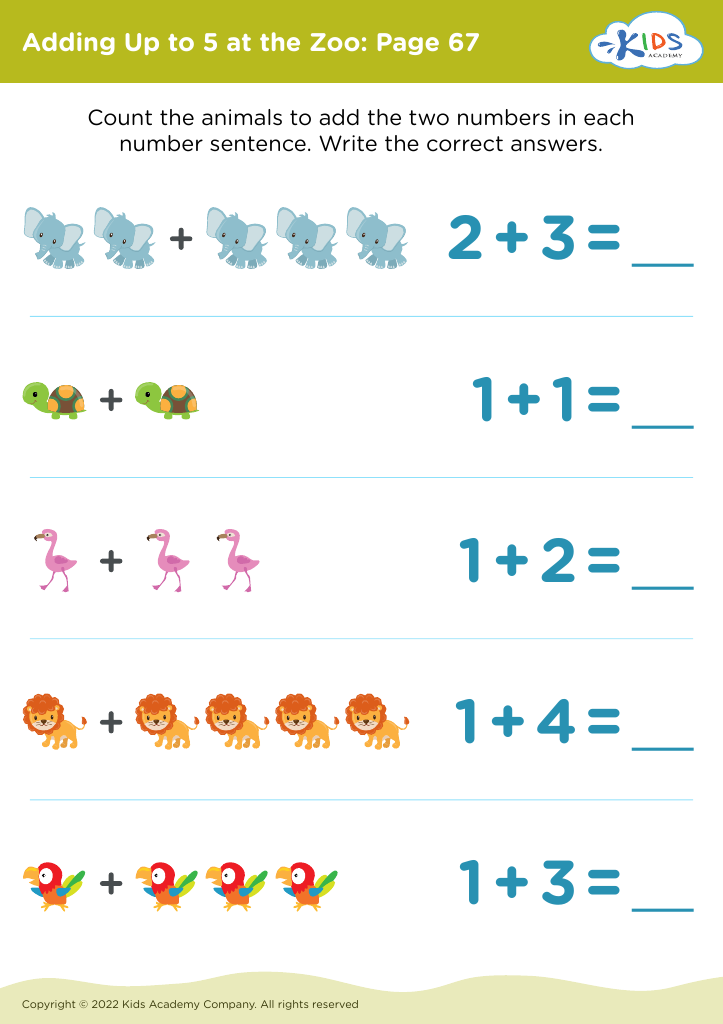
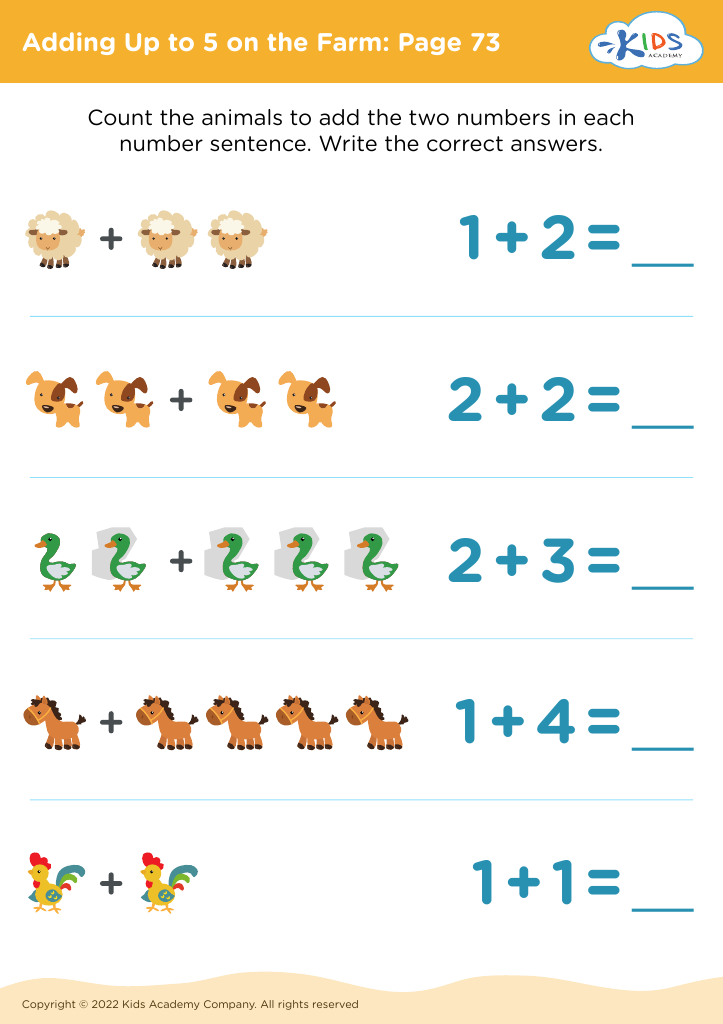
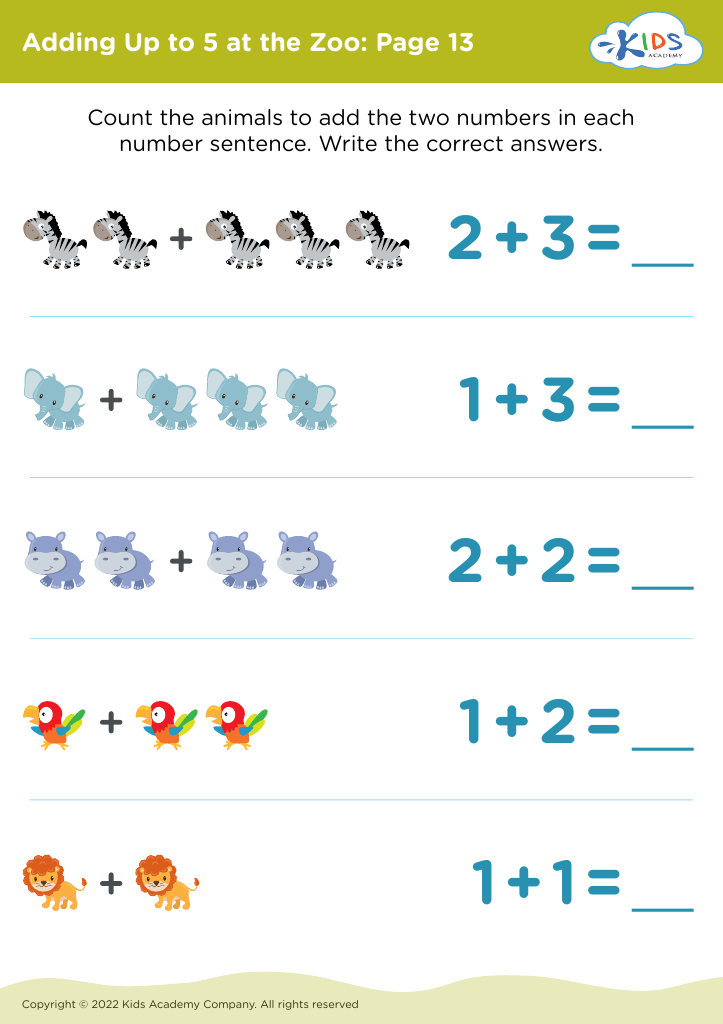
Moreover, recognizing different animals supports early literacy and numeracy skills. For instance, counting animals, sorting them by type, or creating simple patterns using animal images can introduce young learners to basic mathematical concepts like adding up to 5. This not only cultivates math skills but also promotes critical thinking as children engage with fun, interactive activities.
Additionally, learning about animals and their habitats can instill values of empathy and respect for living beings. It encourages stewardship of the environment and nurtures a care for wildlife.
By creating engaging lessons that blend animal identification with math, educators and parents can create a richer, multi-disciplinary learning environment. Ultimately, involving children in these activities equips them with foundational skills while allowing for imaginative play and social interaction, all critical for their overall development.








