Filters

90 filtered results

Clear all filters
Favorites
With answer key
Interactive

90 filtered results

Difficulty Level

Grade


Check out this FREE Trial Lesson on Adding Up to 5 for age 4-7!

P

Favorites
With answer key
Interactive
  • 4-7
  • Animal recognition
  • Adding Up to 5
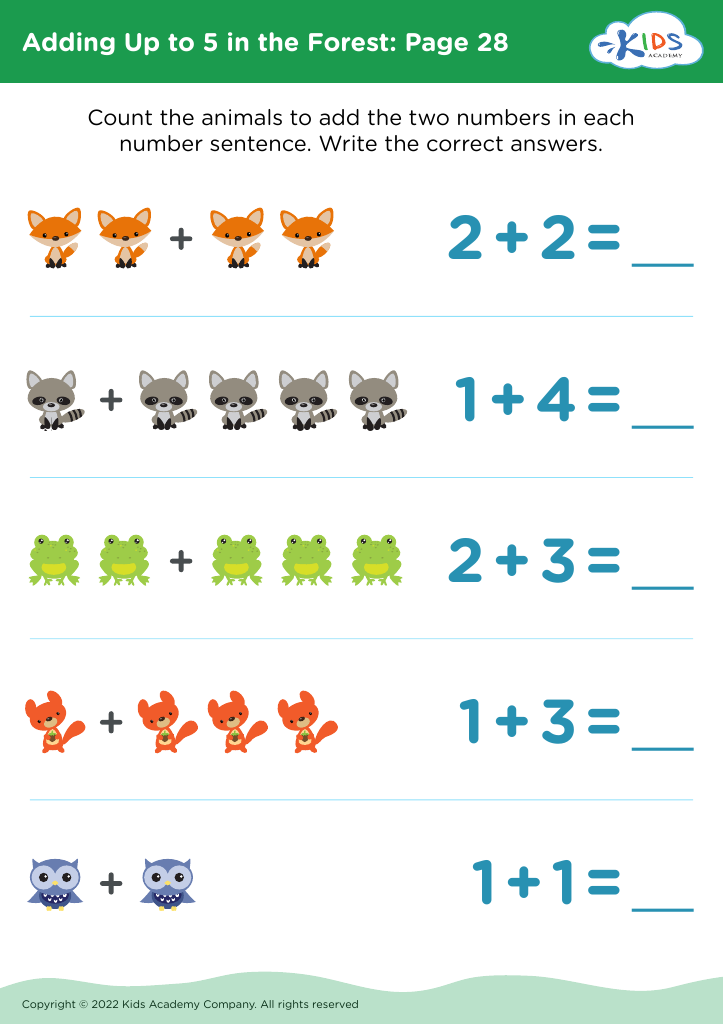
Adding Up to 5 in the Forest: Page 28
Worksheet
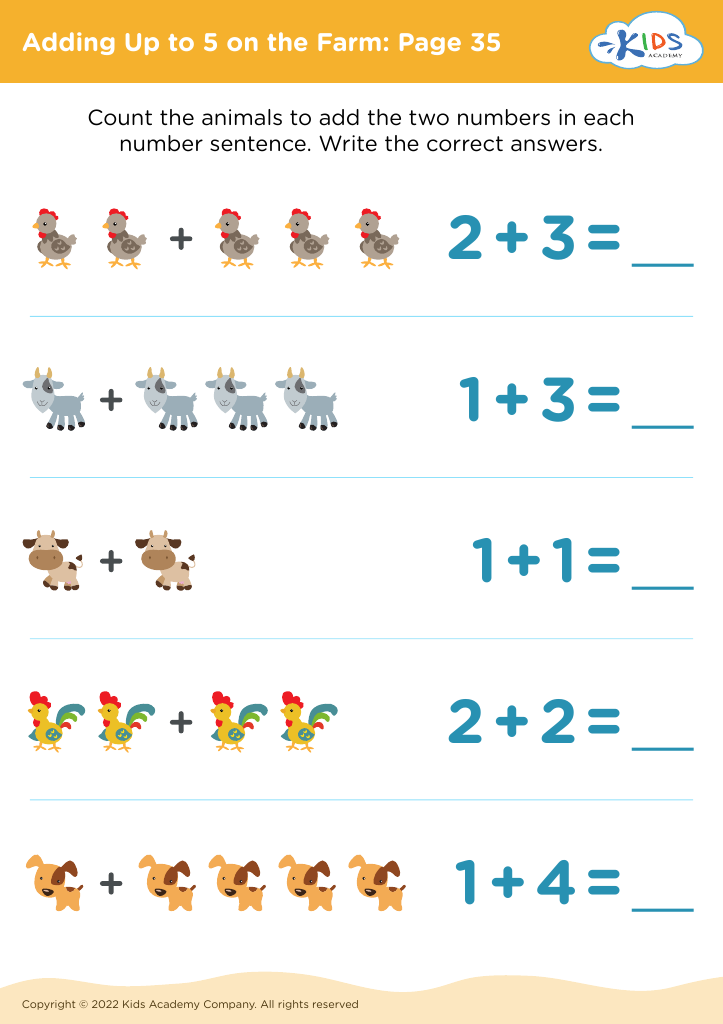
Adding Up to 5 on the Farm: Page 35
Worksheet
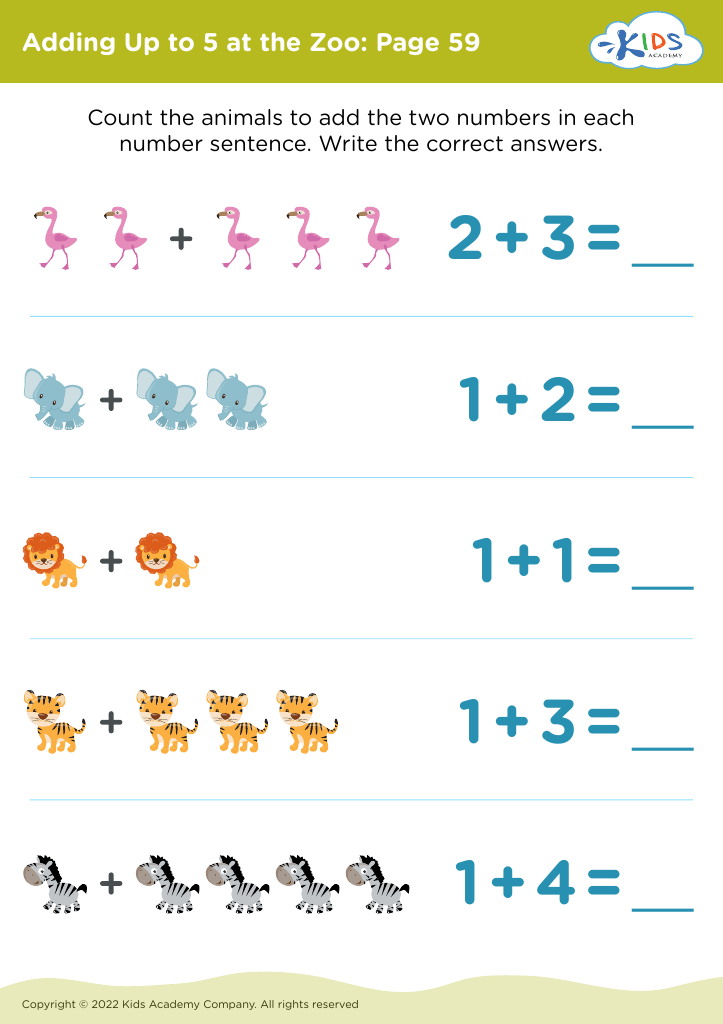
Adding Up to 5 at the Zoo: Page 59
Worksheet
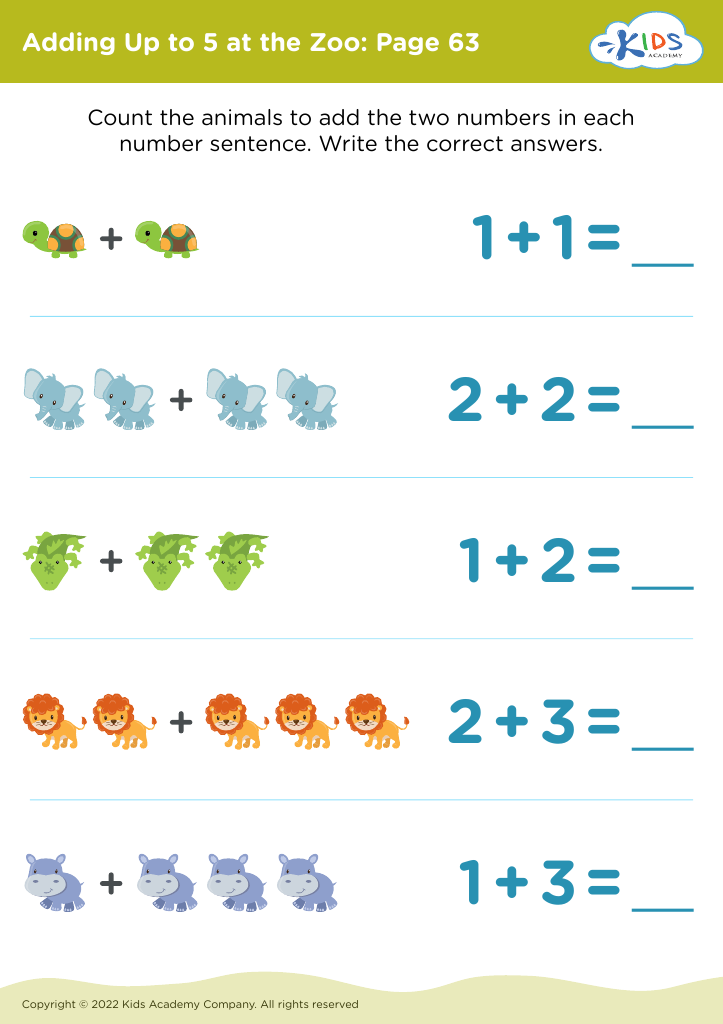
Adding Up to 5 at the Zoo: Page 63
Worksheet
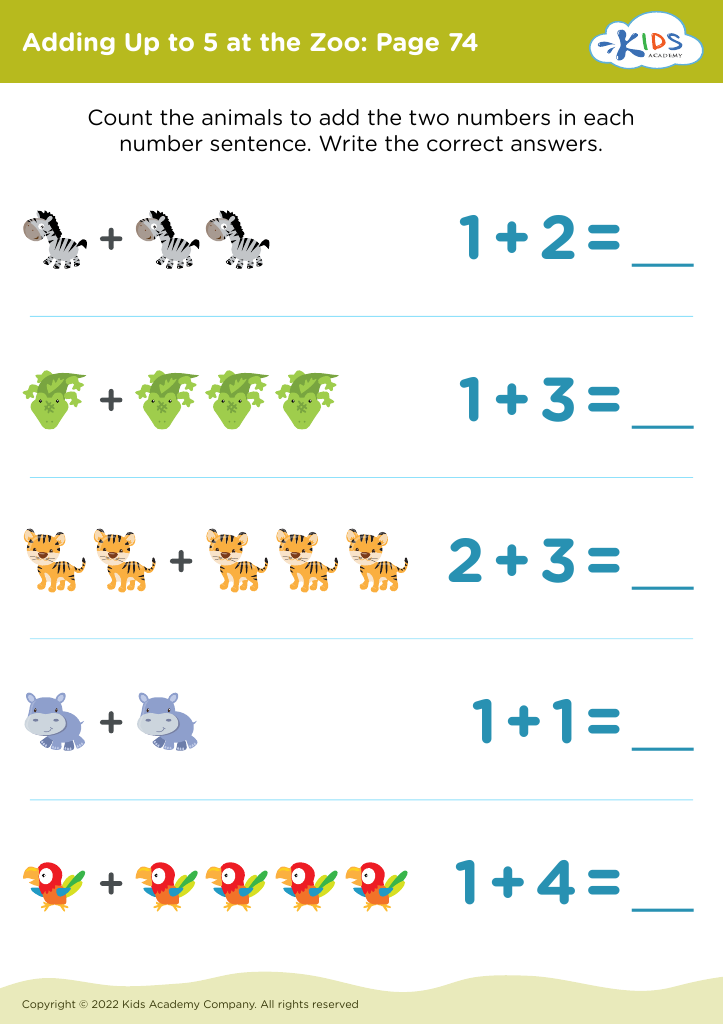
Adding Up to 5 at the Zoo: Page 74
Worksheet
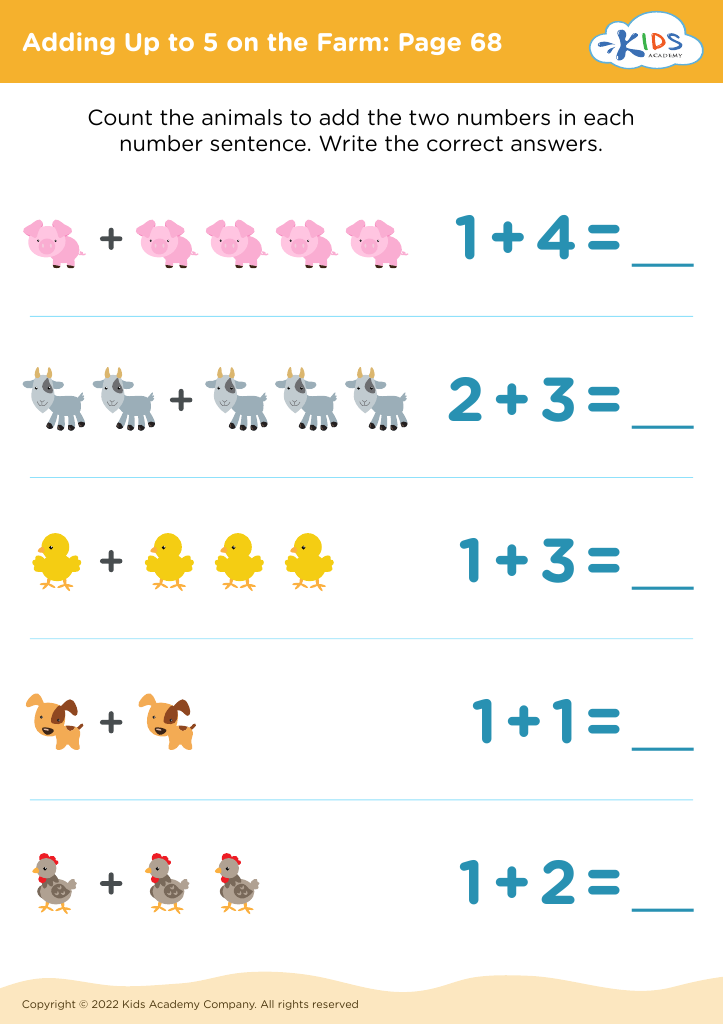
Adding Up to 5 on the Farm: Page 68
Worksheet
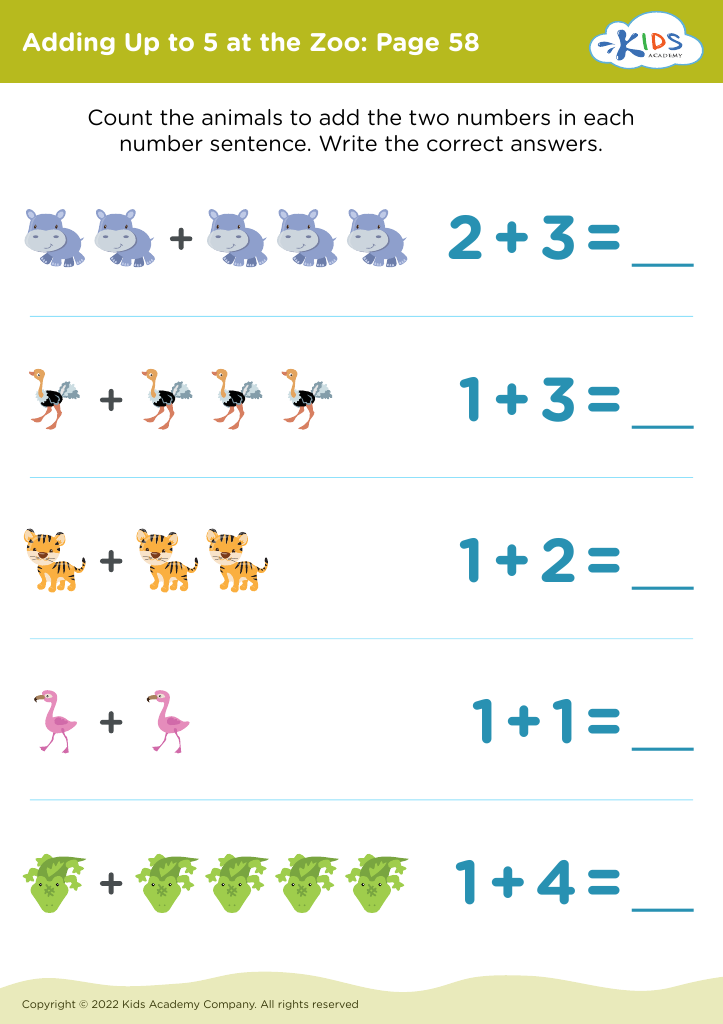
Adding Up to 5 at the Zoo: Page 58
Worksheet
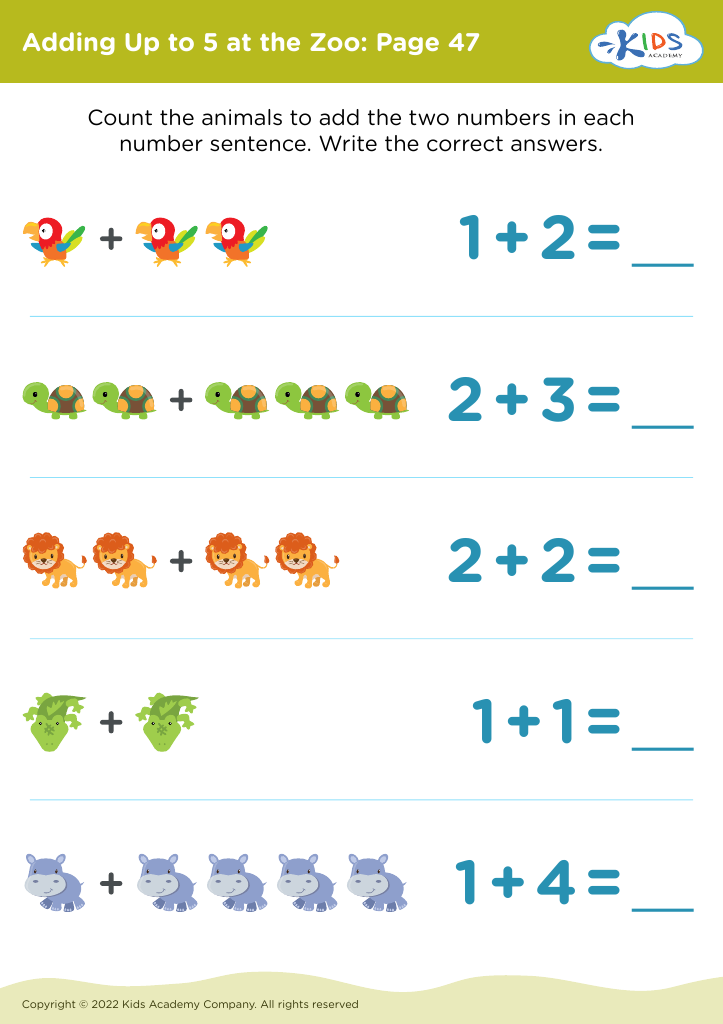
Adding Up to 5 at the Zoo: Page 47
Worksheet
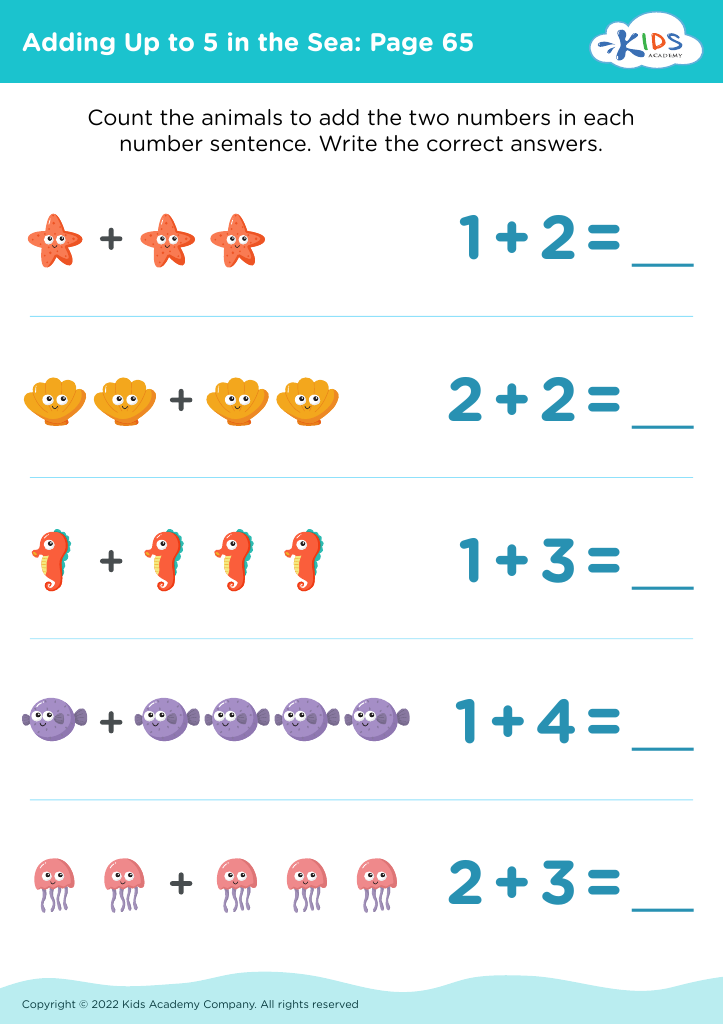
Adding Up to 5 in the Sea: Page 65
Worksheet
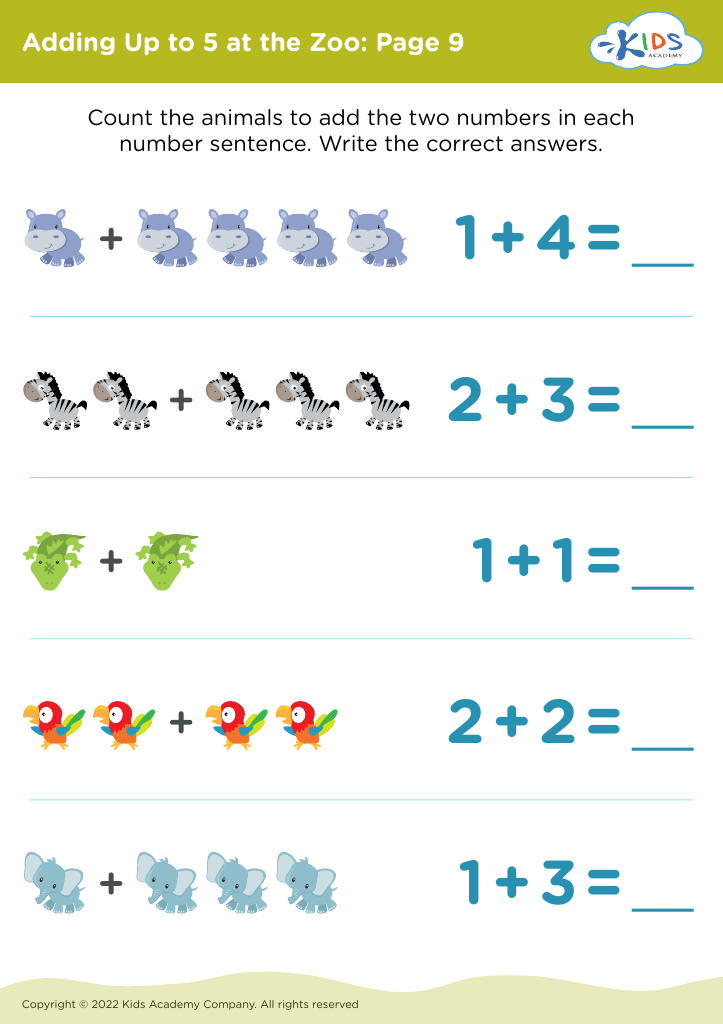
Adding Up to 5 at the Zoo: Page 9

Adding Up to 5 at the Zoo: Page 9

Adding Up to 5 at the Zoo: Page 9
Worksheet
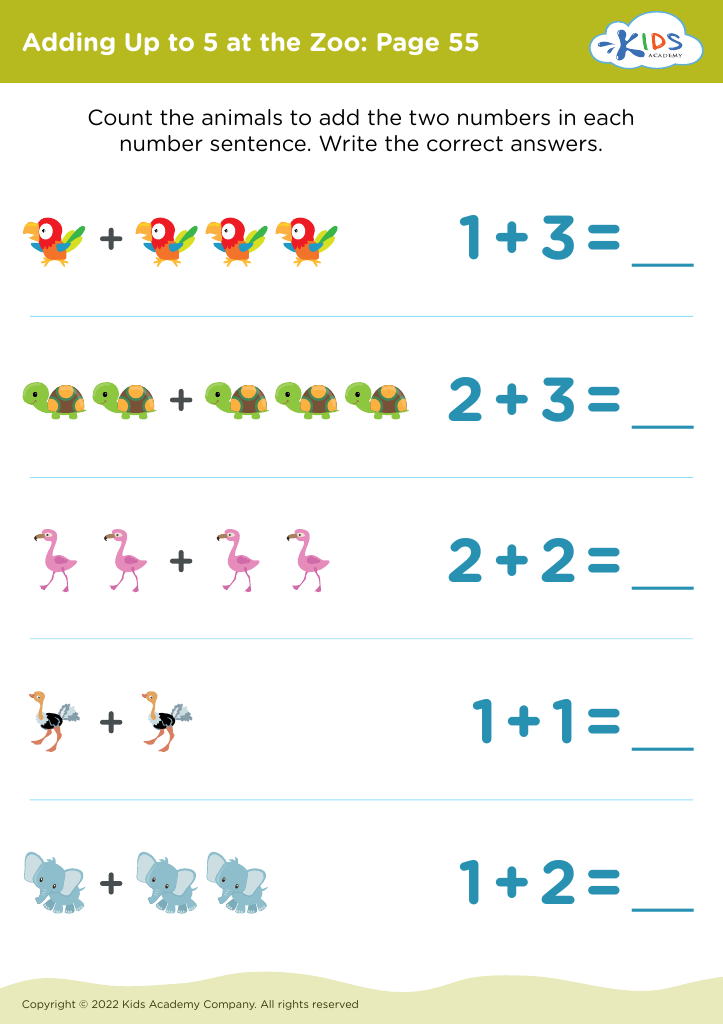
Adding Up to 5 at the Zoo: Page 55
Worksheet
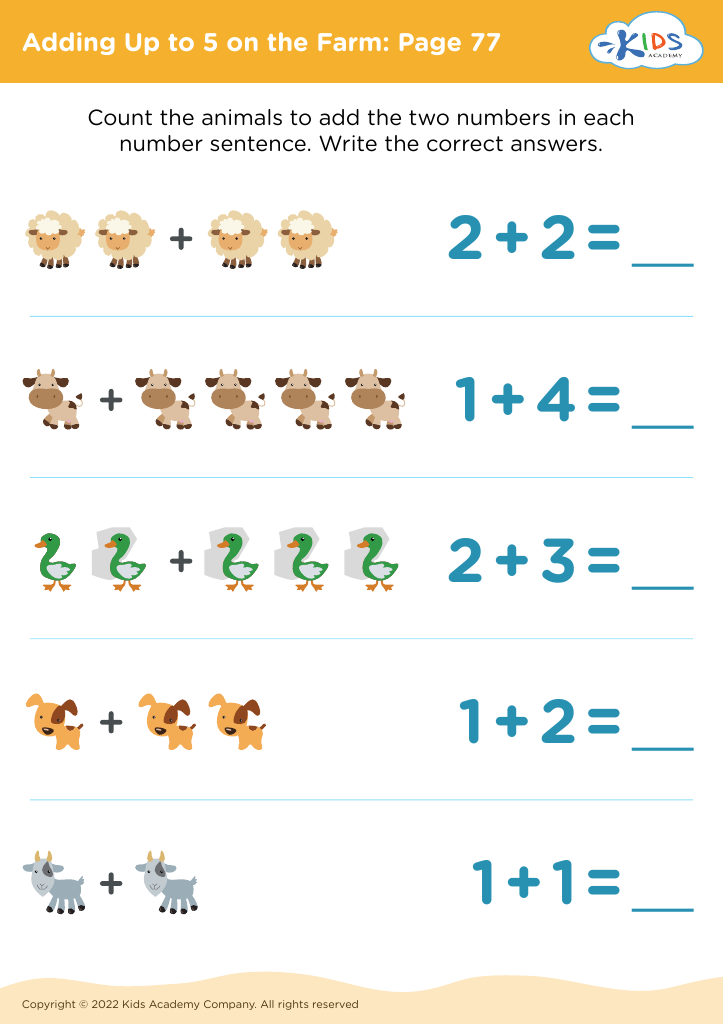
Adding Up to 5 on the Farm: Page 77
Worksheet
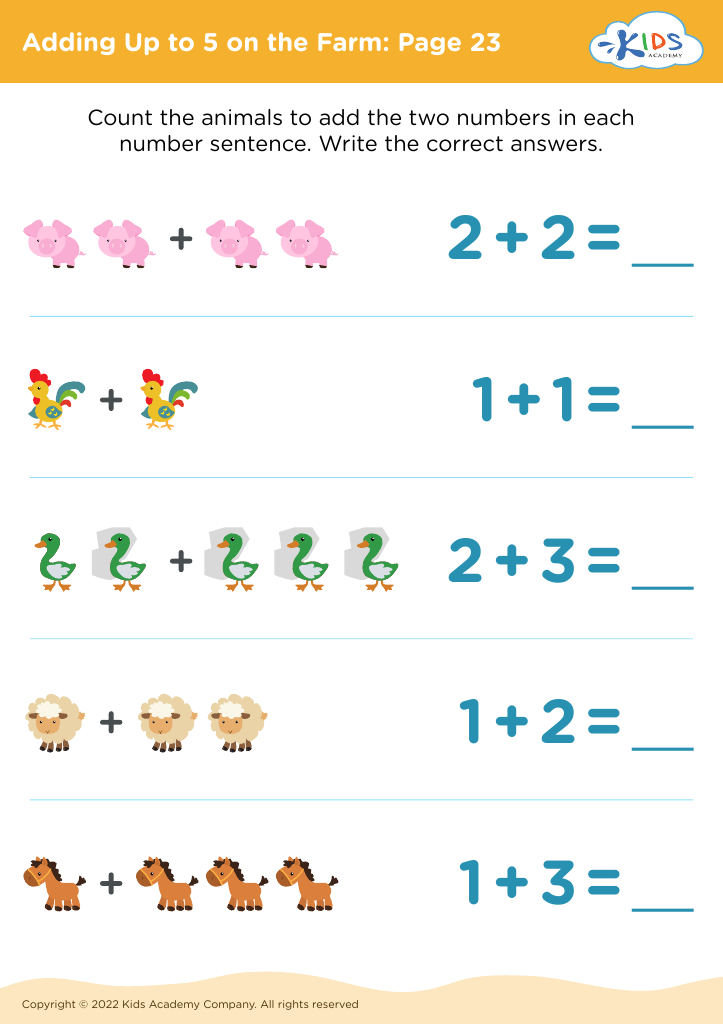
Adding Up to 5 on the Farm: Page 23
Worksheet
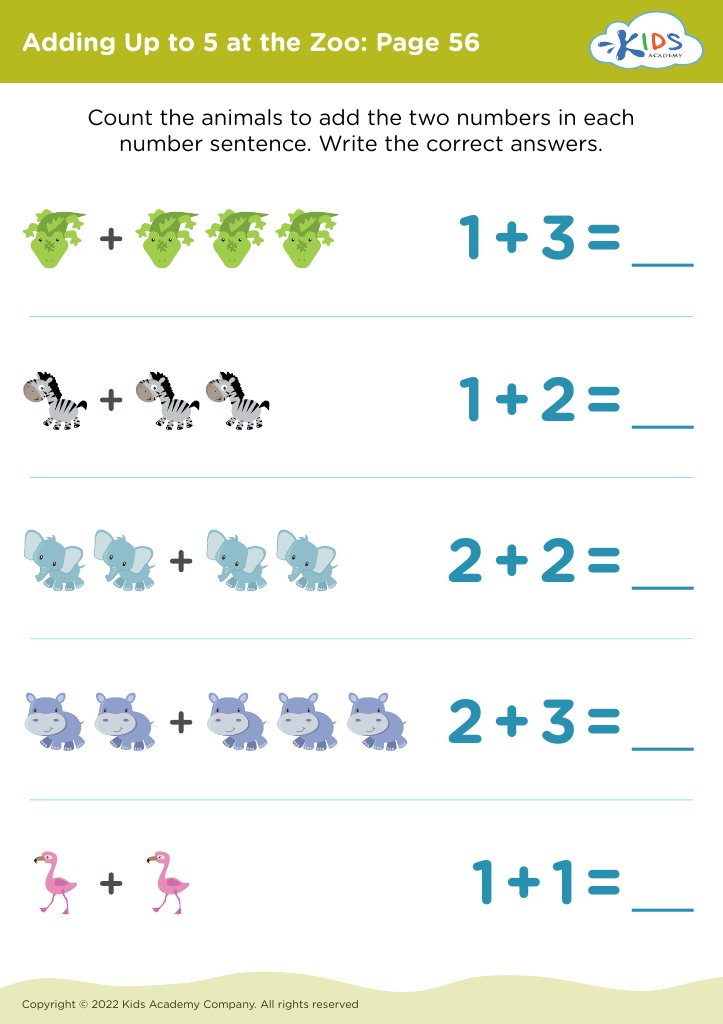
Adding Up to 5 at the Zoo: Page 56
Worksheet
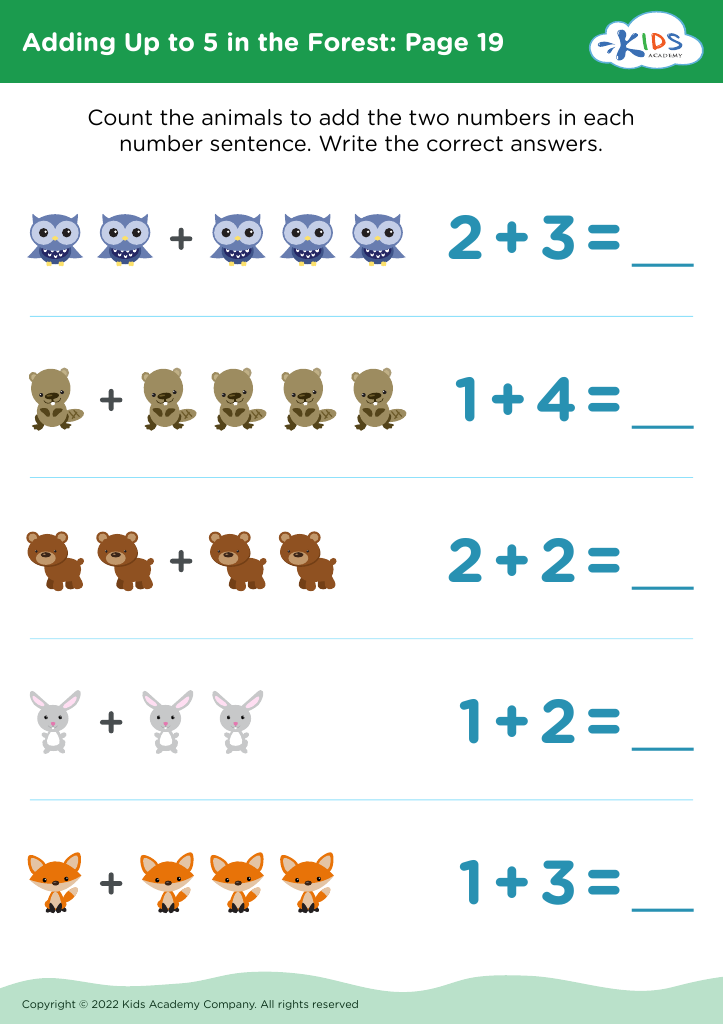
Adding Up to 5 in the Forest: Page 19
Worksheet
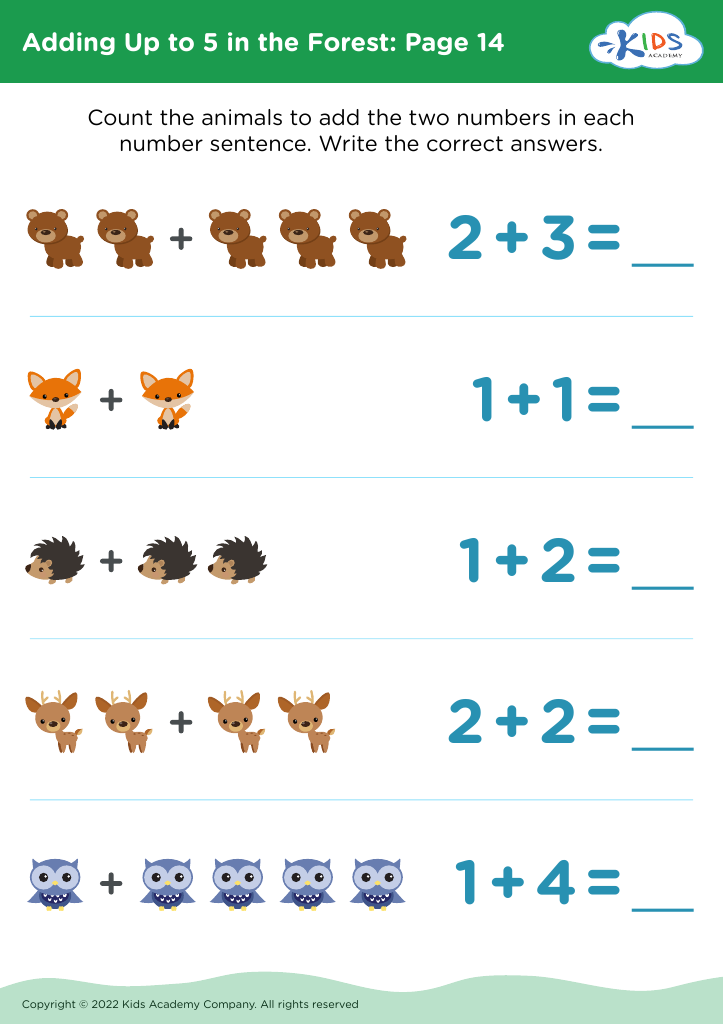
Adding Up to 5 in the Forest: Page 14
Worksheet
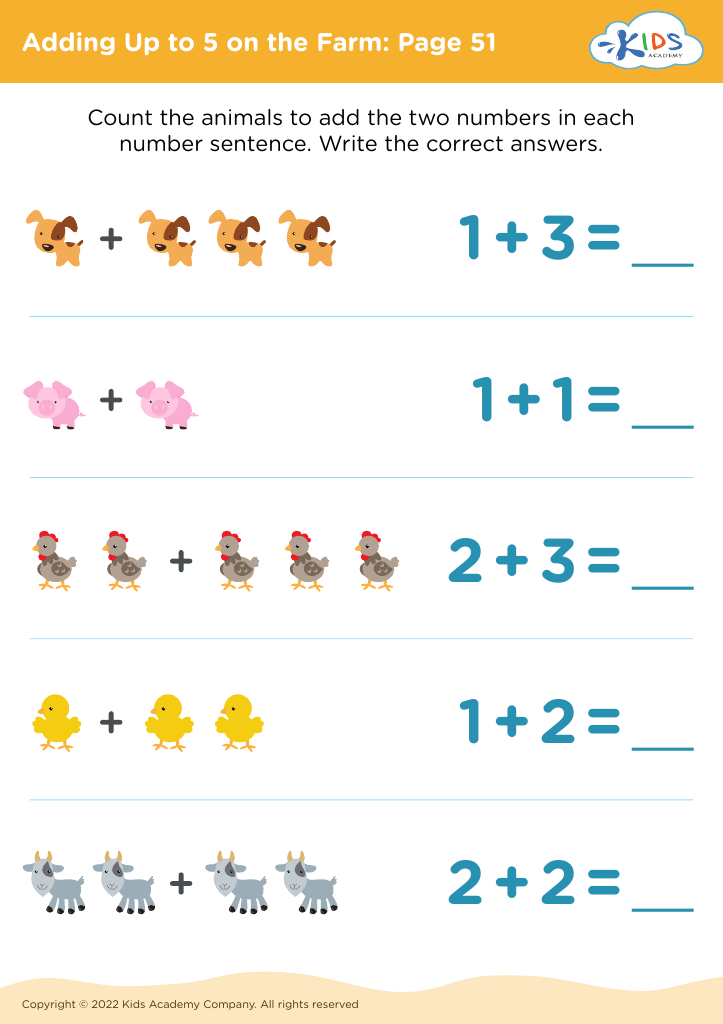
Adding Up to 5 on the Farm: Page 51
Worksheet
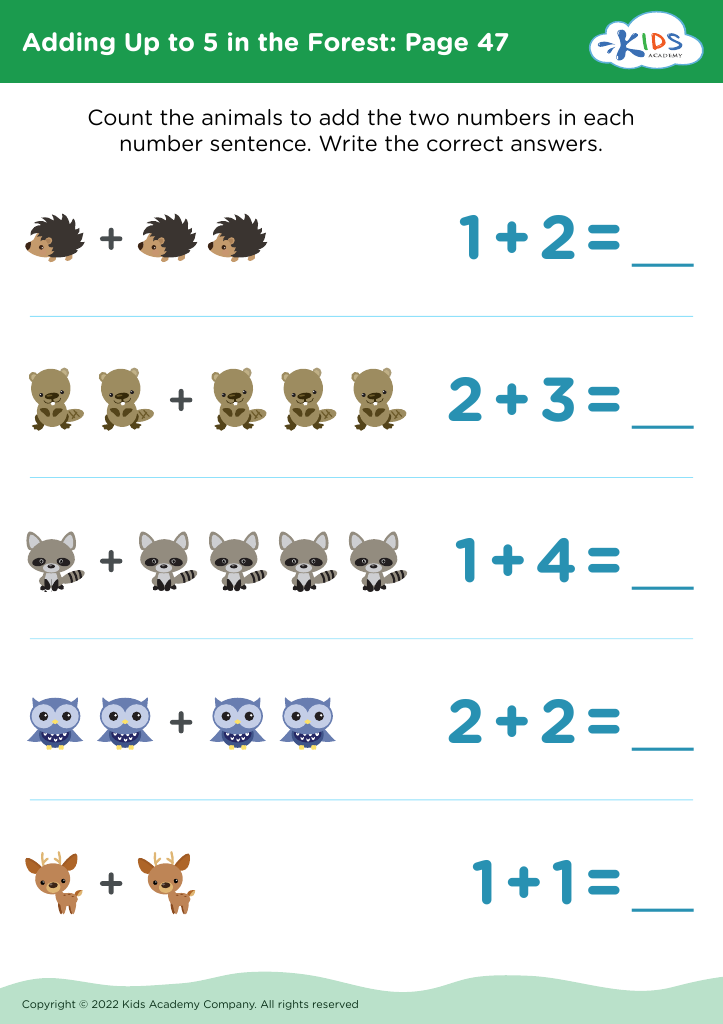
Adding Up to 5 in the Forest: Page 47
Worksheet
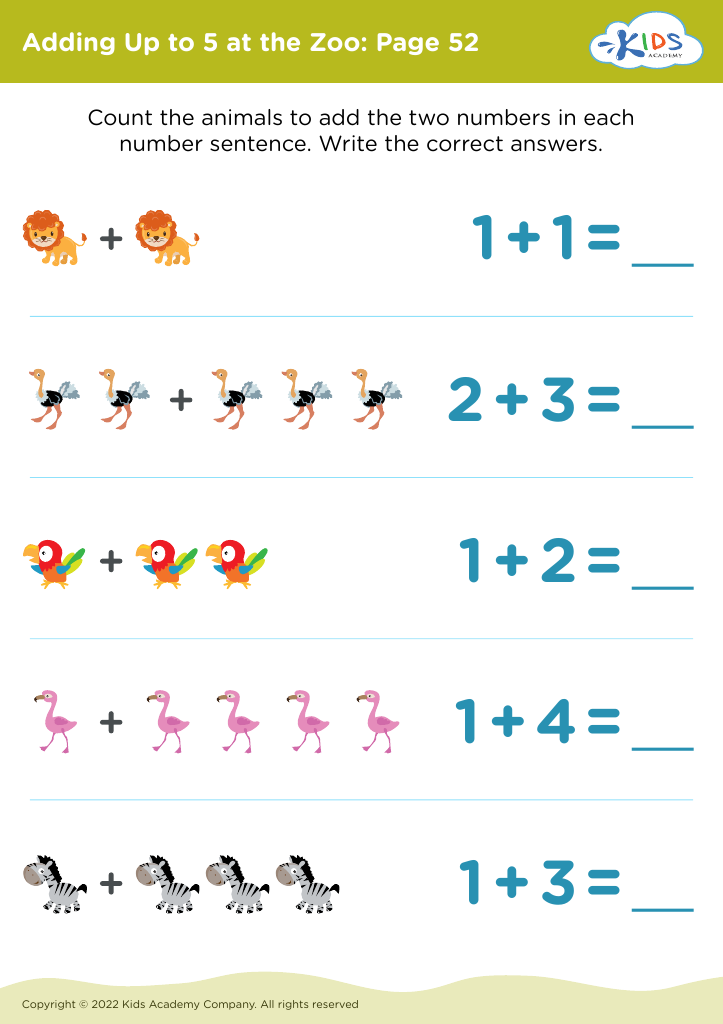
Adding Up to 5 at the Zoo: Page 52
Worksheet
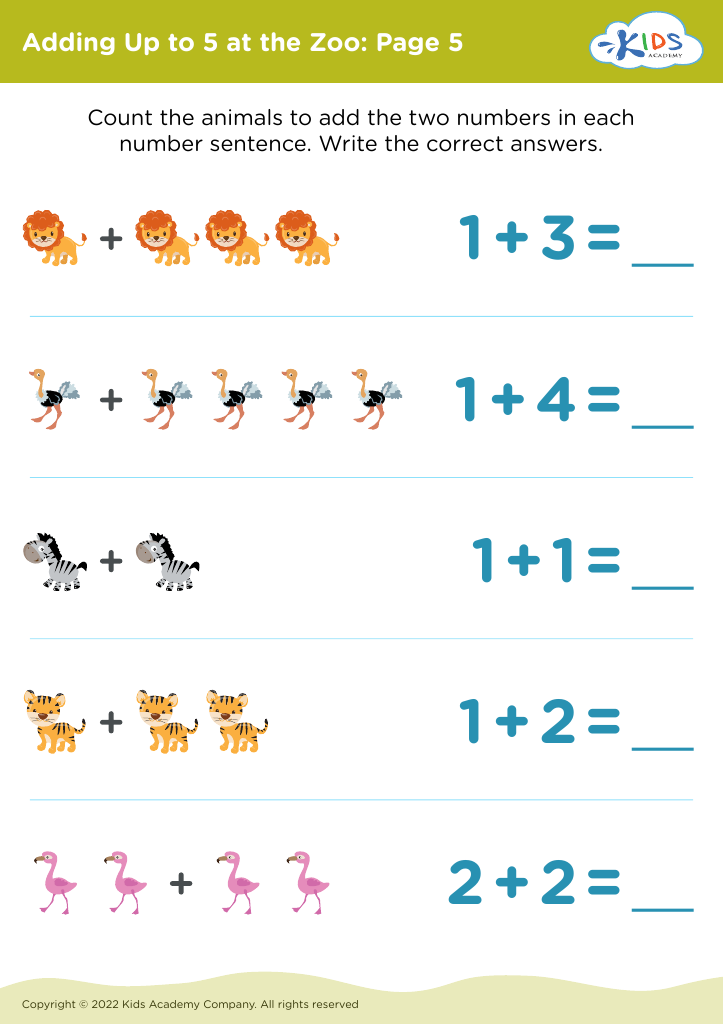
Adding Up to 5 at the Zoo: Page 5

Adding Up to 5 at the Zoo: Page 5

Adding Up to 5 at the Zoo: Page 5
Worksheet
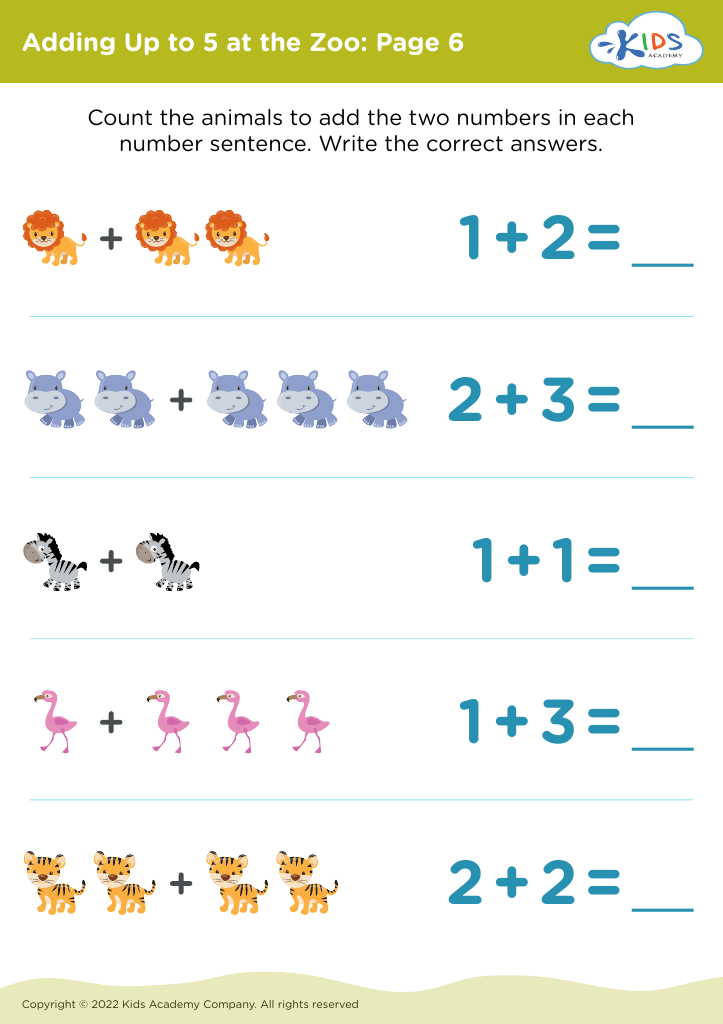
Adding Up to 5 at the Zoo: Page 6

Adding Up to 5 at the Zoo: Page 6

Adding Up to 5 at the Zoo: Page 6
Worksheet
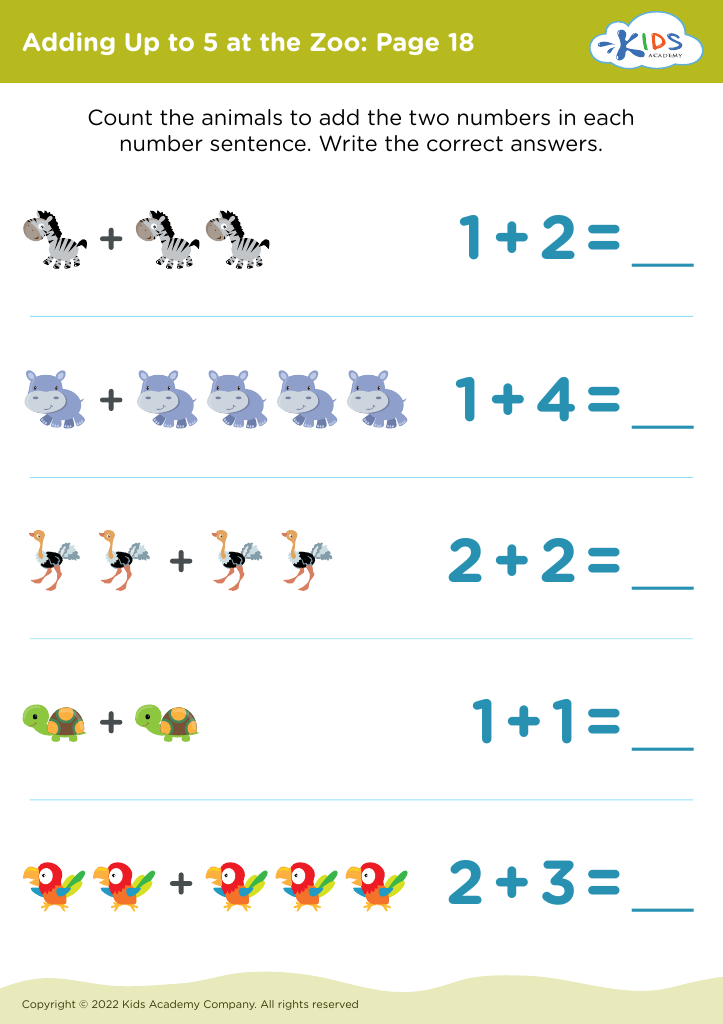
Adding Up to 5 at the Zoo: Page 18
Worksheet
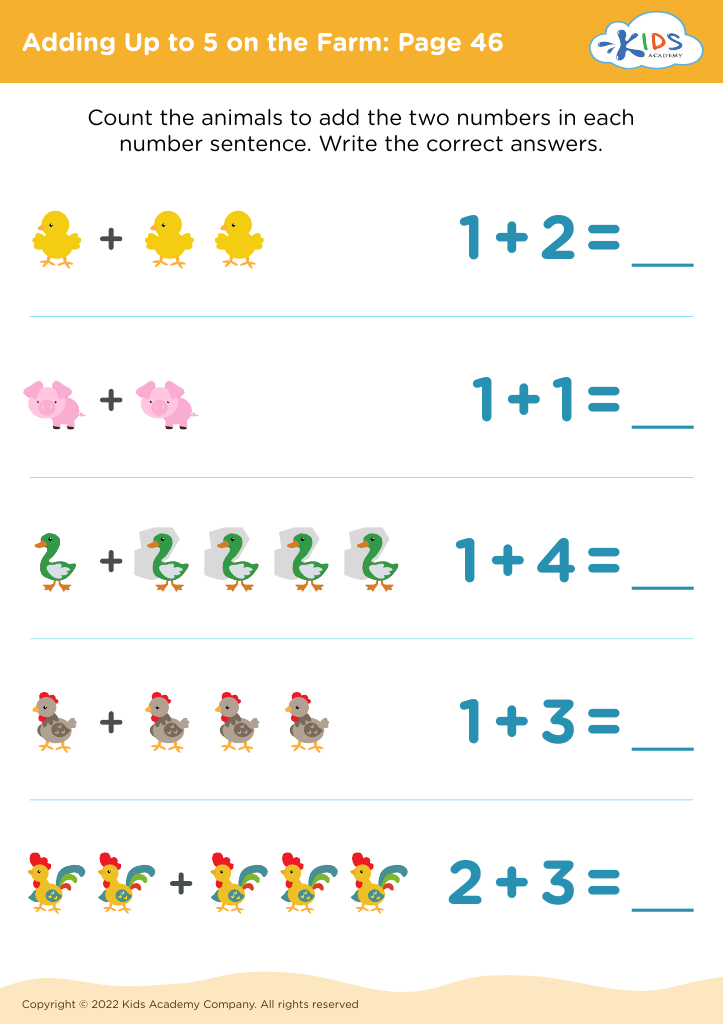
Adding Up to 5 on the Farm: Page 46
Worksheet
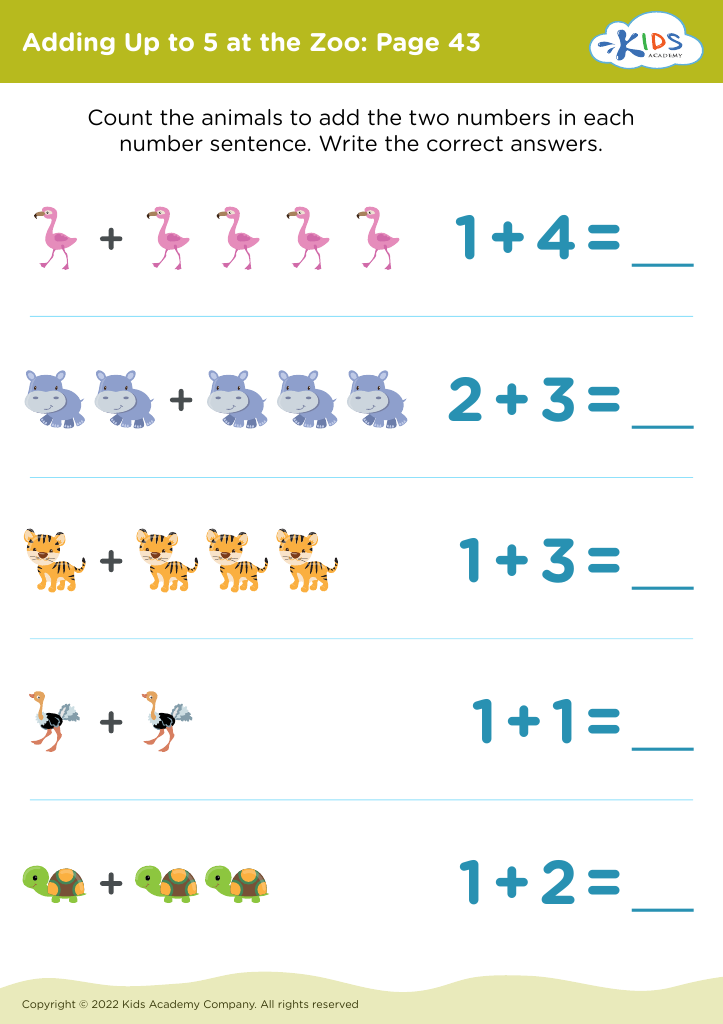
Adding Up to 5 at the Zoo: Page 43
Worksheet


Animal recognition and early math skills, such as adding up to 5, are crucial areas of development for children aged 4-7. Parents and teachers should care about these skills for several reasons. First, animal recognition aids in fostering curiosity about the natural world, helping children to develop observation skills and comprehension of their environment. It encourages discussions about different species, habitats, and conservation, promoting empathy and respect for animals.

Furthermore, incorporating animals into math lessons can enhance engagement and make learning fun. For example, using pictures of animals can help children visualize quantity while learning to add. Activities such as counting animal figures or using animal-themed storybooks for problems can reinforce both math concepts and animal knowledge.

Additionally, integrating these themes supports the development of critical thinking and pattern recognition. These foundational skills are key as children move ahead in their education. By caring about and implementing animal recognition along with math skills, parents and teachers provide a holistic early learning experience that fosters a love for learning and builds essential cognitive abilities. Ultimately, these skills pave the way for future academic success and cultivate a sense of wonder towards the world.