Fine motor skills (writing) Adding Up to 5 Worksheets for Ages 4-7 - Page 2
32 filtered results
-
From - To
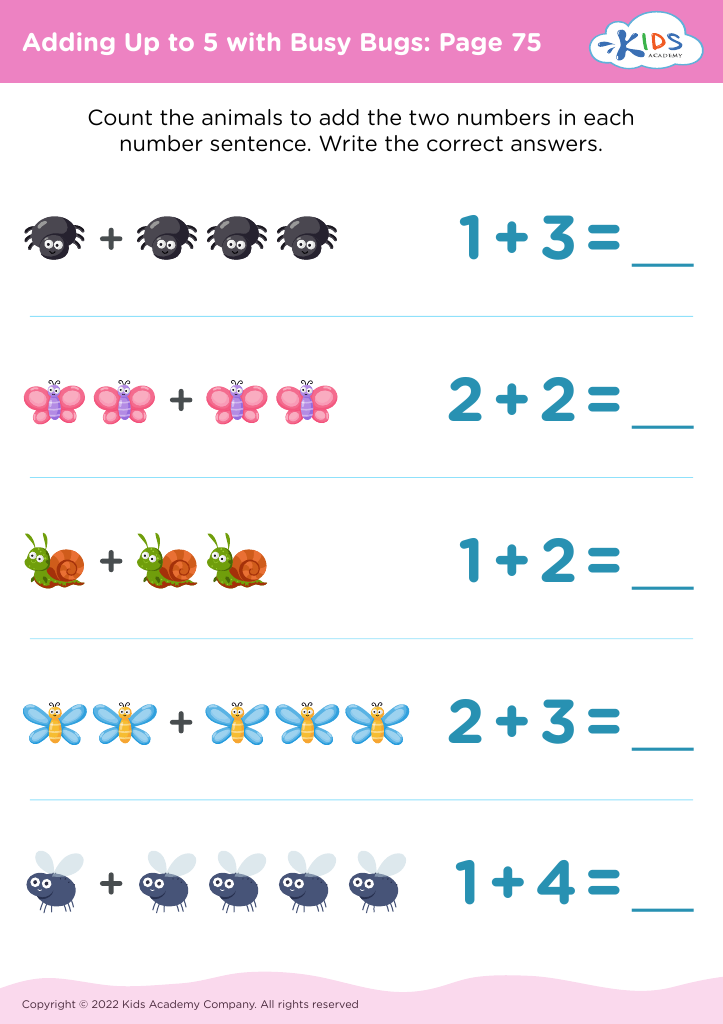
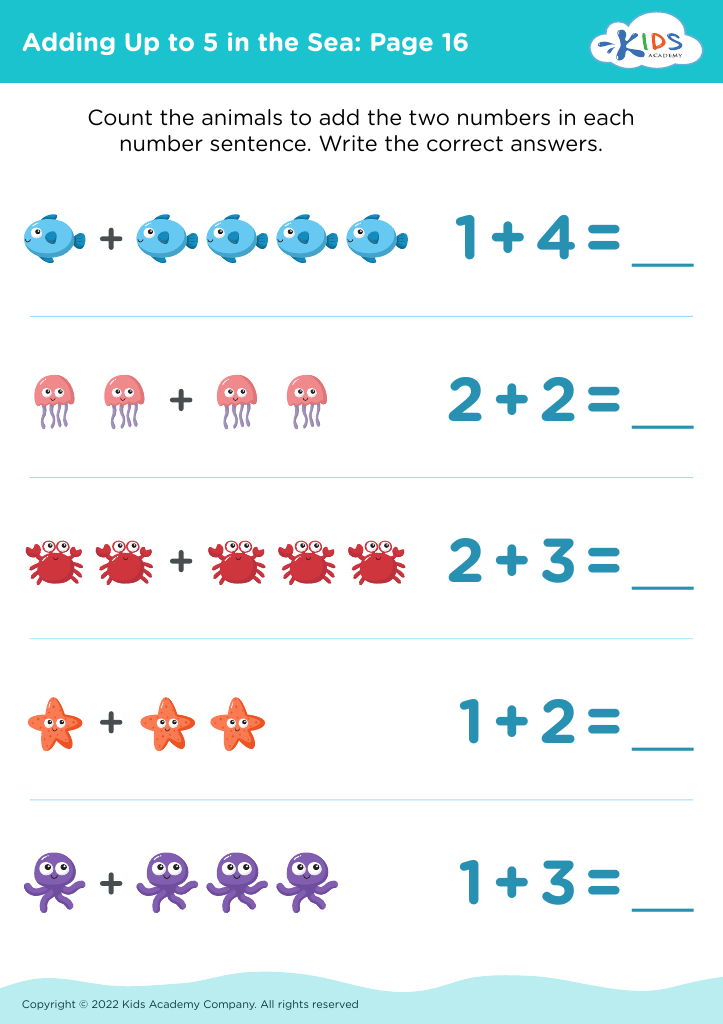
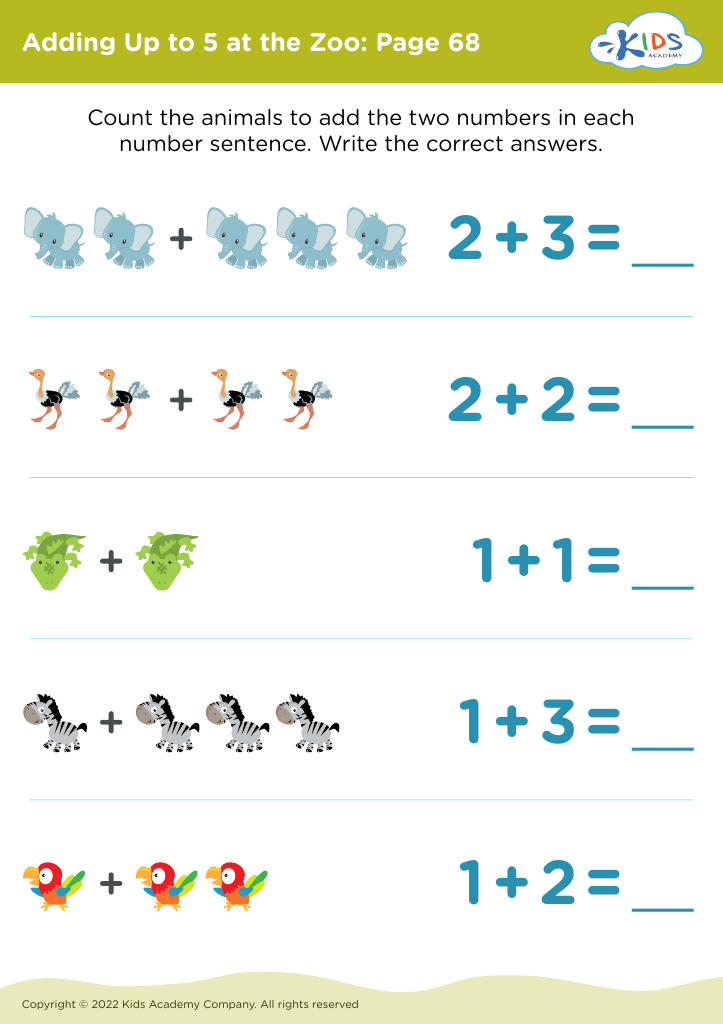
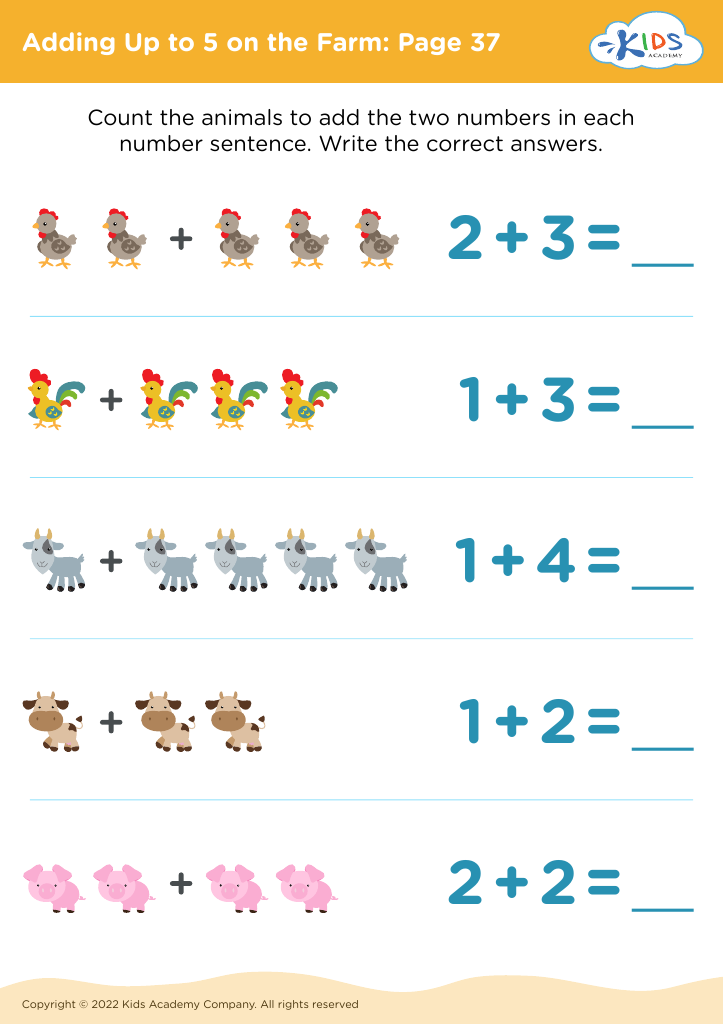
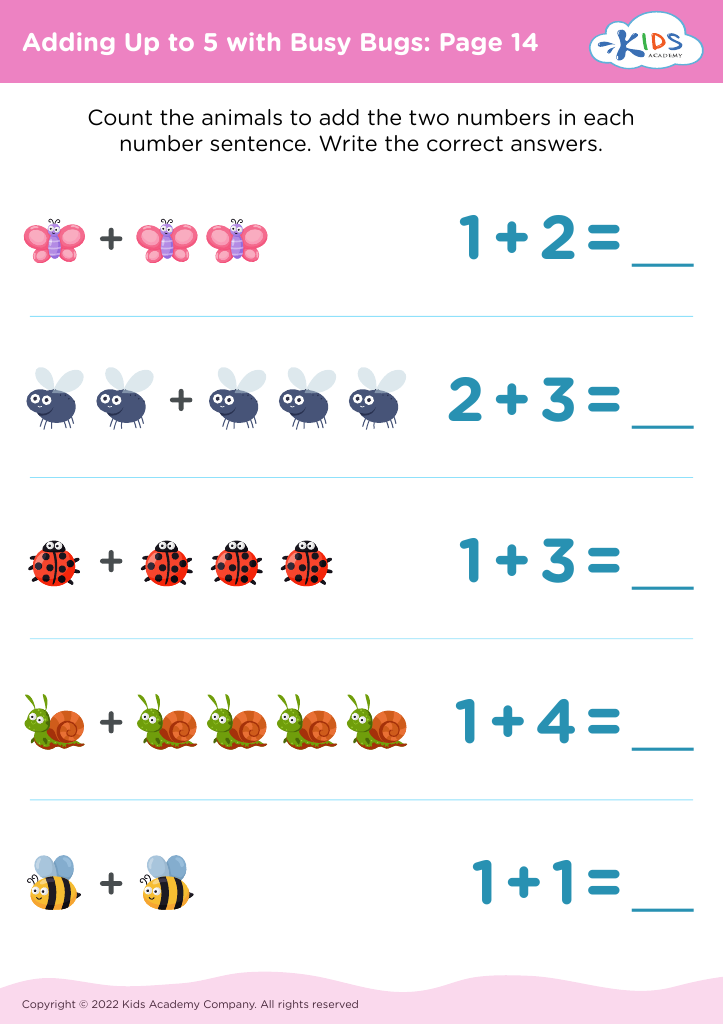
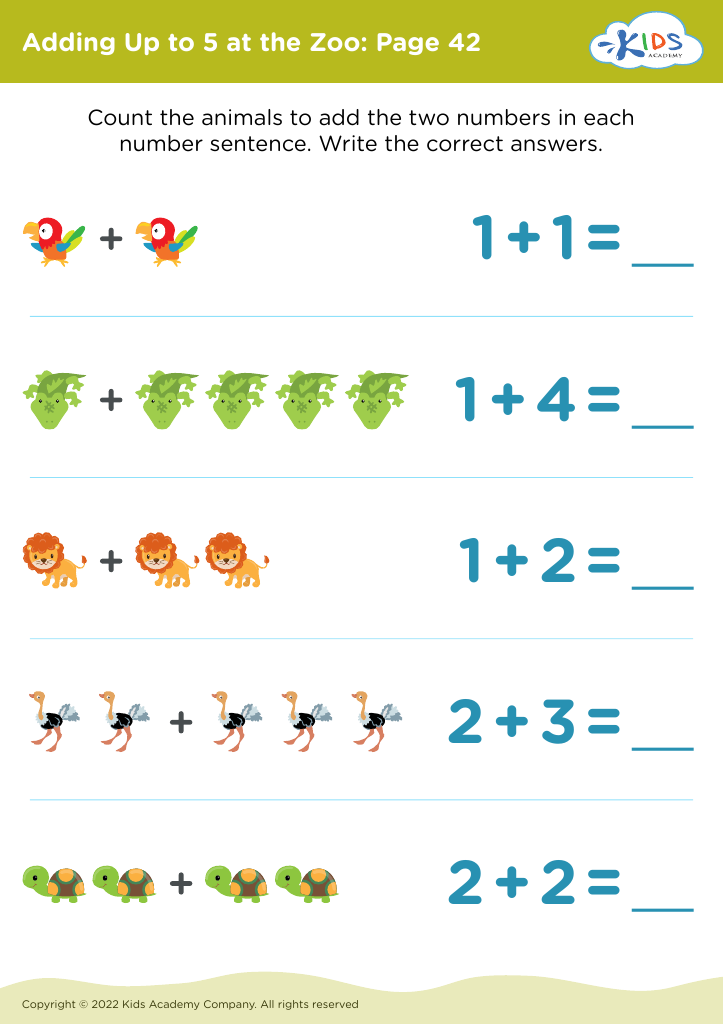
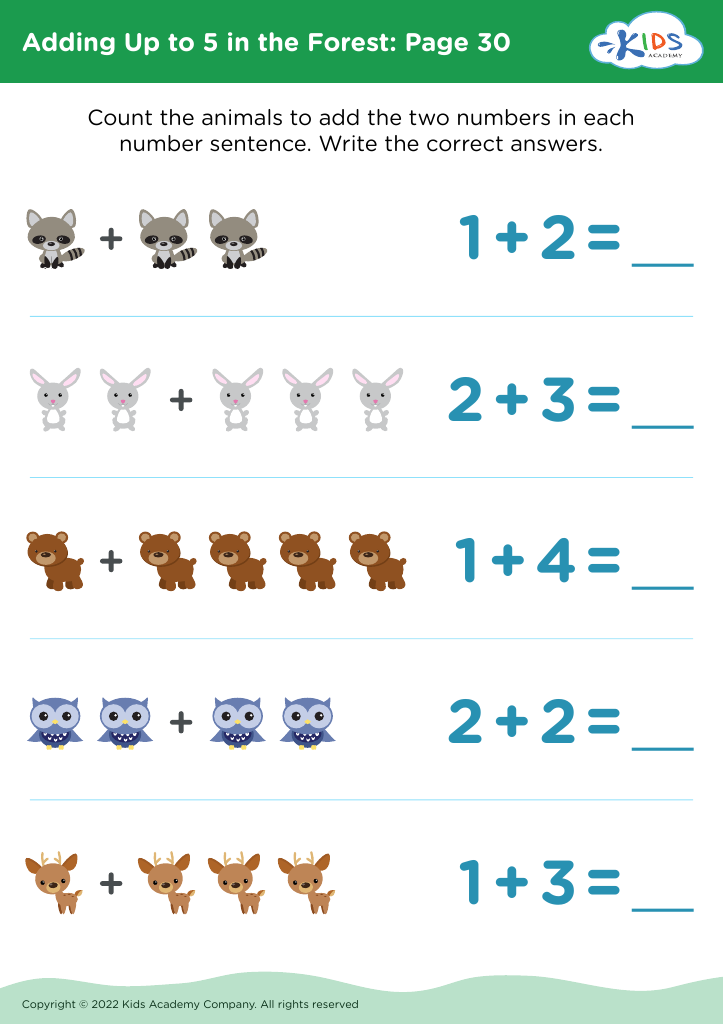
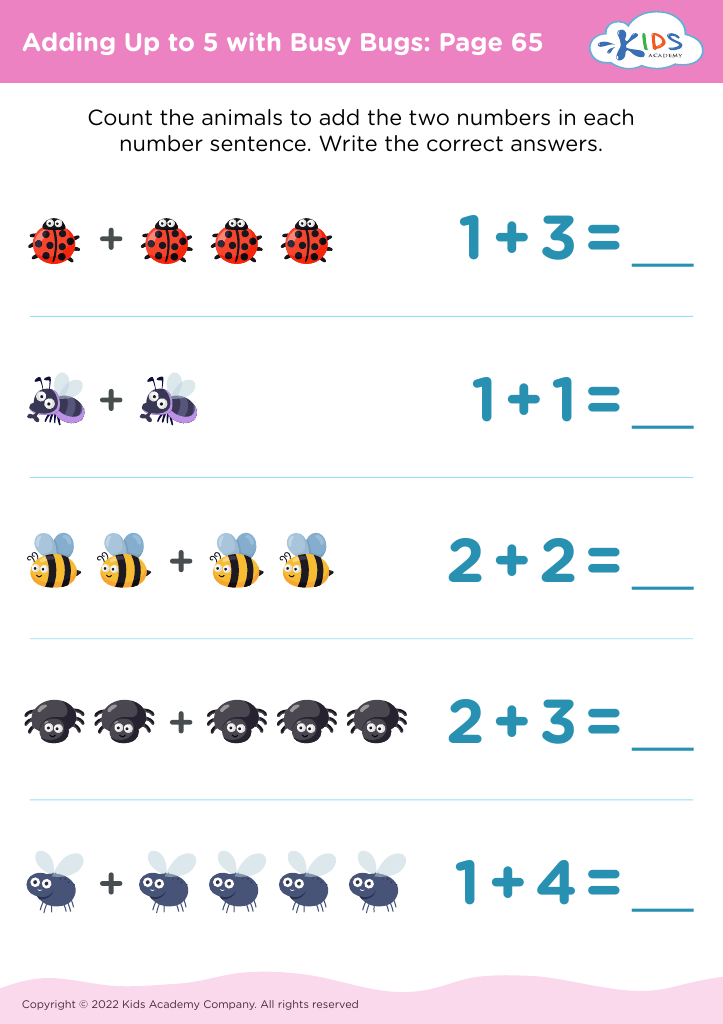








Fine motor skills are critical for children ages 4-7 as they lay the foundation for essential tasks, including writing and basic mathematics like adding up to 5. Development of these skills impacts a child's ability to grip and maneuver writing tools, which is crucial for producing legible letters and numbers. When children practice fine motor skills, they enhance their hand-eye coordination and dexterity, making academic activities less frustrating and more enjoyable.
Moreover, mastering these skills early boosts confidence, encouraging a positive attitude towards learning. Fine motor development is not limited to writing; it also aids in numerous daily tasks such as buttoning clothes or using utensils, promoting independence.
Additionally, integrating writing and simple mathematics reinforces cognitive connections in children's brains. Thinking of numbers as tangible objects they can manipulate enhances understanding. Strong fine motor skills help children progress smoothly through early education, setting the stage for more complex tasks in later grades.
By supporting children’s fine motor skills, parents and teachers contribute to their overall academic success and personal development, fostering environments where children can thrive both in school and in their daily lives. Thus, emphasizing the importance of these foundational skills is vital for future achievements.








