Math problem-solving Adding Up to 5 Worksheets for Ages 4-7
3 filtered results
-
From - To
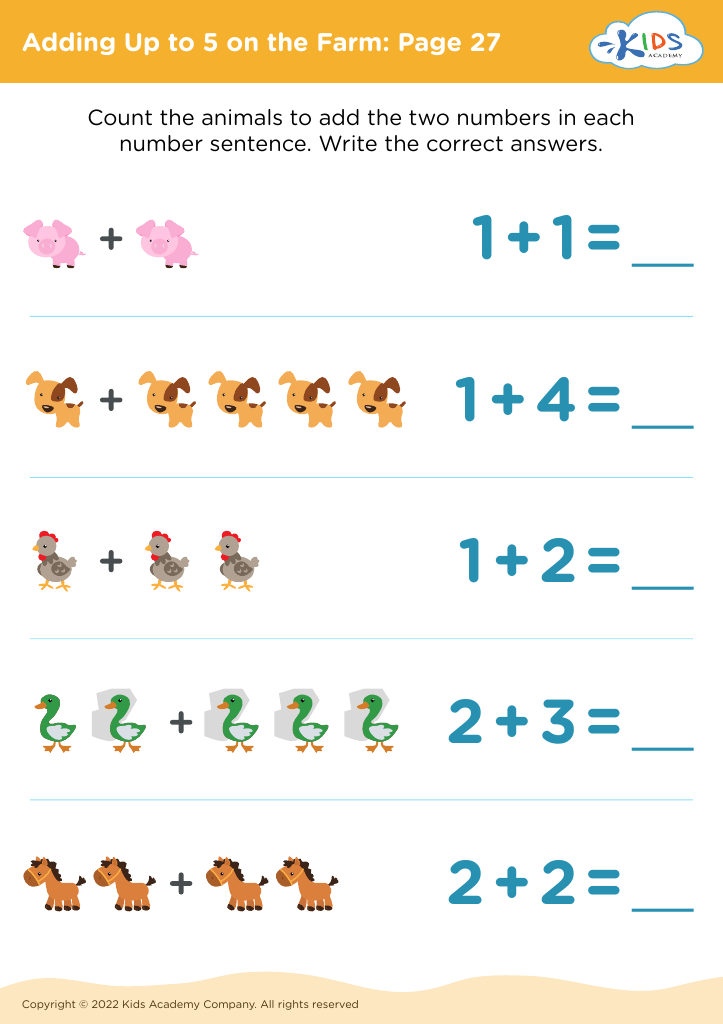
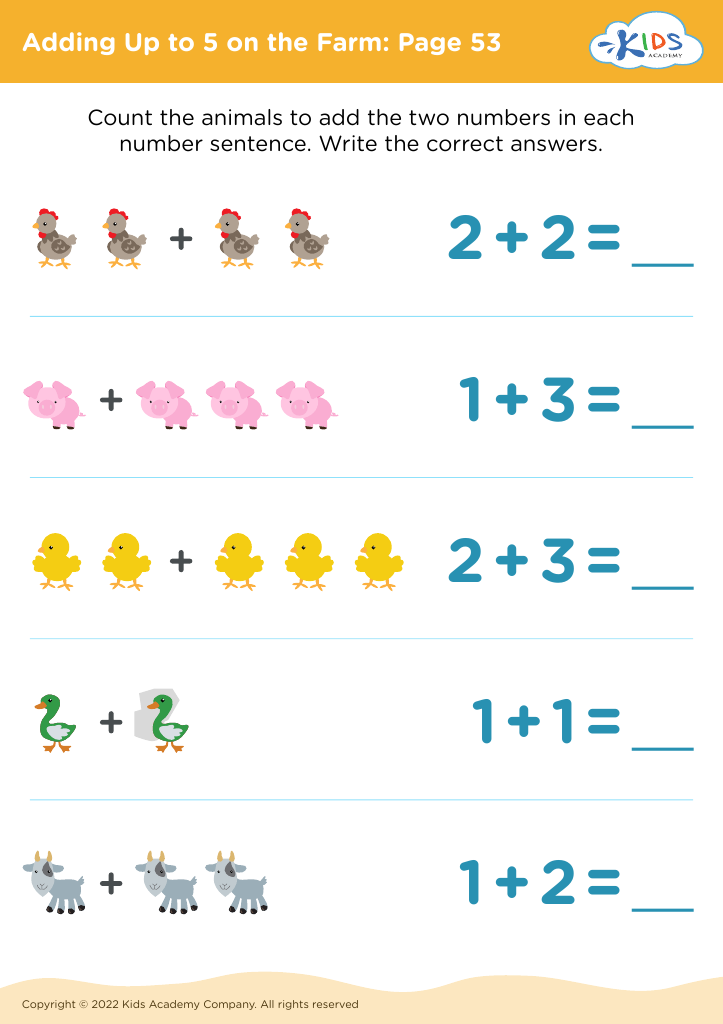
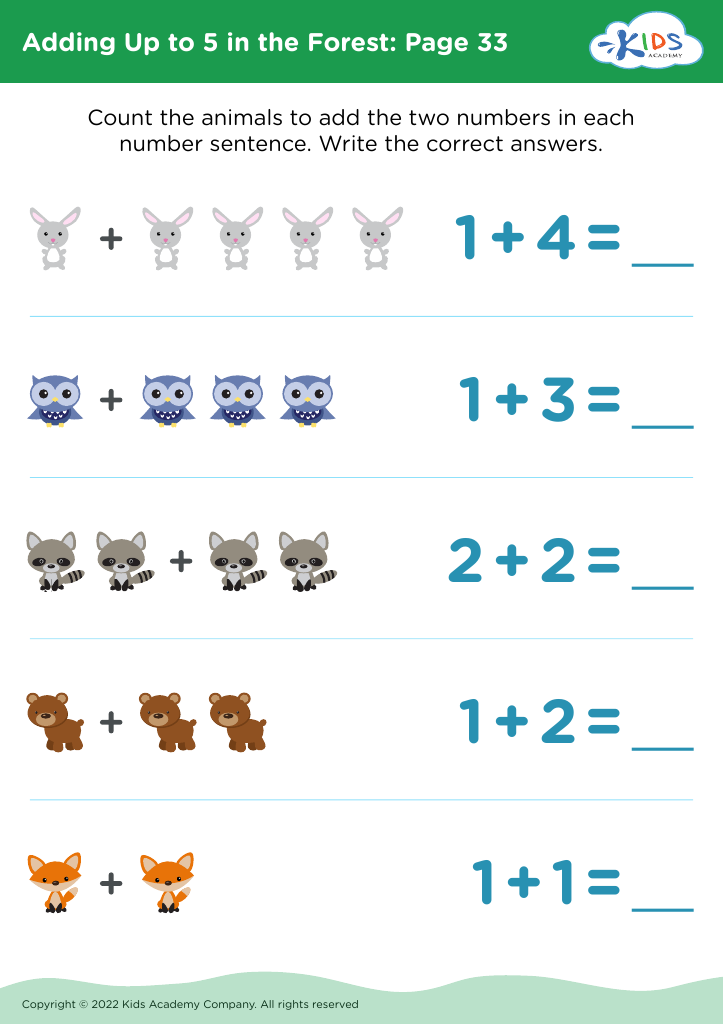
Enhance your child’s math skills with our "Adding Up to 5" worksheets, designed specifically for ages 4-7. These engaging activities encourage young learners to develop essential problem-solving abilities as they practice addition in a fun and interactive way. Featuring vibrant illustrations and easy-to-follow exercises, each worksheet helps children grasp the concept of addition while fostering a love for math. Ideal for both classroom and home use, these worksheets cater to various learning styles, ensuring that every child can build a strong foundation for future arithmetic success. Help your child gain confidence and proficiency in math with our thoughtfully created materials!


%20(1).jpg)





Parents and teachers should prioritize math problem-solving activities like "Adding Up to 5" for children aged 4-7 as this foundational skill lays the groundwork for future learning. This age group is critical for cognitive development, and engaging children in math promotes critical thinking, logical reasoning, and the ability to recognize patterns.
Math problem-solving helps children understand basic arithmetic concepts, which are essential for everyday tasks and more advanced math in later years. The activity encourages a positive attitude towards mathematics, helping to dispel any fears or apprehensions that children might have about the subject.
Moreover, "Adding Up to 5" activities can enhance social skills when done in groups, allowing children to collaborate and communicate while working on problems together. This teamwork fosters a sense of community and shared learning.
Additionally, parents and teachers can observe a child’s problem-solving strategies, allowing them to tailor support to individual needs. Ultimately, fostering an early love for math equips children with essential skills not just for school, but for life, inspiring a lifelong engagement with learning and critical thinking in all areas.








