Problem-Solving Skills Adding Up to 5 Worksheets for Ages 4-7
37 filtered results
-
From - To
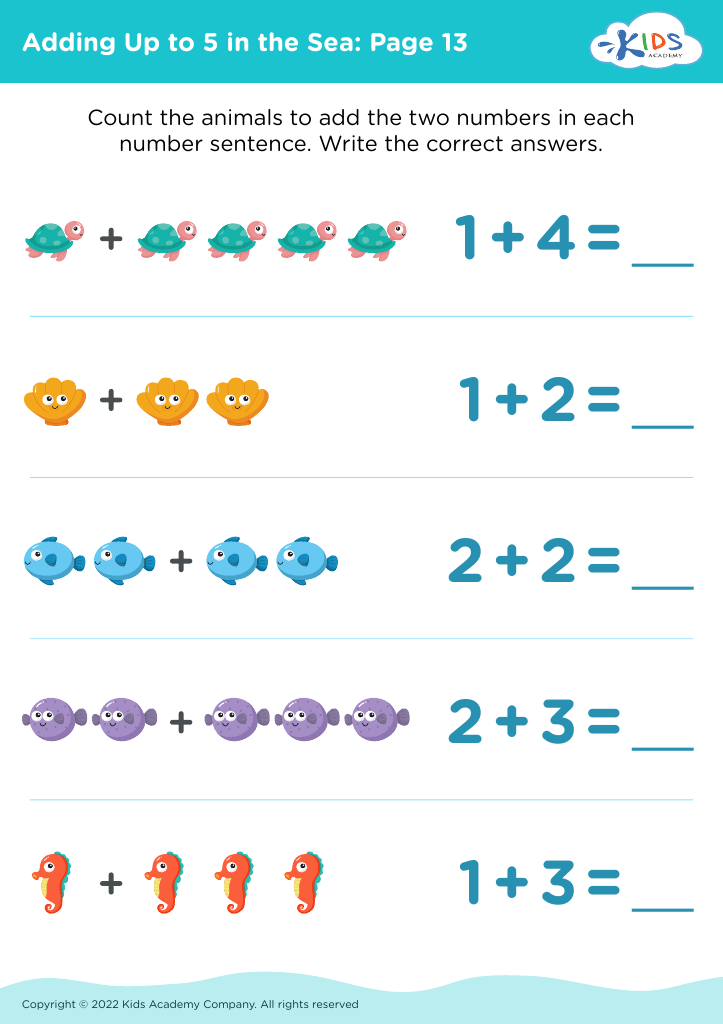
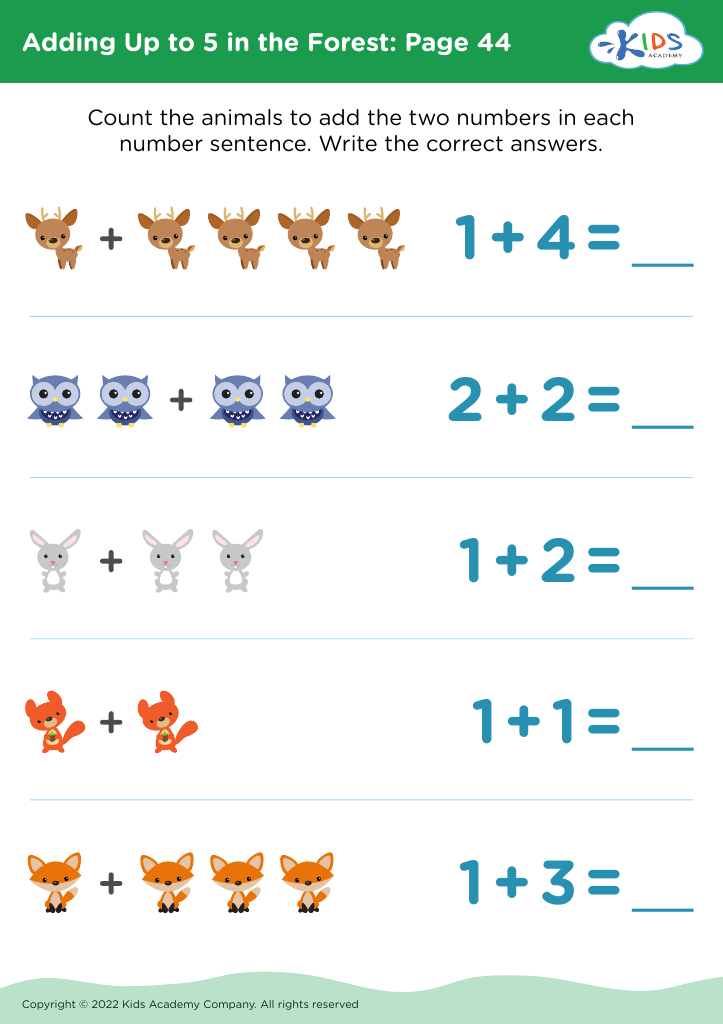
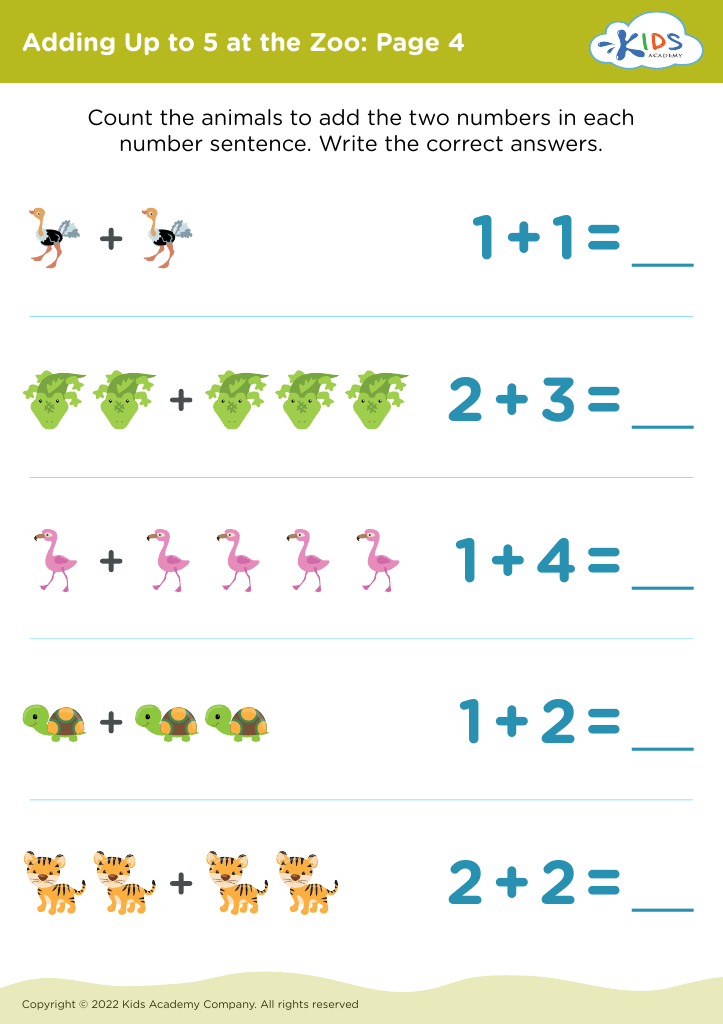
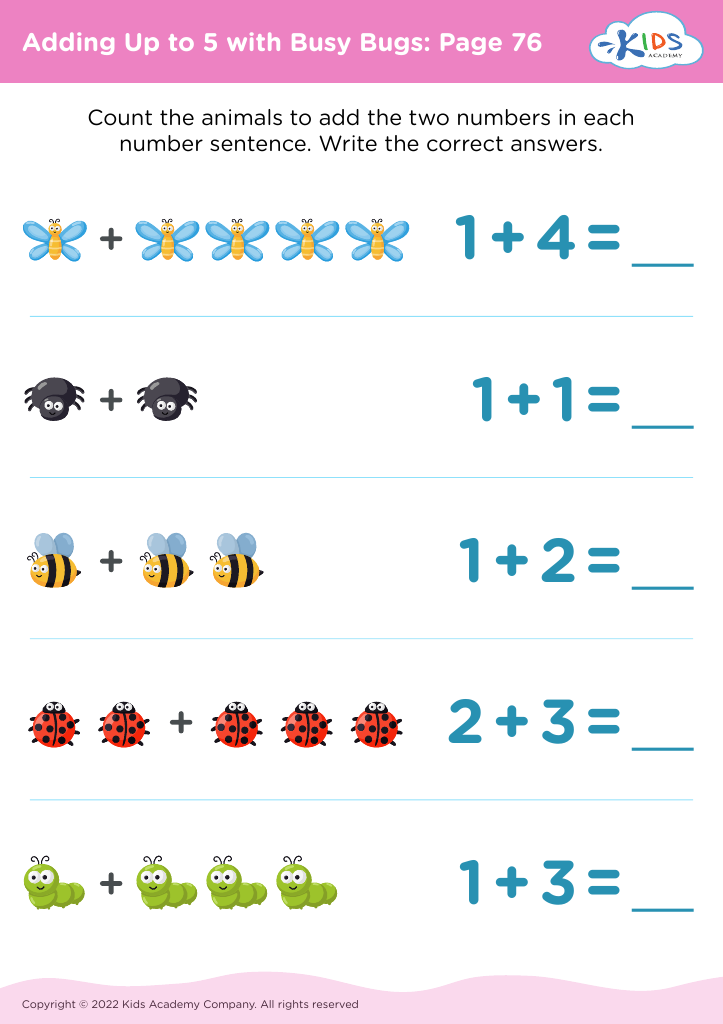
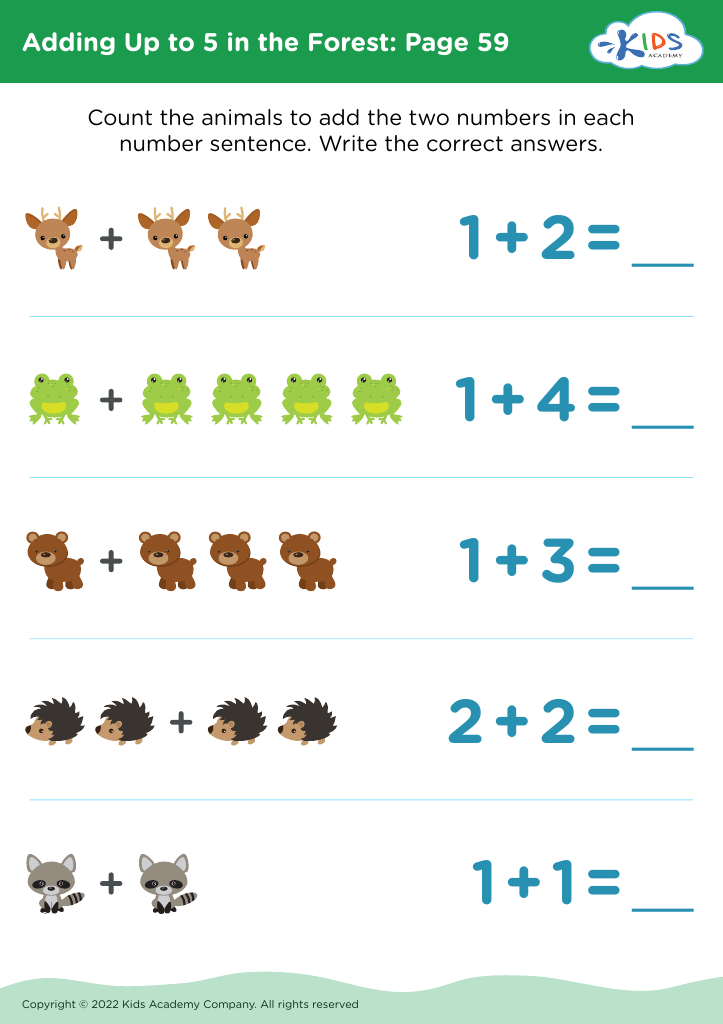
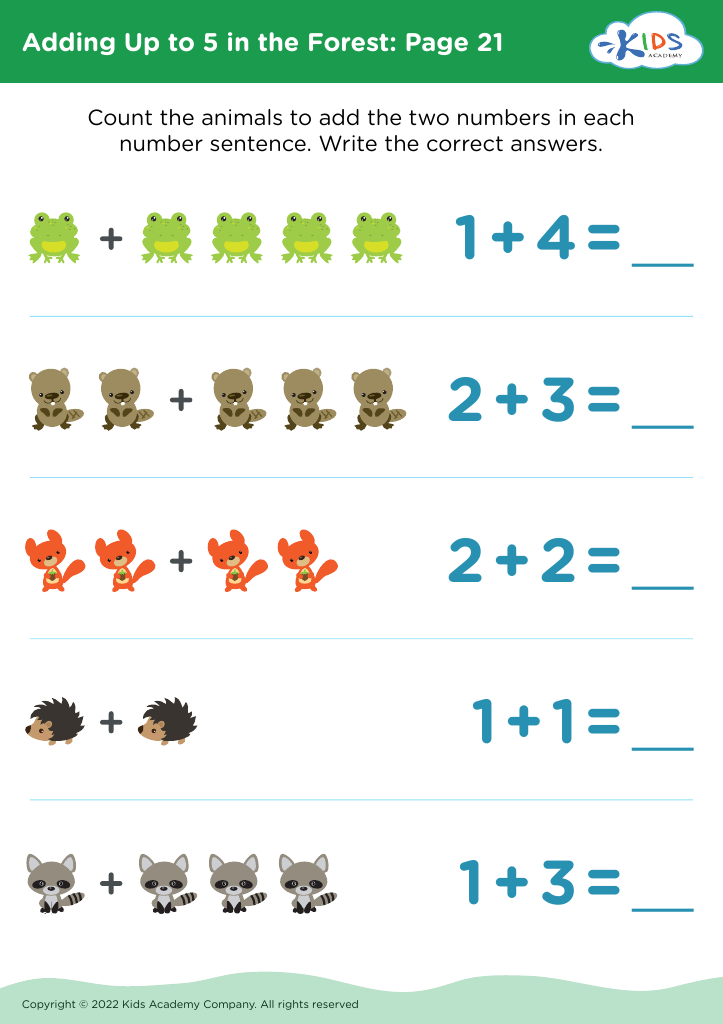
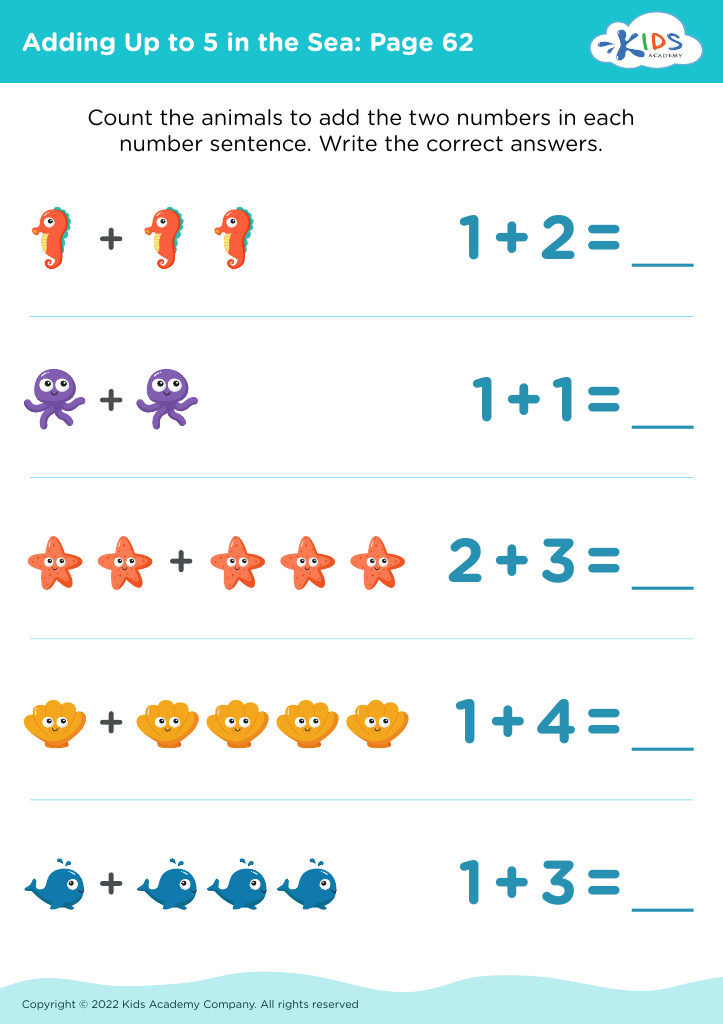
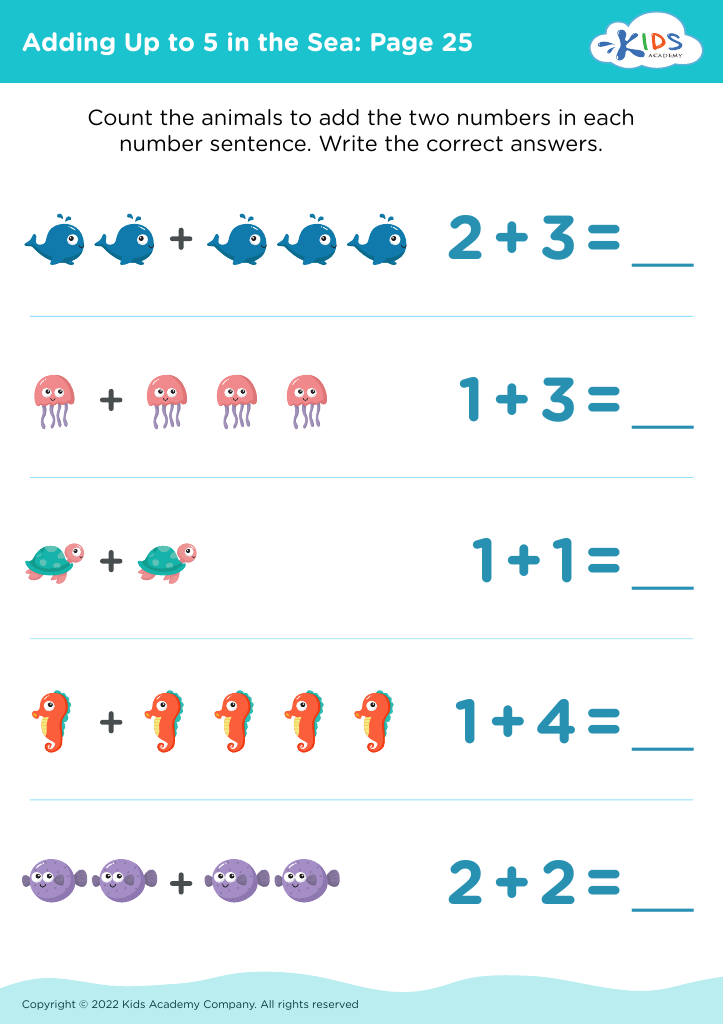
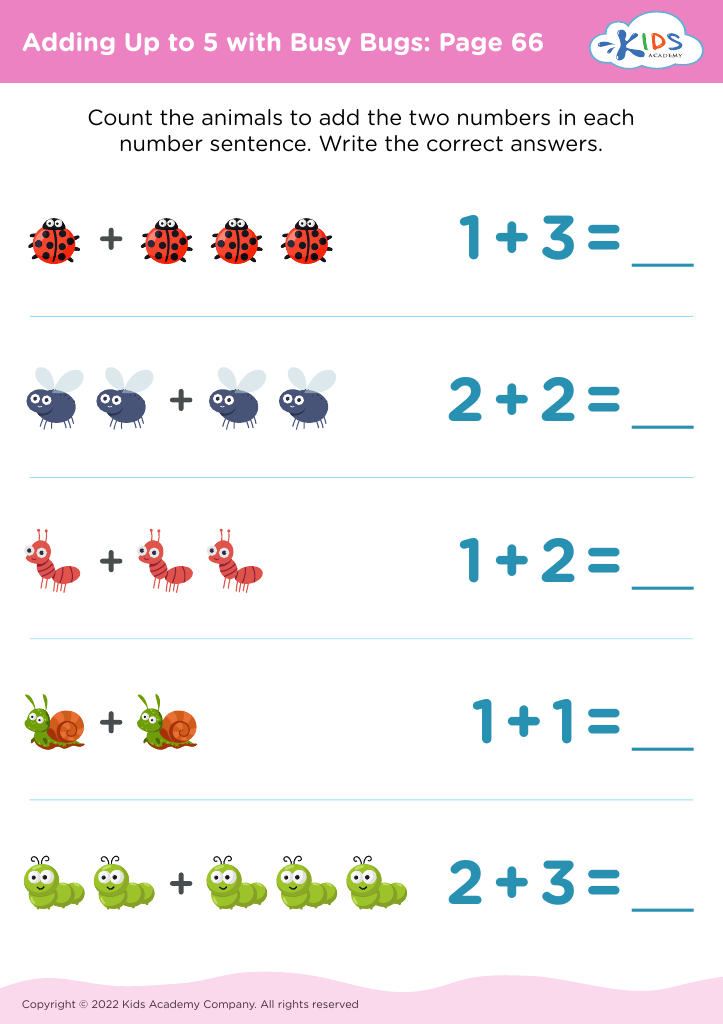
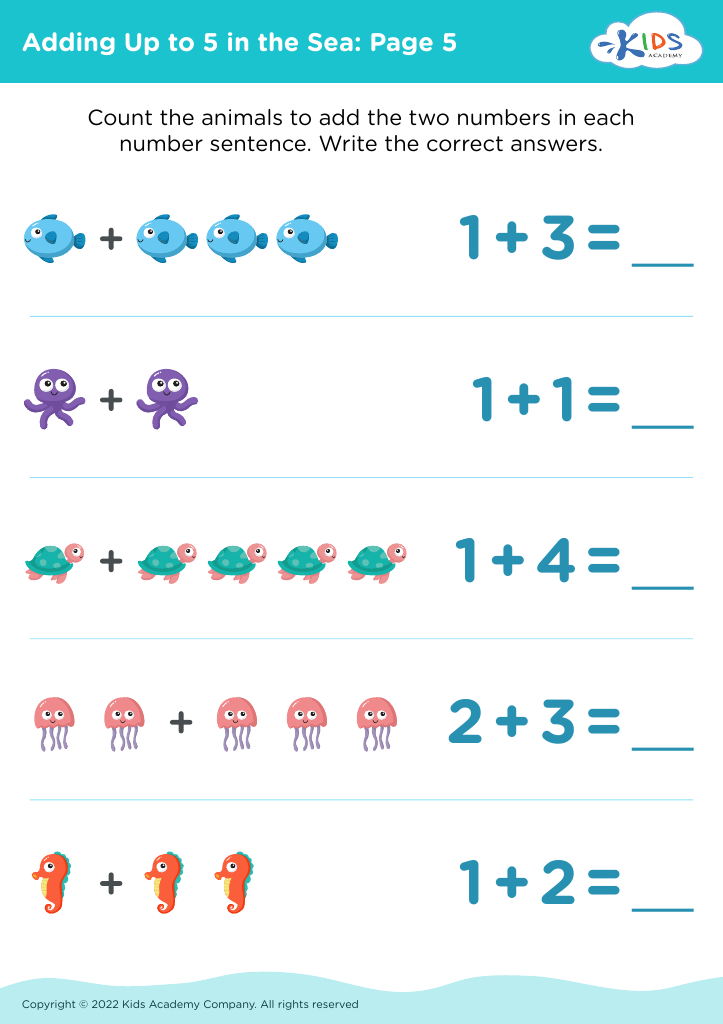
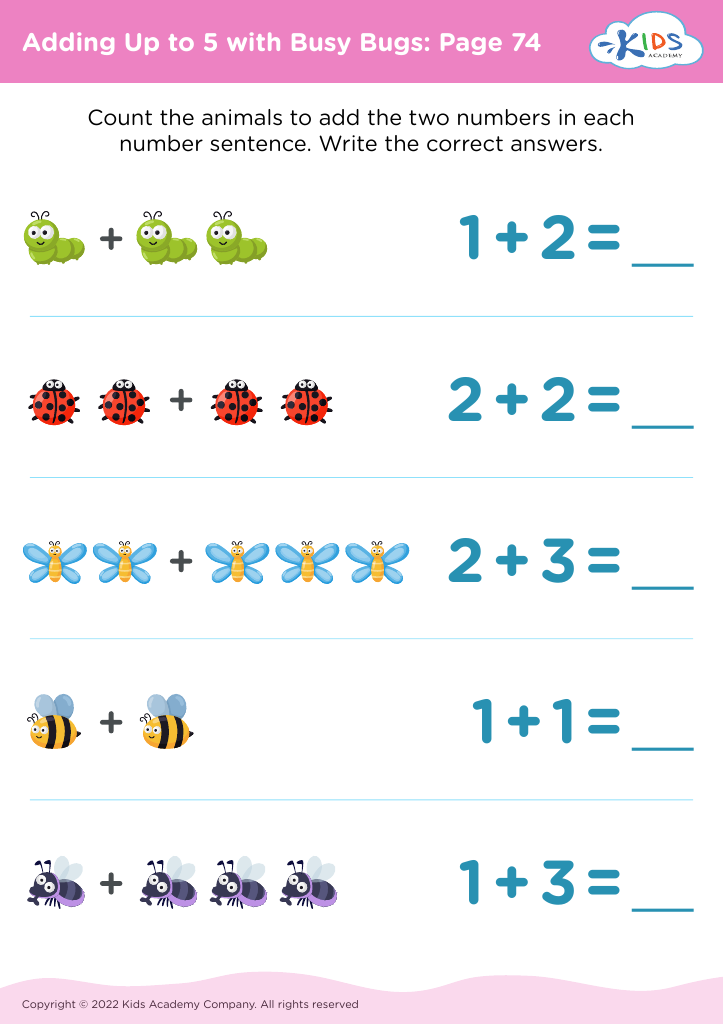
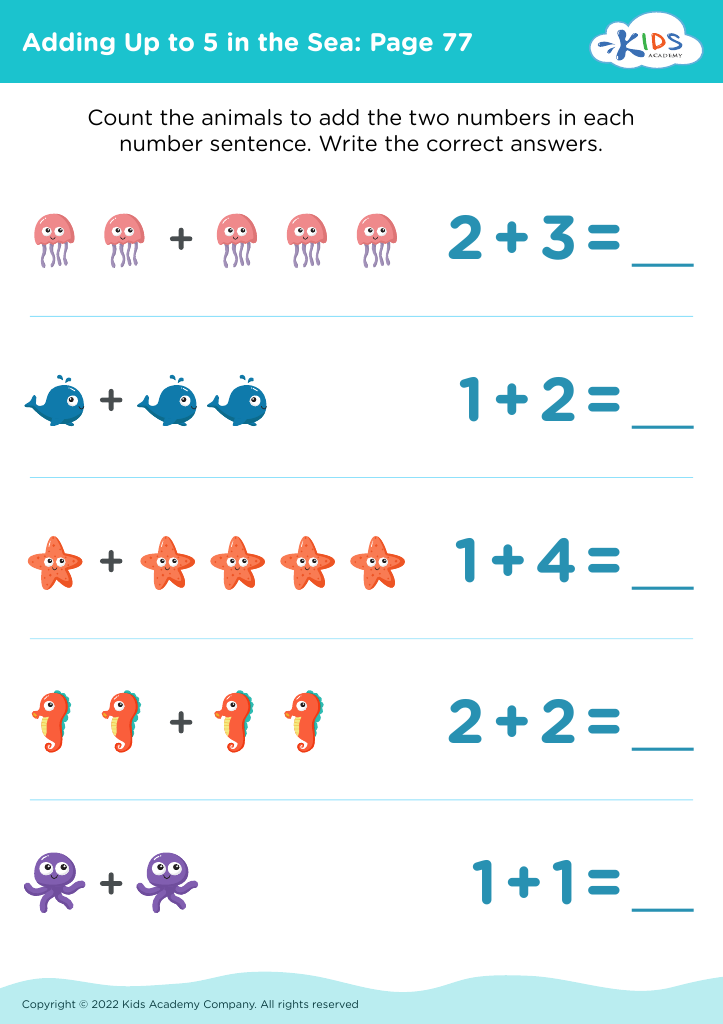
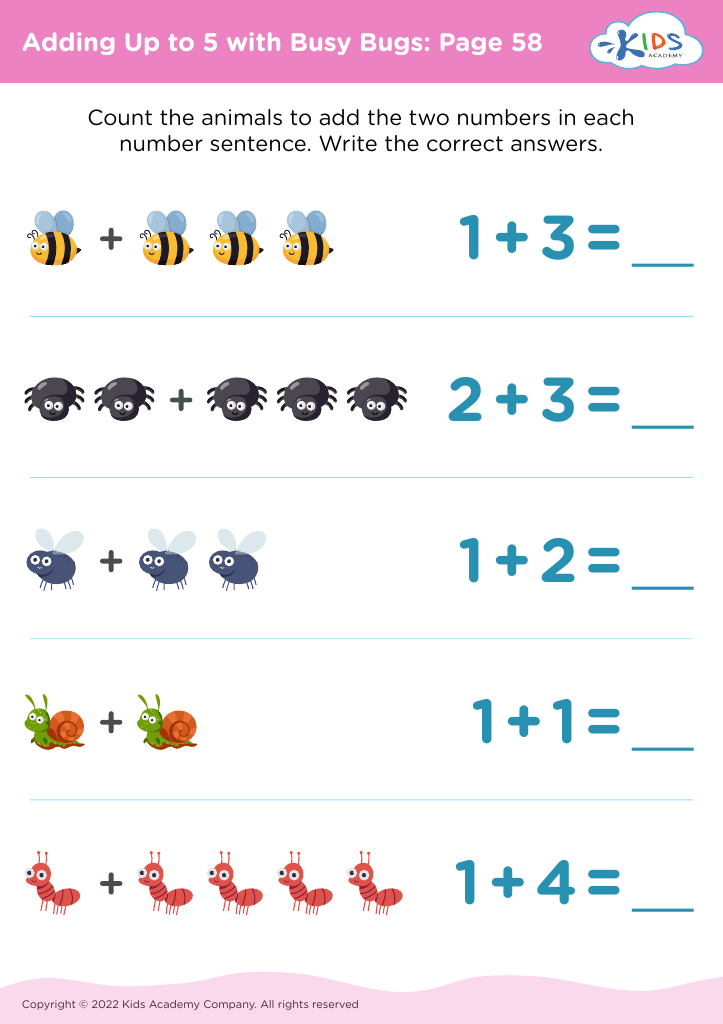
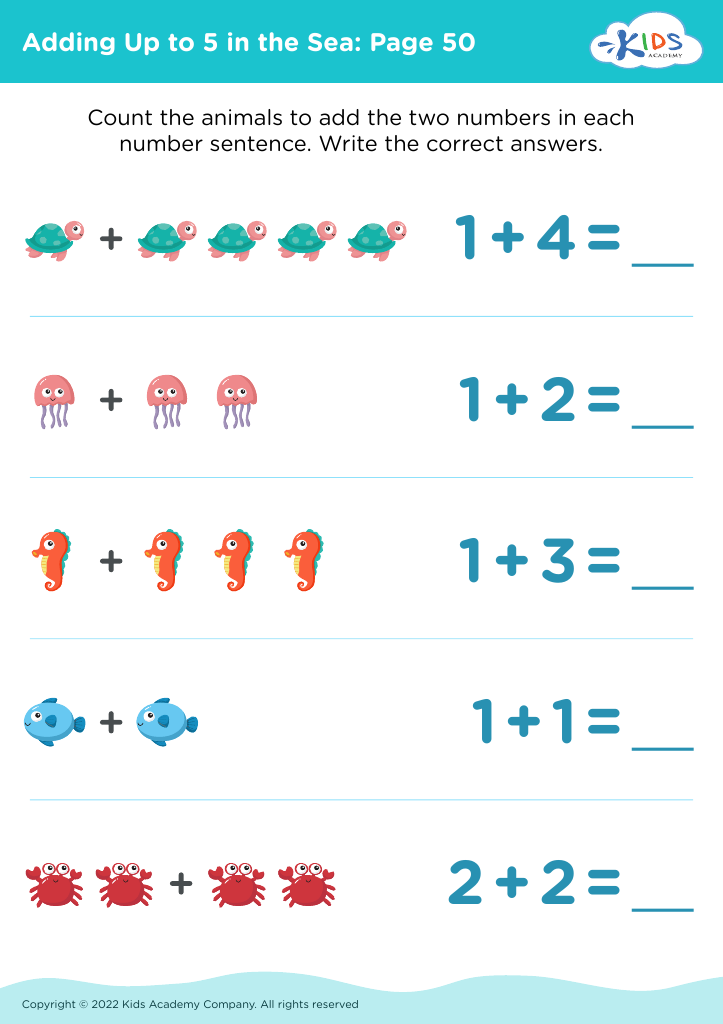
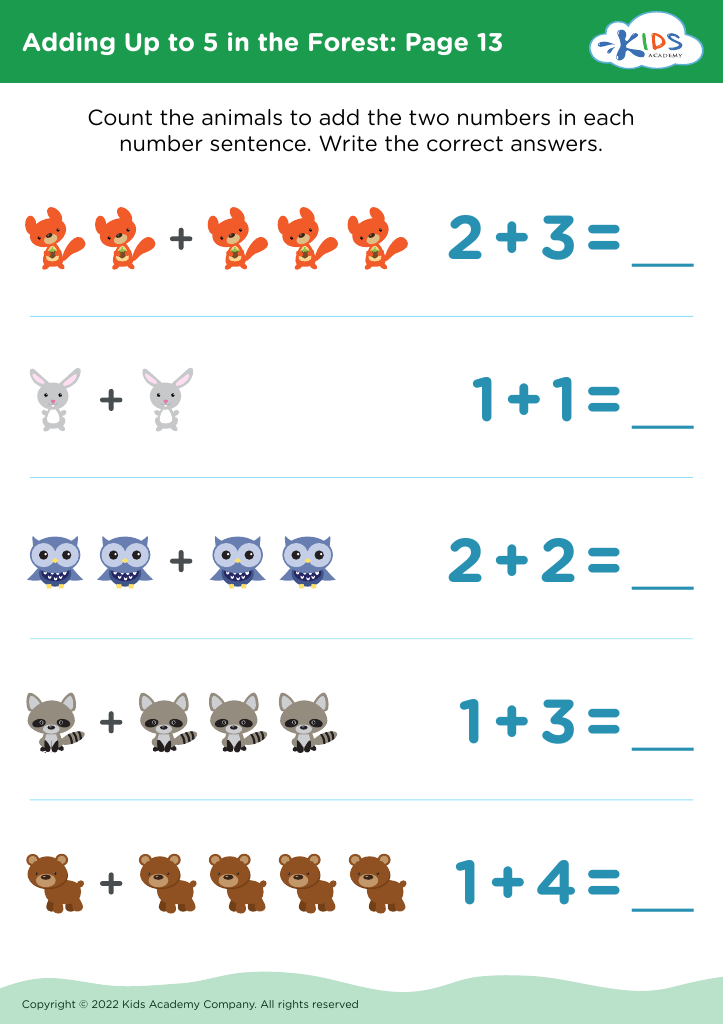
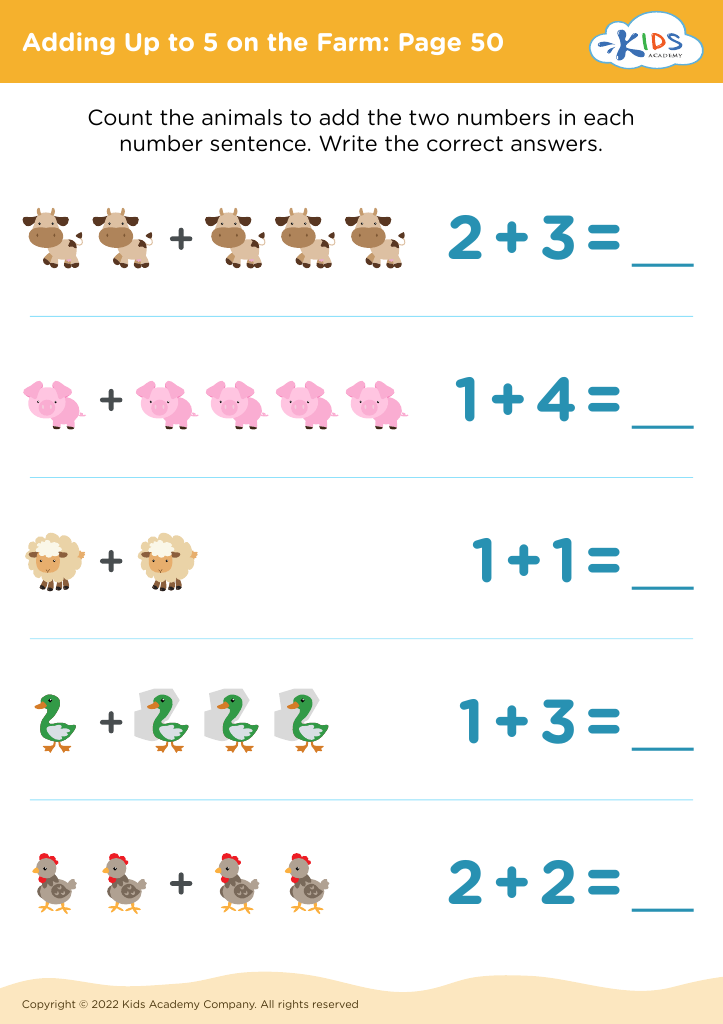
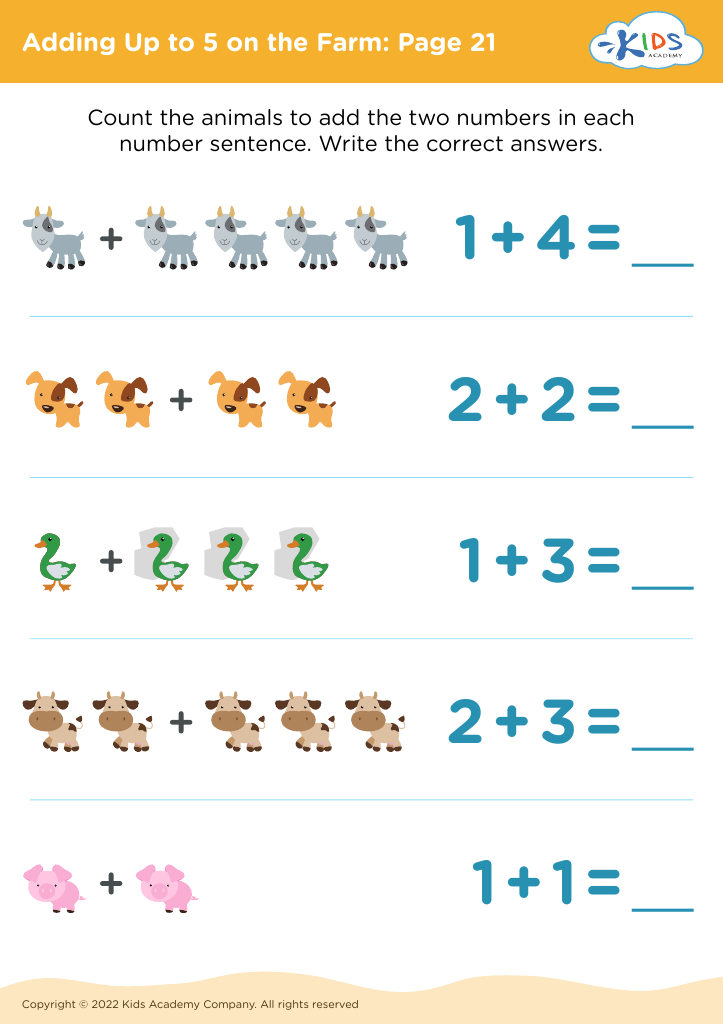
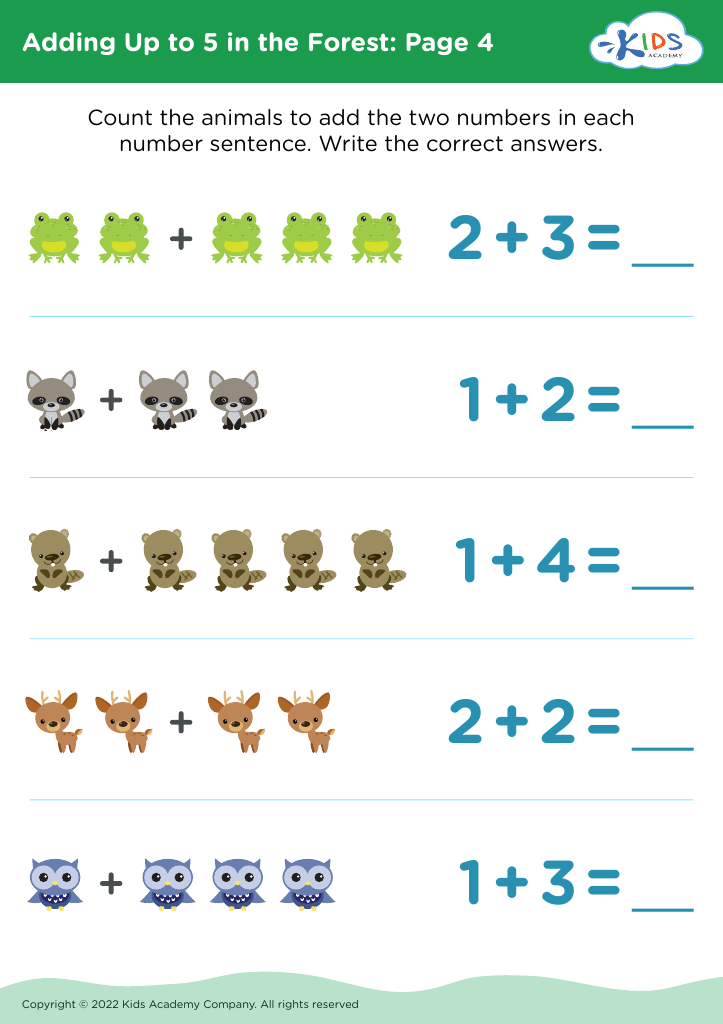
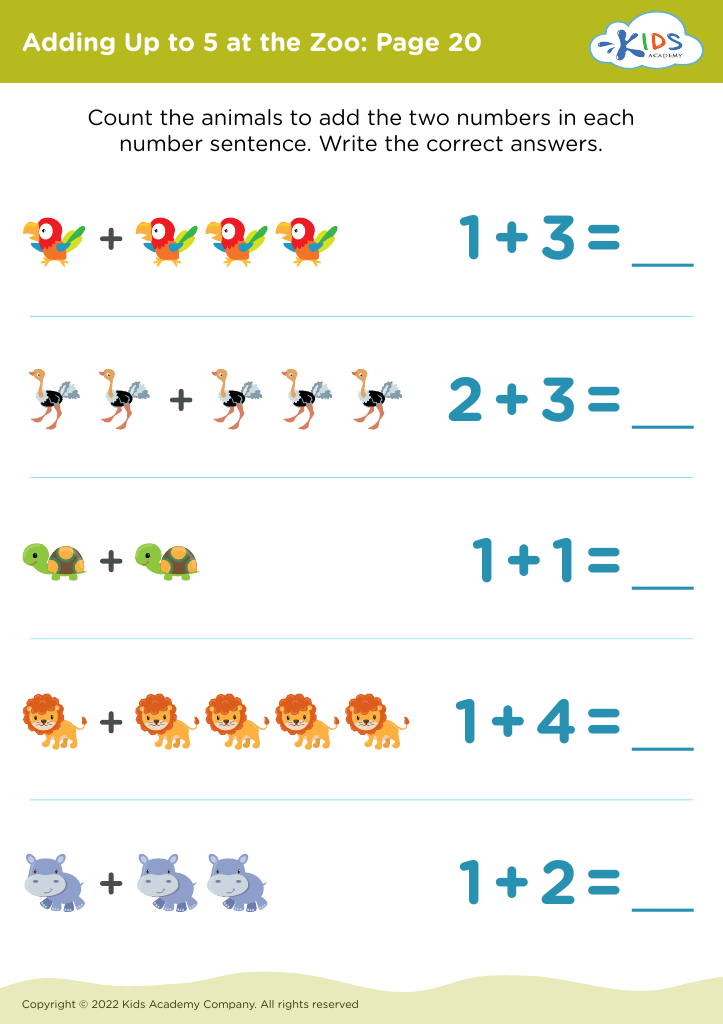
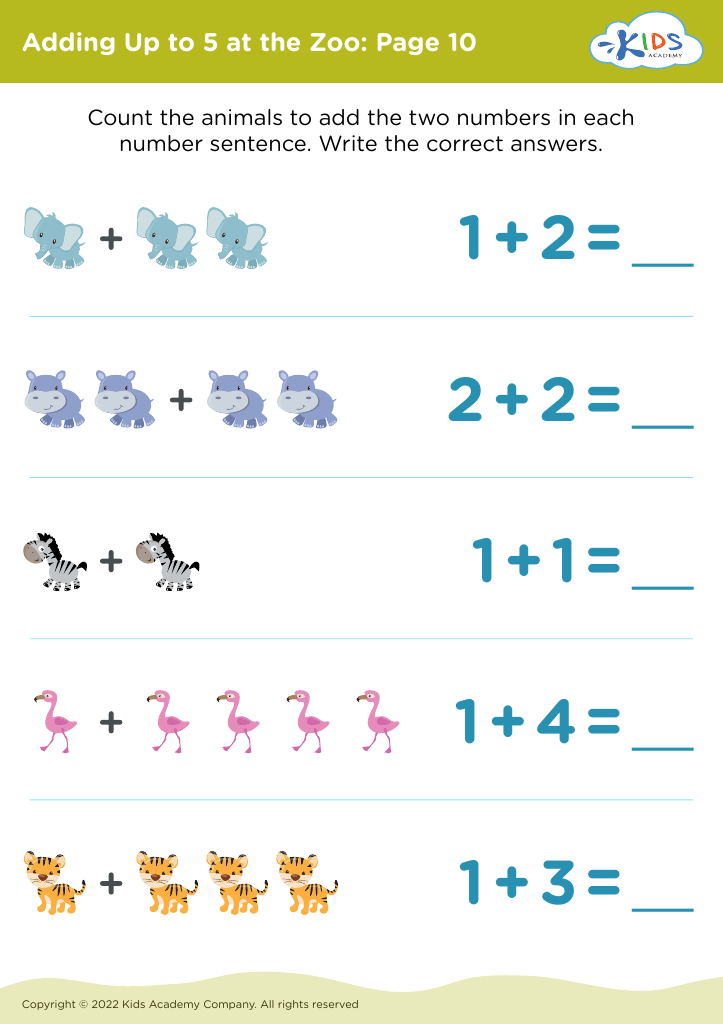
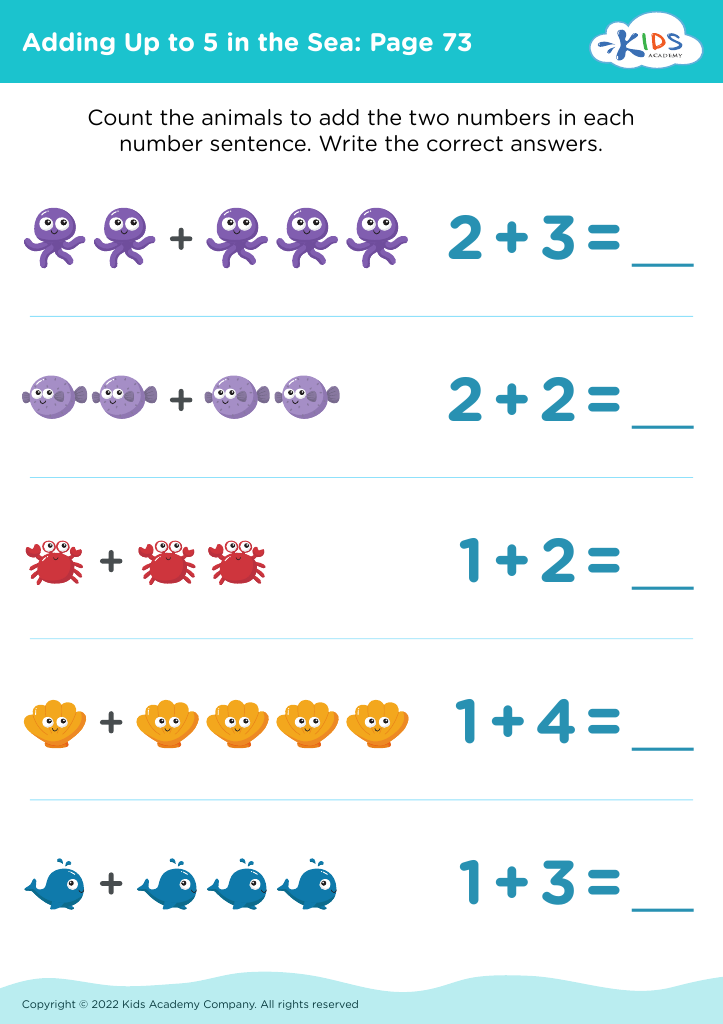
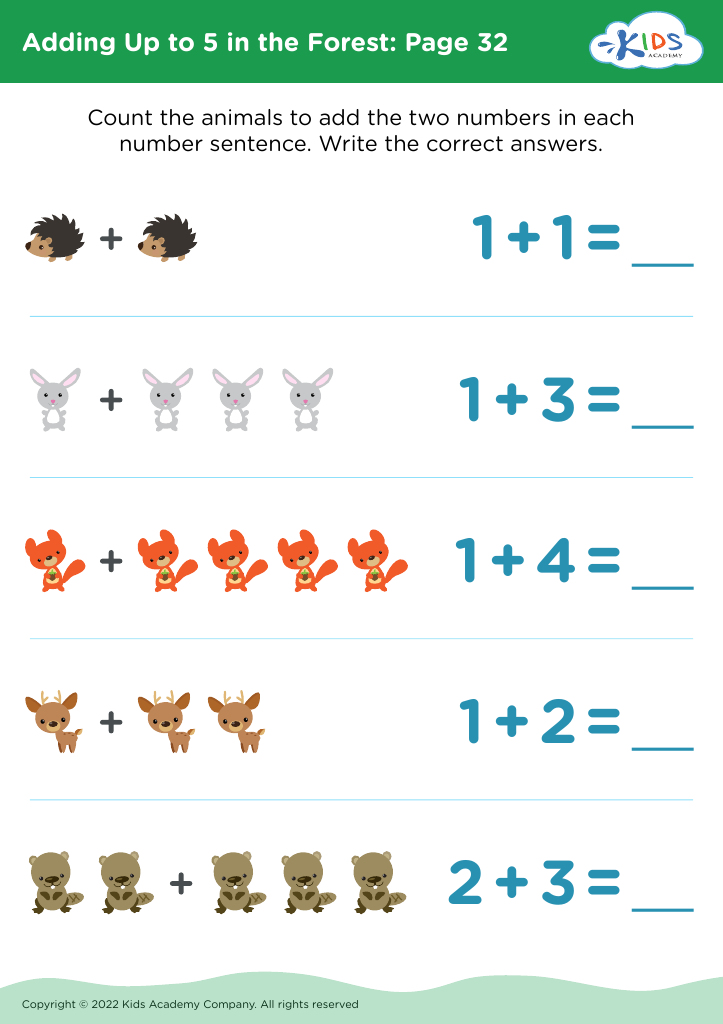
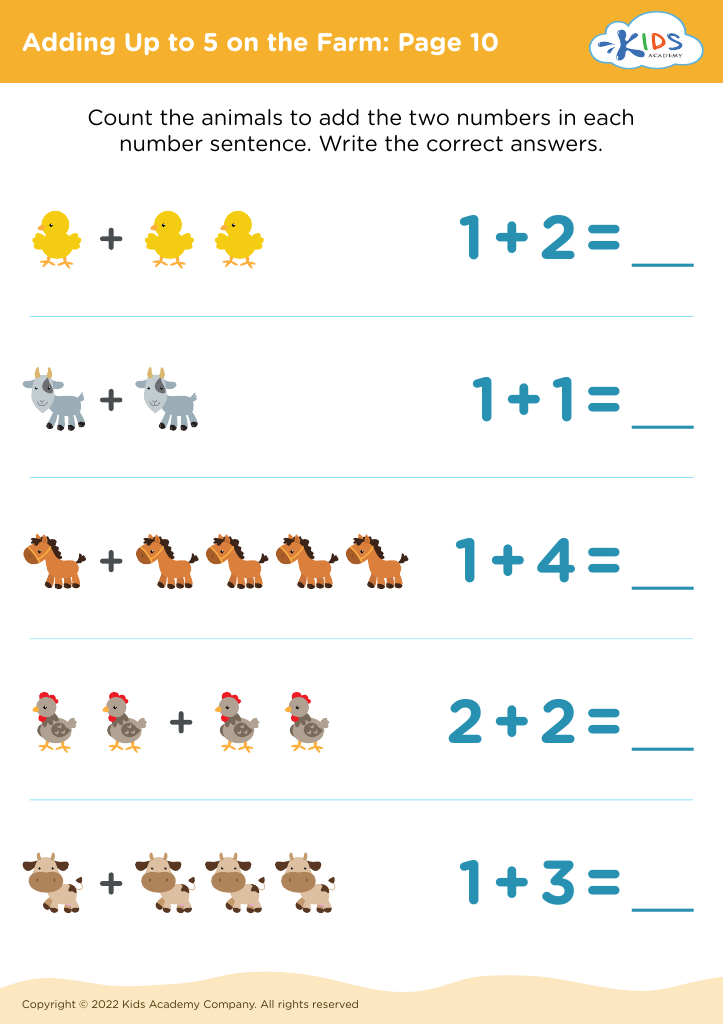
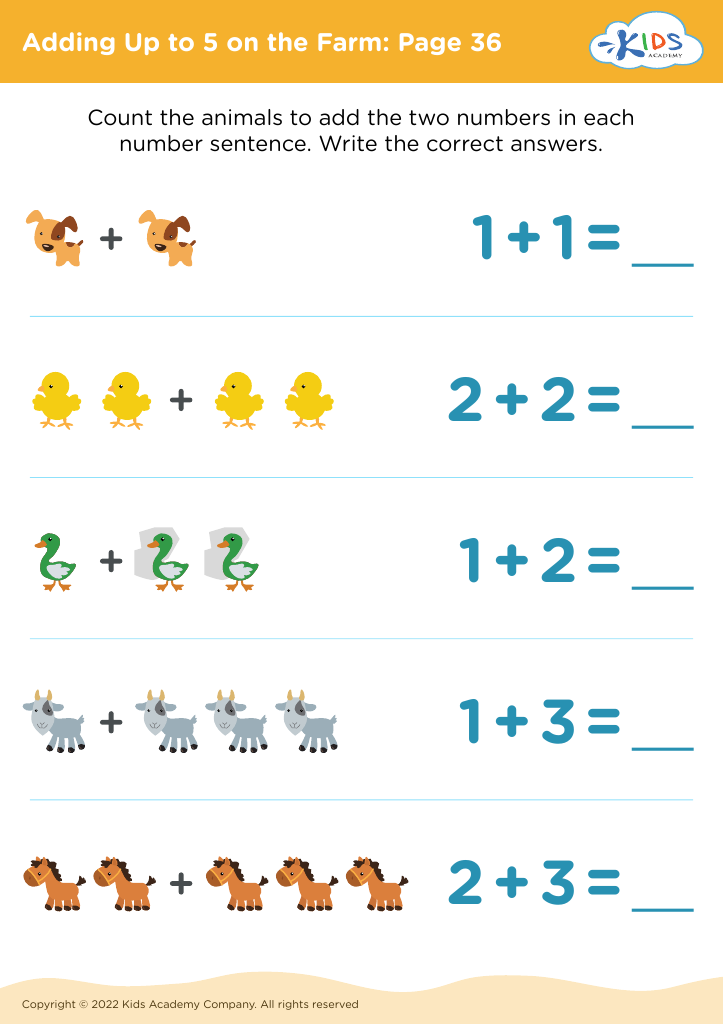
Enhance your child's early math skills with our "Problem-Solving Skills Adding Up to 5 Worksheets" tailored for ages 4-7. These engaging, printable worksheets help young learners explore addition concepts within the crucial range of 1 to 5. Designed by educational experts, the activities promote critical thinking and problem-solving abilities through fun, interactive scenarios. Children will enjoy solving vibrant and relatable math problems that boost their confidence as they develop essential numeracy skills. Foster a positive attitude towards math while laying the groundwork for future success. Perfect for home or classroom use, these worksheets are a valuable resource for young learners!




%20(1).jpg)



Parents and teachers should prioritize problem-solving skills that involve adding up to 5 for children aged 4-7 because these foundational skills are crucial for early mathematical development and everyday life. At this age, children are naturally curious and eager to explore numbers, making it the perfect time to instill confidence in their math abilities. Problem-solving with simple addition supports cognitive development, allowing kids to practice critical thinking, logic, and reasoning.
Additionally, understanding addition concepts prepares children for more complex math in the future. Mastery of adding numbers up to 5 lays the groundwork for more advanced operations, like subtraction and even multiplication. Moreover, engaging in problem-solving activities cultivates resilience as children learn to try different approaches, make mistakes, and understand that persistence is part of learning.
These skills also enhance social development through collaborative group activities, helping children communicate and negotiate solutions with peers. Ultimately, investing time in nurturing these problem-solving skills imparts confidence, fosters a positive attitude towards math, and helps children succeed both academically and in everyday contexts. Thus, it is worth the concern of parents and teachers alike as they play an instrumental role in shaping children's early educational experiences.








