Understanding number value Adding Up to 5 Worksheets for Ages 4-7
3 filtered results
-
From - To
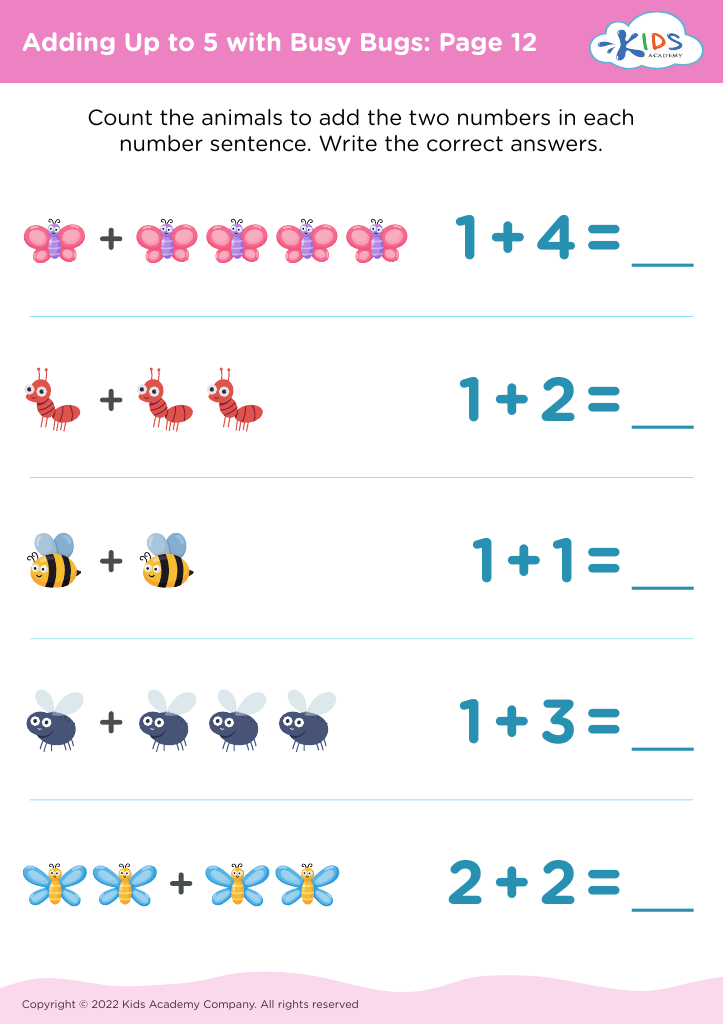
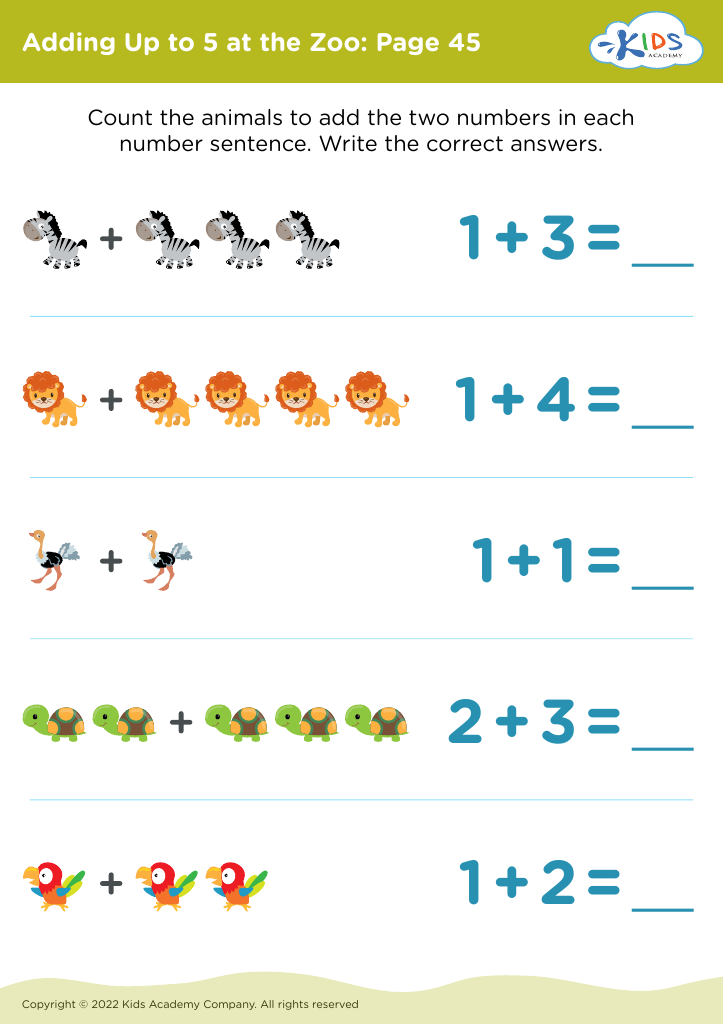
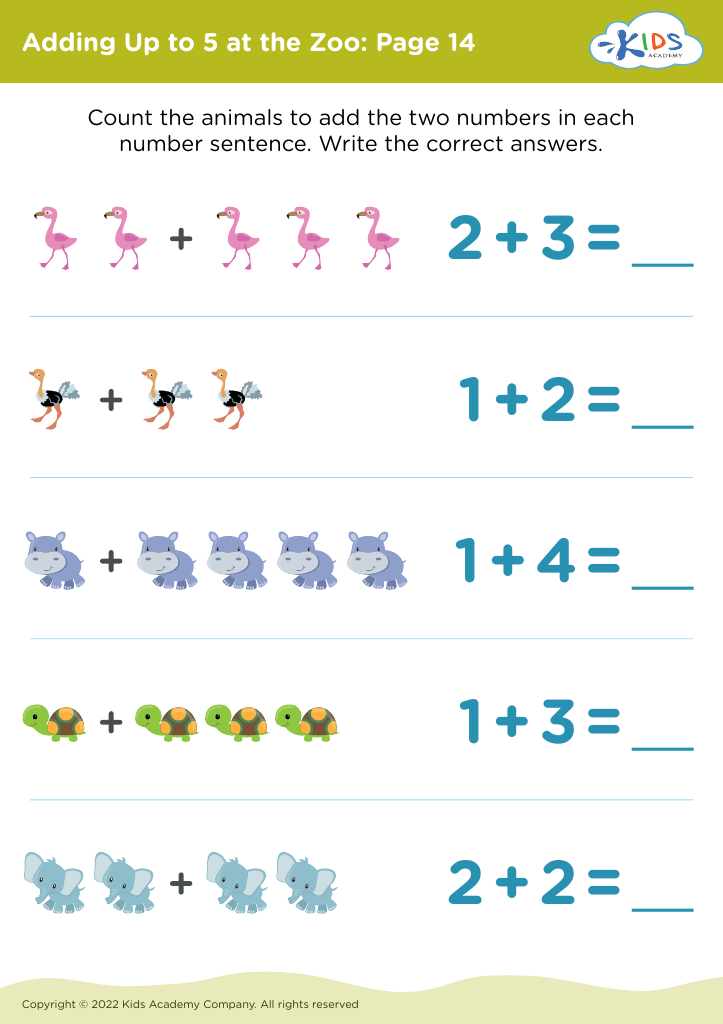
Discover our "Understanding Number Value: Adding Up to 5" worksheets, designed specifically for children aged 4-7! These engaging resources help young learners grasp the foundational concept of number value while practicing addition skills up to 5. With colorful illustrations and interactive activities, these worksheets make learning fun and effective. Children will develop essential math skills through hands-on exercises, improving their number sense and boosting their confidence in mathematics. Perfect for home or classroom use, our worksheets provide an excellent tool for early education teachers and parents alike. Start your child's math journey today and watch them excel in understanding numbers!




.jpg)



Understanding number value and the concept of adding up to 5 is fundamental for children aged 4-7 as it lays the groundwork for their future mathematical learning. During these formative years, children develop critical cognitive skills, and grasping number value helps them recognize quantities and relationships between numbers.
When children learn to add up to 5, they engage in problem-solving and critical thinking, essential skills not just in math, but in daily life. Ordinary activities like sharing snacks or playing games can turn into opportunities to apply addition skills, making math relevant and fun.
Additionally, this age group is characterized by rapid brain development, making it an ideal time to instill a positive attitude towards math. When parents and teachers emphasize understanding number value, they cultivate confidence and competence in young learners. This foundational understanding also fosters a love for learning, as children experience the joy of discovering how numbers work together.
Furthermore, these concepts assist in later mathematics mastery, helping children build upon their early skills as they progress through schooling. Therefore, parents and teachers should prioritize helping young children grasp these foundational concepts, ensuring a strong mathematical foundation for their future education.








