Understanding numeracy Adding Up to 5 Worksheets for Ages 4-7
4 filtered results
-
From - To
Introduce your child to the basics of addition with our "Understanding Numeracy: Adding Up to 5 Worksheets for Ages 4-7." These engaging, printable worksheets are designed to help young learners develop a solid foundation in basic math skills. With colorful and fun activities, children will practice adding numbers up to 5, enhancing their numerical understanding and boosting confidence. Perfect for early learners, teachers, and parents, these worksheets make learning math enjoyable and effective. Foster your child's love for mathematics and watch them excel with our expertly crafted resources! Download today and start your child's journey to numeracy success.
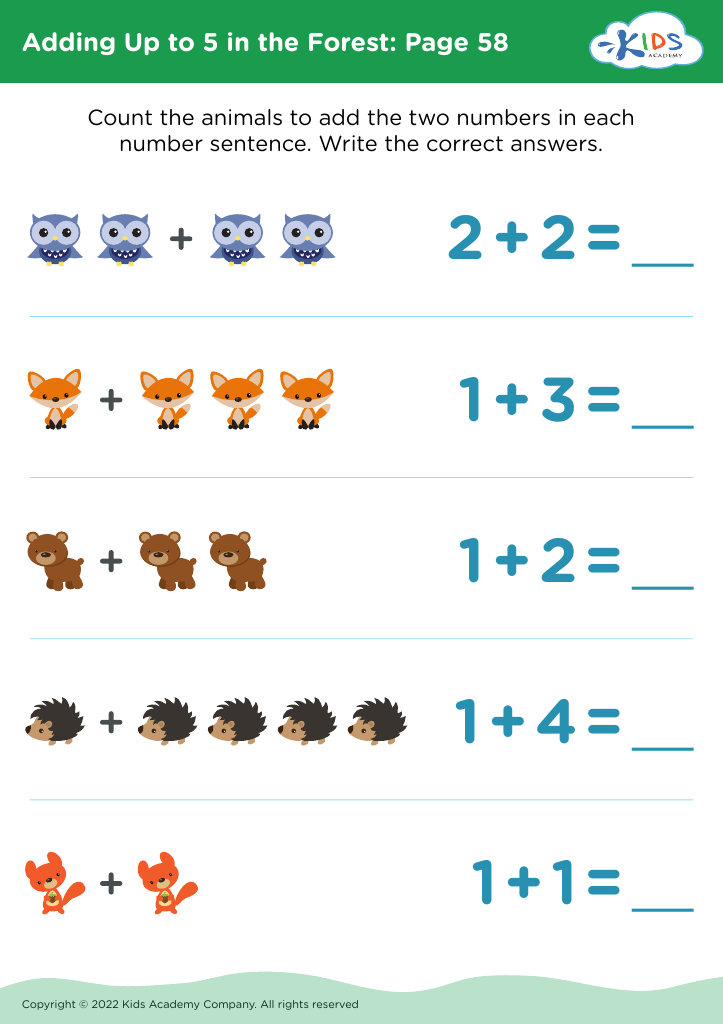
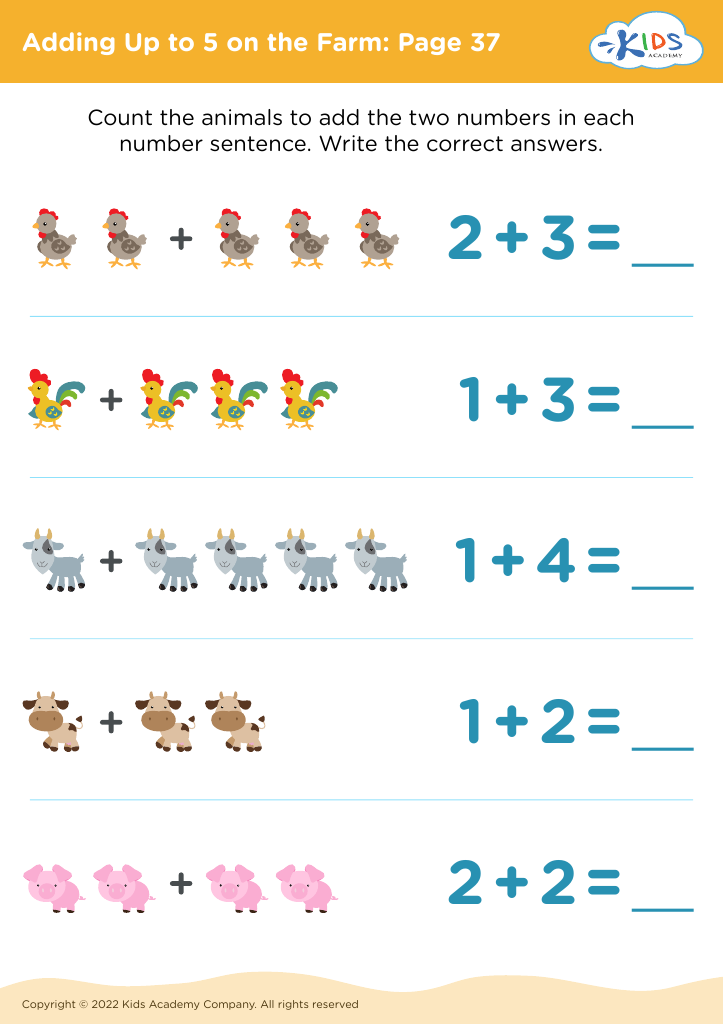
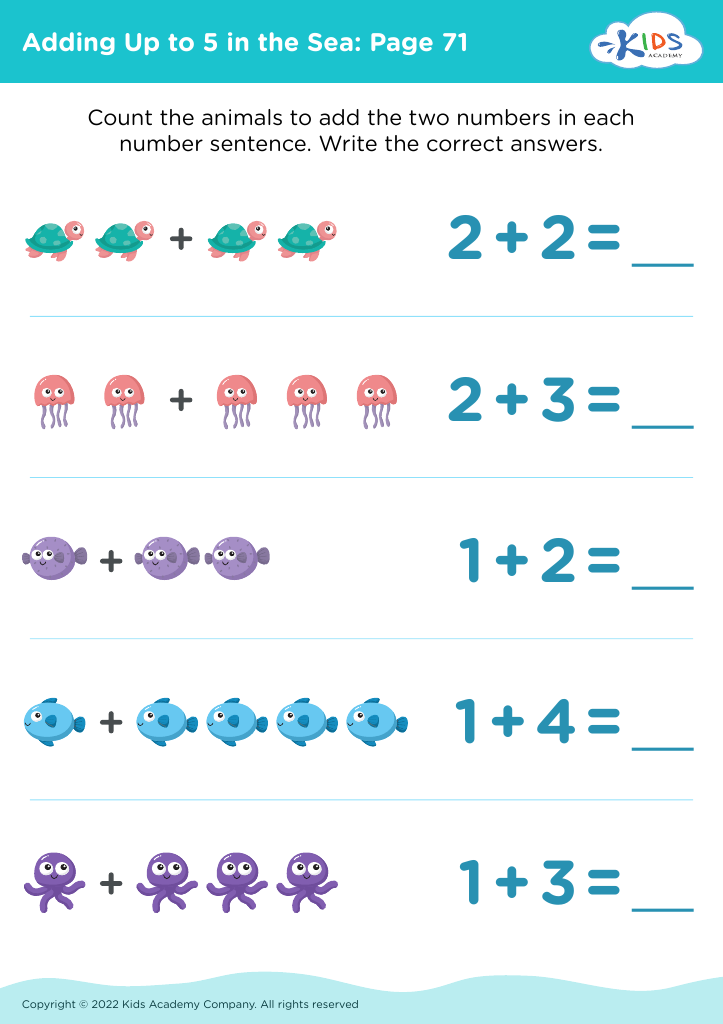
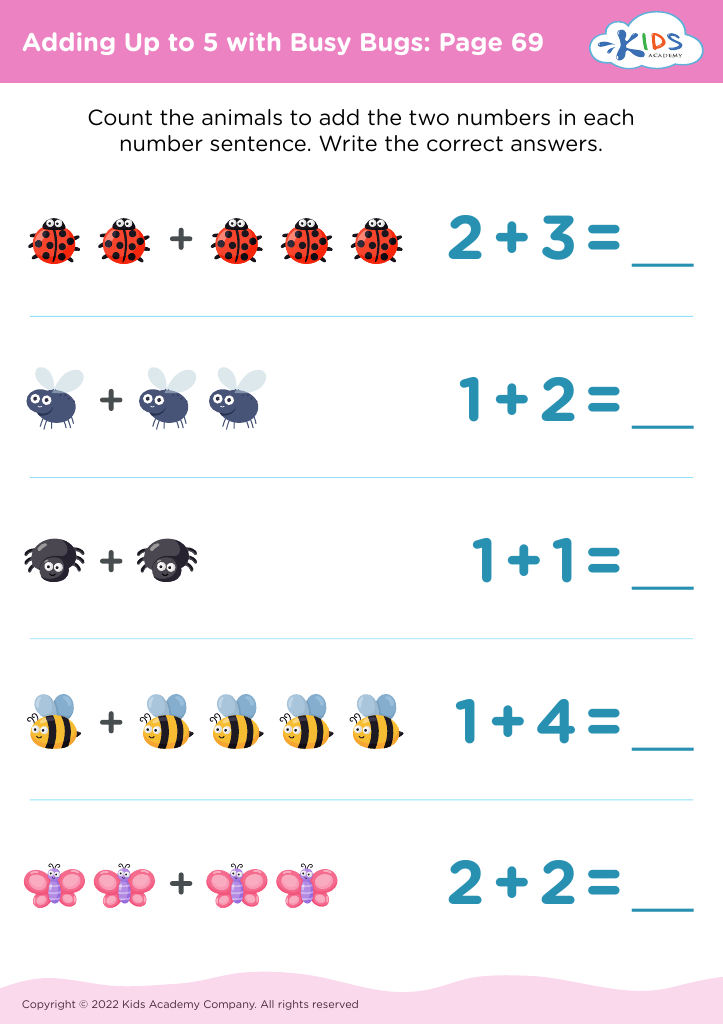








Understanding numeracy, particularly basic addition up to 5, for children aged 4-7 forms a critical foundational skill in a child's educational journey. At this age, children are developing their cognitive abilities rapidly. Mastering simple addition not only paves the way for more complex mathematical concepts but also enhances problem-solving skills, logical thinking, and mental arithmetic.
Parents and teachers should focus on numeracy because early math skills are closely linked to future academic achievement. Children who develop strong numeracy skills early are more likely to succeed in other subjects that require analytical thinking, like science and engineering. Additionally, a solid understanding of basic addition promotes confidence and a positive attitude toward learning mathematics, alleviating fears and anxieties often associated with the subject later on.
Moreover, numeracy is a life skill essential for everyday activities. By grasping simple addition, children learn to quantify objects, understand the concept of ‘more’ and ‘less,' and begin to predict outcomes, which are crucial skills for daily decision-making. Incorporating these lessons at home and in the classroom through engaging activities, games, and hands-on practice helps make learning math enjoyable and meaningful, creating a robust platform for lifelong numeracy and overall academic growth.








