Understanding numerical values Adding Up to 5 Worksheets for Ages 4-7
4 filtered results
-
From - To
At Kids Academy, our worksheets on 'Understanding Numerical Values Adding Up to 5' are expertly designed for children ages 4-7. These printable resources help young learners grasp basic addition skills by combining small numbers, with engaging exercises foster comprehension. Our age-appropriate activities encourage confidence through playful, interactive challenges. Perfect for early learners, these worksheets support a solid mathematical foundation by teaching kids how numbers work together in a fun, relatable way. Great for use at home or in the classroom, they transform early education into an enjoyable adventure. Start building key math skills today with our carefully crafted educational materials.
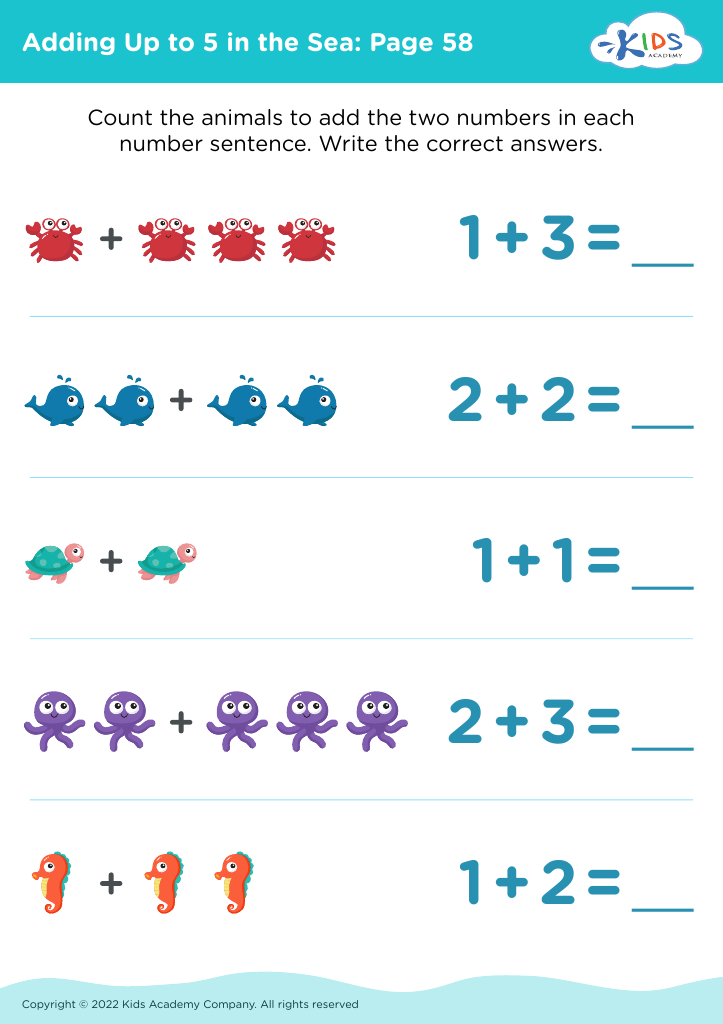
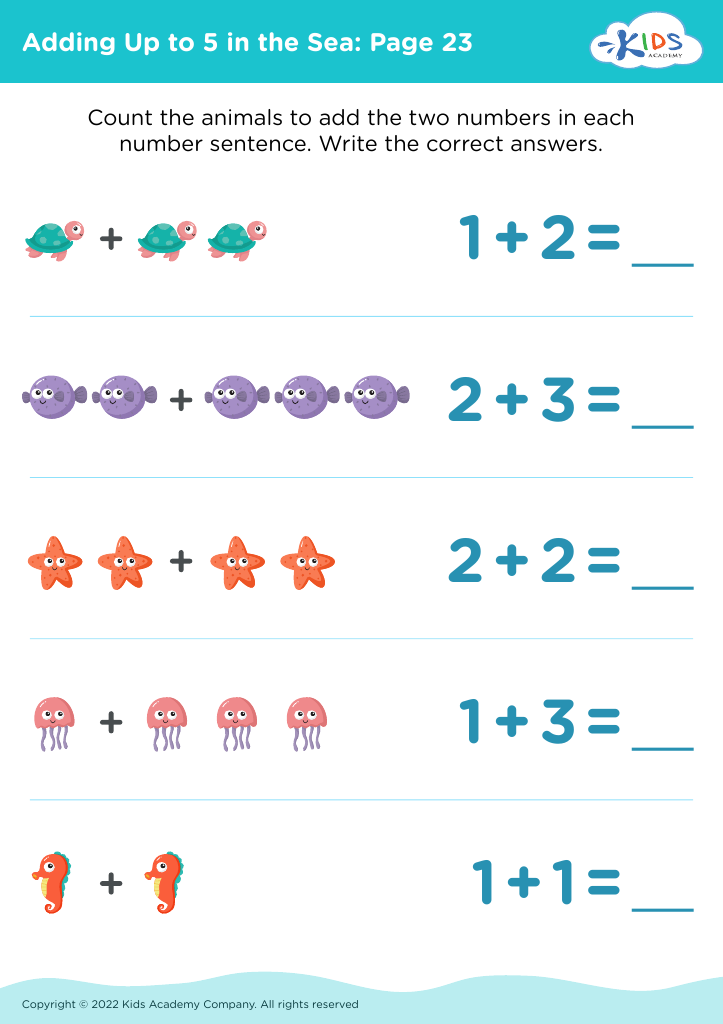
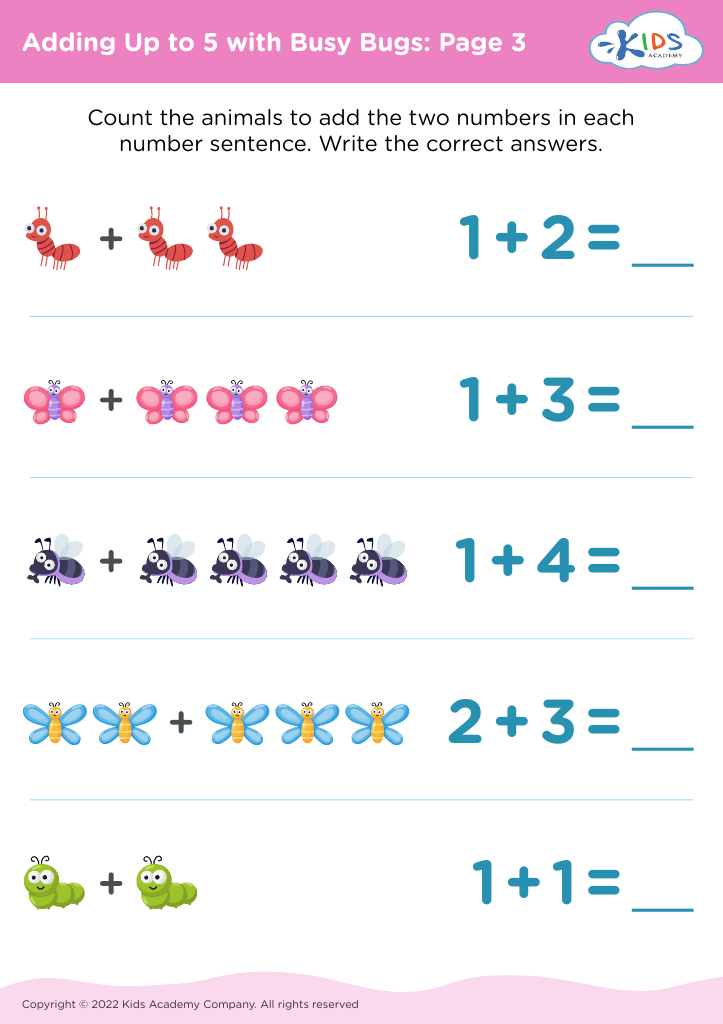
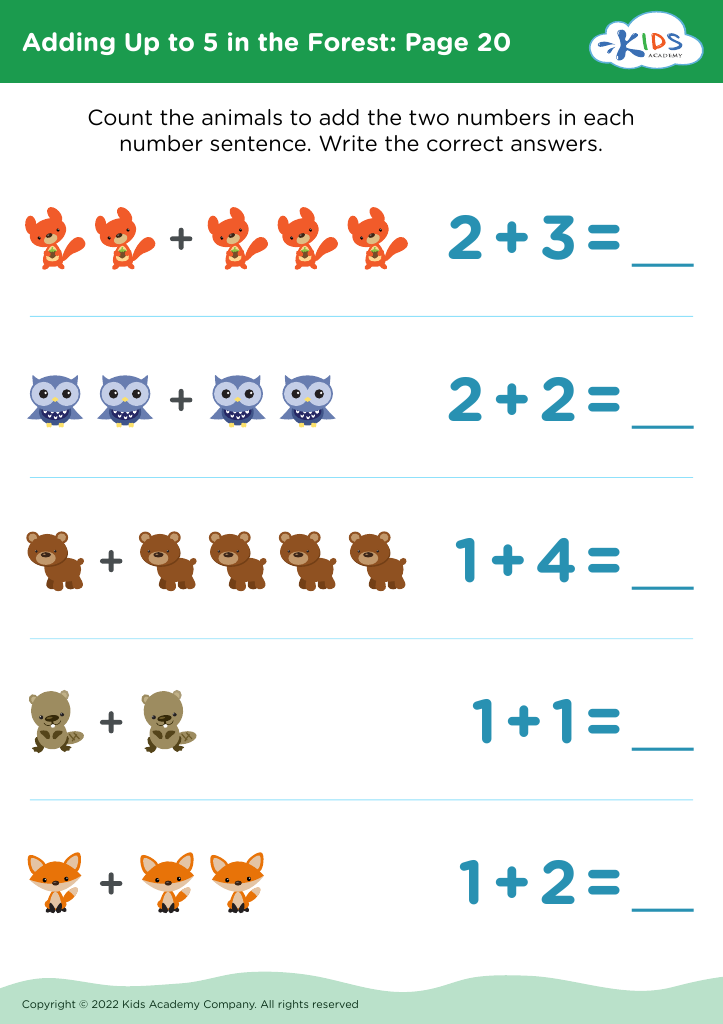








Understanding numerical values and their sum being up to 5 is crucial for children aged 4-7 as it lays the foundation for future mathematical skills. During these early years, children are like sponges, absorbing fundamental concepts that serve as the building blocks for more complex ideas. Learning to add numbers up to 5 helps young kids develop number sense, understand the concept of "more" and "less," and grasp basic addition, which is integral to math proficiency.
Mastering these small numerical values builds confidence, encouraging the desire to tackle more challenging problems. It aids in developing cognitive skills such as memory, attention to detail, and logical thinking. Familiarity with numbers up to 5 also enhances their ability to perform everyday activities, such as sharing toys or understanding simple instructions about quantities.
For parents and teachers, focusing on this foundational skill ensures a solid understanding that prevents future math-related anxiety and struggles. Incorporating playful, engaging activities—like counting fingers, using colorful objects, or interactive games—makes learning enjoyable, setting a positive tone for lifelong mathematical learning. Ultimately, these efforts create a supportive environment where children feel motivated and capable, making critical early strides in their mathematical journey.








