Underwater animal identification Adding Up to 5 Worksheets for Ages 4-7
3 filtered results
-
From - To
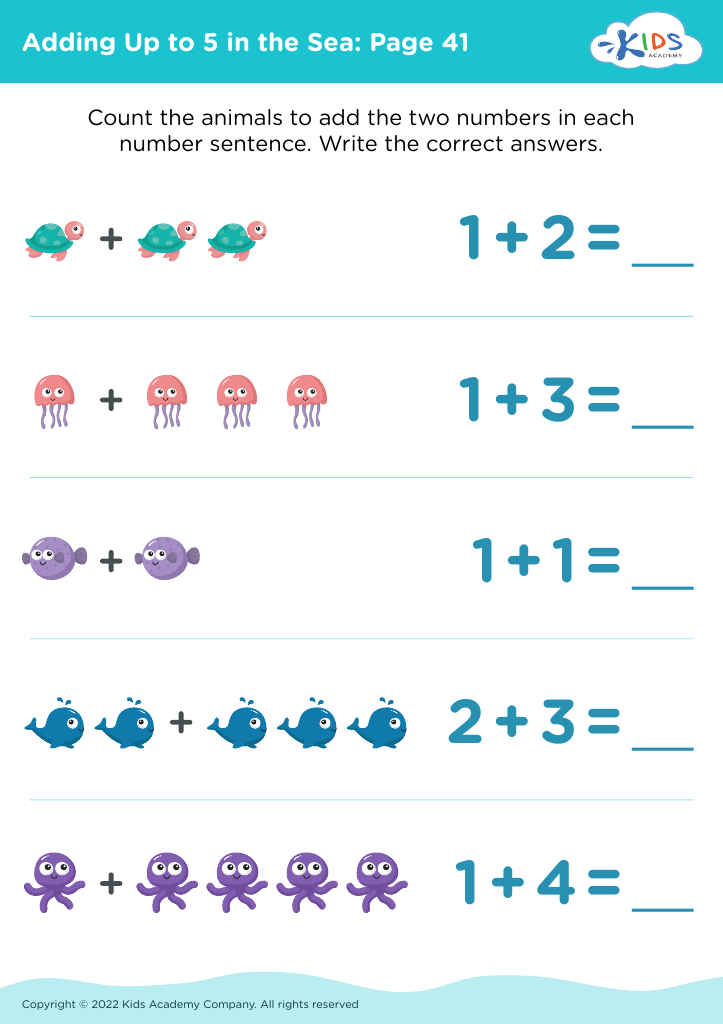
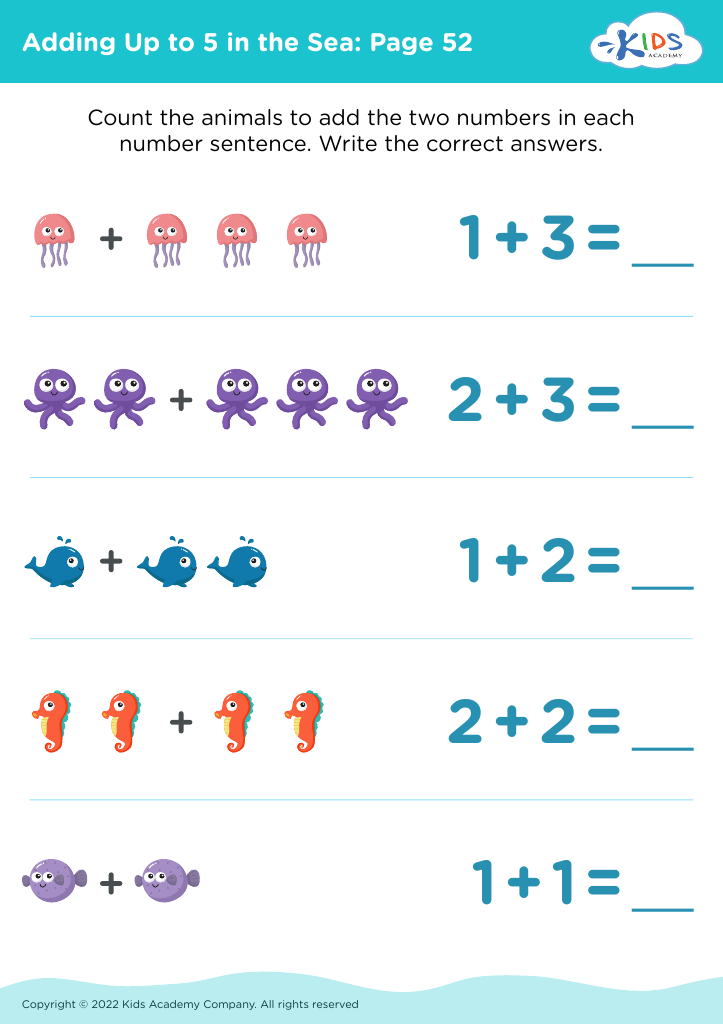
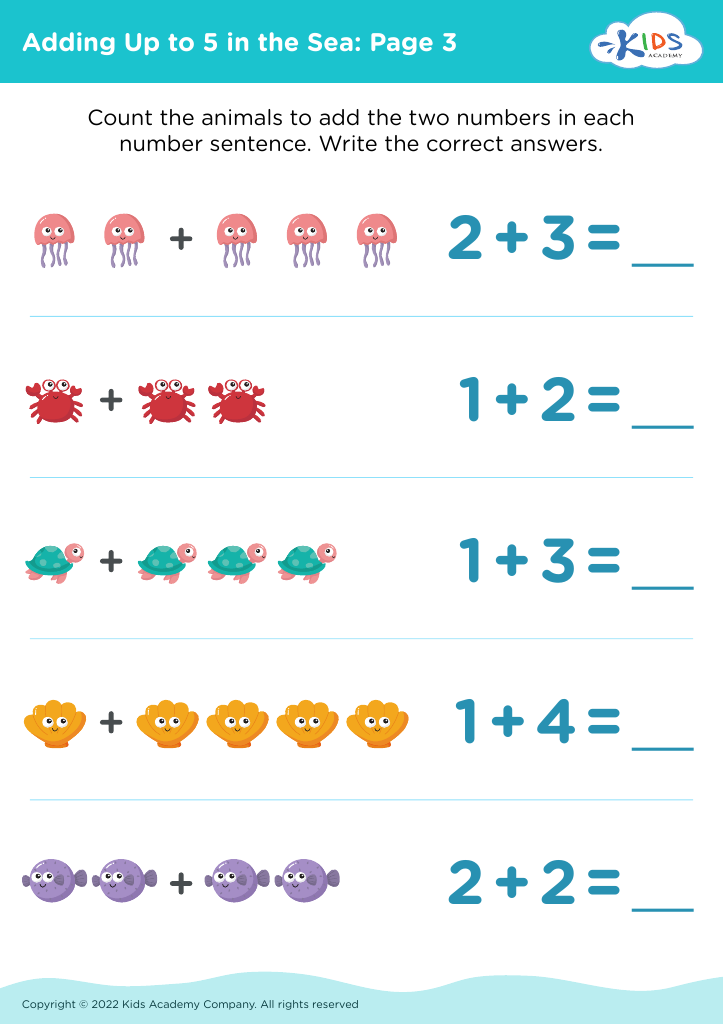
Explore the fascinating underwater world with our "Underwater Animal Identification: Adding Up to 5" worksheets, designed specifically for children aged 4-7. These engaging, educational resources combine fun with learning, helping young learners expand their math skills while discovering a variety of underwater creatures. Each worksheet incorporates colorful illustrations to captivate young imaginations, while teaching basic addition concepts through the context of marine life. Perfect for home or classroom use, these activity sheets promote early numeracy, critical thinking, and animal recognition in a playful, interactive manner. Dive into a sea of knowledge and watch your child's confidence in math grow!







.jpg)
Parents and teachers should care about underwater animal identification for young children, especially when introducing math concepts like addition. This integration of marine life knowledge and basic math skills creates an engaging learning experience that captures children's imagination.
Understanding underwater animals fosters curiosity about the environment, promoting early scientific thinking. Children learn to identify various species, which improves their observational skills and enhances vocabulary as they discover new terms like "octopus" or "dolphin." Moreover, incorporating math skills, such as “adding up to 5,” allows children to practice counting and basic addition using fun, relatable themes.
For instance, a classroom activity could involve counting different fish in a picture or a story about a coral reef. These moments make learning interactive and meaningful. When children count and identify animals together, they're encouraged to communicate and collaborate, fostering social skills.
Moreover, this approach aligns with educational standards that promote STEM learning. Overall, nurturing a love for the ocean while building foundational math skills equips children with knowledge and tools they will carry into future learning endeavors. Emphasizing this harmonious blend encourages lifelong curiosity, respect for nature, and a solid mathematical foundation.








