Counting practice Adding up to 50 Misc Worksheets for Ages 4-7
5 filtered results
-
From - To
Enhance your child's math skills with our "Counting Practice Adding up to 50" misc worksheets designed for ages 4-7. These engaging activities offer a fun way for young learners to develop their counting abilities and grasp fundamental addition concepts. Each worksheet offers colorful illustrations and relatable scenarios to spark interest and encourage active learning. Suitable for beginners and those looking to practice and master counting up to 50, these resources help build a strong numerical foundation, boost confidence, and make math fun and accessible for early grade learners. Download now for endless learning adventures!
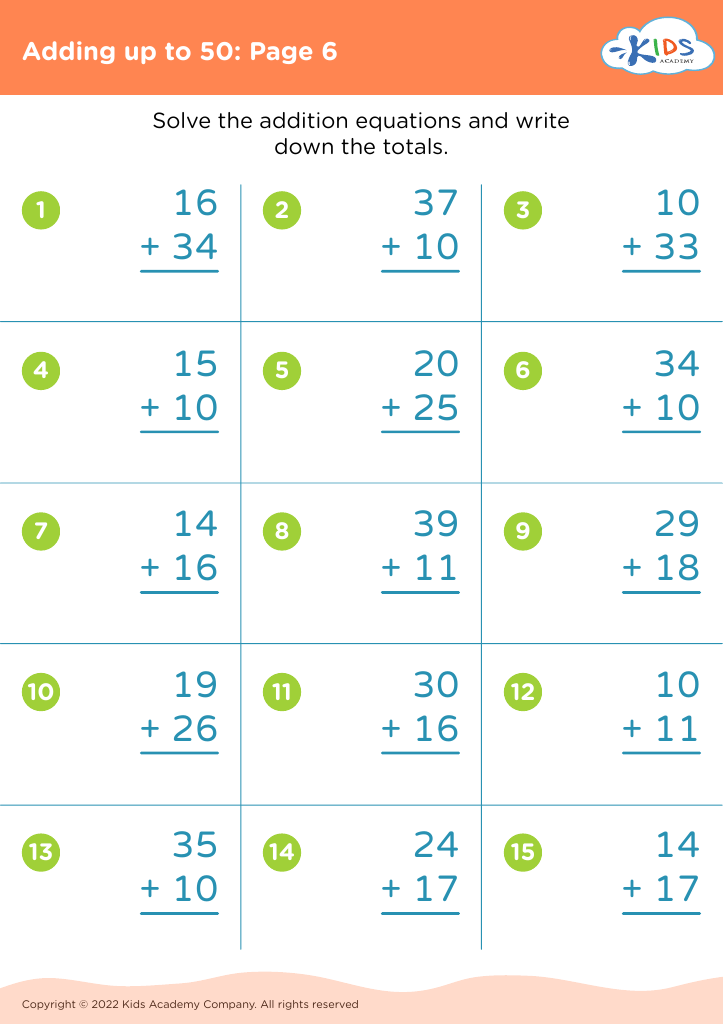
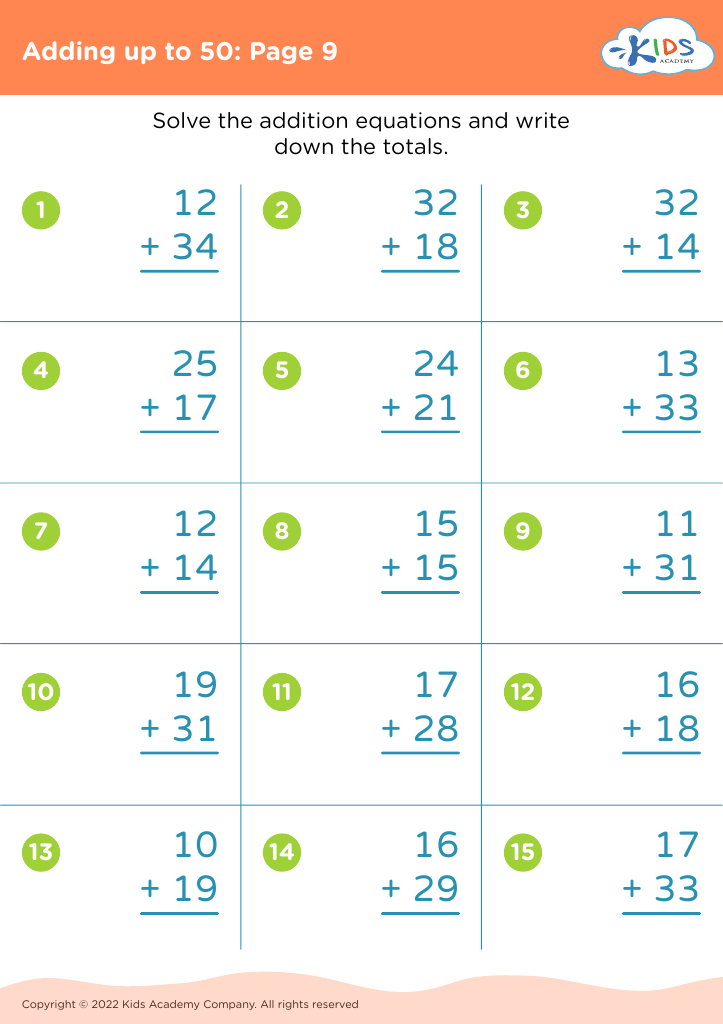
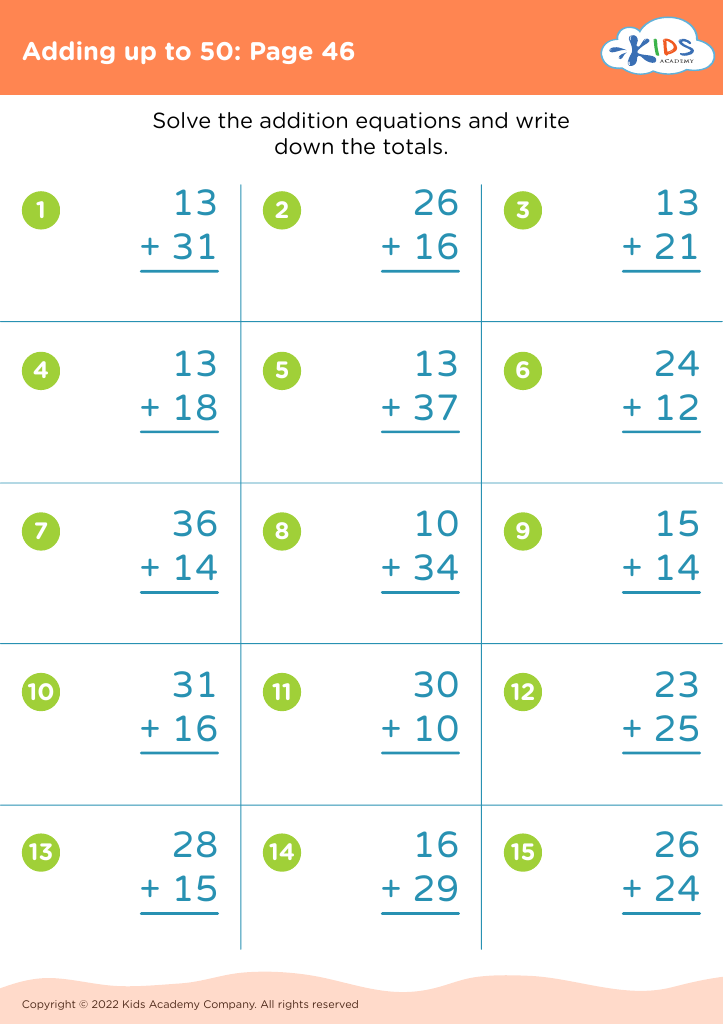


Counting practice and learning to add up to 50 are fundamental skills for children aged 4-7, forming the building blocks for all higher mathematics they will encounter. At this early age, engaging in counting and basic addition helps develop number sense, which is the ability to understand, relate, and connect numbers.
Number sense is crucial because it sets the stage for problem-solving and analytical thinking. Children who grasp these early concepts more readily understand more complex mathematical ideas later on. Counting practice also enhances memory, sequencing, and attention to detail, as children must remember the order of numbers and how they relate to one another.
Introducing addition up to 50 opens up real-world application opportunities, reinforcing the concept that math is all around us. Concepts like adding prices when shopping or determining more or fewer items in groups make learning relevant and exciting.
From a developmental perspective, these activities foster patience and concentration. Manipulating objects to count or add and using visual aids like number lines bolster cognitive and fine motor skills.
By ensuring children develop these foundational math skills early on, we empower them with confidence and competence in handling more demanding tasks, making school more enjoyable and less intimidating. As educators and parents, our goal is to foster a love for learning and preparedness for future academic challenges.