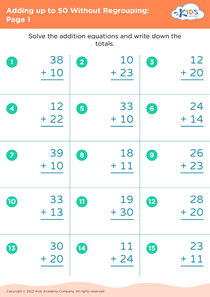
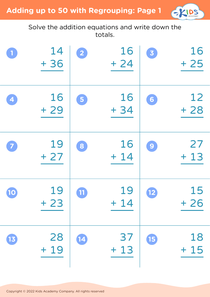
Understanding symmetry Adding up to 50 Misc Worksheets for Ages 4-7
3 filtered results
-
From - To
Welcome to our "Understanding Symmetry: Adding Up to 50" worksheets, specially designed for children ages 4-7! These engaging and interactive resources promote early math skills while introducing the concept of symmetry. Our collection offers a variety of activities that challenge young learners to identify symmetrical shapes, practice addition up to 50, and develop critical thinking skills. Each worksheet is crafted to spark curiosity and encourage creativity, making learning fun. Perfect for classroom use or home practice, these worksheets help build a strong foundation in math and spatial awareness. Dive into symmetry and math with us today!
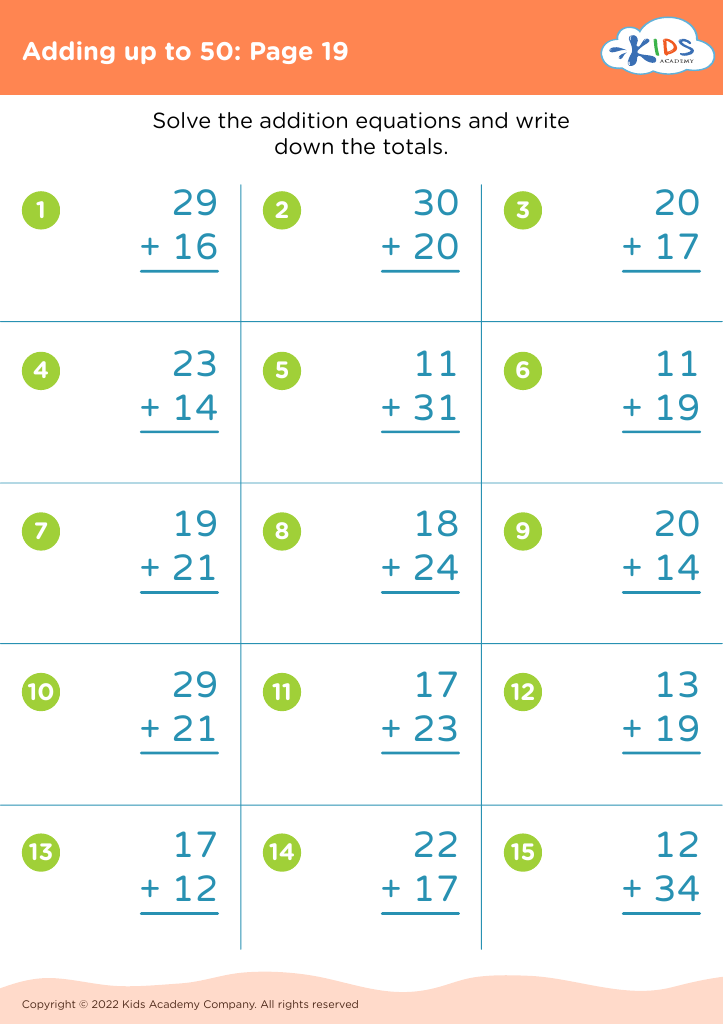
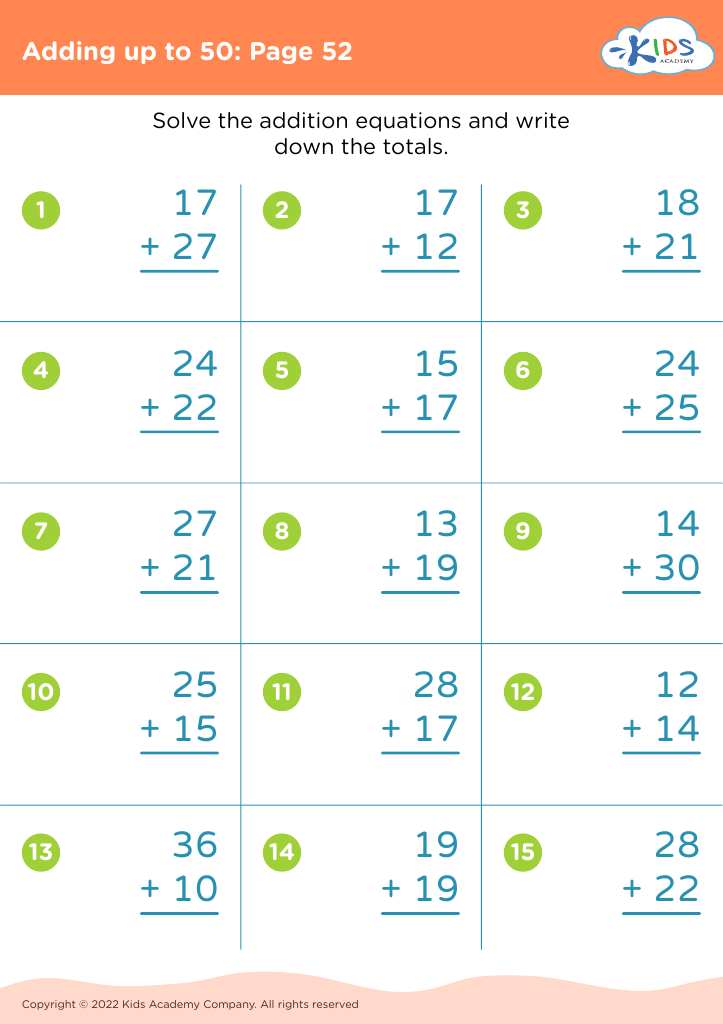
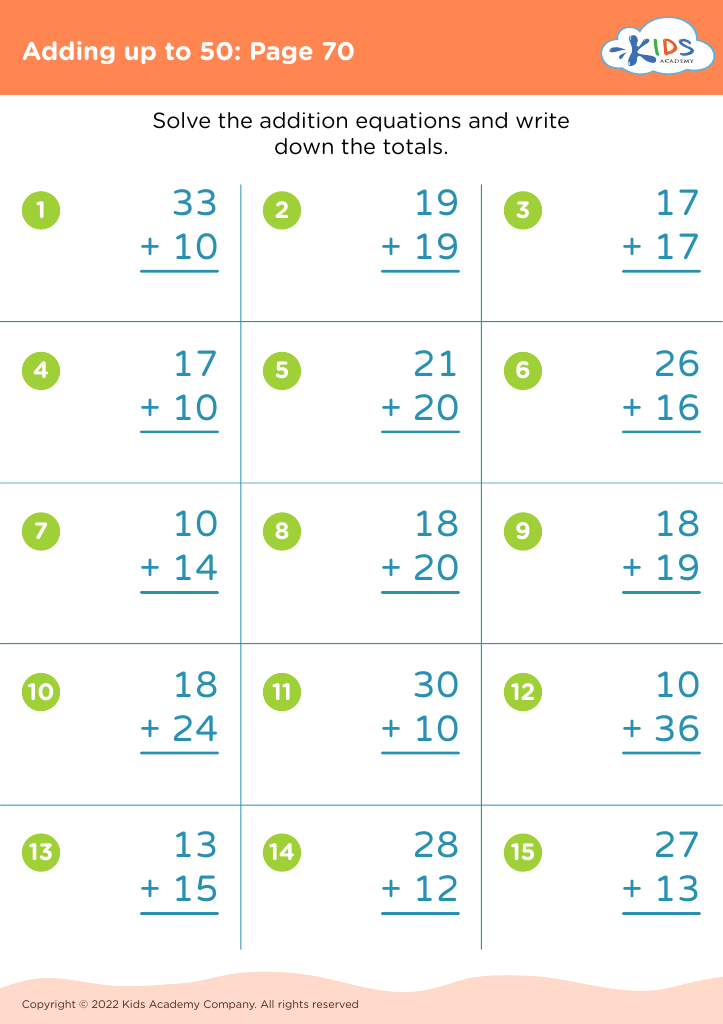


Understanding symmetry and mastering addition up to 50 are crucial foundational skills for children aged 4-7. These concepts develop critical thinking and problem-solving abilities. Symmetry helps children recognize patterns and shapes, fostering visual-spatial skills essential in subjects like mathematics and art. It encourages observational skills, enabling young learners to notice balance and harmony in their surroundings—qualities important for creativity and design.
On the other hand, learning to add up to 50 lays the groundwork for arithmetic proficiency. Early literacy in numbers boosts confidence and self-esteem in math, helping children transition to more complex mathematical operations later on. Mastery of addition up to 50 enhances their numerical fluency, allowing them to tackle practical tasks like handling money or telling time.
Moreover, these skills encourage collaborative learning experiences. When parents and teachers emphasize concepts like symmetry and addition, they create opportunities for engaging activities, such as patterns games or math puzzles, fostering a joy for learning. Early investment in these foundational skills not only prepares children for more complex math but also instills a love for inquiry and exploration—qualities that are essential for success in school and beyond. Parents and teachers should prioritize these skills to support holistic development in young learners.