Filters

17 filtered results

Clear all filters
Favorites
With answer key
Interactive

17 filtered results

Difficulty Level

Grade


Explore mastering fractions with our "Understanding Fractions: Adding up to 50 with Regrouping Worksheets for Ages 4-7". Tailored for young learners, these engaging activities gently introduce fraction concepts through interactive exercises and fun visuals. Designed purposefully to strengthen foundational math skills, children will learn to efficiently add numbers up to 50, utilizing regrouping techniques. These worksheets foster understanding and confidence, ensuring your child grasps essential mathematical principles from an early age. Perfect for both classroom and home learning, begin your child's journey into the world of fractions and regrouping today, making math an exciting and fulfilling adventure.
Check out this FREE Trial Lesson on Adding up to 50 with Regrouping for age 4-7!

Exactly the Same, or Not

Favorites
With answer key
Interactive
  • 4-7
  • Understanding fractions
  • Adding up to 50 with Regrouping
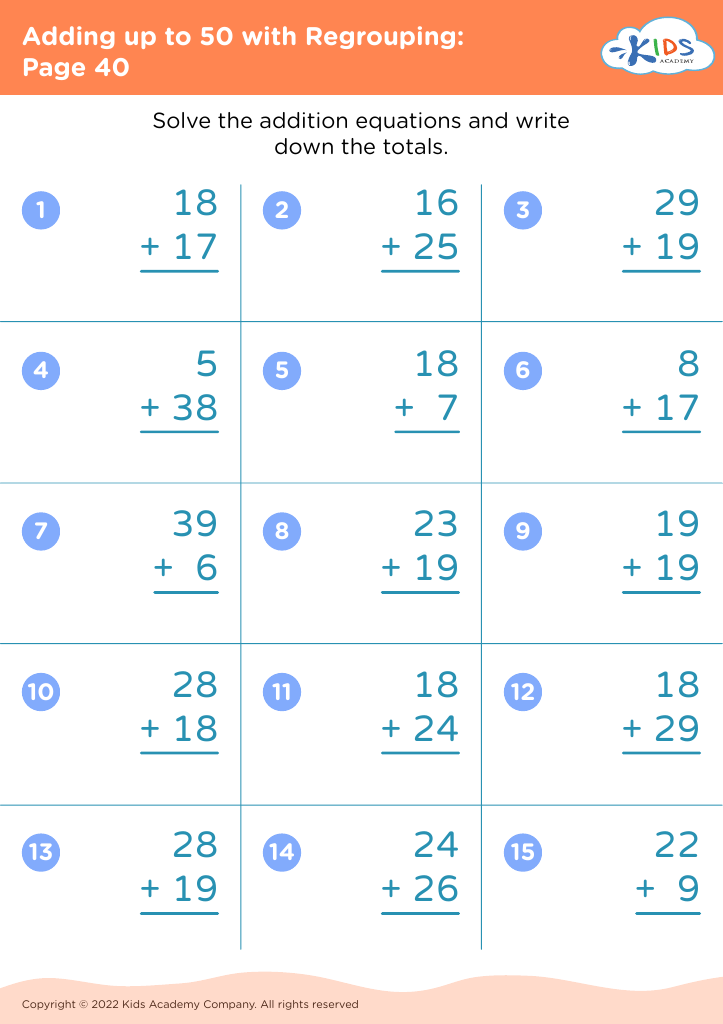
Adding up to 50 with Regrouping: Page 40
Worksheet
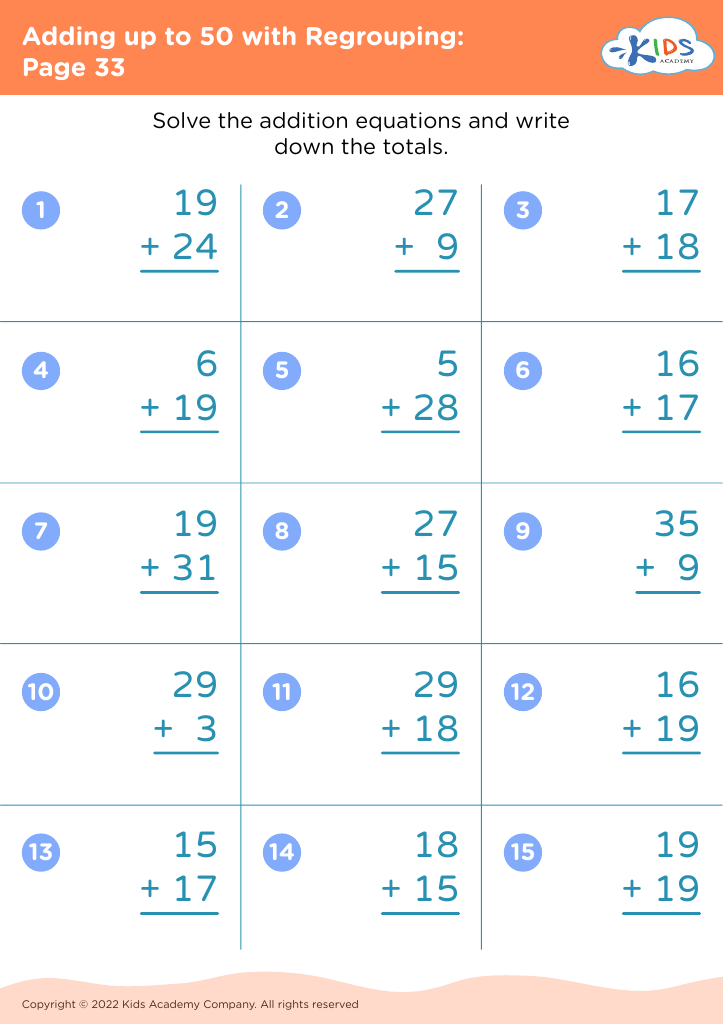
Adding up to 50 with Regrouping: Page 33
Worksheet
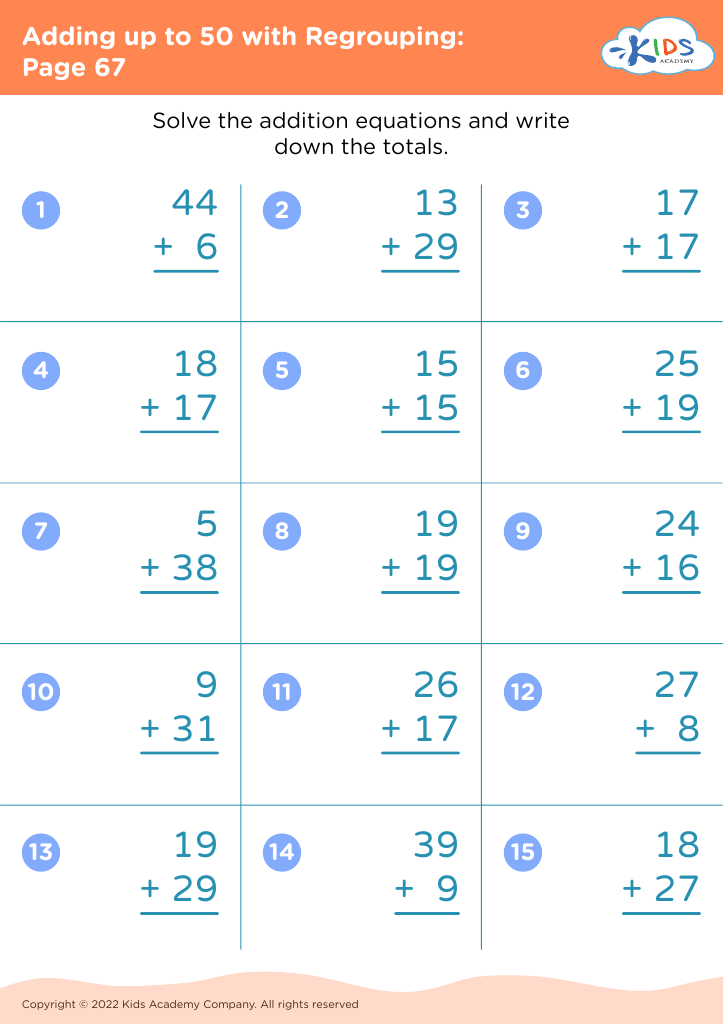
Adding up to 50 with Regrouping: Page 67
Worksheet
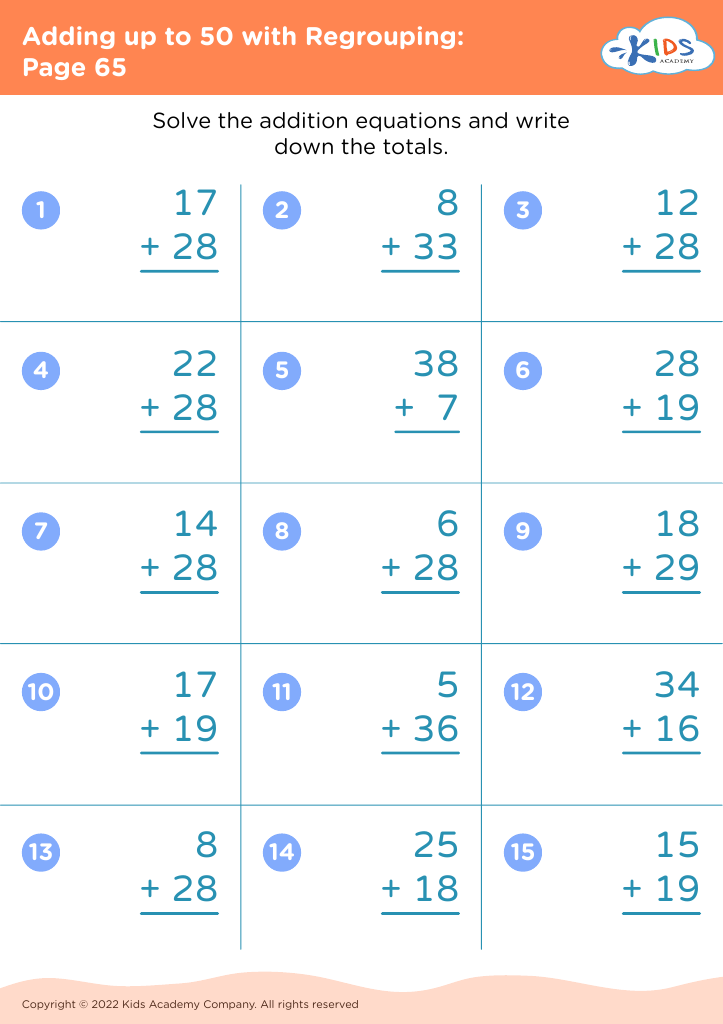
Adding up to 50 with Regrouping: Page 65
Worksheet
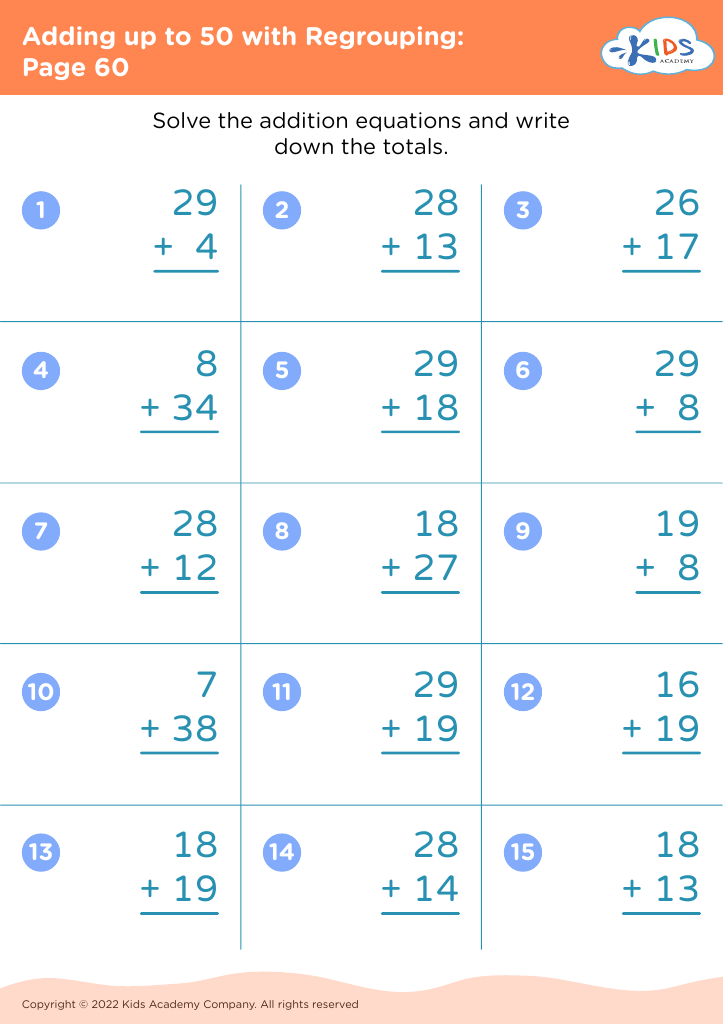
Adding up to 50 with Regrouping: Page 60
Worksheet
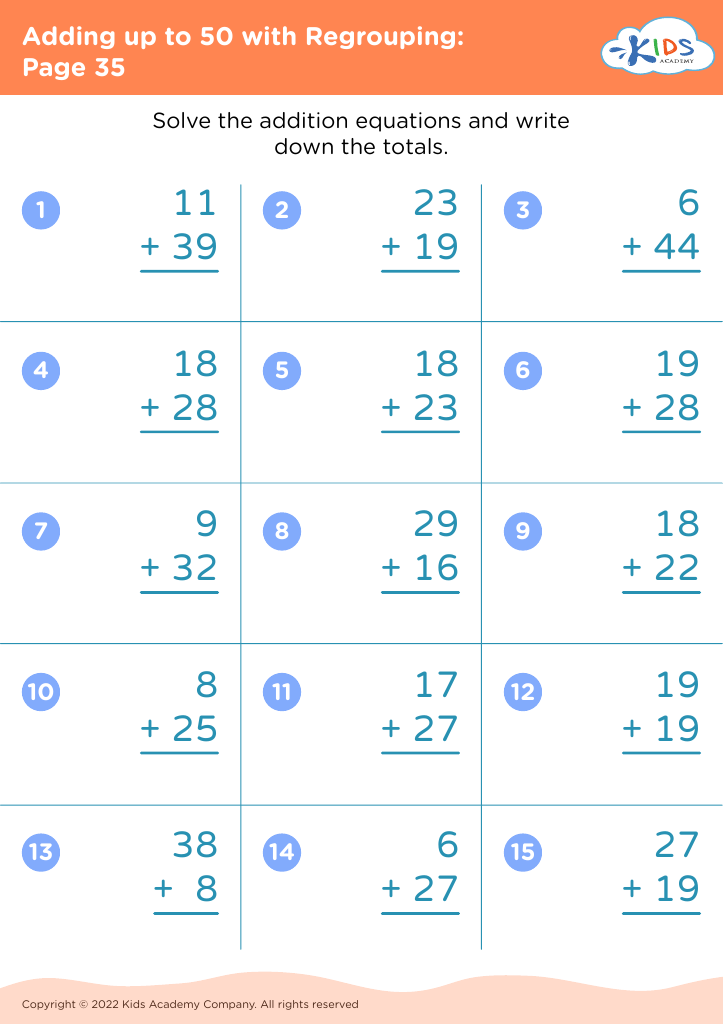
Adding up to 50 with Regrouping: Page 35
Worksheet
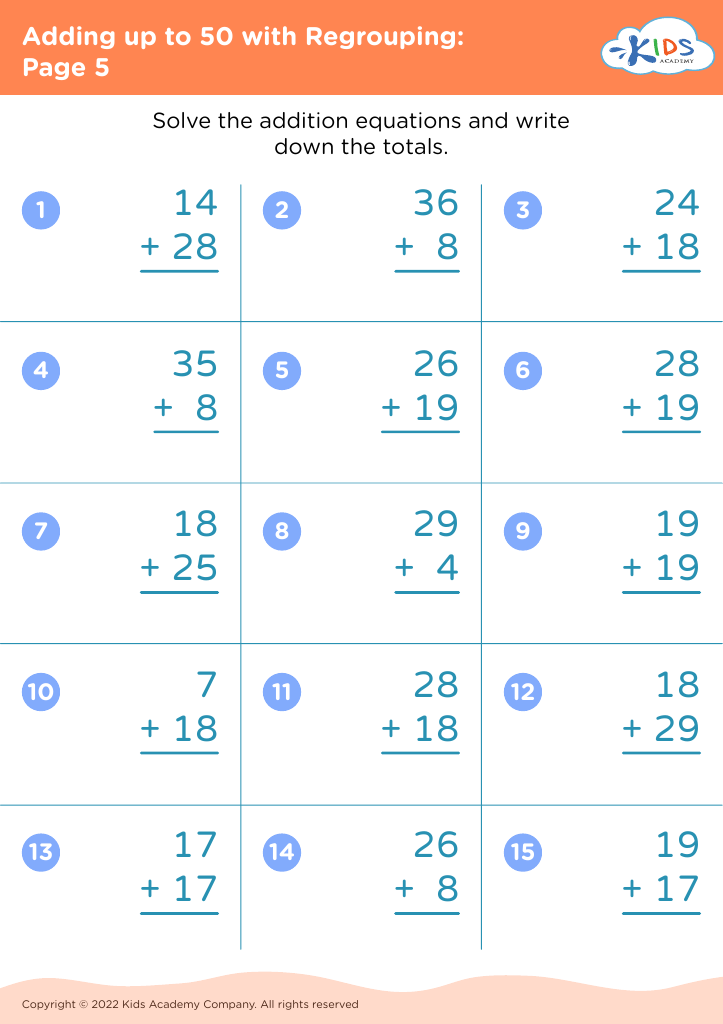
Adding up to 50 with Regrouping: Page 5
Worksheet
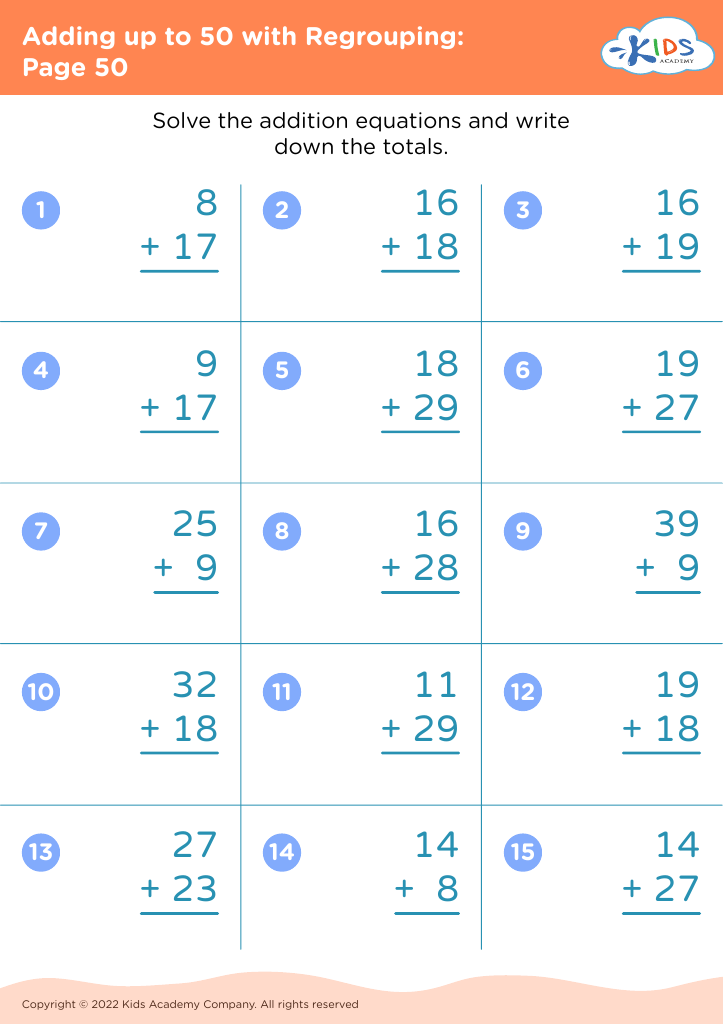
Adding up to 50 with Regrouping: Page 50
Worksheet
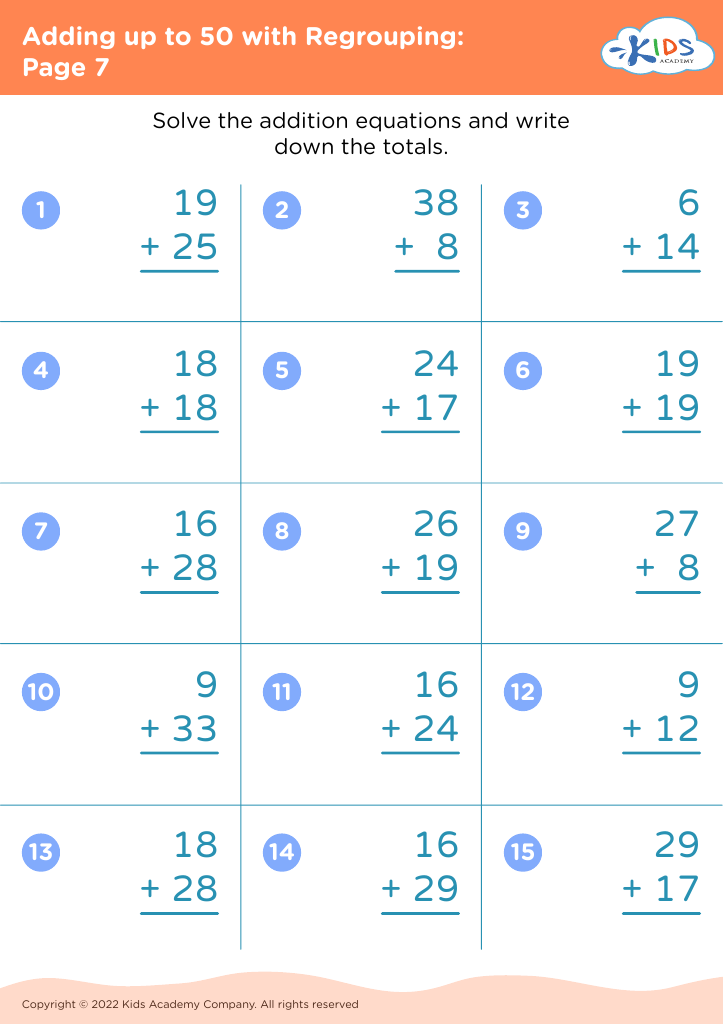
Adding up to 50 with Regrouping: Page 7
Worksheet
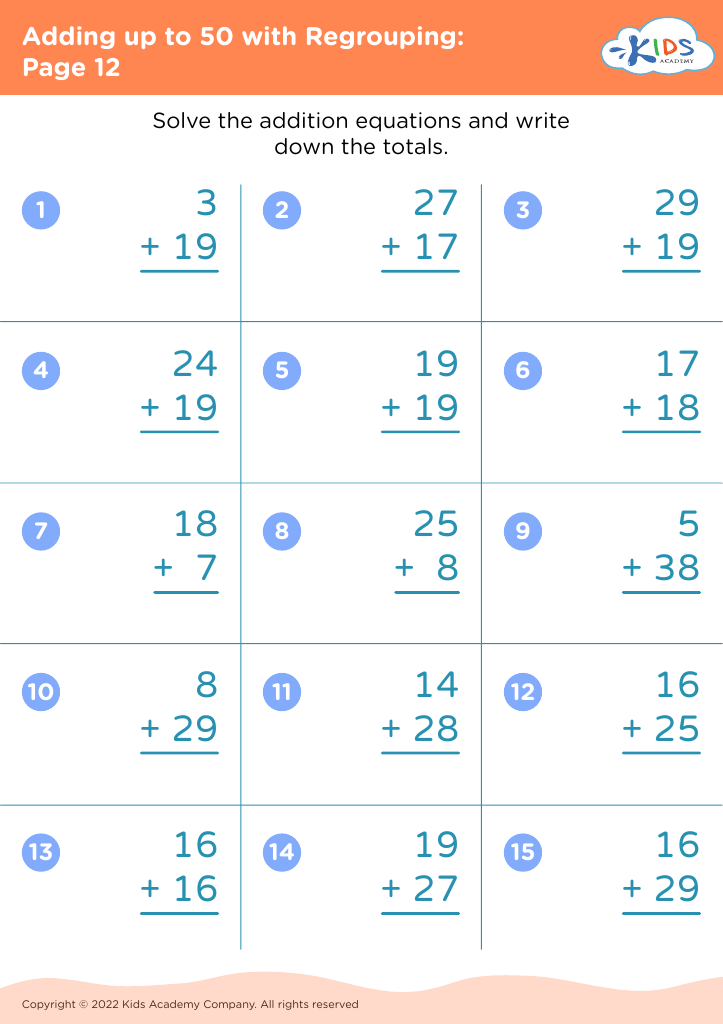
Adding up to 50 with Regrouping: Page 12
Worksheet
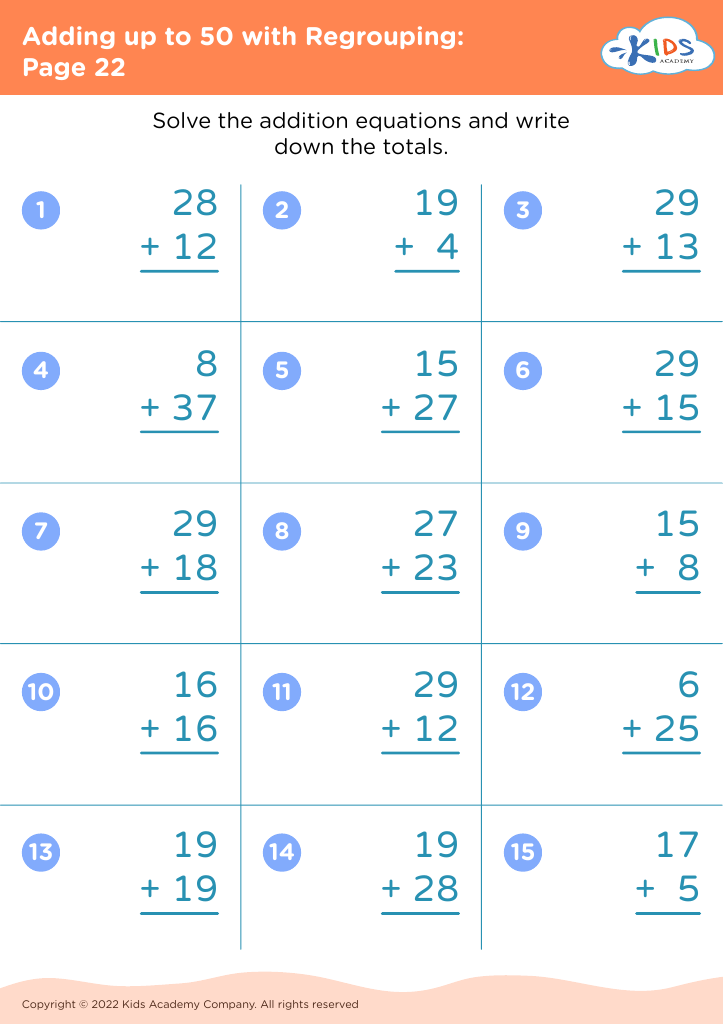
Adding up to 50 with Regrouping: Page 22
Worksheet
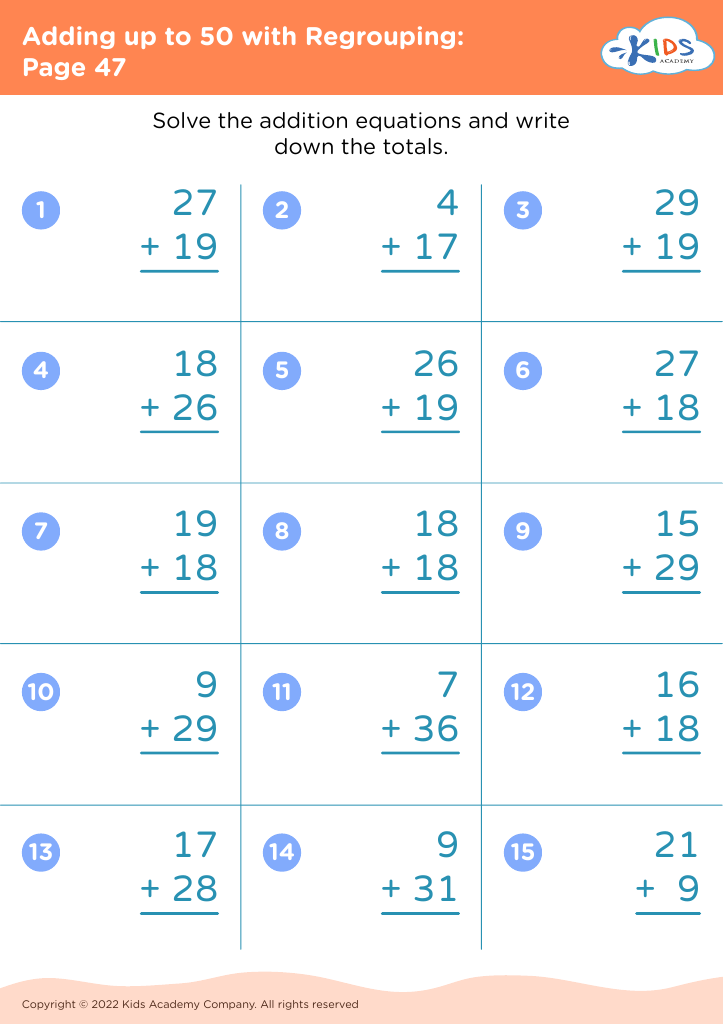
Adding up to 50 with Regrouping: Page 47
Worksheet
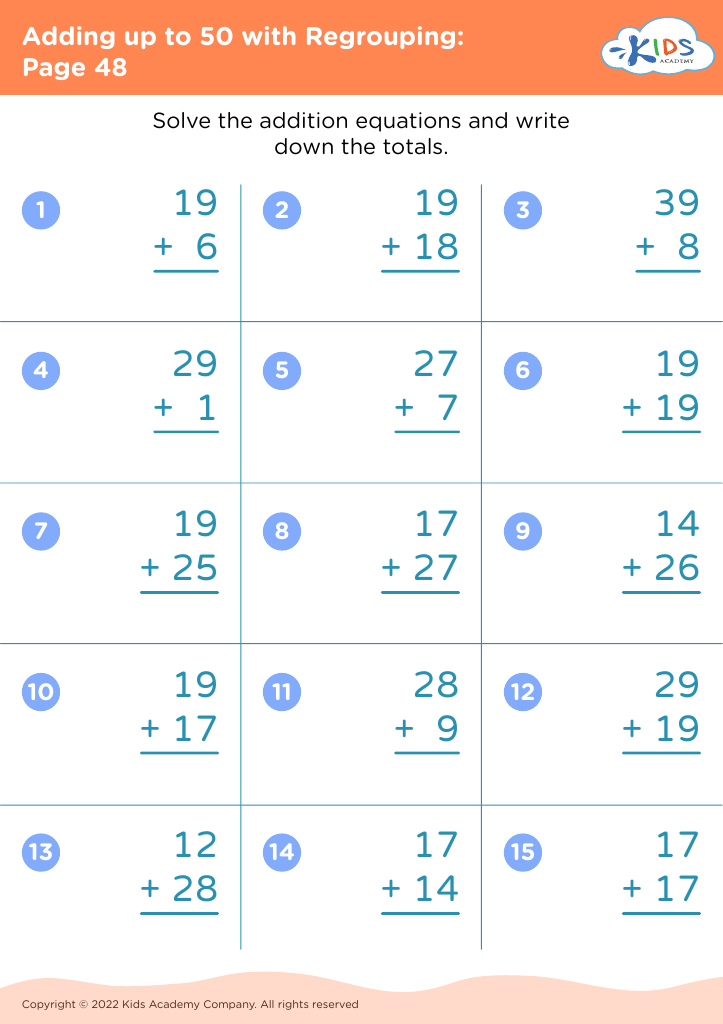
Adding up to 50 with Regrouping: Page 48
Worksheet
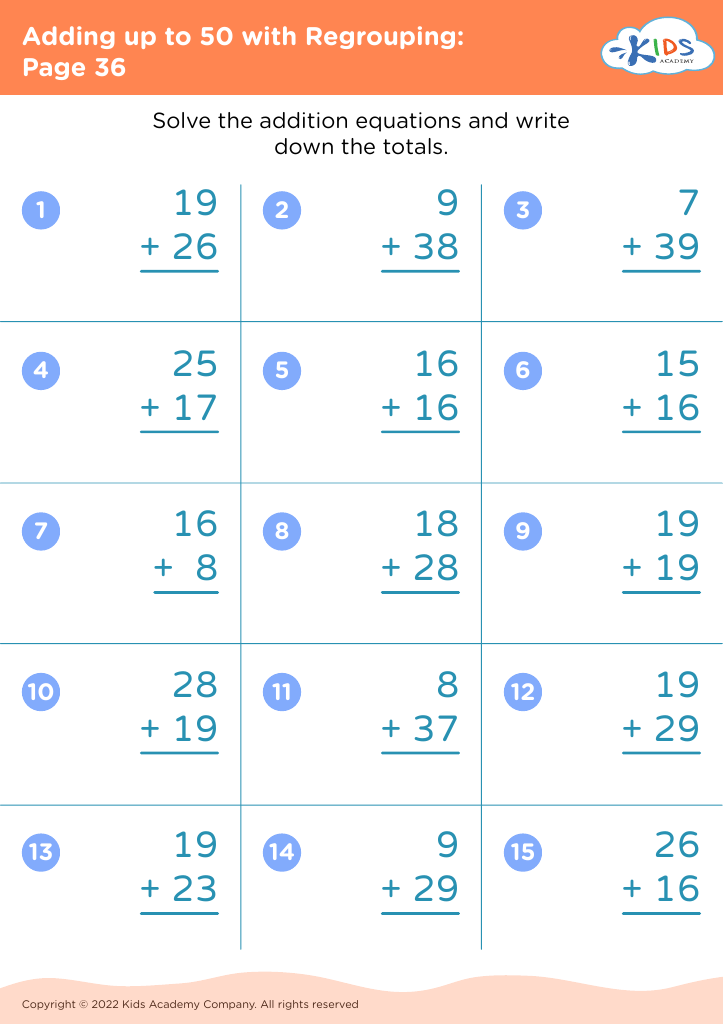
Adding up to 50 with Regrouping: Page 36
Worksheet
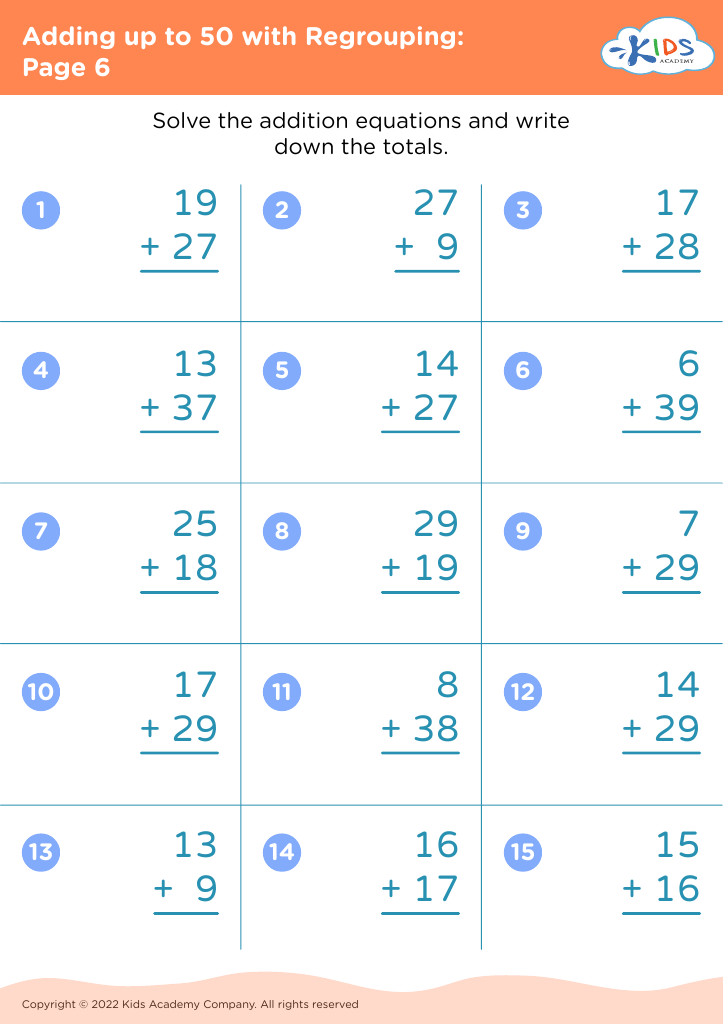
Adding up to 50 with Regrouping: Page 6
Worksheet
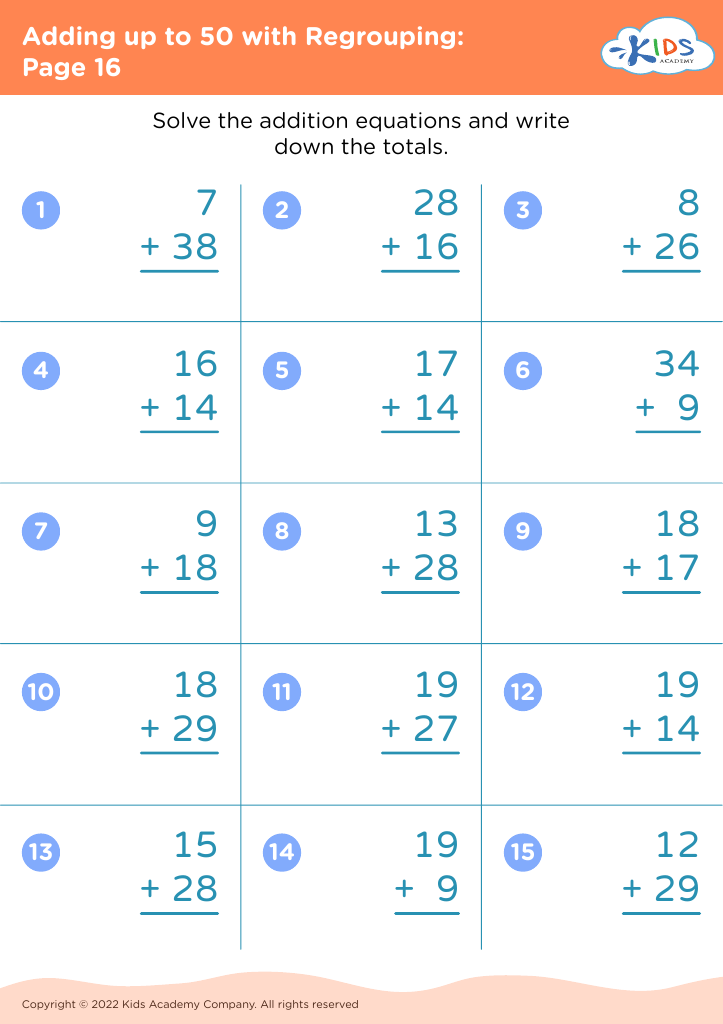
Adding up to 50 with Regrouping: Page 16
Worksheet
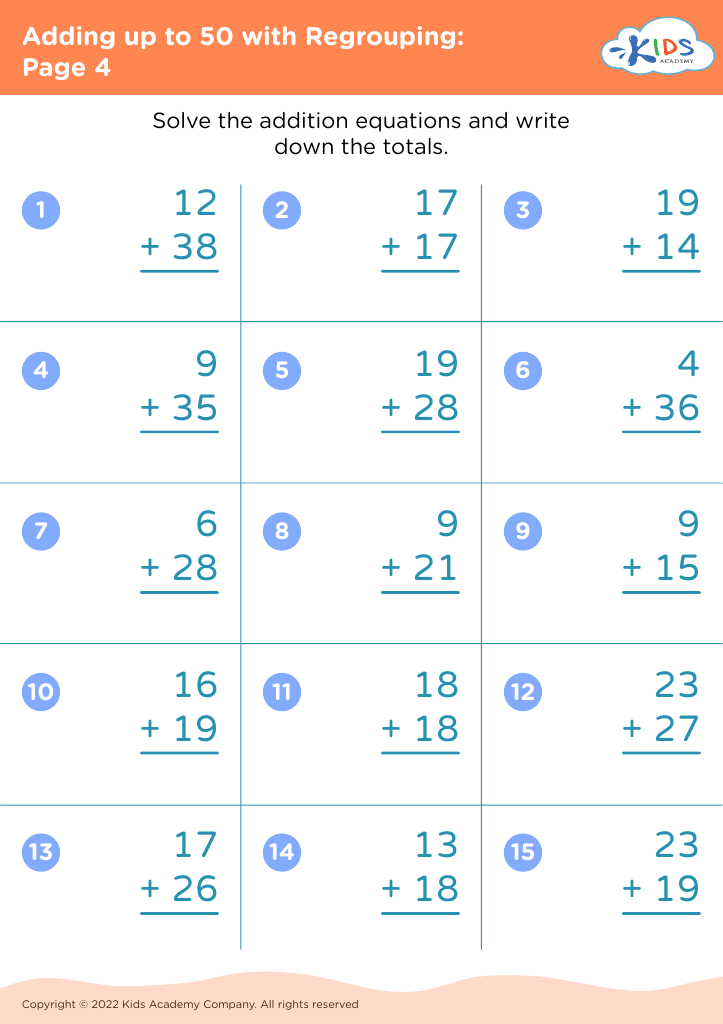
Adding up to 50 with Regrouping: Page 4
Worksheet


Understanding fractions and learning to add with regrouping are crucial skills for young children, even as early as ages 4-7. Fractions, although might sound advanced for this age group, introduce foundational concepts of dividing wholes into parts, which is pivotal in developing number sense and mathematical reasoning. Activities with simple, practical fractions, like cutting fruit into halves or quarters, can help children grasp the idea that numbers represent quantities, parts, and wholes. This early exposure nurtures familiarity and comfort with more intricate mathematical ideas that they'll encounter later in their education.

Similarly, adding up to 50 with regrouping is an essential arithmetic skill that enables students to handle more complex math problems. This involves carrying over values from one column to the next during addition, thereby bridging the gap between simple single-digit arithmetic and more complicated number operations. Mastering this concept lays the groundwork for future math learning, promotes computational fluency, and enhances problem-solving abilities. Engaging children in age-appropriate, enjoyable activities like puzzles, games, or hands-on exercises not only strengthens these skills but also builds confidence and positive attitudes towards math. Parents and teachers play vital roles by encouraging and supporting these early mathematics explorations, which are pivotal for academic success and everyday life.