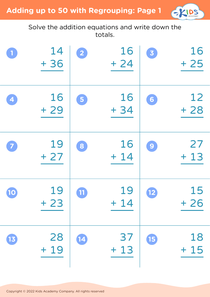
Counting practice Adding up to 50 Without Regrouping Worksheets for Ages 4-7
5 filtered results
-
From - To
Introduce your child to the fundamentals of addition with our "Counting Practice: Adding up to 50 Without Regrouping" worksheets, designed for ages 4-7. These engaging and interactive worksheets focus on enhancing math skills by adding numbers up to 50 without regrouping, ensuring a solid foundation for future arithmetic. Ideal for early learners, each worksheet features colorful illustrations and simple problems, making learning both fun and effective. Help your little one build confidence and proficiency in addition, laying the groundwork for academic success. Visit our page to download these excellent educational resources!
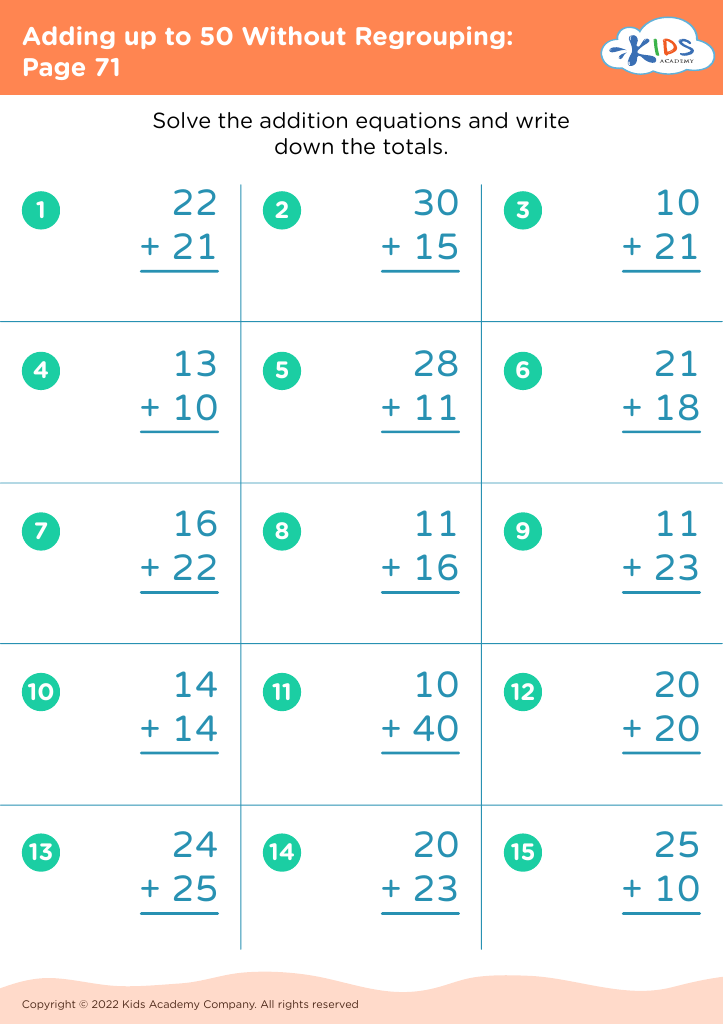
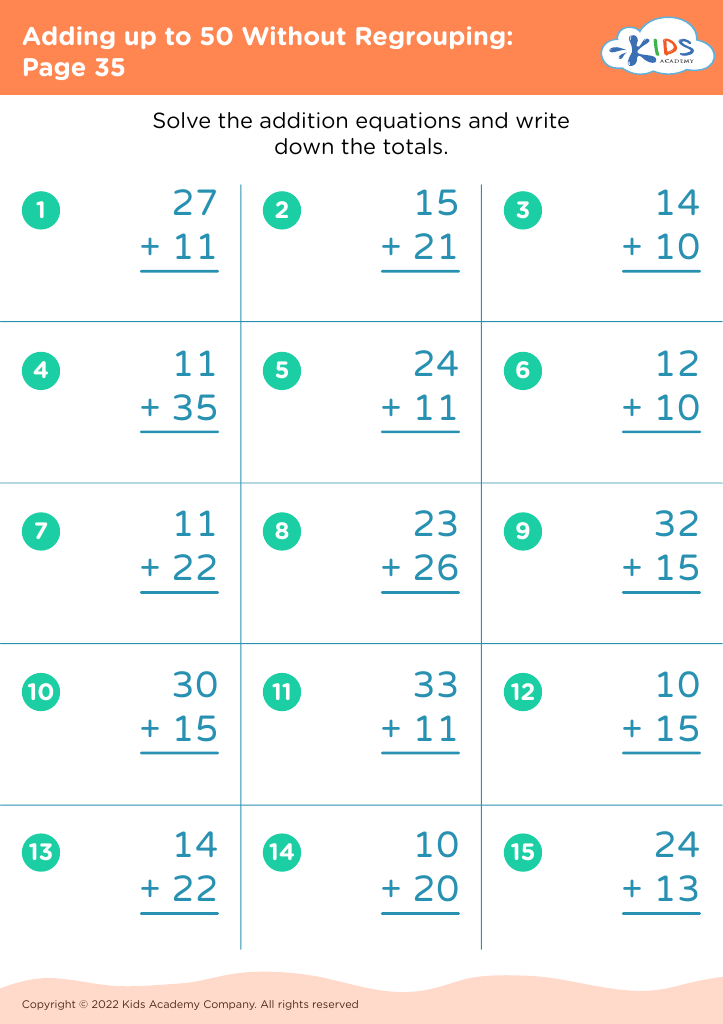
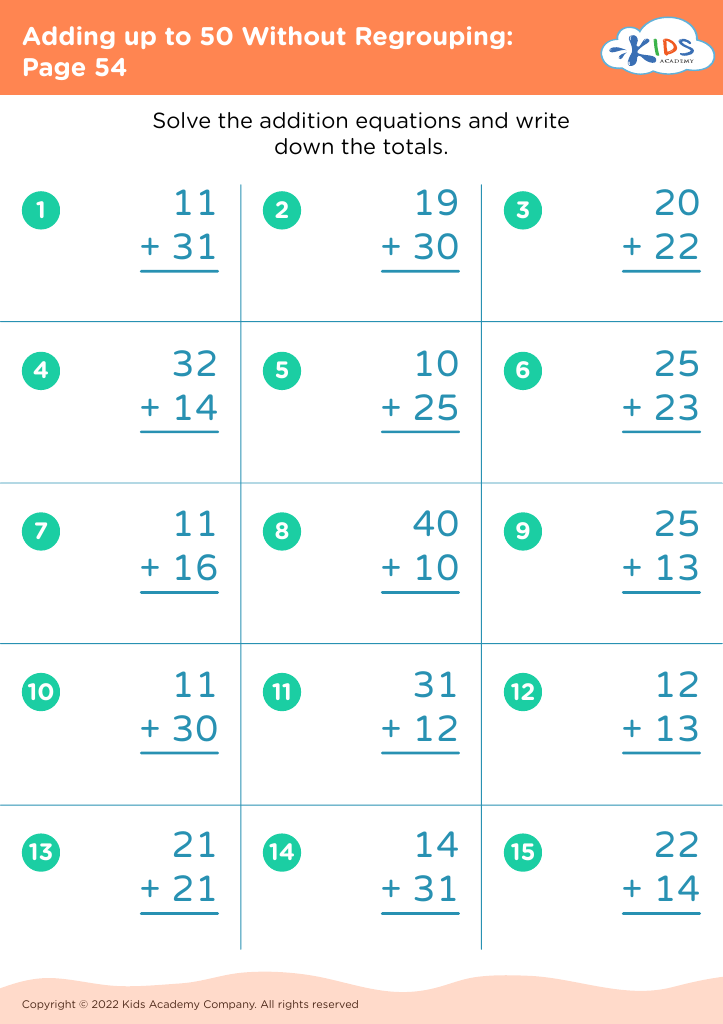
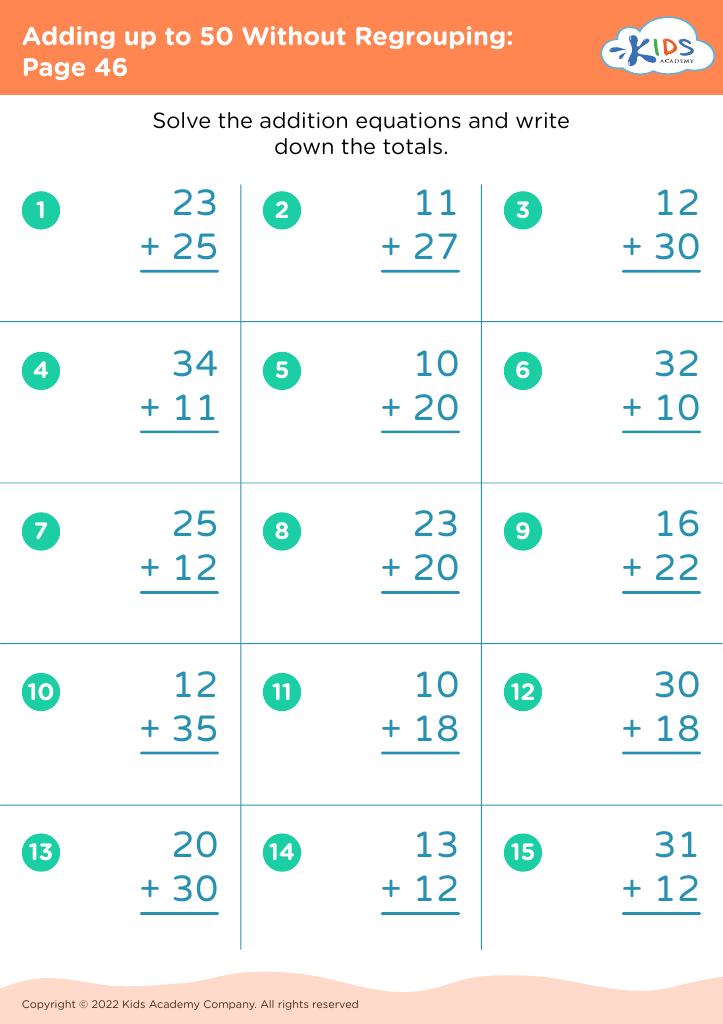
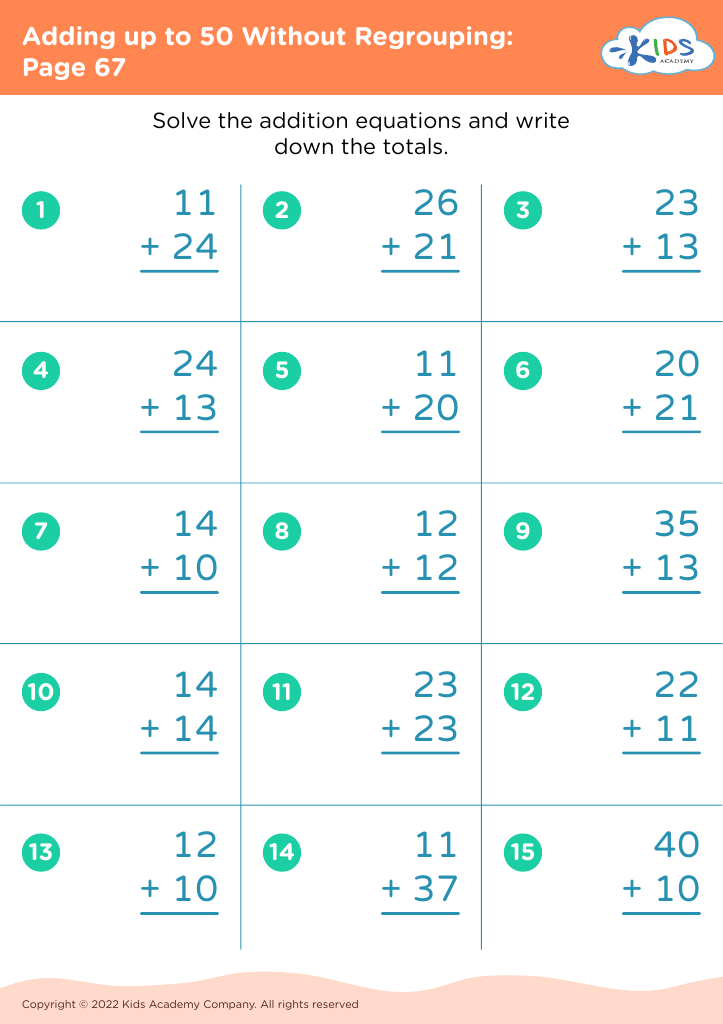


Counting practice adding up to 50 without regrouping is essential for children aged 4-7 as it lays a vital foundation for their future mathematical understanding. Firstly, this skill helps young learners develop number sense, which is the ability to comprehend, relate, and connect numbers. Strong number sense is critical for more complex math skills like addition with regrouping, subtraction, multiplication, and division.
Counting practice also enhances cognitive and problem-solving abilities. By regularly engaging in counting exercises, children learn to recognize patterns, make numerical comparisons, and understand sequences. This helps in building mental agility and analytical thinking, making math less daunting and more intuitive over time.
Mastering addition without regrouping to 50 is particularly important because it instills confidence. When children can successfully add smaller numbers, they develop a positive attitude towards learning, reducing anxiety and building a strong mathematical foundation. Positive early math experiences are crucial for lifelong academic success.
For teachers and parents, encouraging counting practice to 50 ensures that learning is structured and progressive. It allows for the early identification of learning difficulties and provides opportunities to intervene with corrective measures, ensuring no child falls behind. Ultimately, this practice nurtures a love for math, facilitating smoother transitions to more complicated concepts in future learning stages.