Basic addition practice Adding up to 50 Worksheets for Ages 4-7
5 filtered results
-
From - To
Nurture your young learner's math skills with our "Basic Addition Practice: Adding up to 50 Worksheets" tailored for ages 4-7. These engaging worksheets help children build a strong foundation in addition while boosting their confidence with numbers. Each sheet features visually appealing themes and simple problems that guide kids from counting to summing numbers up to 50. Perfect for home and classroom use, these practice sheets are designed to make early math learning enjoyable and effective. Set your child on a path to math success with our expertly crafted addition practice resources. Ideal for both beginners and those needing extra practice.
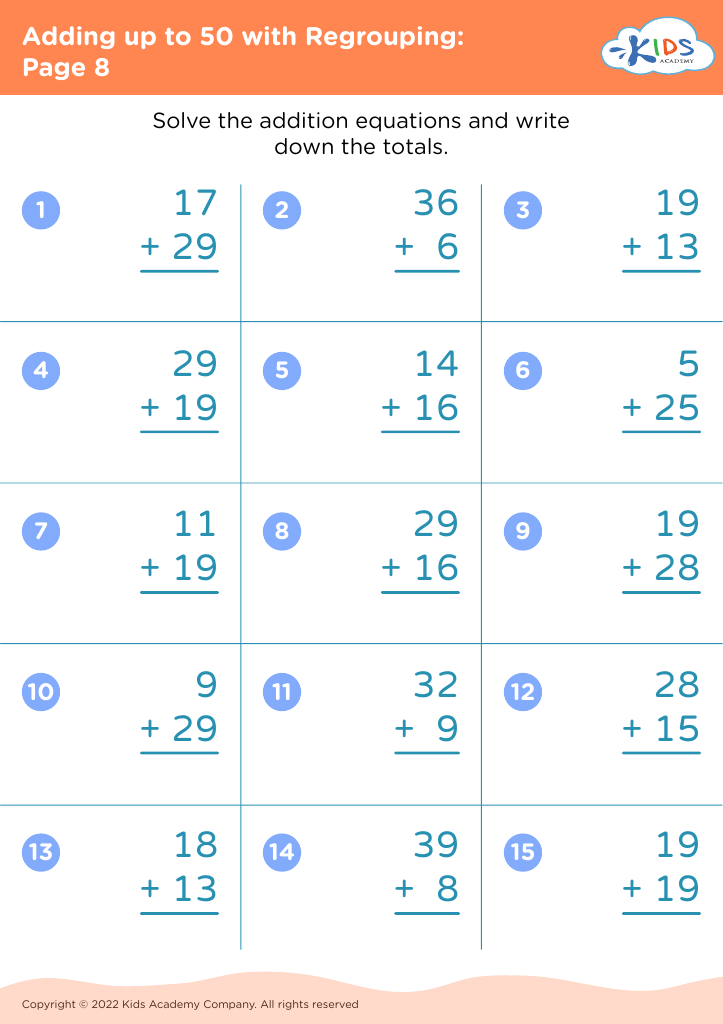
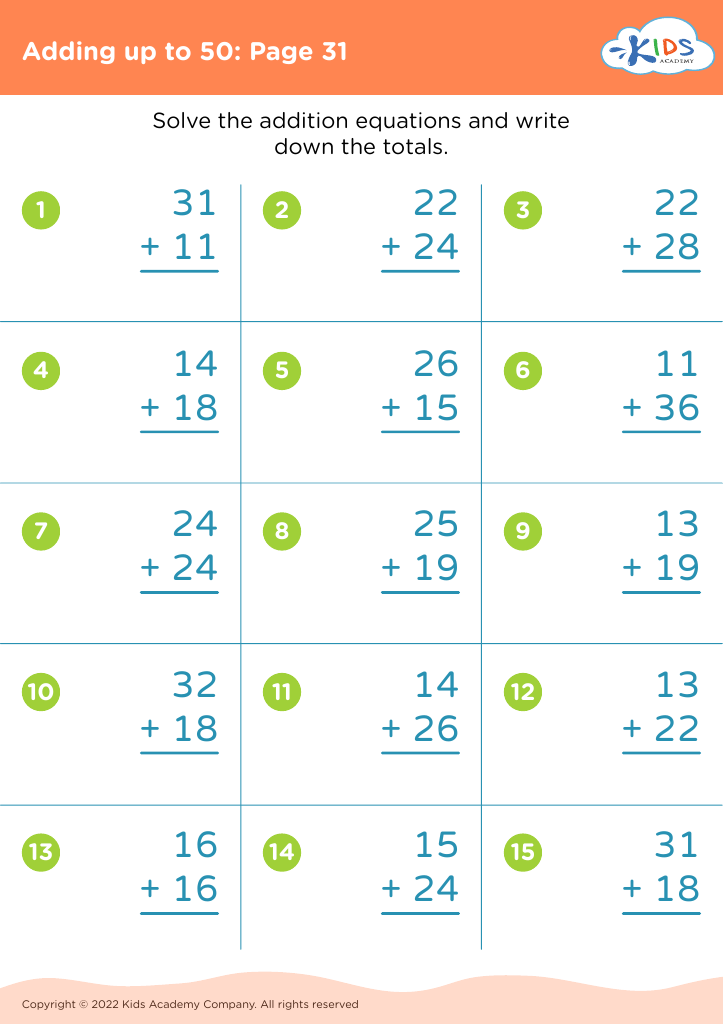
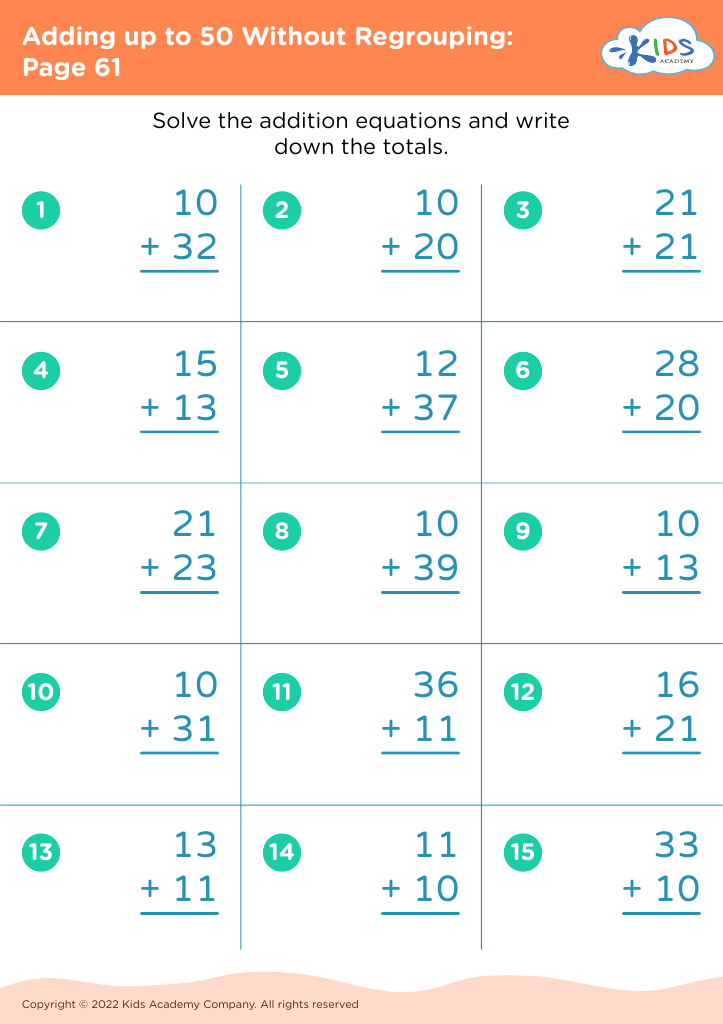
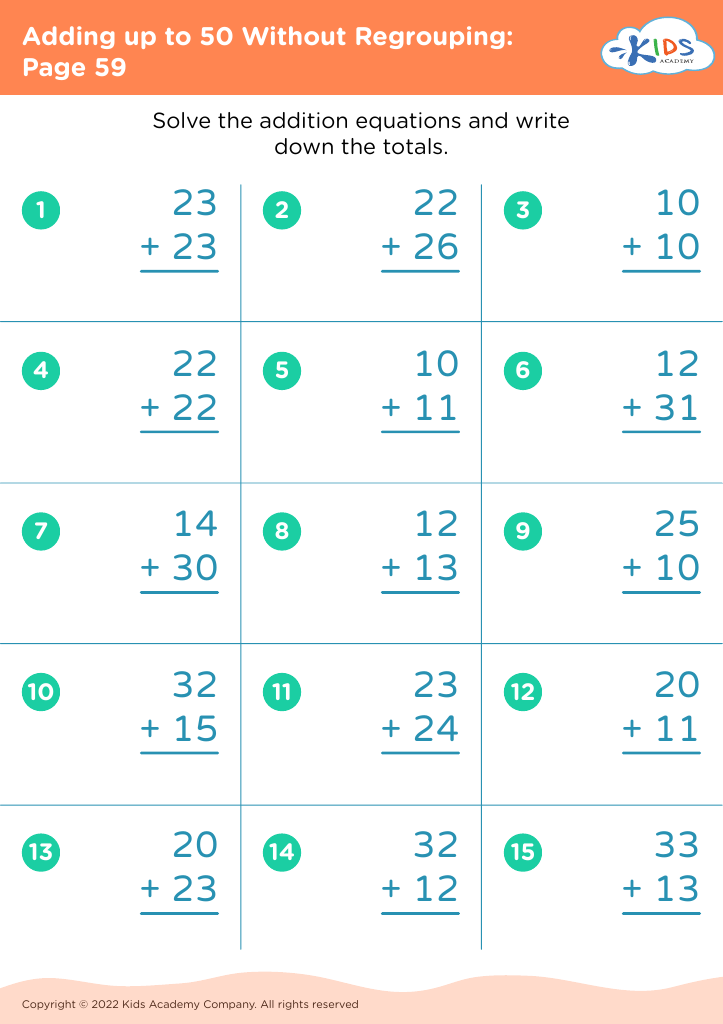
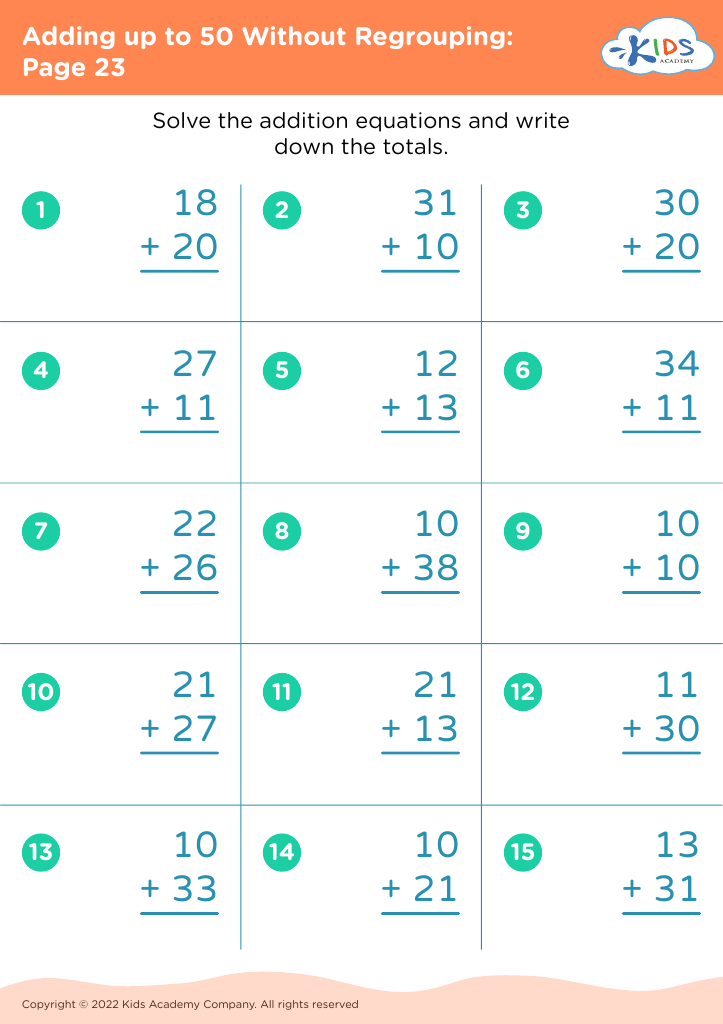




Basic addition practice, especially adding up to 50, is pivotal for children aged 4-7 for several reasons. Firstly, it lays the foundation for more advanced mathematical concepts. Just like building blocks, mastering basic addition helps children understand lessons on subtraction, multiplication, and division more easily in later grades.
Secondly, addition practice enhances cognitive development. It sharpens problem-solving skills, fosters critical thinking, and improves memory. Young minds become adept at recognizing patterns and making connections, which are essential skills both inside and outside the classroom.
Thirdly, regular addition practice boosts confidence. A child who can swiftly and accurately solve basic addition problems feels a sense of accomplishment. This positive reinforcement encourages a love for learning and reduces math-related anxiety in future challenges.
Moreover, understanding addition influences life skills. Everyday activities such as counting money, telling time, and measuring ingredients in cooking all rely on basic math. Children well-versed in addition can handle these tasks more effectively.
Parents and teachers must prioritize basic addition practice because it promotes strong intellectual growth and nurtures essential, lifelong skills. Early competency in math paves the way for academic success, and, importantly, it equips children with the tools they need to navigate their world confidently and independently.








