Filters

16 filtered results

Clear all filters
Favorites
With answer key
Interactive

16 filtered results

Difficulty Level

Grade


Boost your child's math confidence with our "Basic Math Skills Adding up to 50 Worksheets," specially designed for ages 4-7. These engaging worksheets introduce foundational addition concepts while helping young learners develop essential problem-solving skills. Through colorful illustrations and interactive exercises, your child will enjoy mastering addition up to 50. Perfect for both at-home learning and classroom use, these worksheets cater to various learning styles, ensuring each child progresses at their own pace. With our curriculum-aligned resources, children will build a strong mathematical foundation that paves the way for future academic success. Start their math journey today and watch them thrive!
Check out this FREE Trial Lesson on Adding up to 50 for age 4-7!

P

Favorites
With answer key
Interactive
  • 4-7
  • Basic Math Skills
  • Adding up to 50
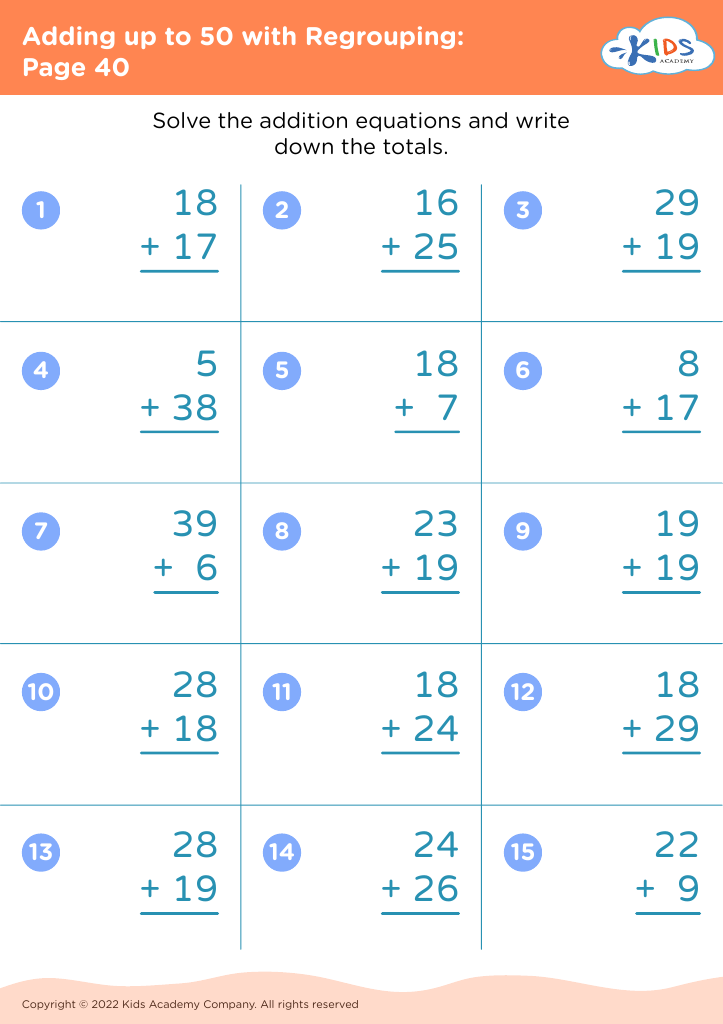
Adding up to 50 with Regrouping: Page 40
Worksheet
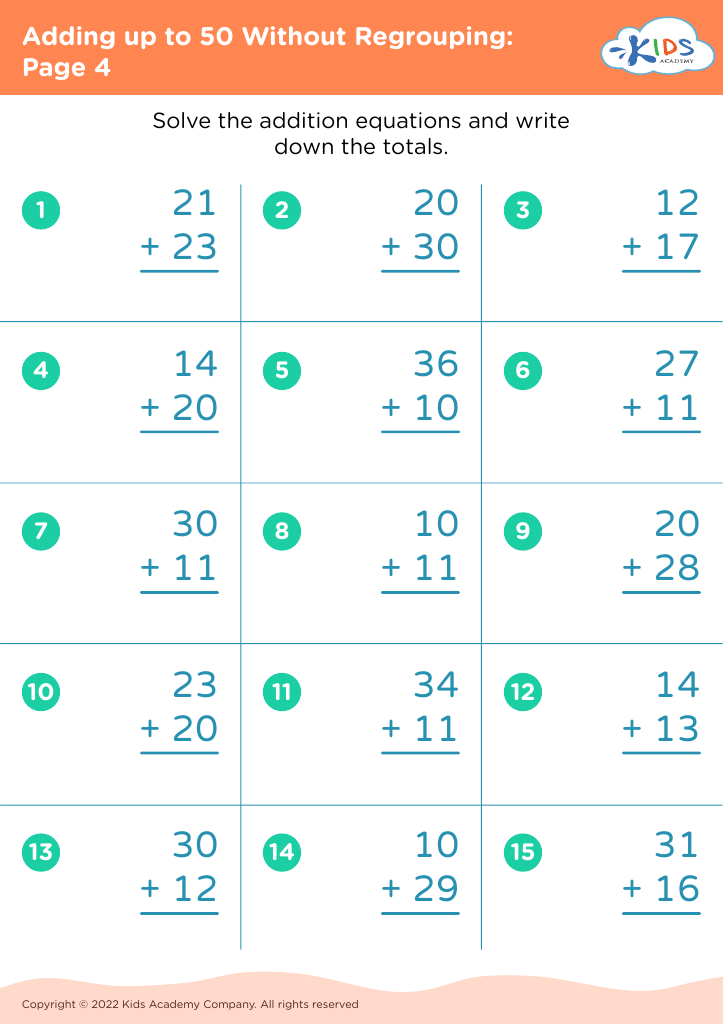
Adding up to 50 Without Regrouping: Page 4
Worksheet
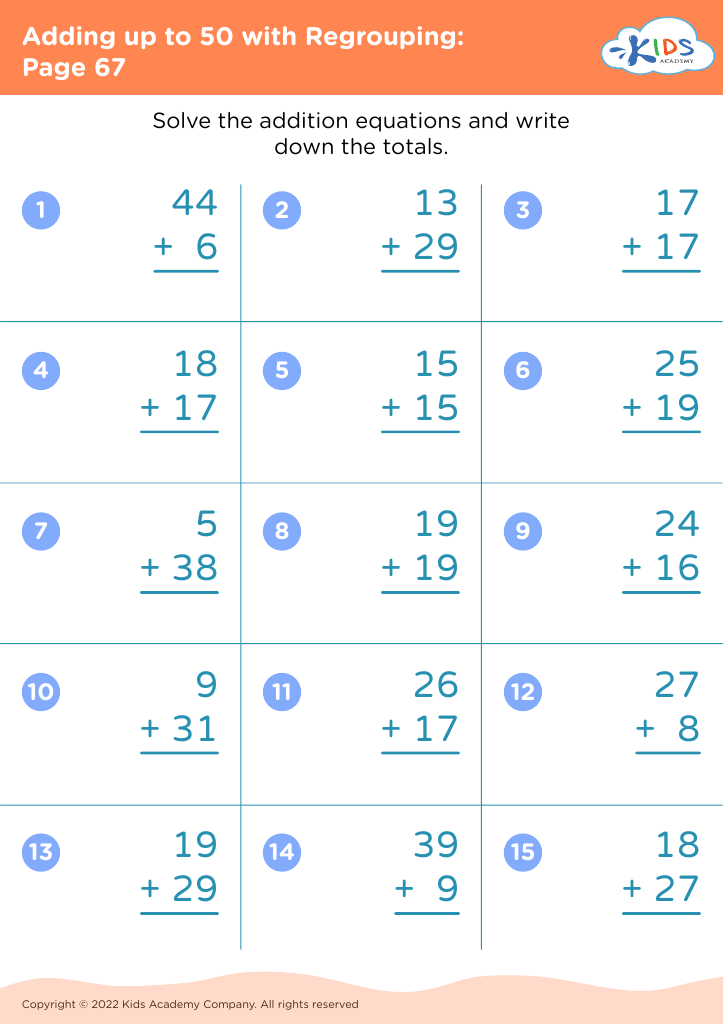
Adding up to 50 with Regrouping: Page 67
Worksheet
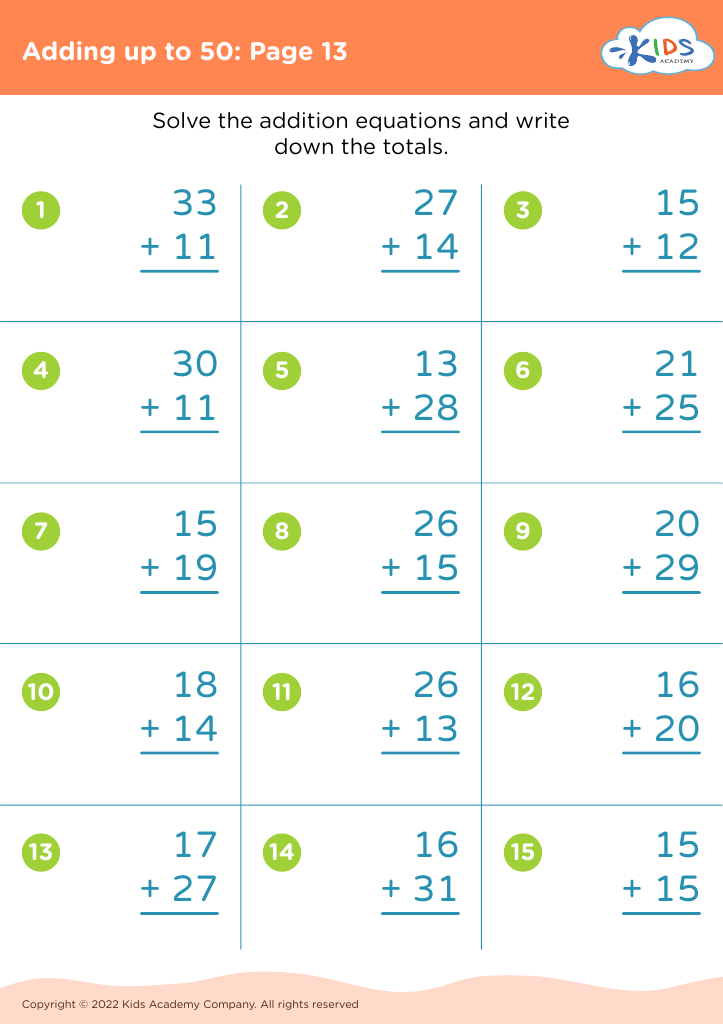
Adding up to 50: Page 13

Adding up to 50: Page 13

Adding up to 50: Page 13
Worksheet
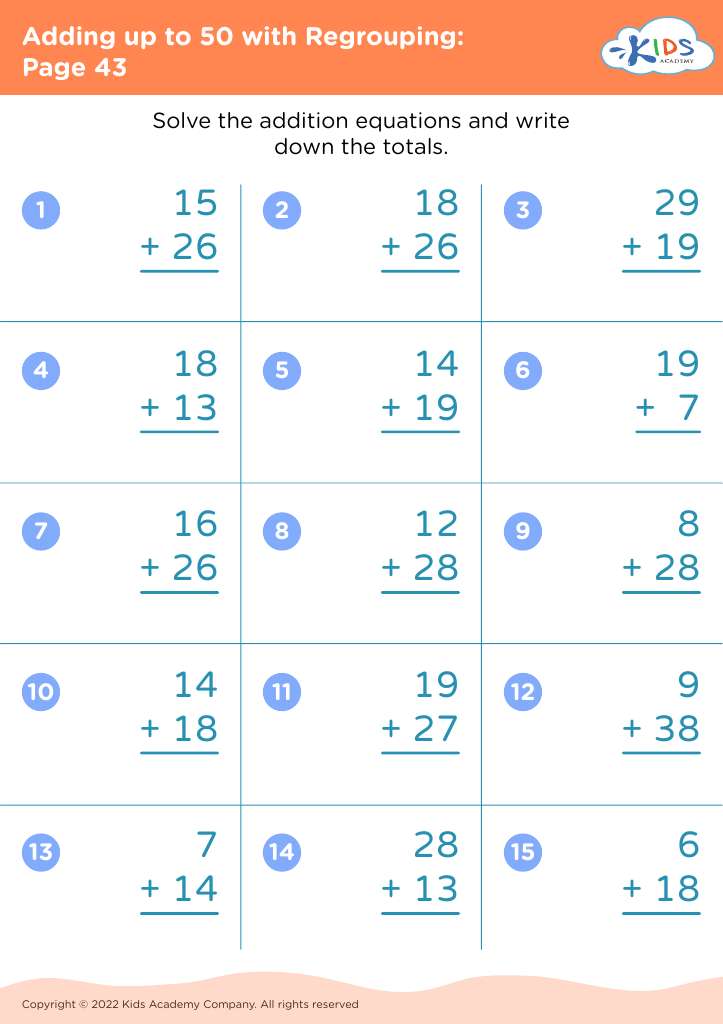
Adding up to 50 with Regrouping: Page 43
Worksheet
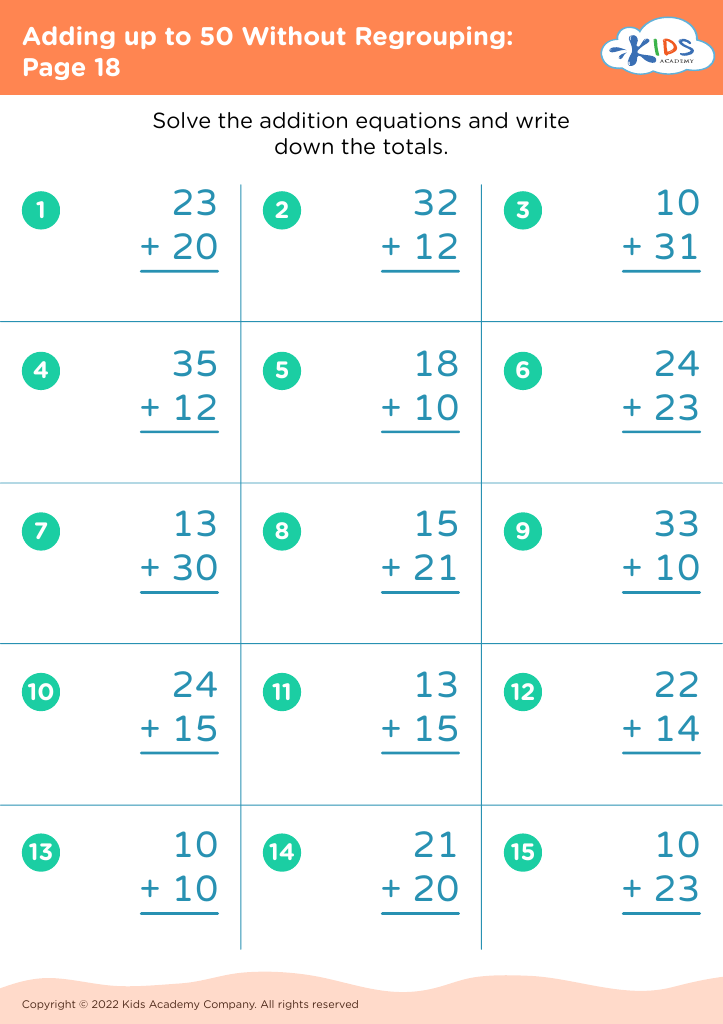
Adding up to 50 Without Regrouping: Page 18
Worksheet
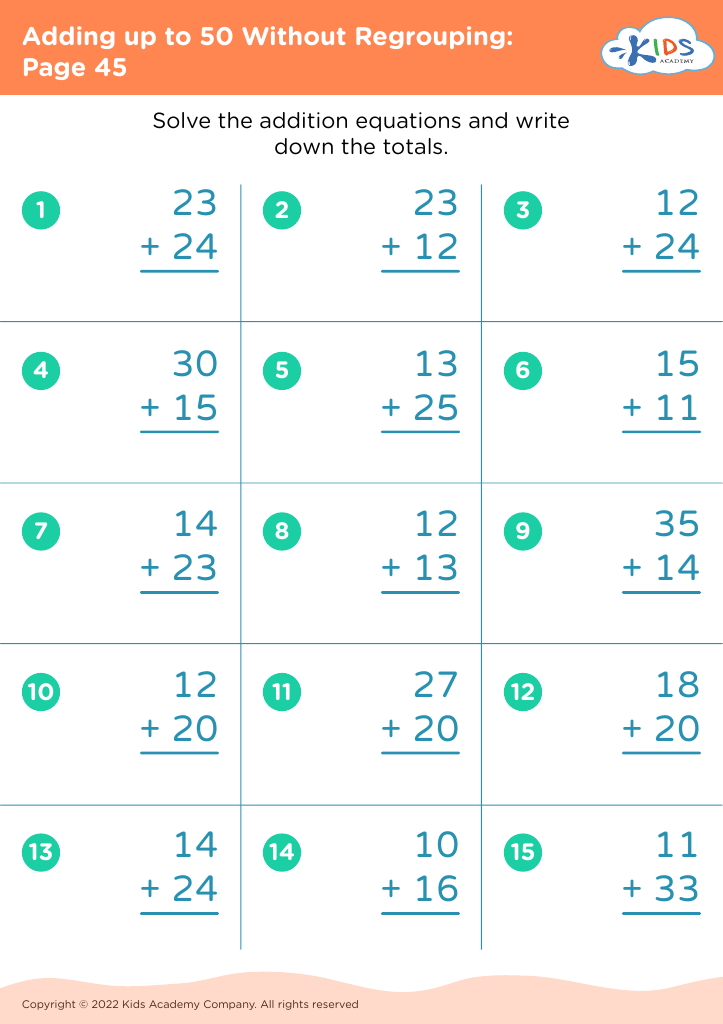
Adding up to 50 Without Regrouping: Page 45
Worksheet
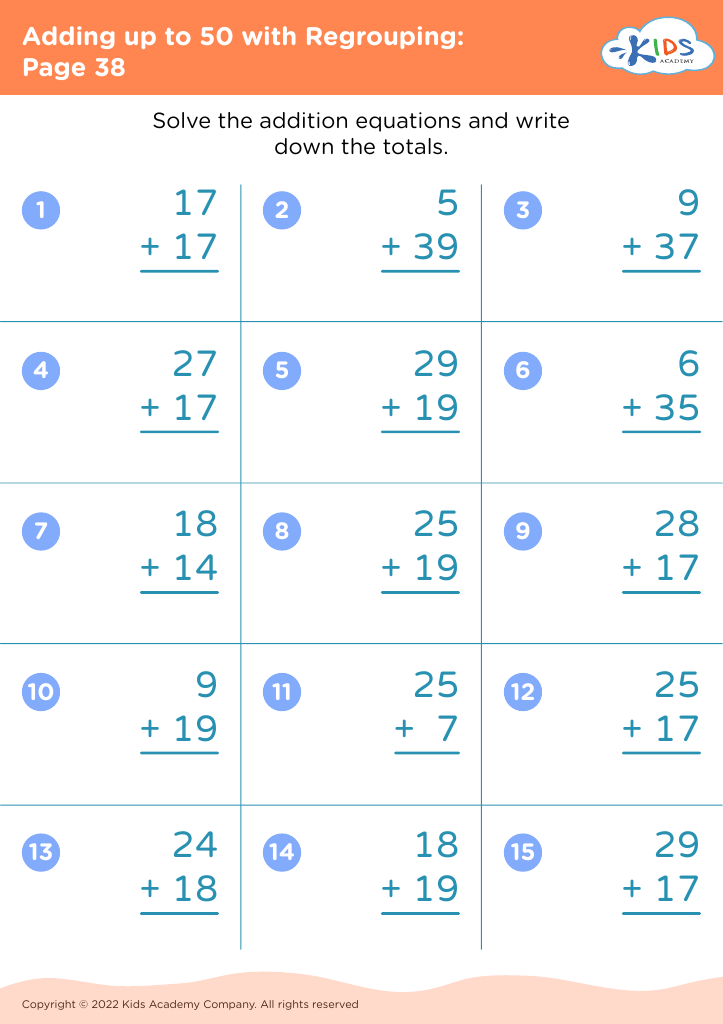
Adding up to 50 with Regrouping: Page 38
Worksheet
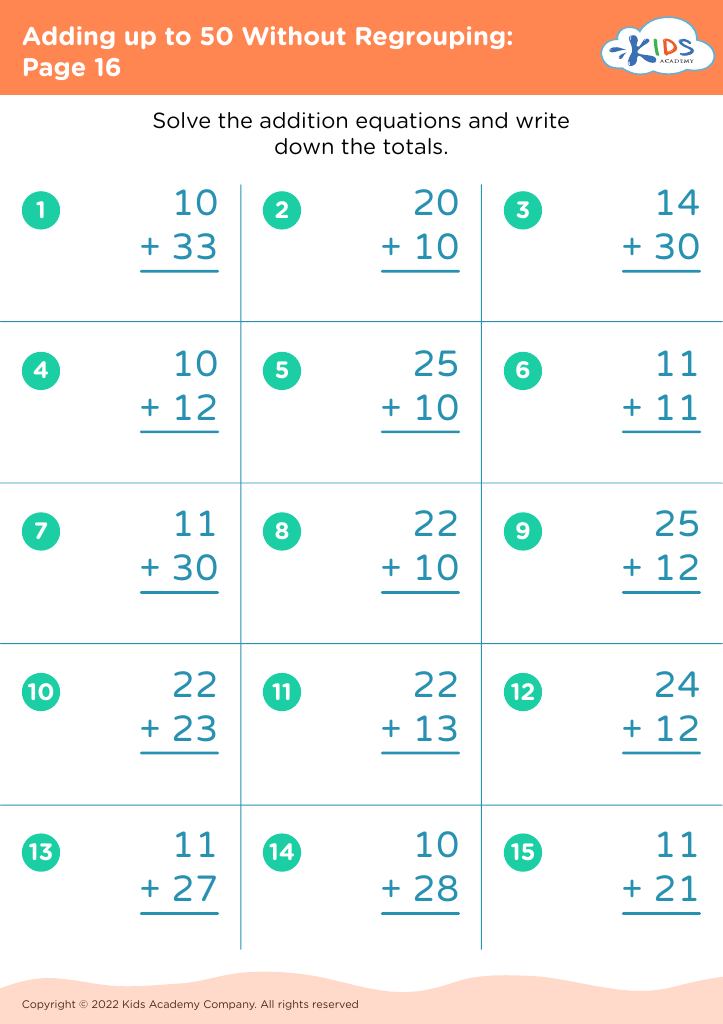
Adding up to 50 Without Regrouping: Page 16
Worksheet
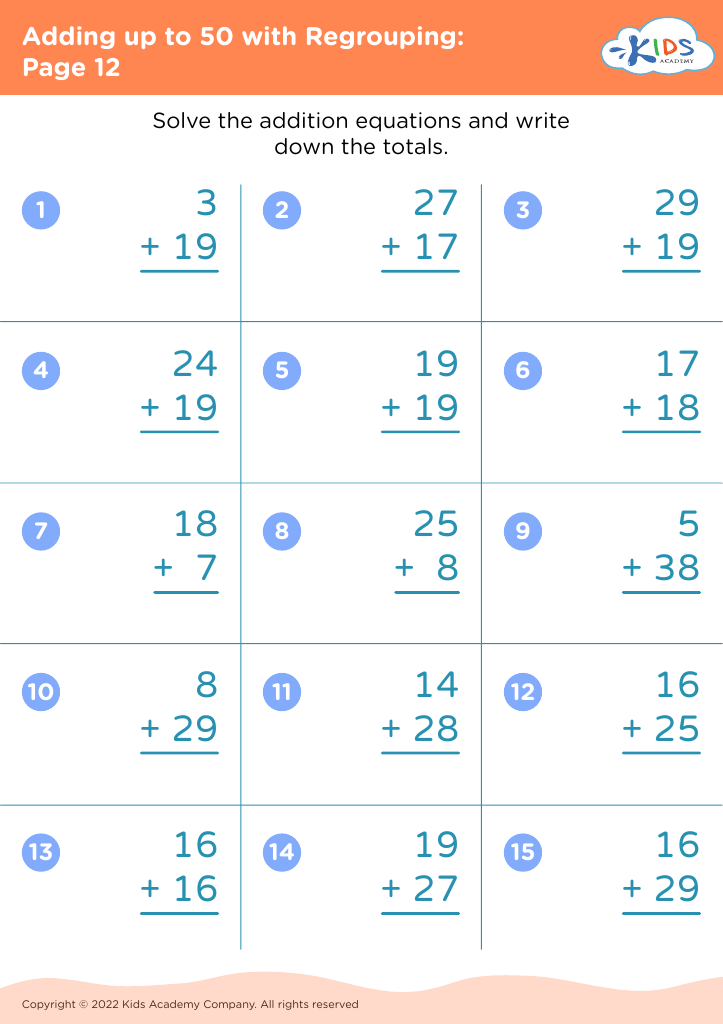
Adding up to 50 with Regrouping: Page 12
Worksheet
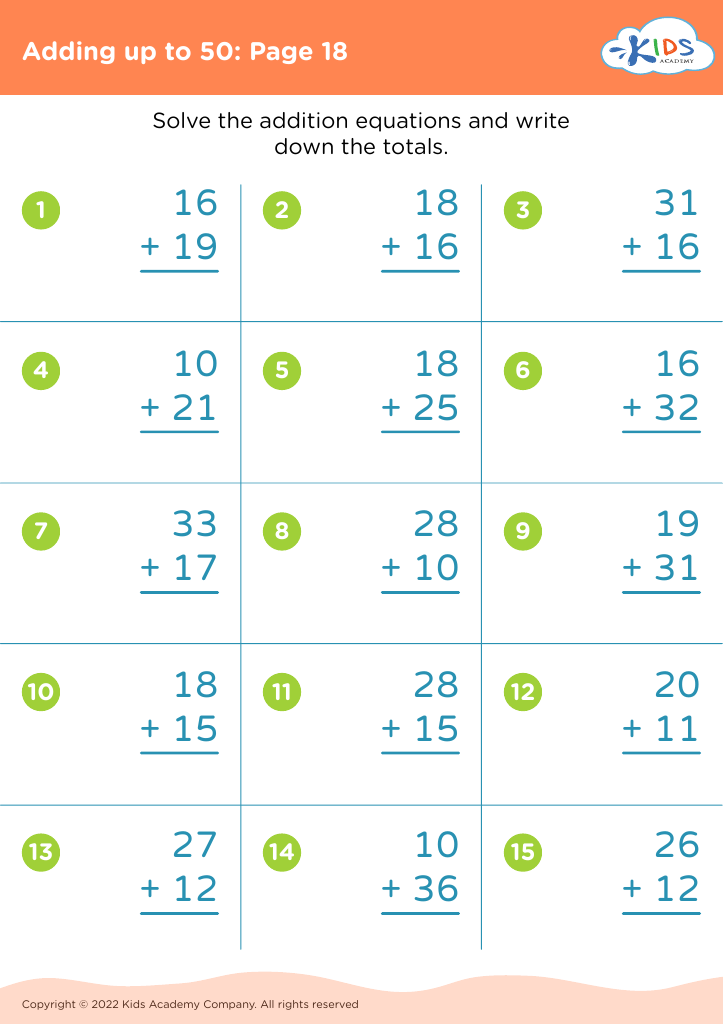
Adding up to 50: Page 18

Adding up to 50: Page 18

Adding up to 50: Page 18
Worksheet
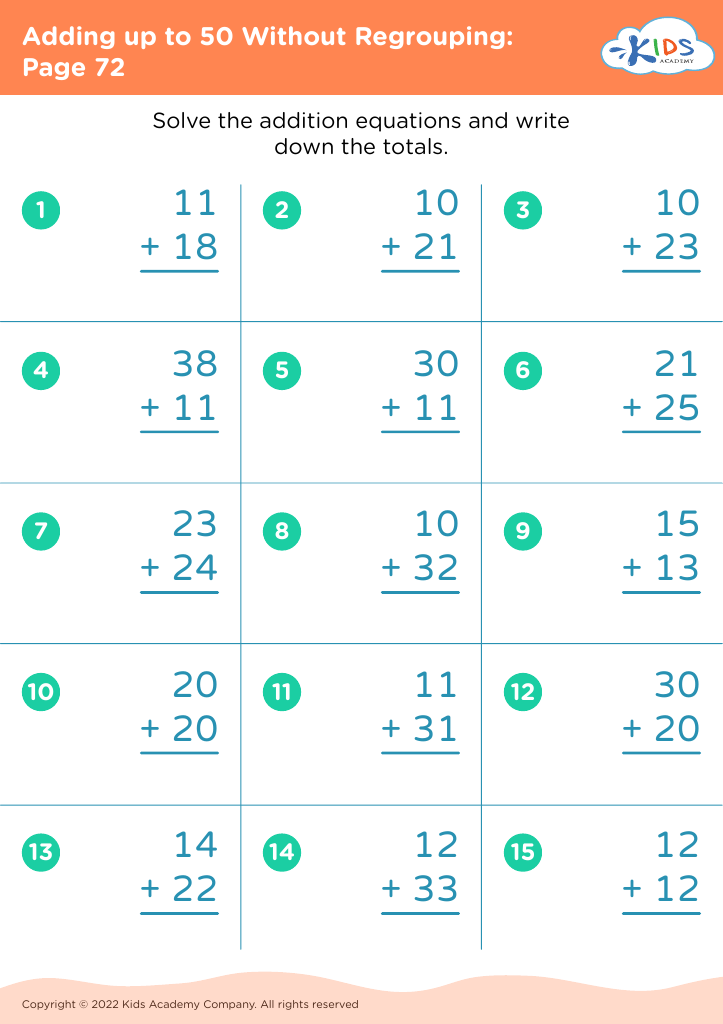
Adding up to 50 Without Regrouping: Page 72
Worksheet
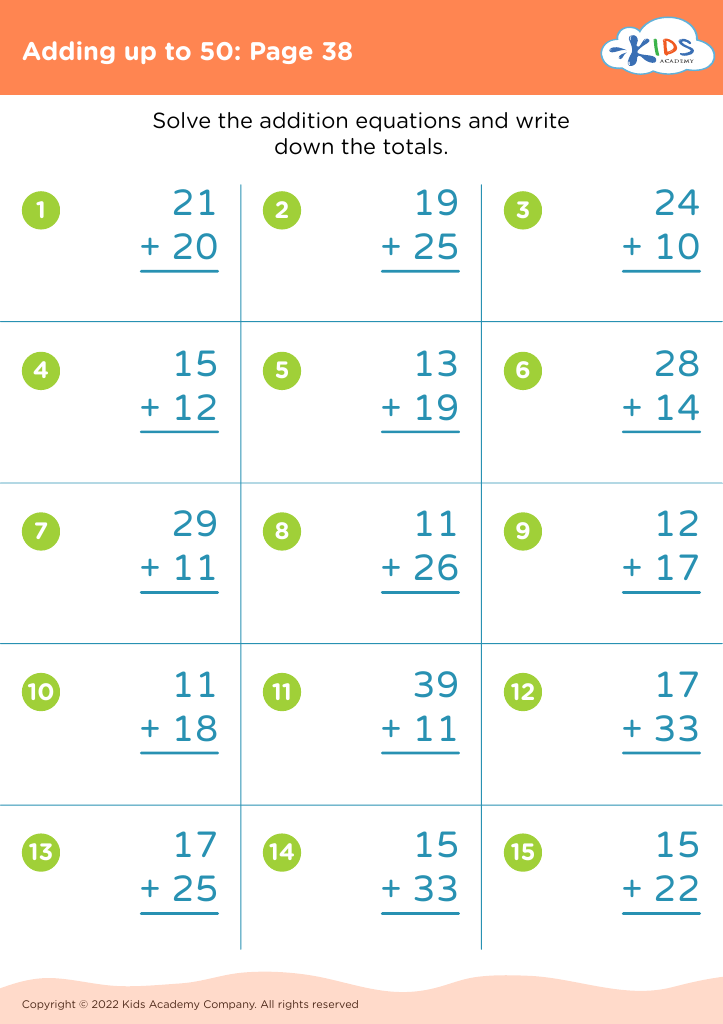
Adding up to 50: Page 38

Adding up to 50: Page 38

Adding up to 50: Page 38
Worksheet
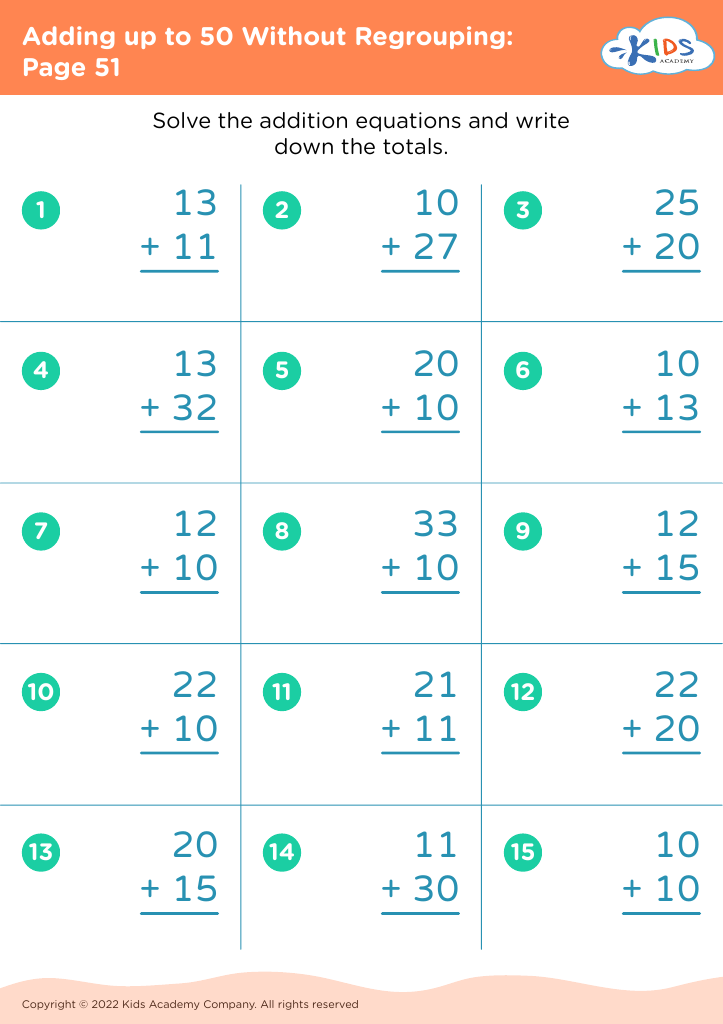
Adding up to 50 Without Regrouping: Page 51
Worksheet
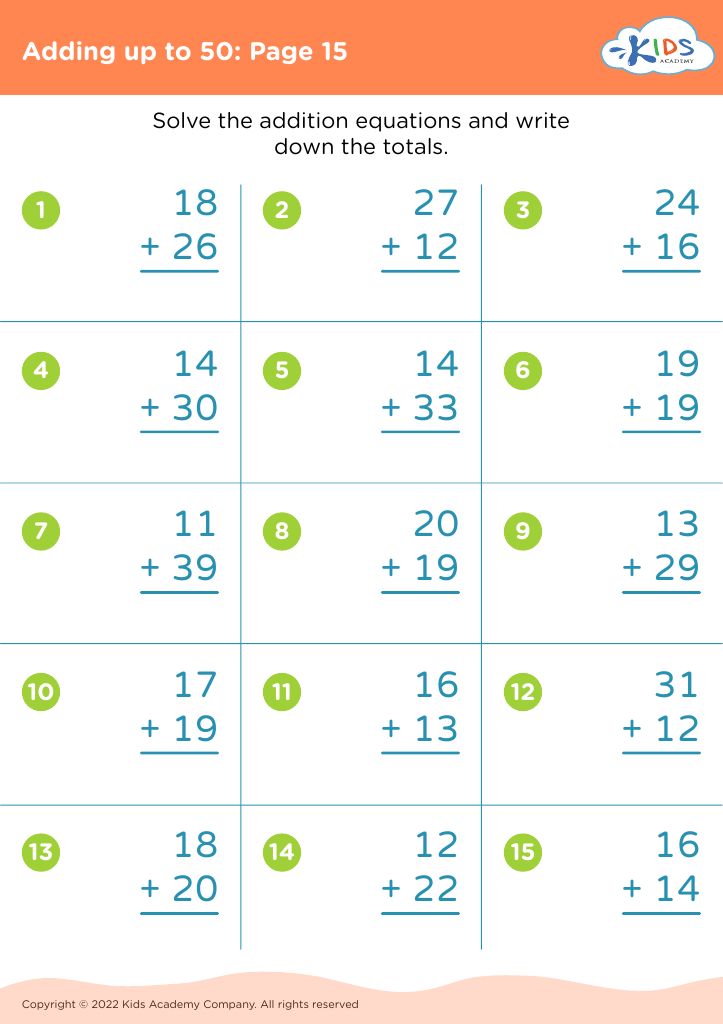
Adding up to 50: Page 15

Adding up to 50: Page 15

Adding up to 50: Page 15
Worksheet
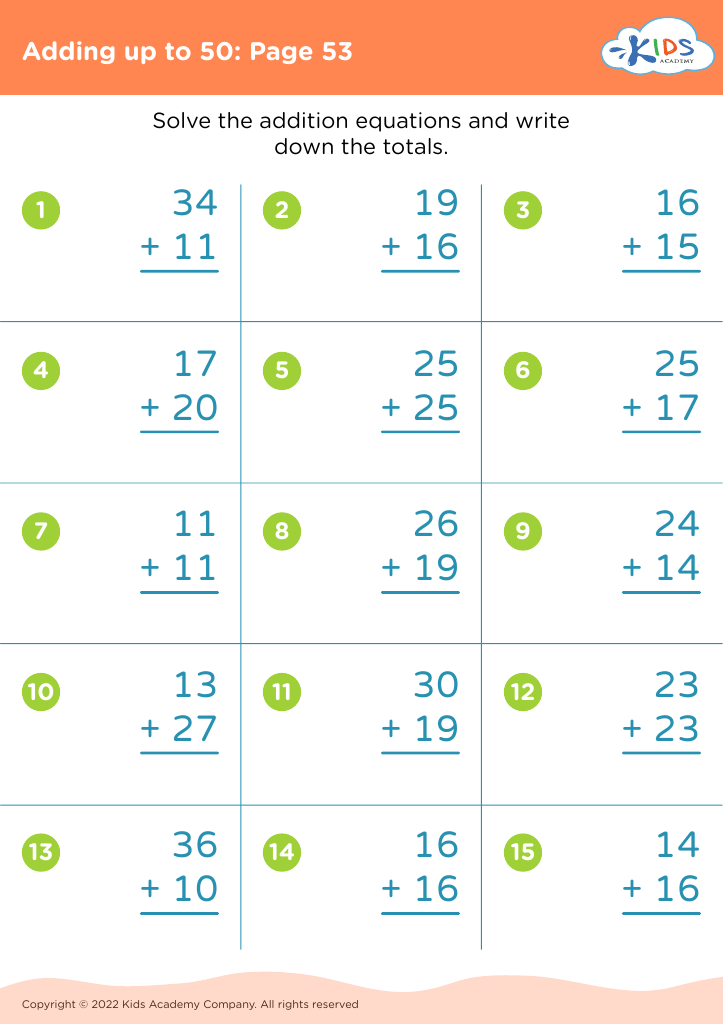
Adding up to 50: Page 53

Adding up to 50: Page 53

Adding up to 50: Page 53
Worksheet


Basic math skills, particularly the ability to add up to 50, are crucial for children aged 4-7. During these formative years, children are undergoing significant cognitive development, making it the perfect time to introduce foundational math concepts. Mastering addition builds the groundwork for their problem-solving skills, critical thinking, and later mathematics learning.

Moreover, mathematical skills aid in everyday activities like shopping, cooking, and engaging in games. Understanding how to add numbers up to 50 allows children to navigate social scenarios and makes them more confident learners.

For teachers, integrating basic math into the curriculum ensures that all students are progressing at an appropriate pace, allowing for early identification of those who may need additional support. For parents, reinforcing these skills at home fosters a cooperative learning environment and nurtures a child's natural curiosity about numbers.

Furthermore, early math proficiency is linked to academic success in later years. Children who are comfortable with addition will find it easier to tackle multiplication, division, and more complex mathematical concepts in the future. Therefore, encouraging basic math skills is not just about numbers; it’s about building a strong foundation for lifelong learning and development.