Compare fractions Adding up to 50 Worksheets for Ages 4-7
3 filtered results
-
From - To
Welcome to our "Compare Fractions Adding up to 50 Worksheets" page, designed for children aged 4-7! These engaging worksheets introduce young learners to the concept of comparing fractions while incorporating addition skills that total to 50. Fun and interactive activities ensure that kids not only grasp basic fraction concepts but also build confidence in their math abilities. Perfect for classrooms or home learning, our carefully crafted resources include colorful visuals, vivid examples, and a variety of problems to keep children motivated. Equip your child with essential math skills as they explore and compare fractions in an enjoyable way!
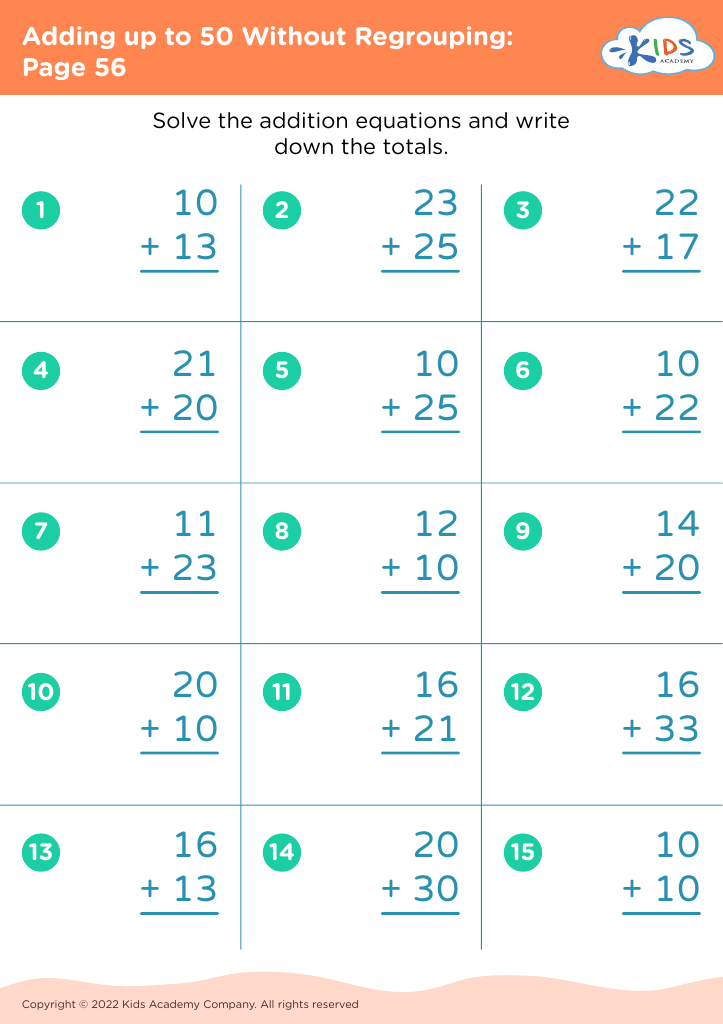
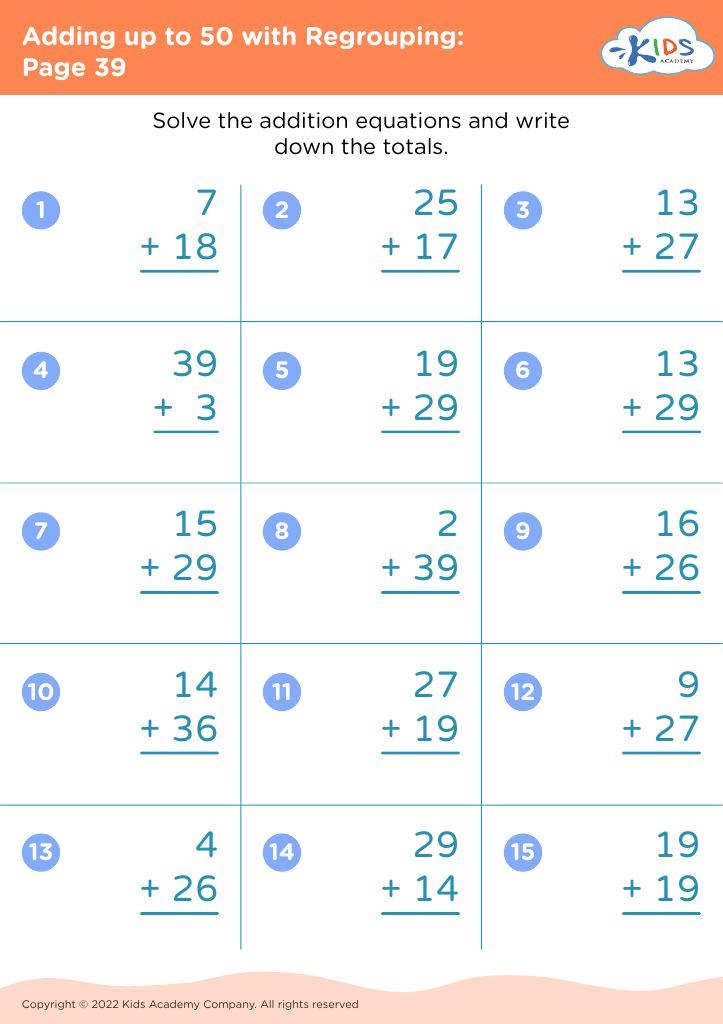
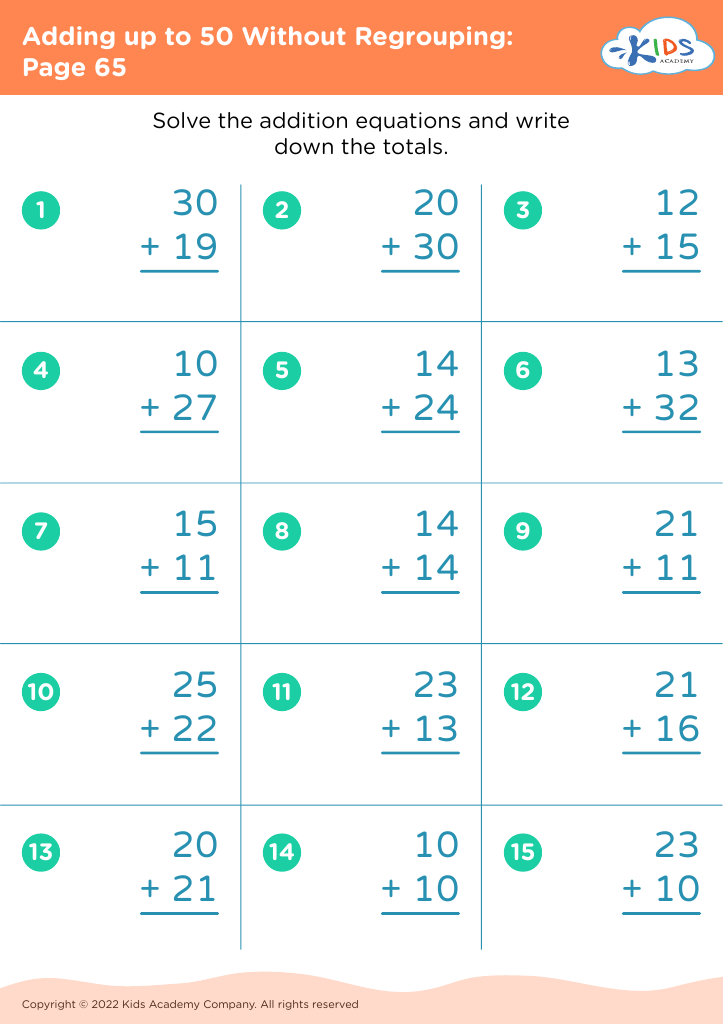




Understanding fractions is a crucial foundational skill for young learners, notably between the ages of 4 to 7. Teaching children about comparing fractions and adding them up to 50 not only supports their mathematical development but also instills a sense of confidence with numbers that carries throughout their educational journey.
When children learn to compare fractions, they develop critical thinking skills as they assess relationships between parts and wholes. This skill enhances their ability to make informed decisions, whether in math or in real-life situations like sharing pizza slices. Engaging young minds with fractions also nurtures problem-solving skills and encourages playful exploration, making learning fun and interactive.
Focusing on adding fractions up to 50 introduces basic arithmetic concepts, demonstrating how different parts can come together to form a whole. This lays the groundwork for later lessons in addition, subtraction, and more complex mathematical concepts.
Moreover, familiarizing students with these concepts fosters a fluency that can prevent future math anxiety and disengagement. Parents and teachers should care about this early exposure, as a strong grasp of numerical relationships will empower children academically and build a lasting appreciation for mathematics, setting them on a positive trajectory for lifelong learning.








