Comparing Fractions Adding up to 50 Worksheets for Ages 4-7 - Page 2
30 filtered results
-
From - To
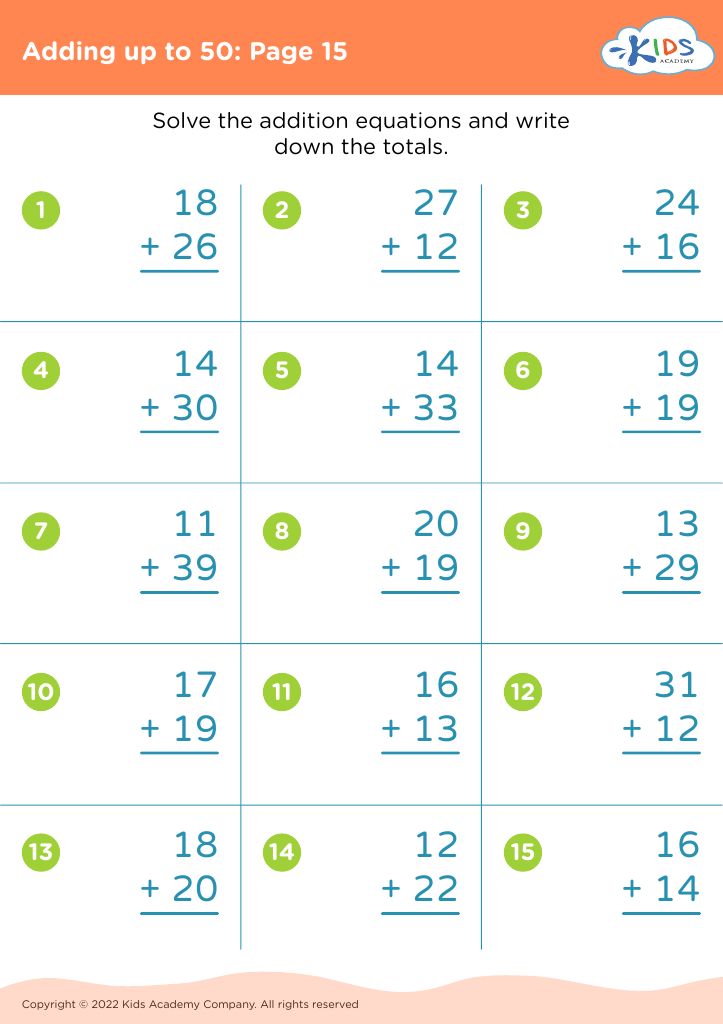
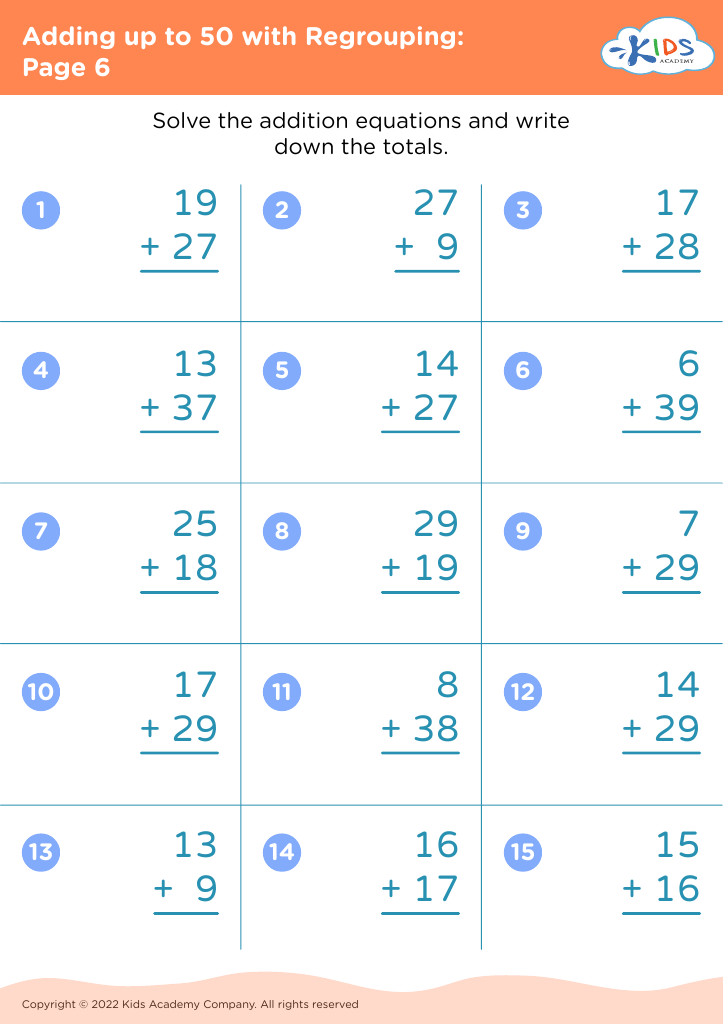
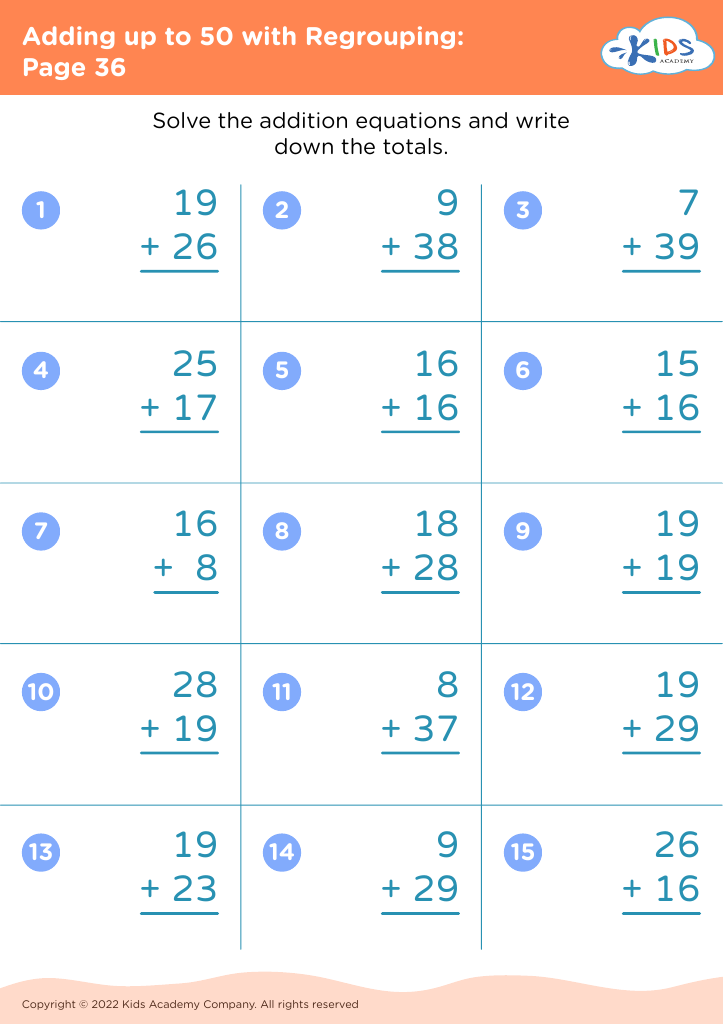
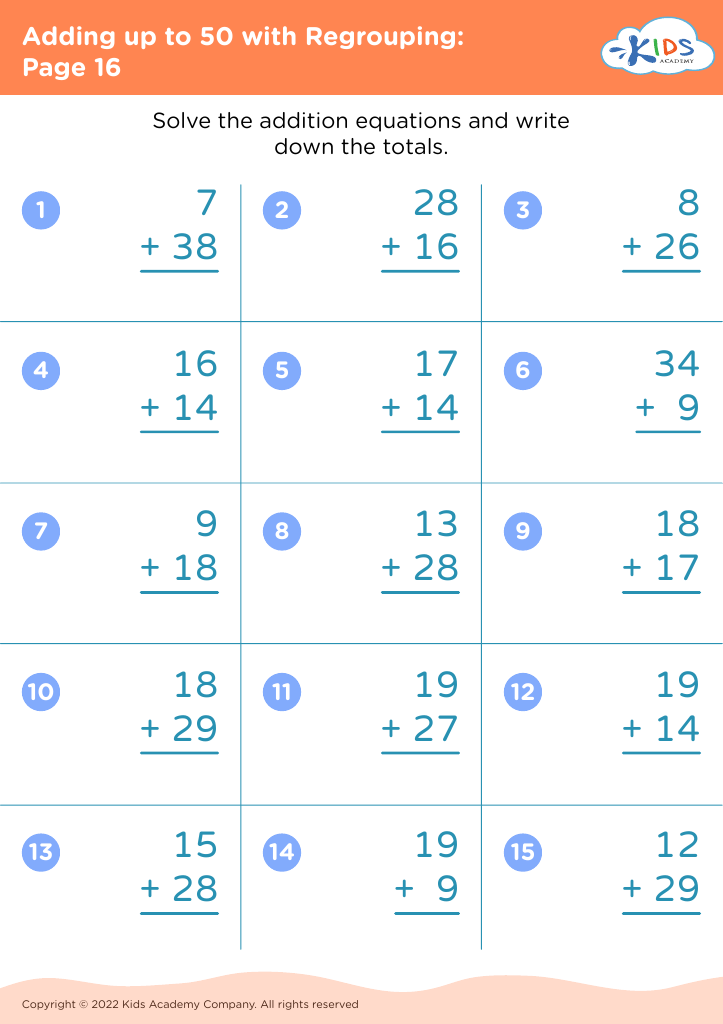
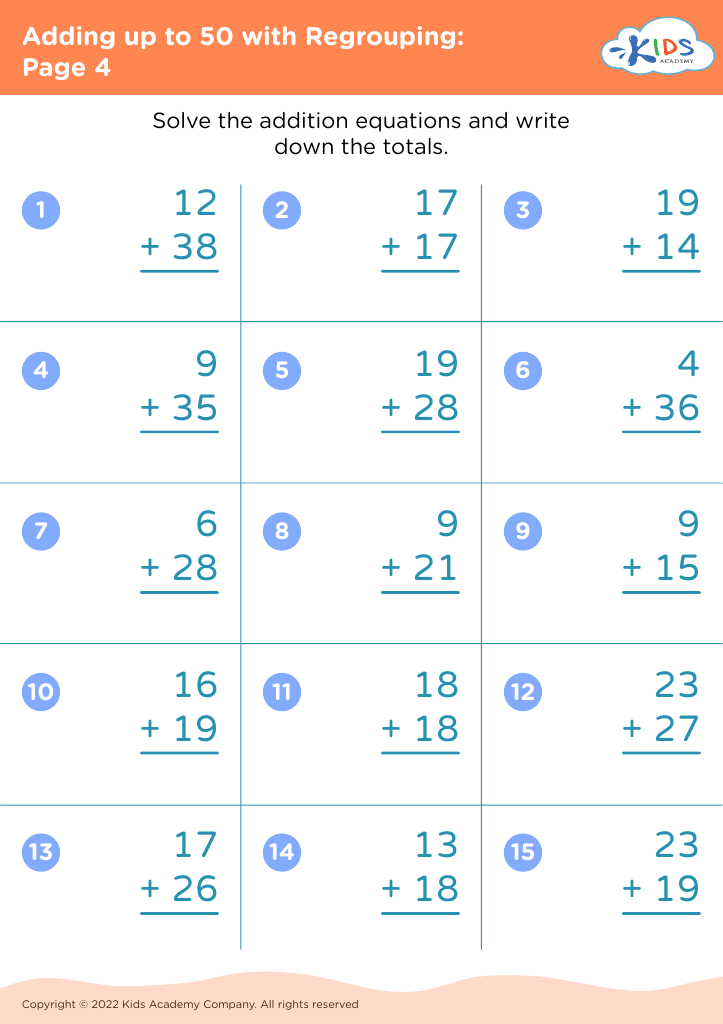
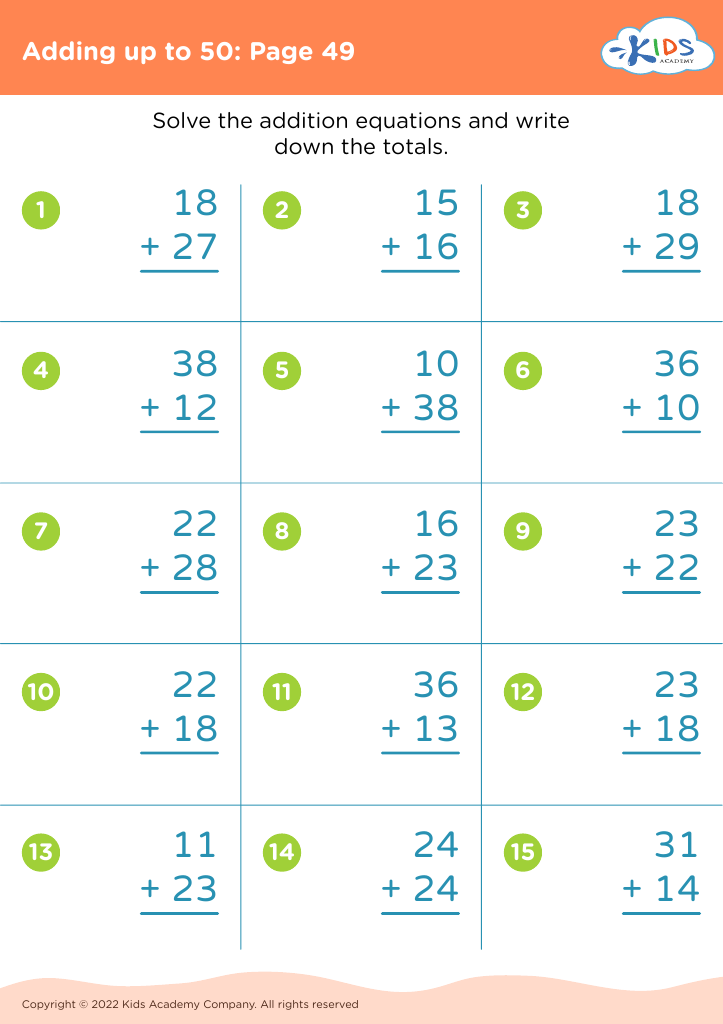




Comparing fractions is an essential skill that helps children aged 4-7 develop critical mathematical reasoning and problem-solving abilities. Understanding how to compare fractions lays the foundation for more complex mathematical concepts they will encounter later, such as addition, subtraction, and even division. When children learn to compare fractions, particularly in a relatable context like amounts that add up to 50, they grasp the concept of parts of a whole, which enhances their overall numeracy.
Moreover, learning to compare fractions fosters logical thinking. As they determine which fraction is larger or smaller, children practice making judicious assessments based on their understanding of numbers. This skill is not just academically vital; it also mirrors real-life situations—like sharing food or dividing resources—where comparison is key.
For parents and teachers, engaging children with hands-on activities involving comparing fractions encourages interactive learning. This reinforces their confidence and competence in math, areas that frequently concern educators and caregivers alike. Ultimately, helping young learners master such foundational concepts cultivates a positive relationship with math, setting the stage for future academic success. Thus, prioritizing activities centered around comparing fractions is instrumental in laying a robust educational groundwork.








