Comparing quantities Adding up to 50 Worksheets for Ages 4-7
3 filtered results
-
From - To
Explore our "Comparing Quantities Adding Up to 50 Worksheets" designed for young learners aged 4-7! These interactive worksheets help children grasp essential math concepts by comparing quantities and practicing addition in a fun and engaging way. With vibrant illustrations and age-appropriate activities, kids will build their confidence in math while enhancing critical thinking and problem-solving skills. Each worksheet focuses on adding numbers that total up to 50, laying a strong foundation for future math success. Perfect for at-home learning or classroom activities, our resources make math exciting and accessible for young minds. Discover the joy of learning with us today!
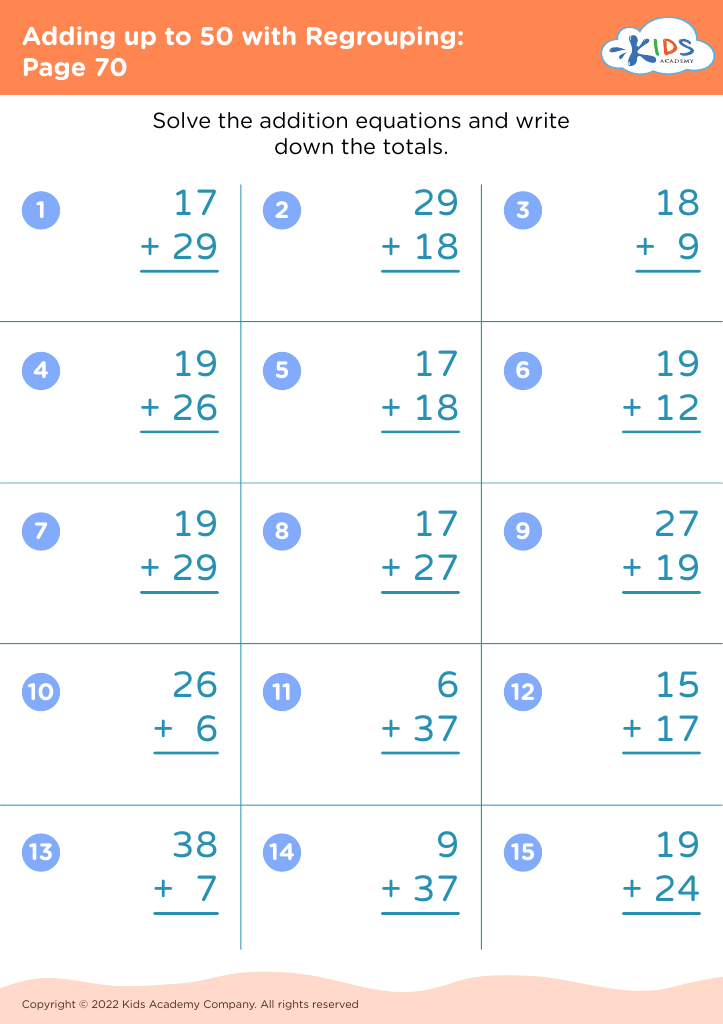
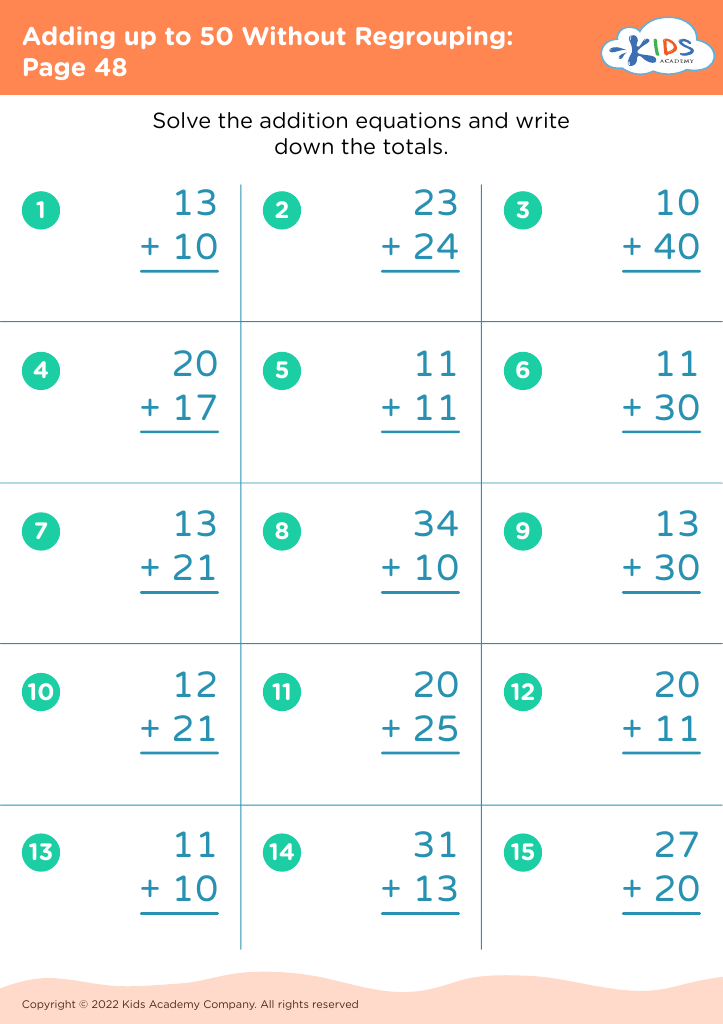
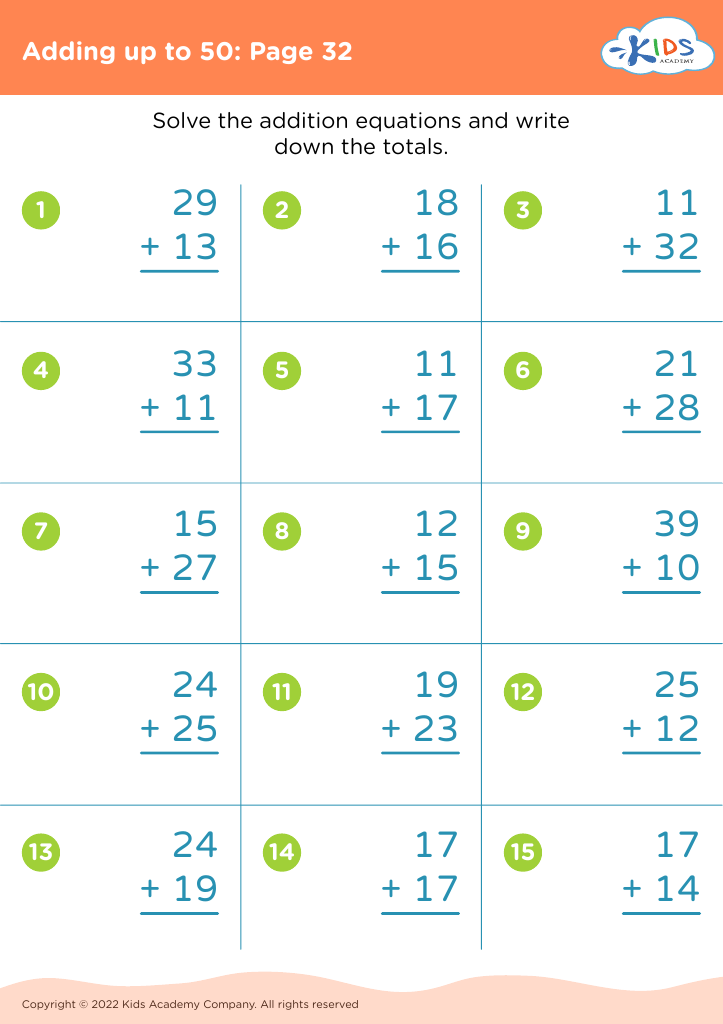




Comparing quantities and adding up to 50 is crucial for children aged 4-7 as it lays a strong foundation for their mathematical understanding and number sense. At this age, children are naturally curious and eager to explore numbers, and engaging them in comparing quantities fosters logical thinking, reasoning, and the ability to discern relationships between numbers.
Understanding how to compare quantities helps children grasp concepts like more, less, and equal, which are pivotal in everyday situations. By practicing addition up to 50, children not only become proficient in counting but also learn essential skills like grouping and breaking apart numbers, which are vital for future mathematical operations.
Moreover, mastering these skills boosts their confidence and encourages a positive attitude towards math, which can combat common anxieties about the subject. Teachers and parents play a critical role in guiding this learning process through interactive activities and play-based learning, making math fun and relatable.
By fostering these foundational skills, adults help children develop critical thinking skills and prepare them for more complex mathematical concepts in later years. Ultimately, attention to comparing quantities and addition creates a robust educational environment that can enhance children's overall cognitive development.








