Enhance number recognition Adding up to 50 Worksheets for Ages 4-7
5 filtered results
-
From - To
Boost your child's math skills with our "Enhance Number Recognition Adding up to 50 Worksheets for Ages 4-7." These engaging activities help young learners recognize and understand numbers up to 50, enhancing their addition skills through fun exercises. Designed for preschool to early elementary ages, these worksheets provide a solid foundation in math by combining colorful visuals with educational tasks. Perfect for school and home learning, our resources foster confidence, mastery of basic math concepts, and a lifelong love of numbers. Unlock your child's potential today and watch them thrive in their mathematical journey!
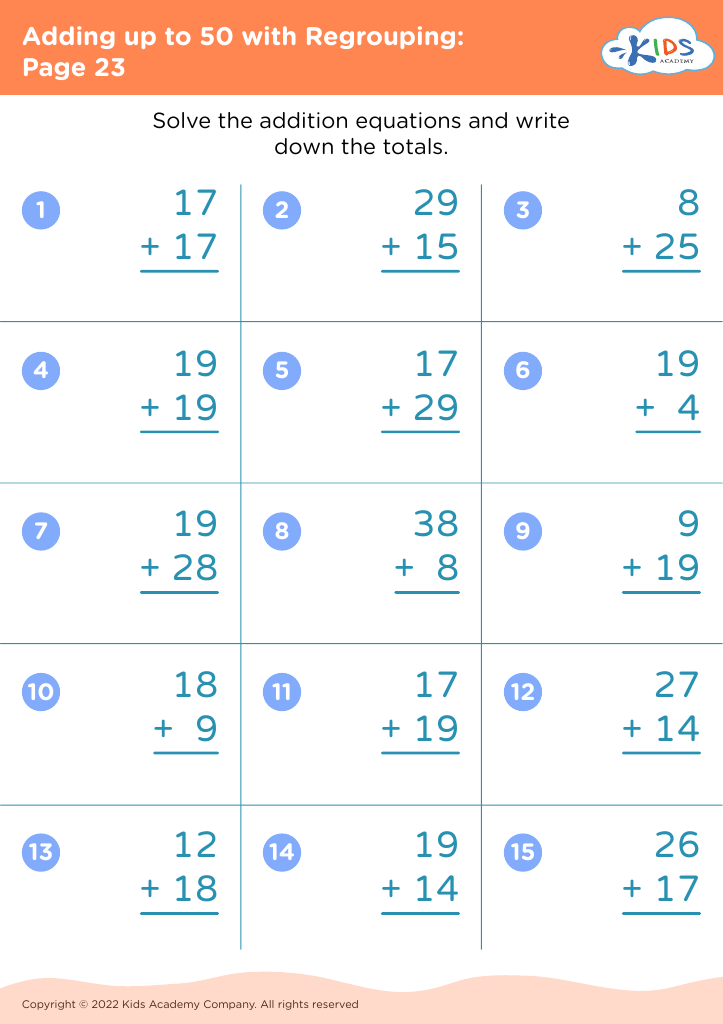
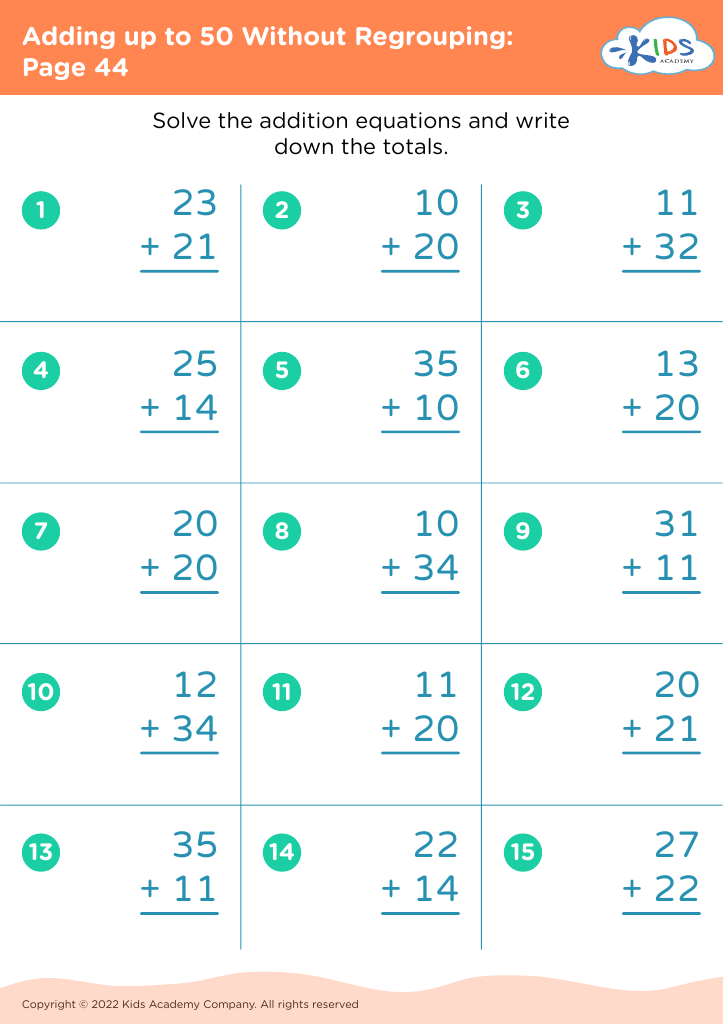
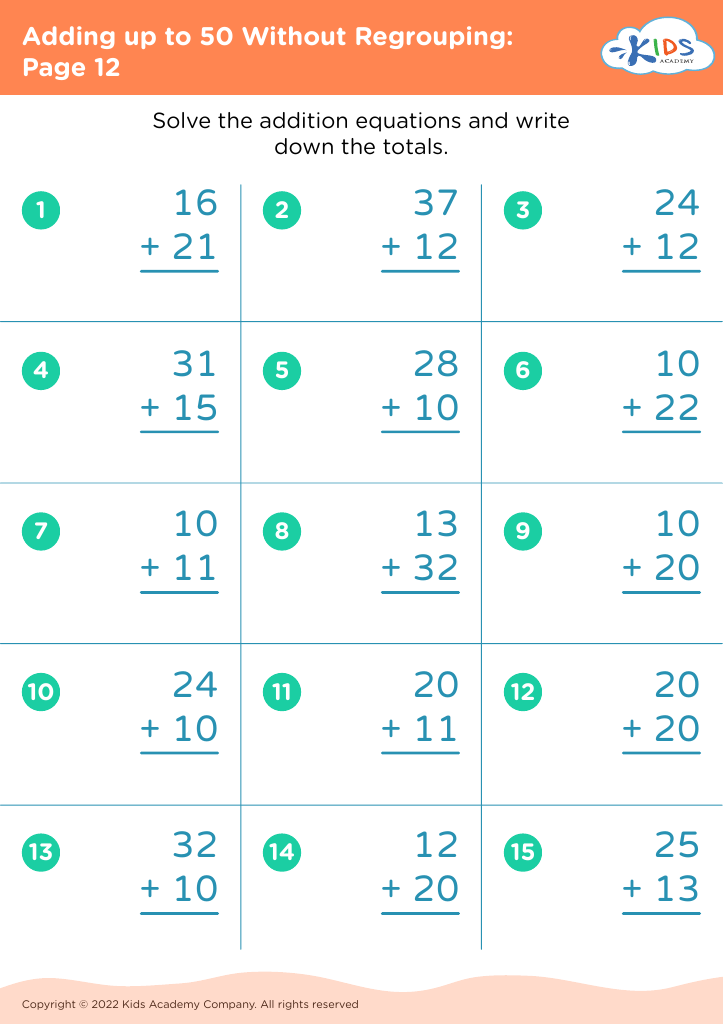
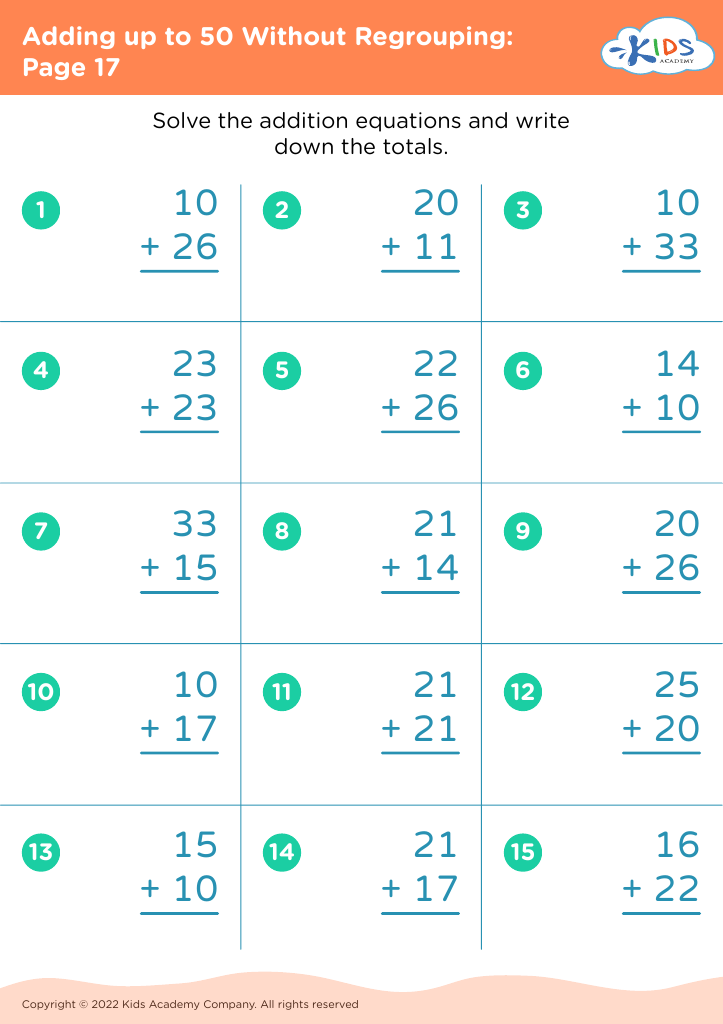
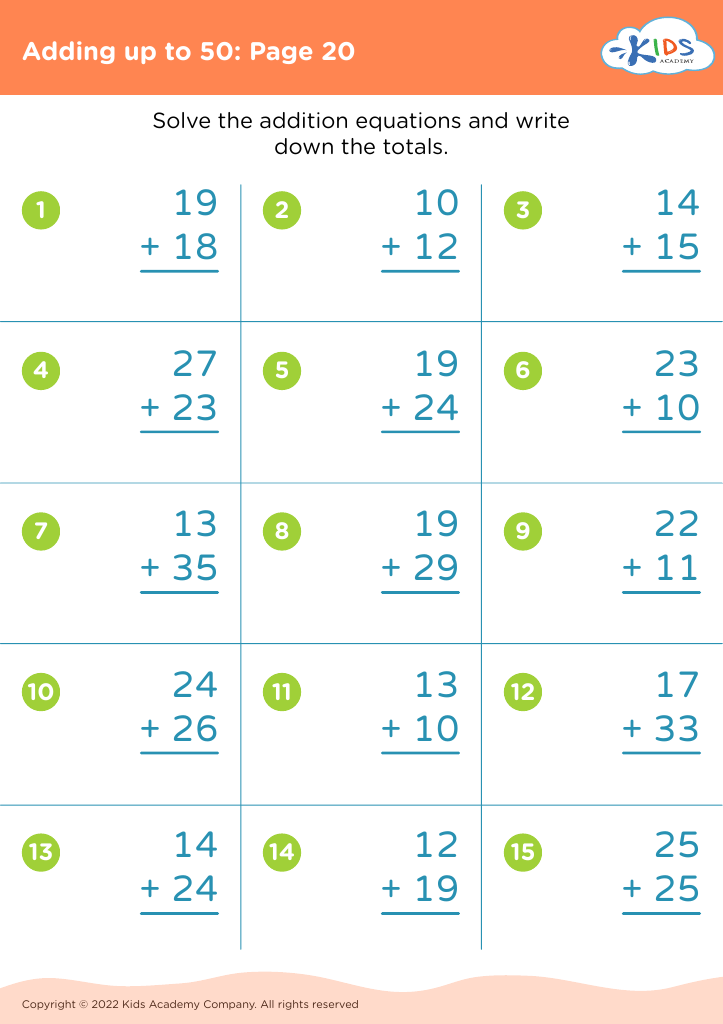




Understanding basic number recognition and addition up to 50 is crucial for young children, particularly between the ages of 4-7, because it forms the foundation for more complex mathematical concepts and everyday problem-solving skills. Parents and teachers should prioritize these early math skills because they foster cognitive development and encourage logical thinking.
Recognizing and adding numbers up to 50 helps children grasp the concept of quantity and improves their ability to perform basic arithmetic, which is essential for later academic success. When children can confidently count and add within this range, they build a sense of numerical relationships and patterns, aiding in the development of mental math skills. These abilities not only support future learning in subjects like algebra and geometry but also in daily activities such as shopping, cooking, and time management.
Moreover, developing these skills at a young age can boost a child's confidence in their mathematical abilities, reducing anxiety around the subject as they progress through school. Interactive and engaging exercises, such as counting games or practical addition problems, can significantly enhance this learning, making it enjoyable and more effective.
Ultimately, ensuring that children have a strong grasp of number recognition and basic addition by age 7 paves the way for academic success and practical life skills, emphasizing why parents and teachers should invest time and effort in this early learning phase.








