Fraction Addition Adding up to 50 Worksheets for Ages 4-7
5 filtered results
-
From - To
Explore our engaging "Fraction Addition Adding up to 50 Worksheets" specially designed for children ages 4-7! These worksheets provide a fun and interactive way to introduce young learners to the world of fraction addition. Ideal for early-grade teachers and parents, each activity encourages kids to recognize and add fractions while developing fundamental math skills. With colorful illustrations and age-appropriate exercises, our resources are perfect for enhancing critical thinking and problem-solving abilities. Join us in making math enjoyable and accessible, helping your child build a strong foundation in mathematics and gain confidence in their learning journey!
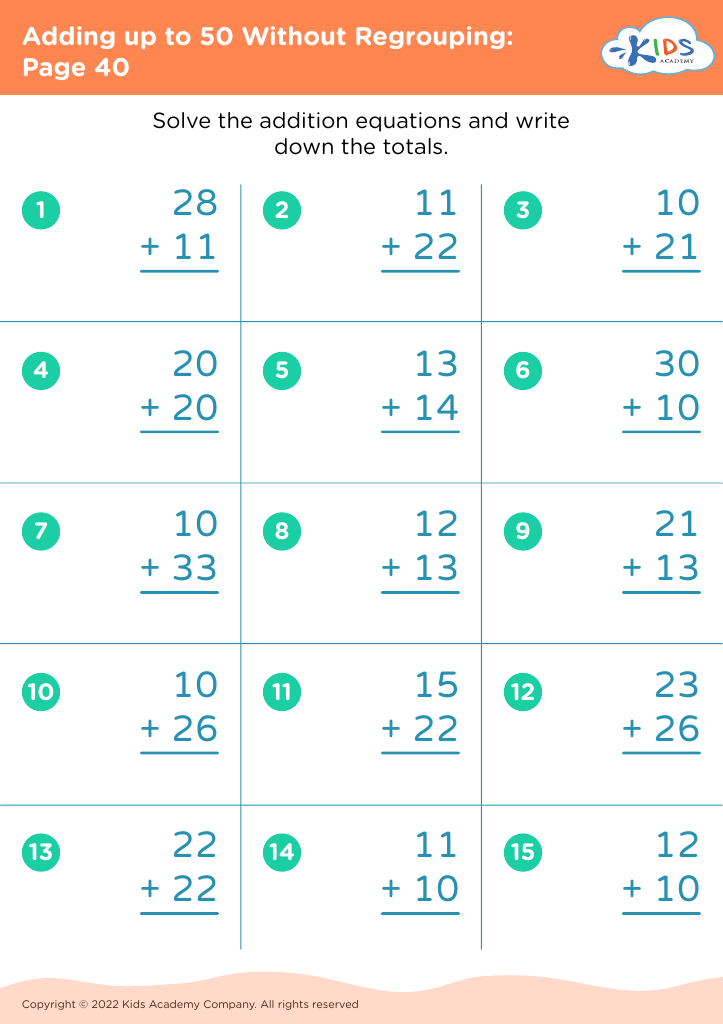
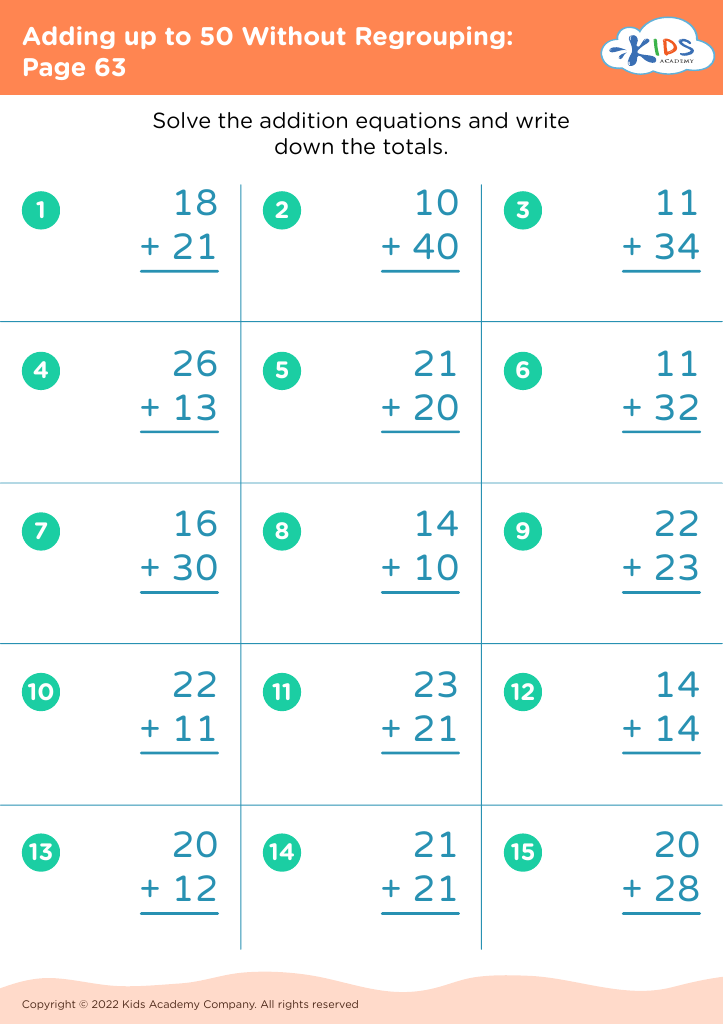
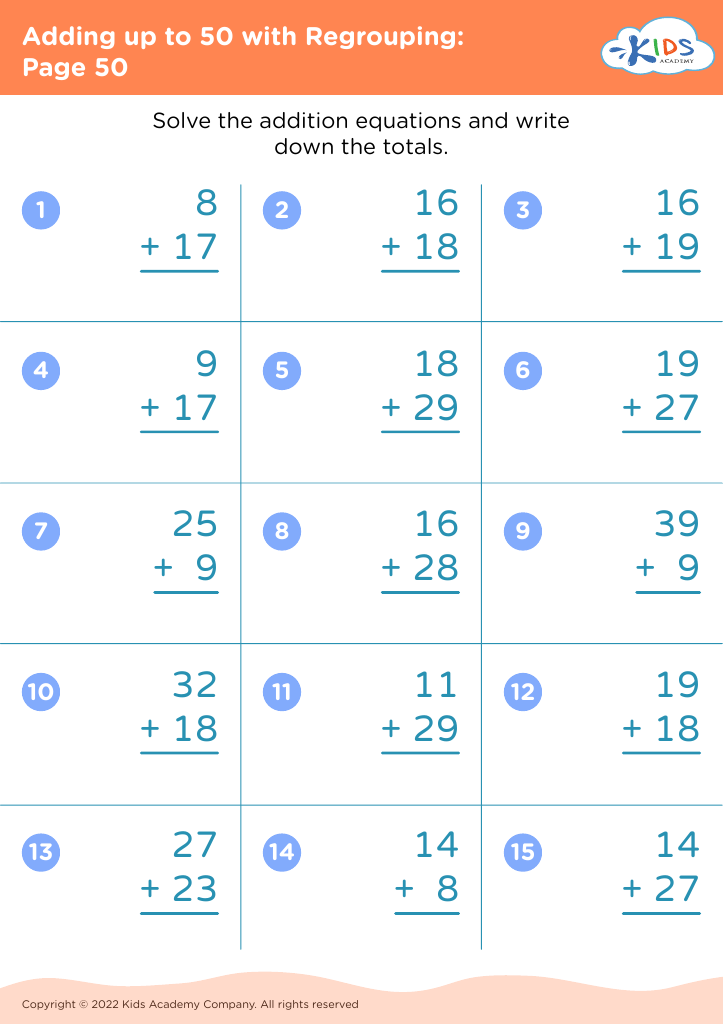
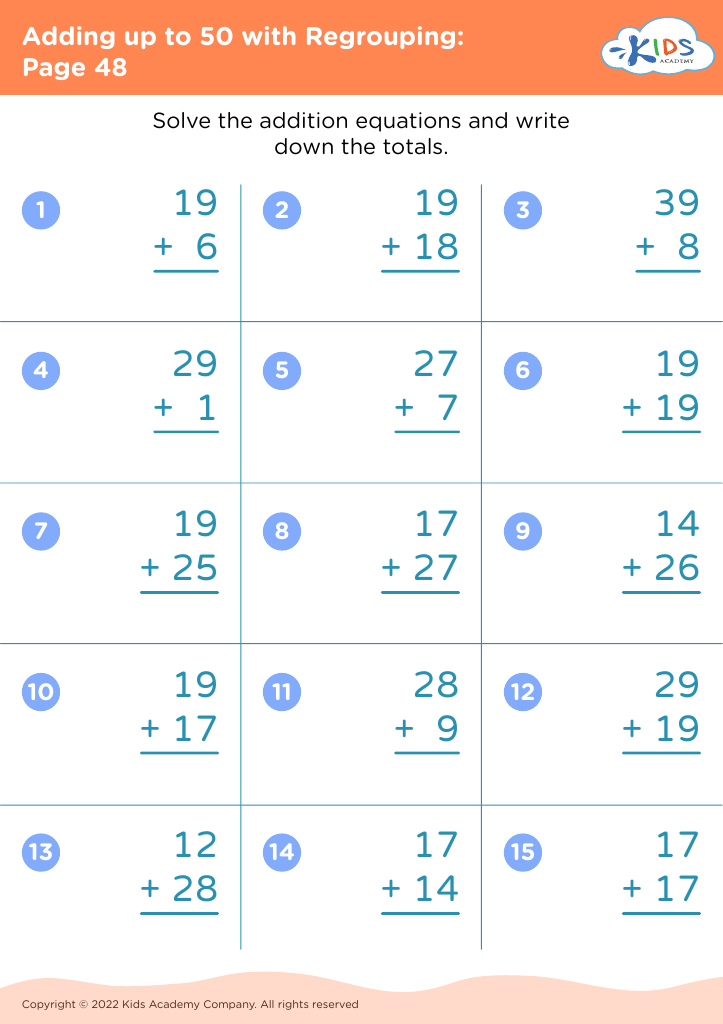
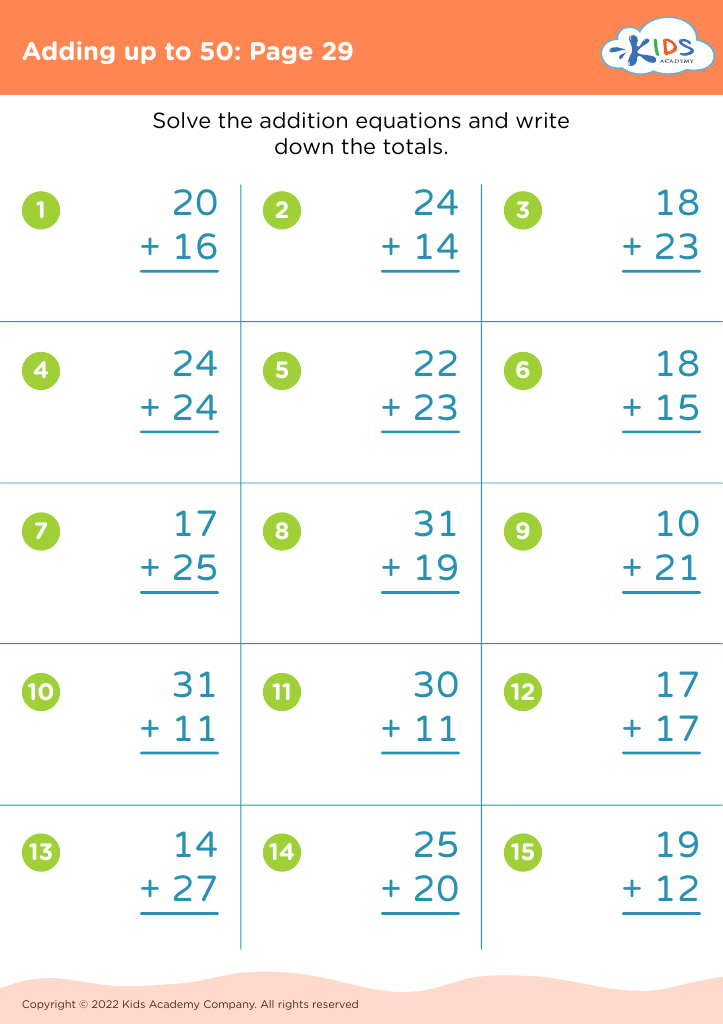




Parents and teachers should care about teaching fraction addition, particularly with a focus on combining fractions up to 50, because it lays the groundwork for important mathematical concepts. Children aged 4 to 7 are in a crucial stage of cognitive development. Introducing fractions at this age helps them visualize parts of a whole, enhancing their number sense and understanding of division and multiplication as they progress.
Engaging children with playful and relatable scenarios—like slicing a pizza or sharing toys—makes learning fractions tangible and fun. This approach not only boosts their mathematical skills but also fosters critical thinking. Mastering fraction addition builds confidence, as children learn to work with numbers beyond whole numbers, paving the way for more advanced topics in higher grades.
Additionally, fraction addition encourages collaboration, as children often work in pairs to solve problems. This social interaction reinforces communication and teamwork abilities. Ultimately, a solid grasp of these foundational math skills will support children's academic growth, helping them become more adept learners and problem solvers in the future. So, investing time in teaching fraction addition today can cultivate lifelong skills and a positive attitude toward math for our children.








