Fraction comparison Adding up to 50 Worksheets for Ages 4-7
7 filtered results
-
From - To
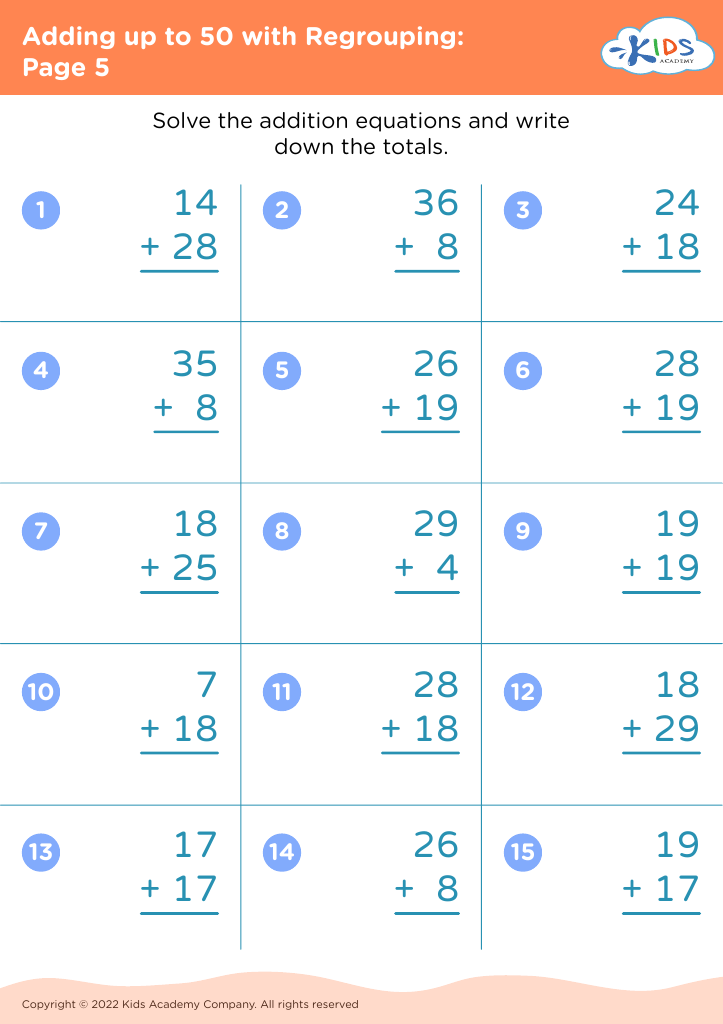
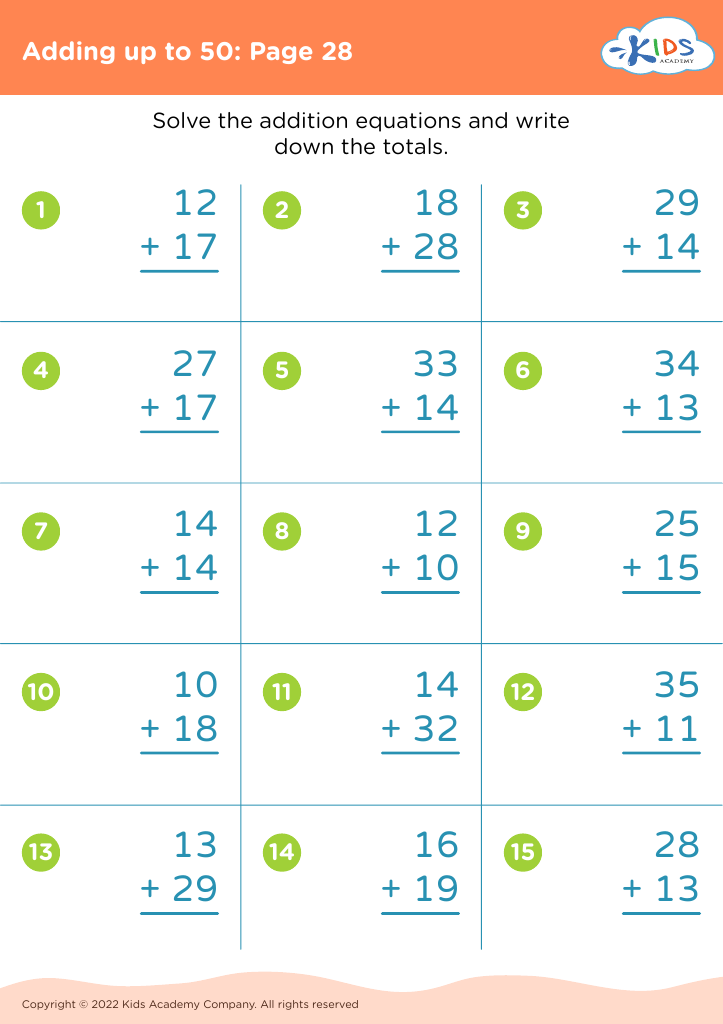
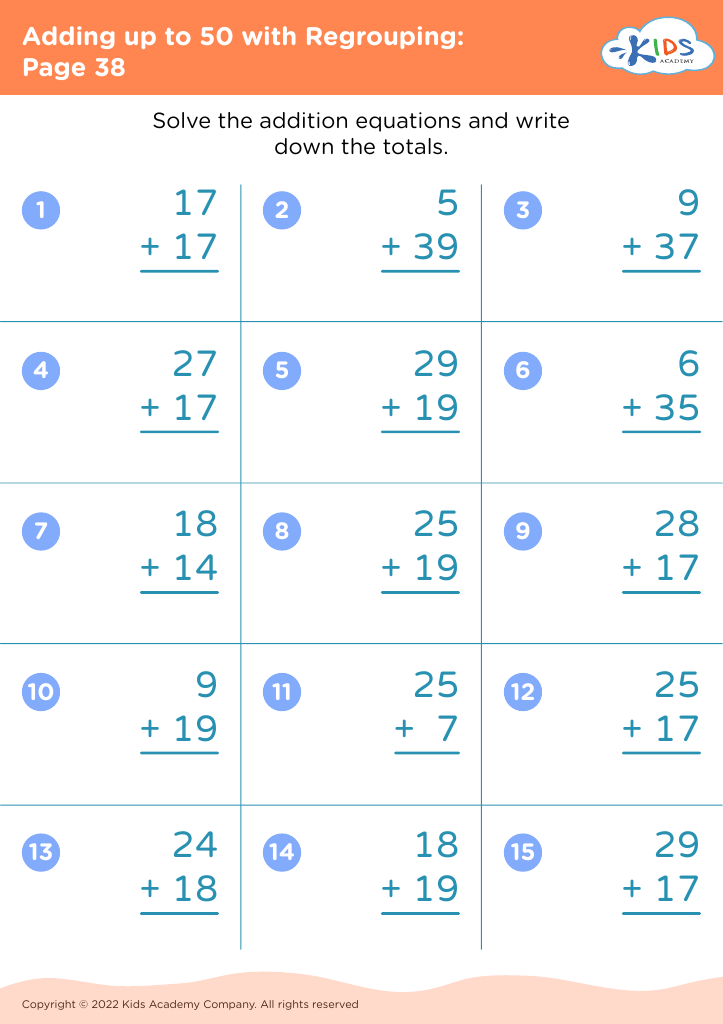
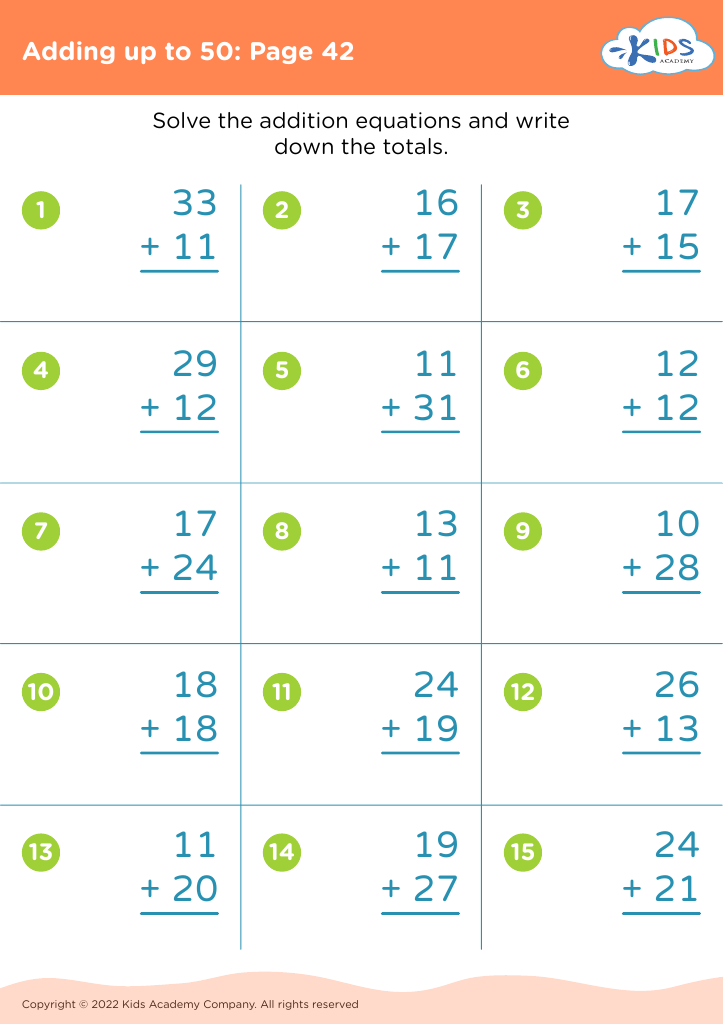
Explore our engaging "Fraction Comparison Adding up to 50 Worksheets" designed specifically for children ages 4-7! These worksheets offer an interactive and fun approach to mastering basic fraction concepts, helping young learners compare fractions effectively while reinforcing addition skills that total up to 50. With colorful illustrations and age-appropriate exercises, kids can practice identifying larger and smaller fractions through hands-on activities. Our worksheets not only foster essential math skills but also promote critical thinking and problem-solving abilities. Perfect for classroom use or at-home learning, these resources ensure a solid foundation in math concepts that will benefit your child’s educational journey!
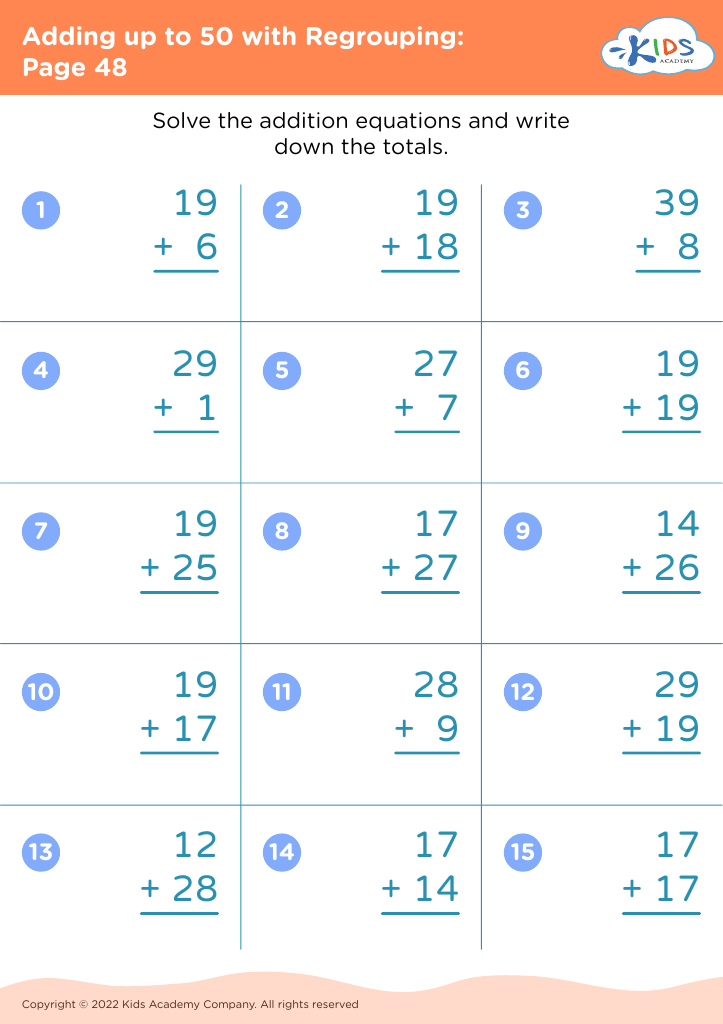
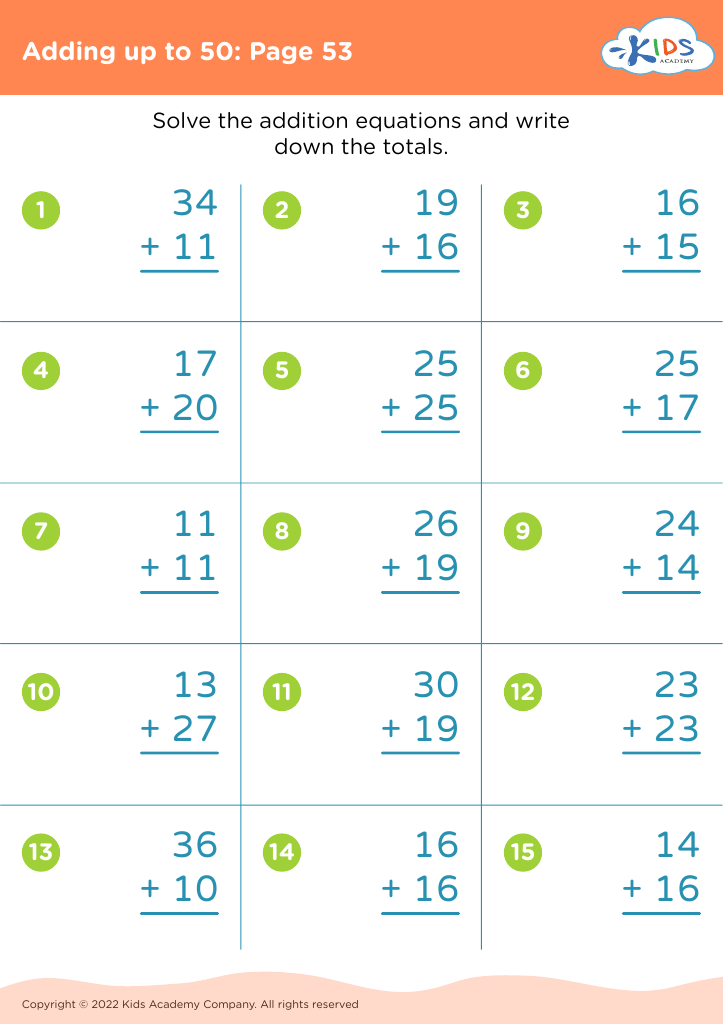
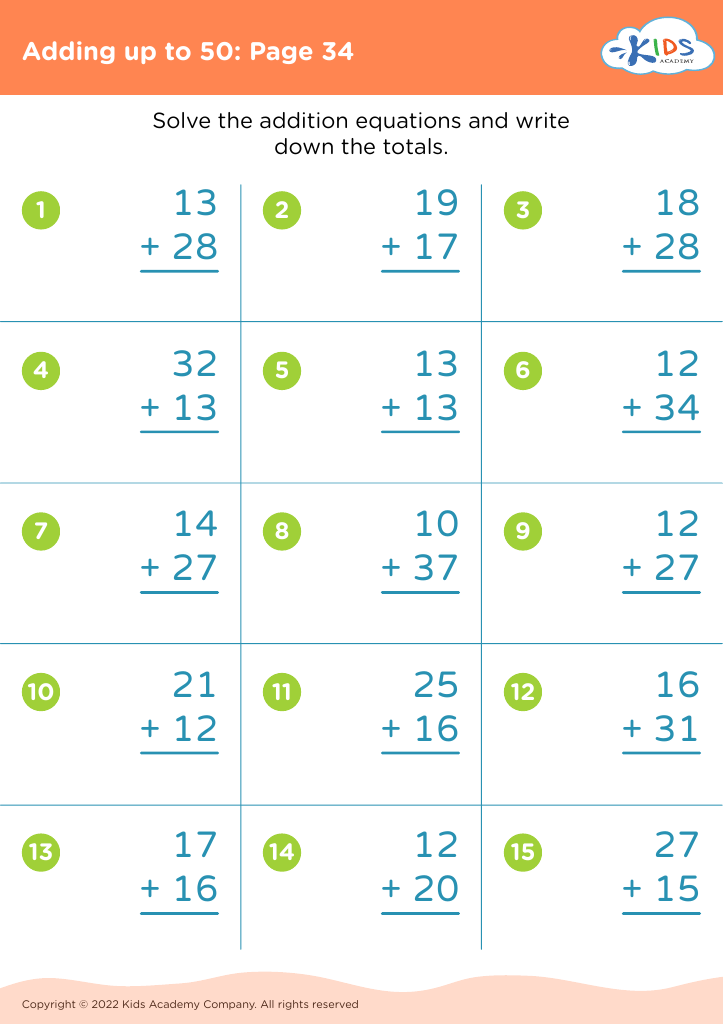




Fraction comparison is a vital skill in early mathematics that lays the foundation for more complex concepts in later years. For children aged 4-7, understanding how to compare fractions, especially when adding up to 50, fosters their ability to make connections between numbers and enhances their overall numerical fluency.
By introducing fraction comparison, parents and teachers can help children grasp the importance of part-to-whole relationships, a concept that transcends mere numbers. When children learn to compare fractions, they develop critical thinking and analytical skills as they evaluate which fraction represents a larger or smaller portion of a whole, laying the groundwork for algebraic reasoning.
Moreover, mastering this skill empowers young learners to tackle real-world problems, such as cooking, where measuring ingredients requires an understanding of fractions. Engaging in practical and fun activities can make these concepts tangible and relatable.
Additionally, early exposure to fraction comparison fosters a positive attitude towards mathematics. When children feel confident in their ability to understand and manipulate numbers, they are more likely to nurture a lifelong love for learning, ultimately advancing their academic journey. Thus, both parents and teachers play a crucial role in nurturing these foundational mathematical skills.








