Fraction identification Adding up to 50 Worksheets for Ages 4-7
3 filtered results
-
From - To
Discover our engaging Fraction Identification Worksheets designed specifically for children aged 4-7! Perfect for early learners, these fun and interactive worksheets help young students recognize and understand fractions while practicing addition skills that sum up to 50. Each worksheet features colorful illustrations and easy-to-follow exercises that stimulate critical thinking and enhance math comprehension. Ideal for at-home practice or classroom use, these resources promote independent learning and foster a solid math foundation. Encourage your child’s mathematical growth and confidence with our thoughtfully crafted fraction identification activities. Download and watch your little mathematician thrive in their number journey today!
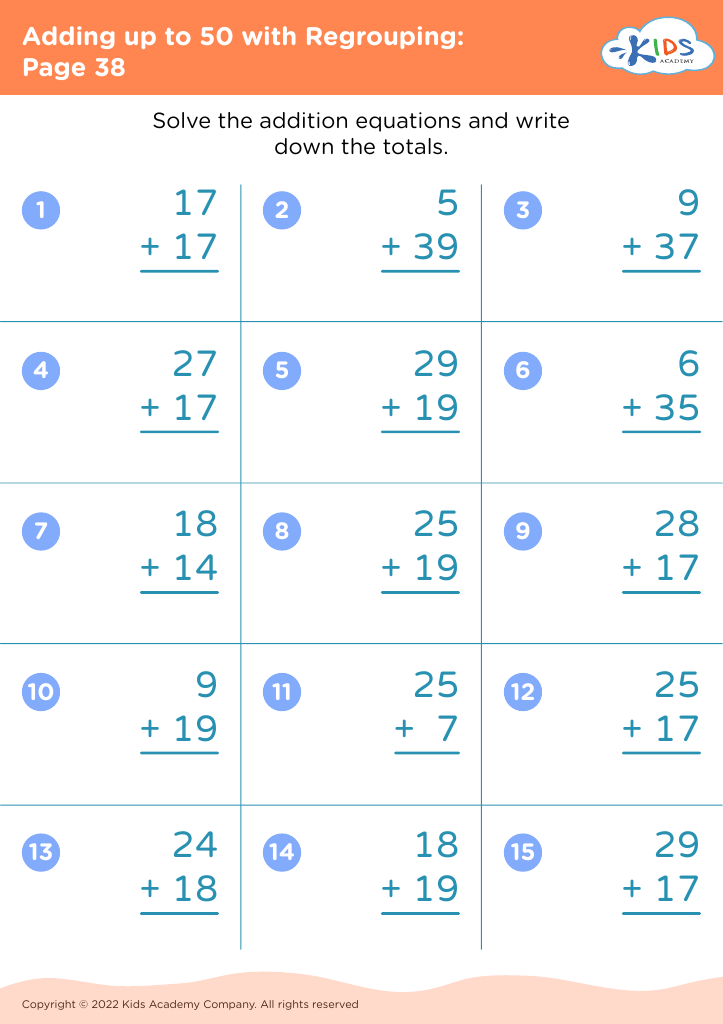
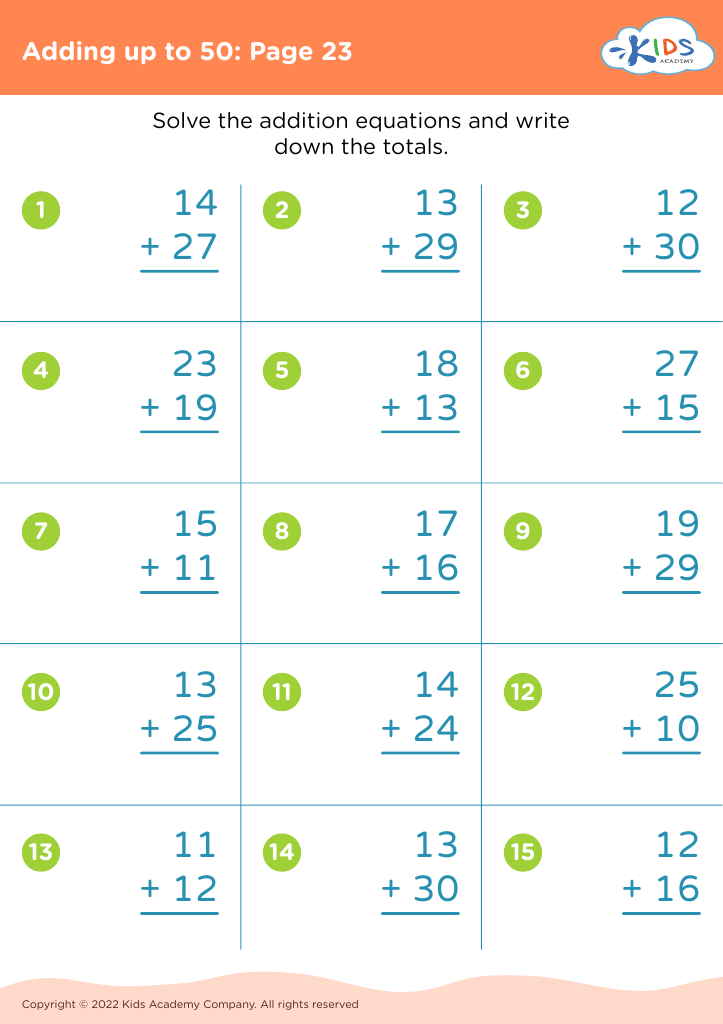
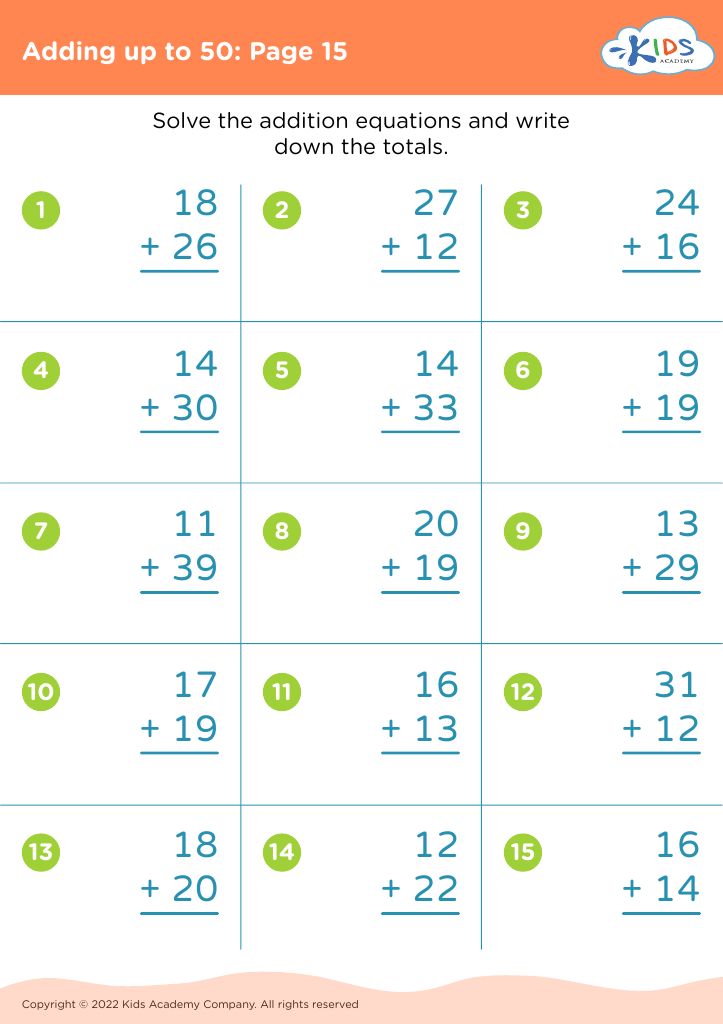




Understanding fraction identification and basic addition is crucial for children aged 4-7 as it lays the foundation for their mathematical literacy. At this age, children are developing critical thinking and problem-solving skills, making it essential for parents and teachers to prioritize these concepts.
Fraction identification helps children grasp the idea of parts of a whole, which is a fundamental concept in mathematics. It enables them to see relationships between numbers and understand concepts like sharing, dividing, and equality in everyday contexts. Additionally, introducing basic addition skills up to 50 fosters confidence and creativity in their approach to math.
Mastering these skills can increase a child’s numerical fluency and prepares them for more advanced topics in later grades, including more complex operations such as multiplication and division. Teaching fractions and simple addition also enhances their ability to comprehend real-life applications—be it measuring ingredients for a recipe or dividing treats among friends.
Moreover, early engagement with these concepts can instill a positive attitude toward math, reducing anxiety in future learning scenarios. By investing time and effort in these foundational skills, parents and teachers empower young learners to navigate the mathematical challenges they will face as they grow.








