Improve number recognition Adding up to 50 Worksheets for Ages 4-7
5 filtered results
-
From - To
Enhance your child's number recognition skills with our engaging "Adding Up to 50 Worksheets" designed for ages 4-7! These worksheets provide a fun and interactive way for young learners to familiarize themselves with numbers while mastering addition up to 50. Featuring colorful visuals and age-appropriate exercises, children will develop confidence and fluency in numeracy. Our resources focus on improving cognitive skills, critical thinking, and problem-solving through enjoyable activities that spark interest in math. Perfect for at-home learning or classroom use, these worksheets are a great addition to any early education curriculum. Download today and watch your child's math skills soar!
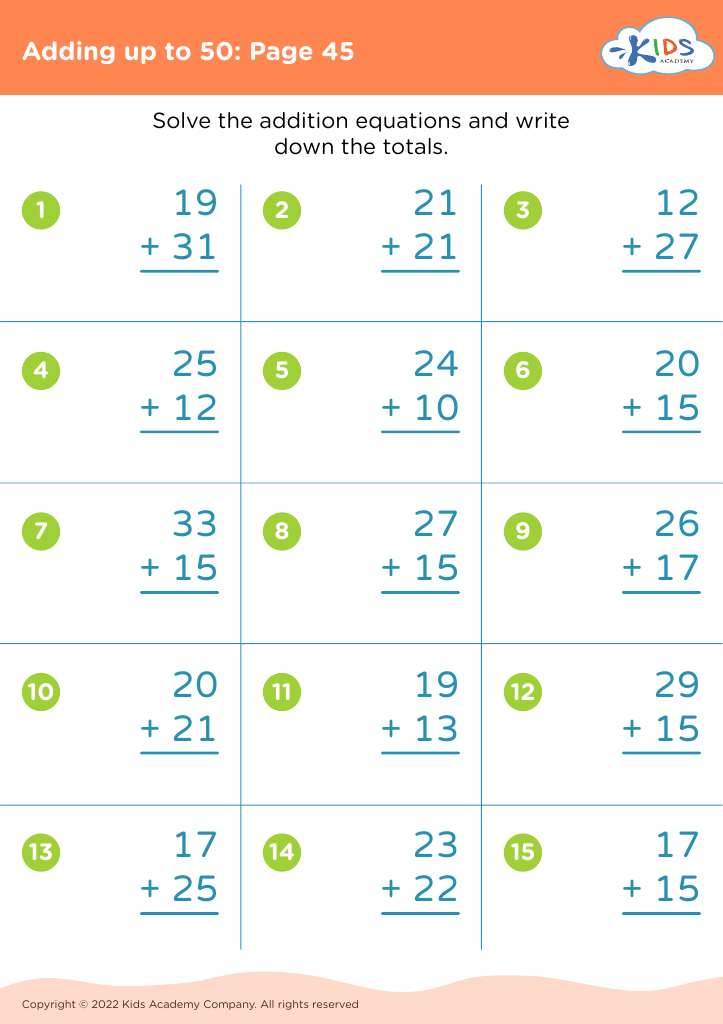
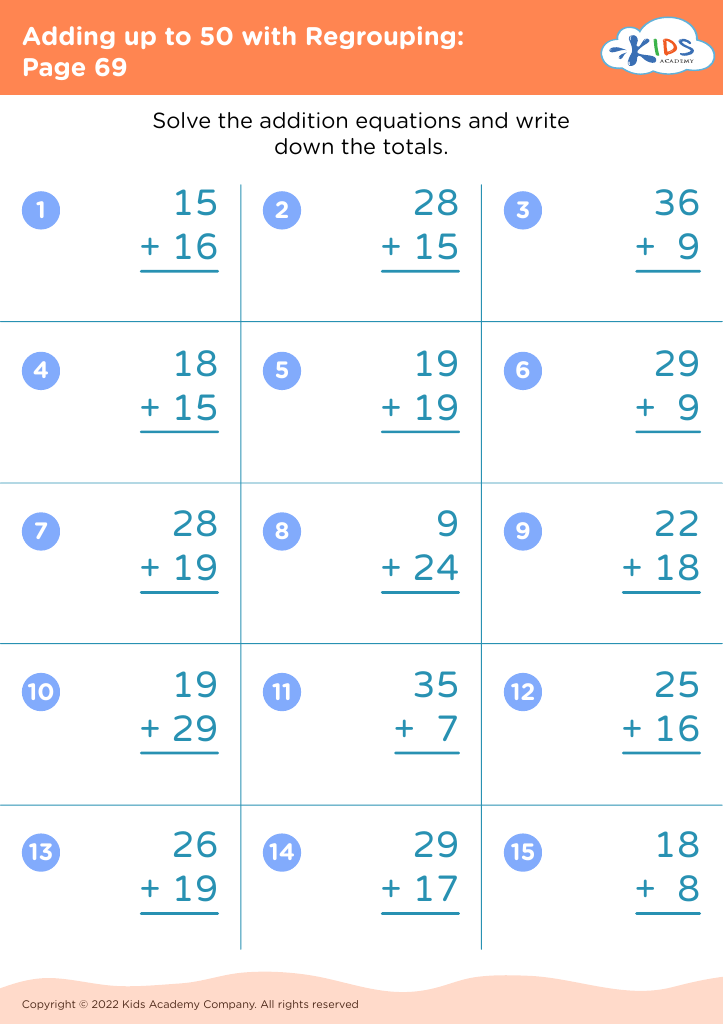
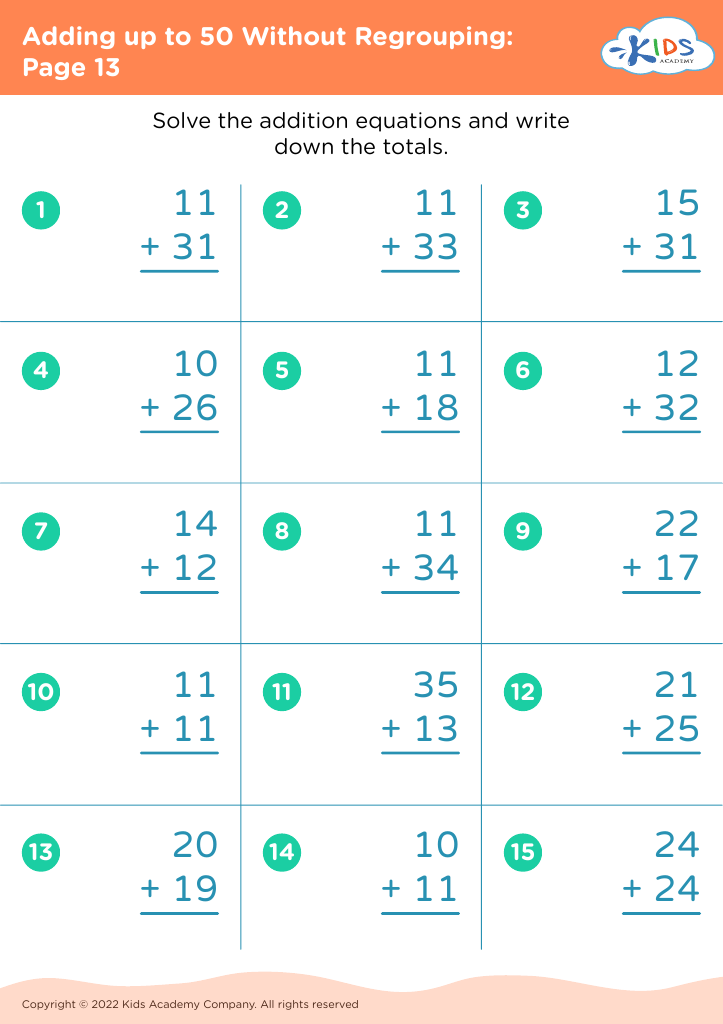
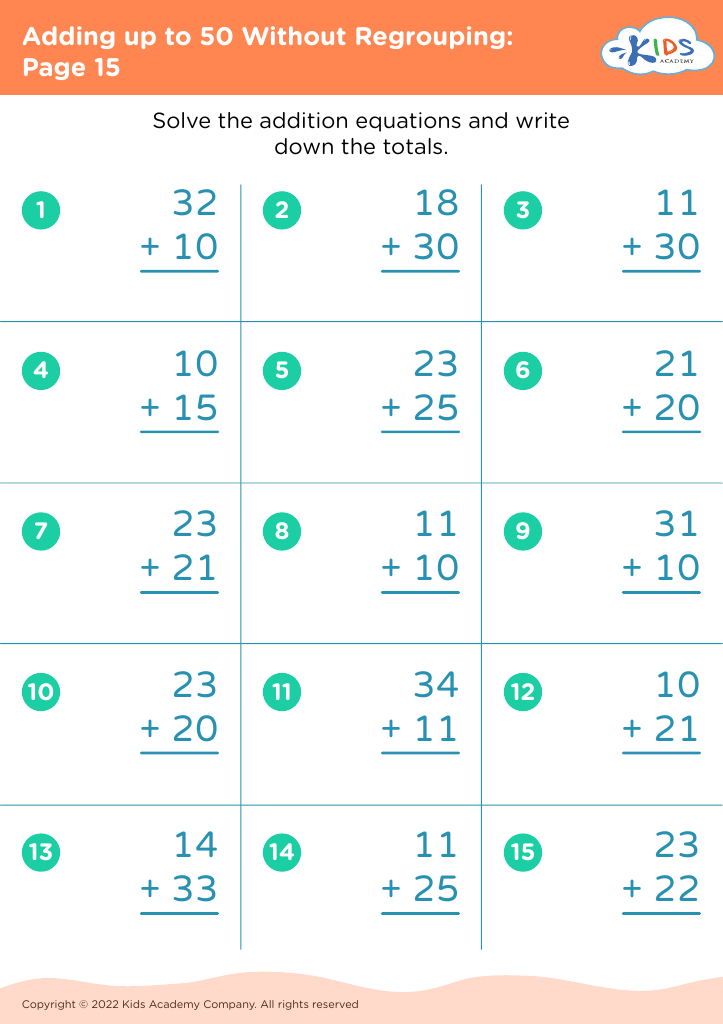
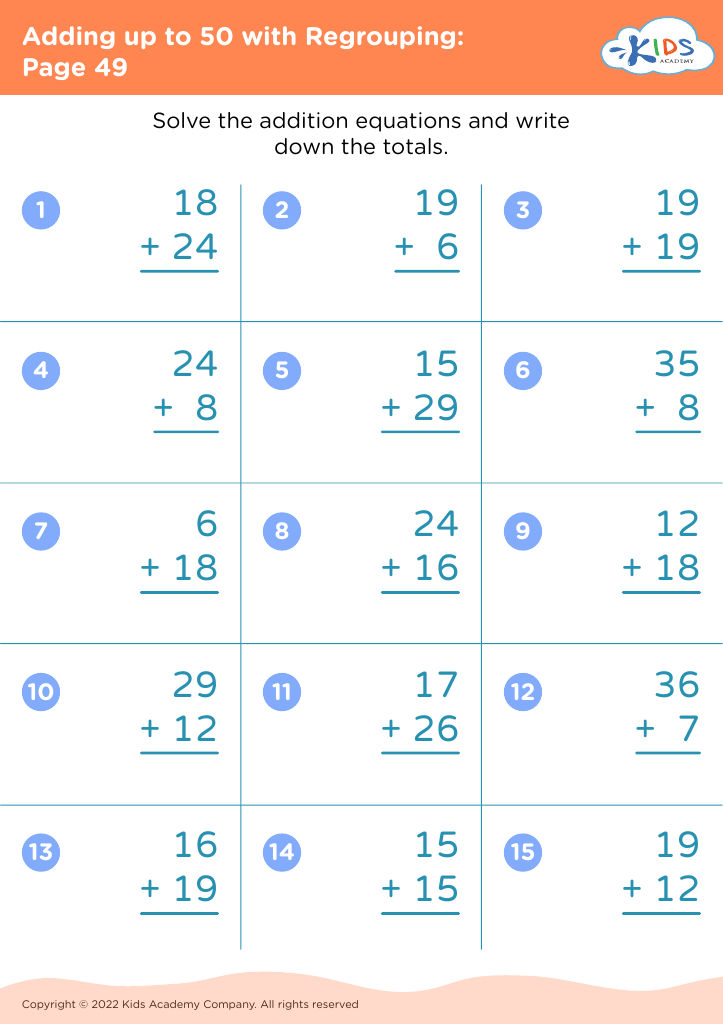




Number recognition and basic addition skills are foundational for children aged 4 to 7, setting the stage for their mathematical development. As parents and teachers, fostering these skills is paramount for several reasons. First, early number recognition aids in building a solid understanding of numbers, which is crucial for developing more advanced mathematical concepts later on. Recognizing numbers enhances a child's confidence in working with mathematics, making learning more enjoyable and less intimidating.
Adding up to 50 serves as a practical benchmarks for children in this age group, introducing them to essential addition strategies. Mastering this skill helps children with problem-solving abilities, logic, and critical thinking. Additionally, engaging children in number recognition and basic addition activities can stimulate their cognitive development and improve fine motor skills through hands-on learning experiences, such as using toys, games, or visual aids.
Moreover, these skills foster a sense of achievement and encourage positive attitudes toward learning. When parents and teachers collaboratively support children's growth in numeric competencies, they create a nurturing environment that promotes curiosity and a lifelong love for learning. Ultimately, these foundational skills empower children to navigate their world with confidence, ensuring they are well-prepared for future academic challenges.








