Shape identification Adding up to 50 Worksheets for Ages 4-7
3 filtered results
-
From - To
Discover our fun and engaging "Shape Identification: Adding up to 50 Worksheets" designed for children ages 4-7! These dynamic worksheets help young learners master both shape recognition and basic addition skills up to 50. Each activity encourages kids to identify various shapes while simultaneously practicing their counting and addition abilities in a playful context. Ideal for home or classroom use, these worksheets foster cognitive development and boost confidence in early math skills. Perfect for educators and parents looking to enrich their child's learning experience, these vibrant and interactive worksheets make math exciting and accessible. Start the journey to shape mastery today!
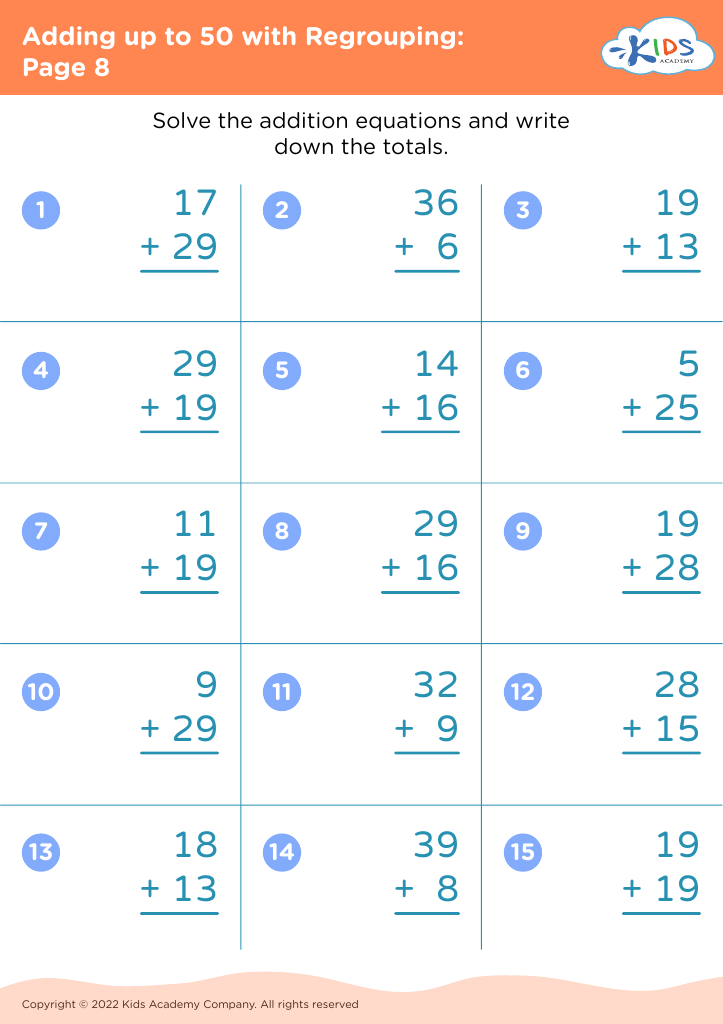
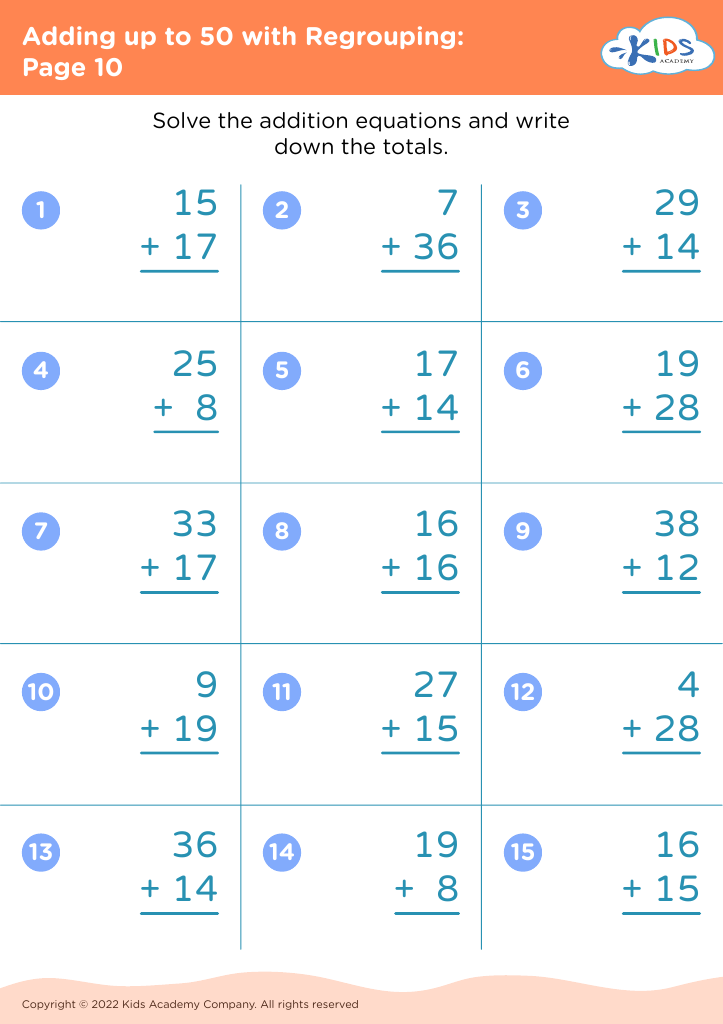
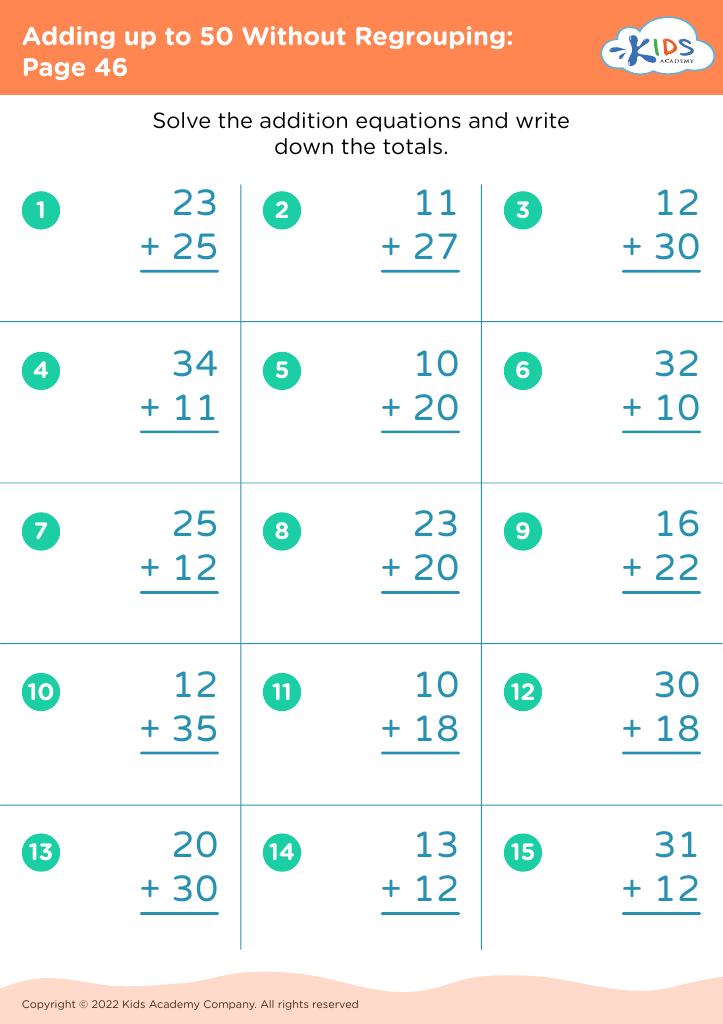




Shape identification and addition up to 50 are foundational skills for children ages 4-7, forming the backbone of their mathematical and spatial understanding. At this age, children are naturally curious, eager to explore the world around them, and able to absorb new information like sponges. Recognizing shapes helps them develop their visual-spatial skills, which are important in everyday tasks and advanced math, art, and science later in life.
Shape identification also enhances critical thinking; kids discern between different forms and their properties, fostering analytical skills. Teachers can engage them through interactive activities and real-life examples, which make learning both fun and relevant.
Addition skills, particularly adding numbers up to 50, help in building numerical literacy—an essential skill in today’s data-driven world. Mastering these concepts promotes confidence, enabling children to tackle more complex mathematical problems in the future. Moreover, combining shape identification with addition tasks can lead to a deeper understanding of geometry by applying numbers to shapes.
Overall, developing these skills promotes cognitive growth, problem-solving, and the ability to see patterns, setting the stage for academic success. Therefore, parents and teachers should prioritize these subjects in early education to foster a strong foundation for lifelong learning.








