Subtraction practice Adding up to 50 Worksheets for Ages 4-7
3 filtered results
-
From - To
Enhance your child's math skills with our "Subtraction Practice Adding up to 50 Worksheets" designed specifically for ages 4-7. These engaging worksheets offer a fun and interactive approach to learning subtraction, helping young learners master the basics while building confidence in math. With colorful illustrations and age-appropriate problems, children can practice simple subtraction skills in an enjoyable way. Perfect for classroom use or at-home learning, our worksheets align with educational standards, promoting important cognitive development. Strengthen your child's understanding of numbers and improve their problem-solving abilities with our engaging subtraction practice resources today!
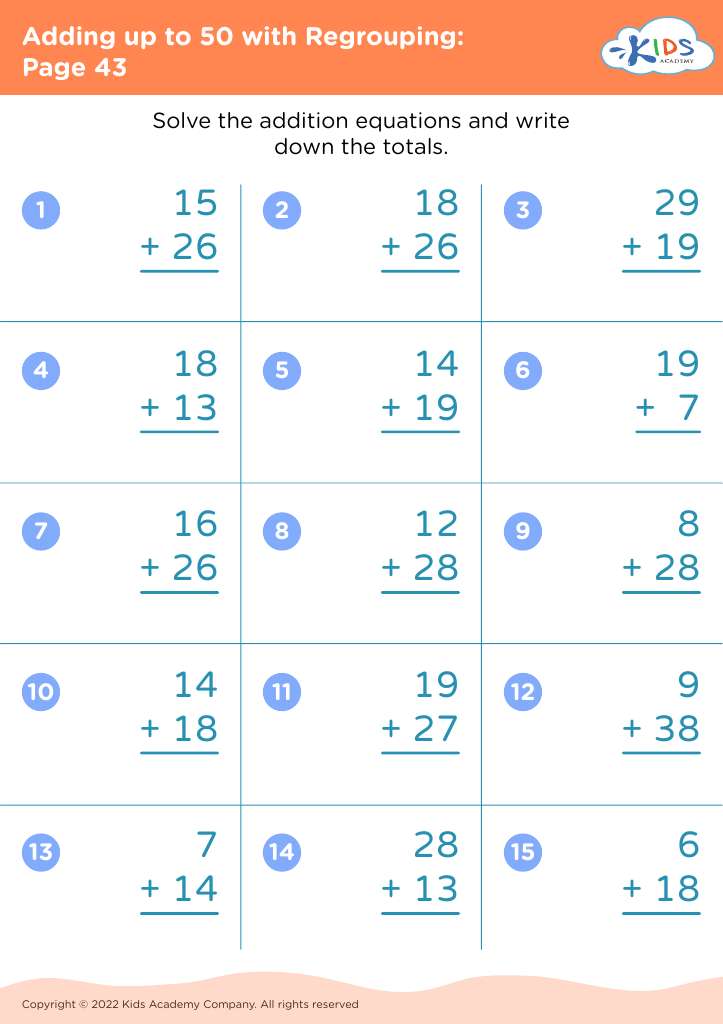
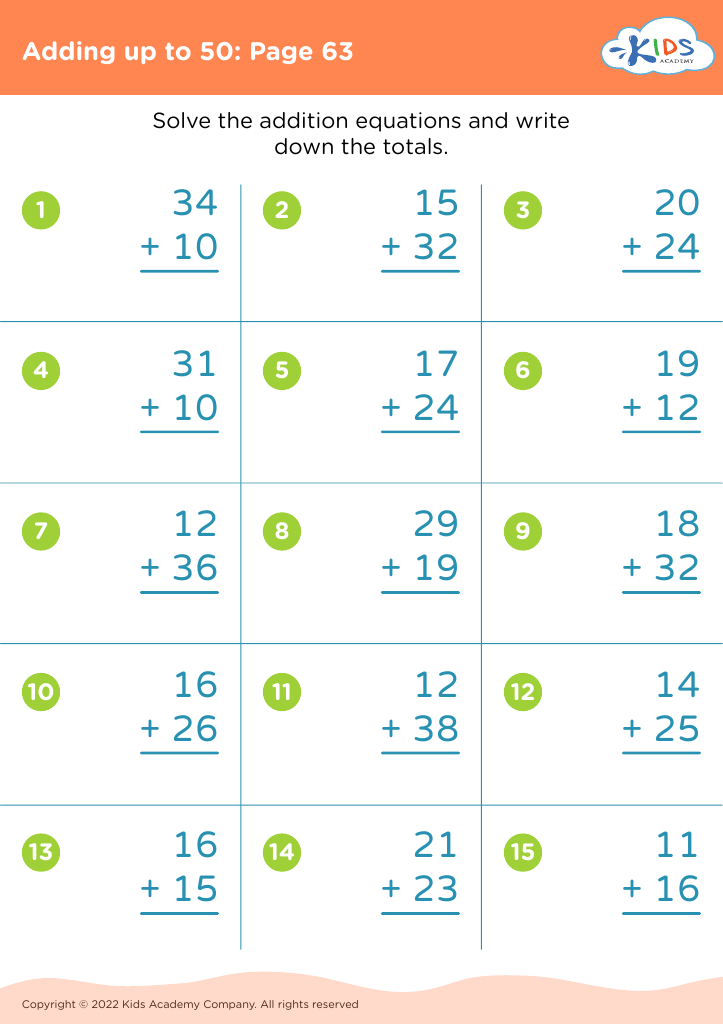
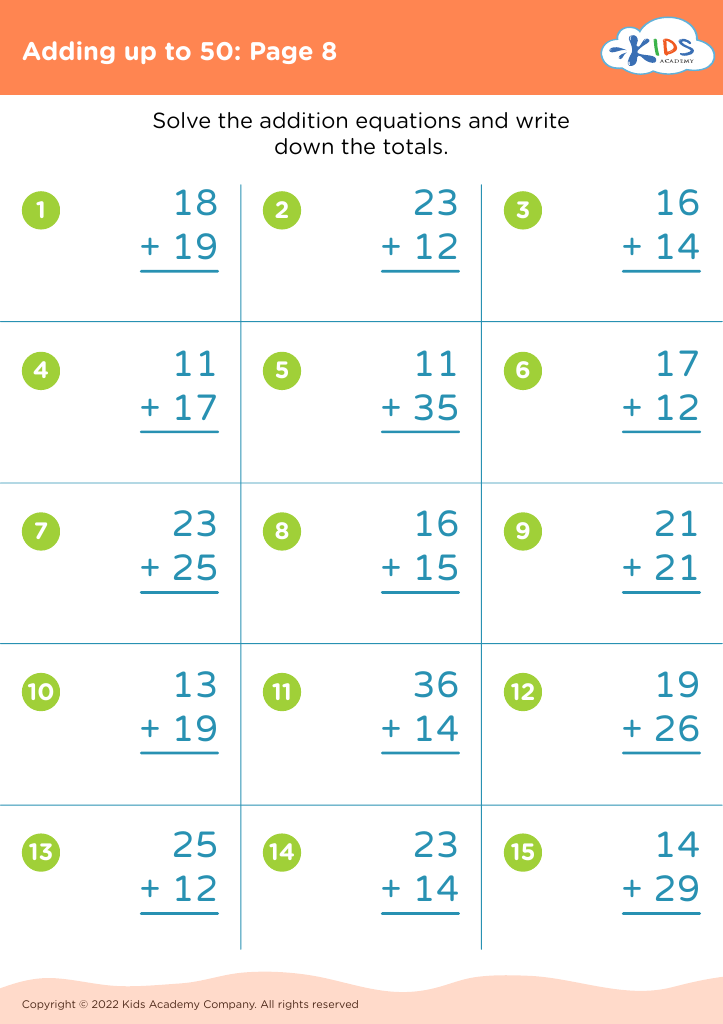




Subtraction practice that adds up to 50 is crucial for children aged 4-7 as it lays the foundation for their mathematical understanding and problem-solving abilities. During these formative years, children develop essential numeracy skills; subtraction helps them grasp the concept of quantity, comparison, and how numbers relate to one another.
As young learners engage in subtraction activities, they build resilience and critical thinking skills. This practice encourages them to tackle challenges, understand relationships between numbers, and apply these concepts to real-life situations. Learning to subtract ensures that students are well-prepared for more advanced mathematics they will encounter later in their education.
Additionally, subtraction practice promotes cognitive development. It enhances memory, attention, and concentration, all essential skills beyond math. Interactive and engaging activities, such as games or hands-on manipulatives, make learning fun and help sustain motivation.
Finally, parental and teacher involvement in subtraction practice fosters a supportive learning environment. Children benefit from positive reinforcement and guidance, which boosts their confidence and enthusiasm for learning. By prioritizing subtraction strategies, we lay down a lifelong love of mathematics and problem-solving in our young learners.








