Filters

47 filtered results

Clear all filters
Favorites
With answer key
Interactive

47 filtered results

Difficulty Level

Grade


Welcome to our "Understanding Fractions Adding Up to 50 Worksheets" page, designed specifically for young learners aged 4-7! These engaging worksheets introduce children to the concept of fractions through fun, age-appropriate activities. By using clear visuals and simple exercises, kids will develop a solid foundation in understanding how fractions work and how they can be added together to reach a total of 50. Our resources help spark curiosity and boost confidence in early math skills, allowing children to explore and master fractions at their own pace. Get started today to make learning fractions an enjoyable experience!
Check out this FREE Trial Lesson on Adding up to 50 for age 4-7!

Match Exactly the Same

Favorites
With answer key
Interactive
  • 4-7
  • Understanding fractions
  • Adding up to 50
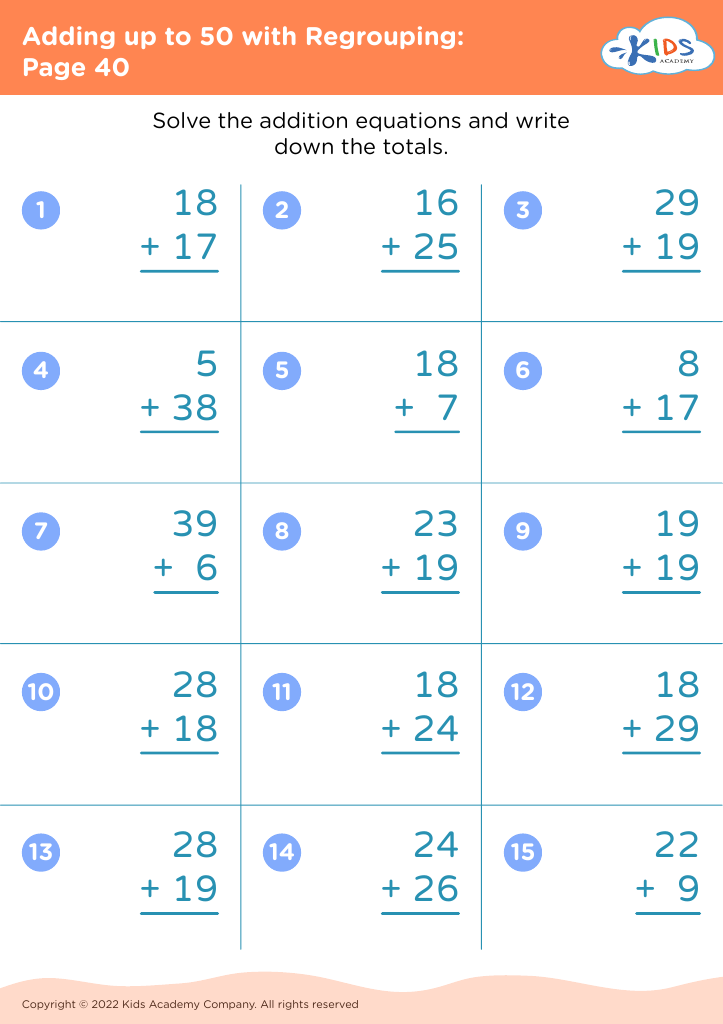
Adding up to 50 with Regrouping: Page 40
Worksheet
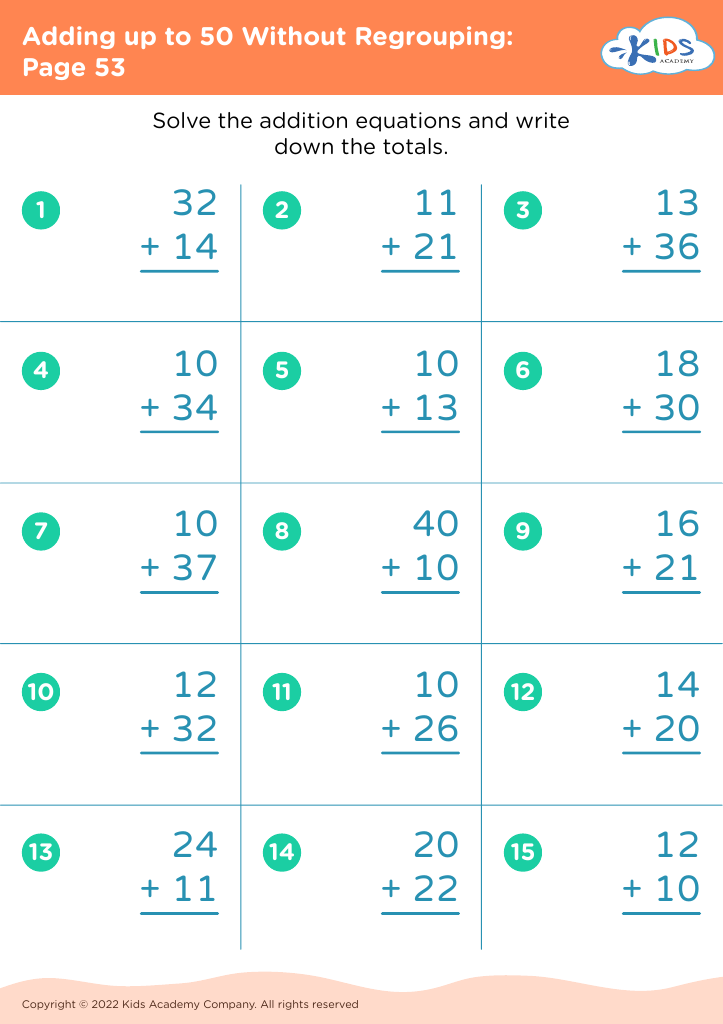
Adding up to 50 Without Regrouping: Page 53
Worksheet
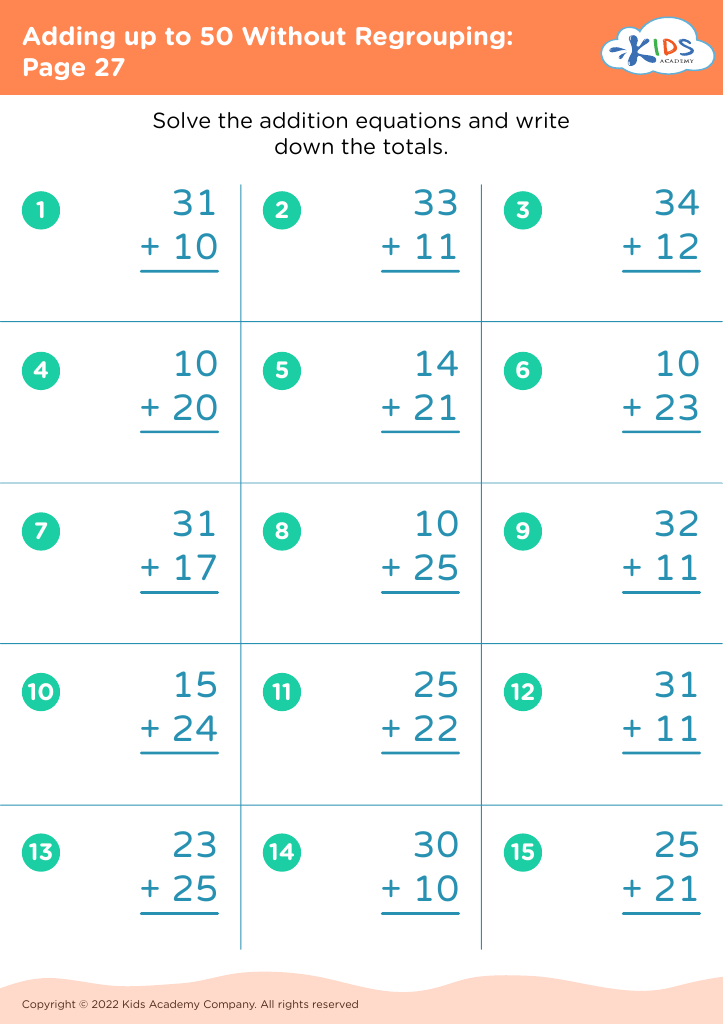
Adding up to 50 Without Regrouping: Page 27
Worksheet
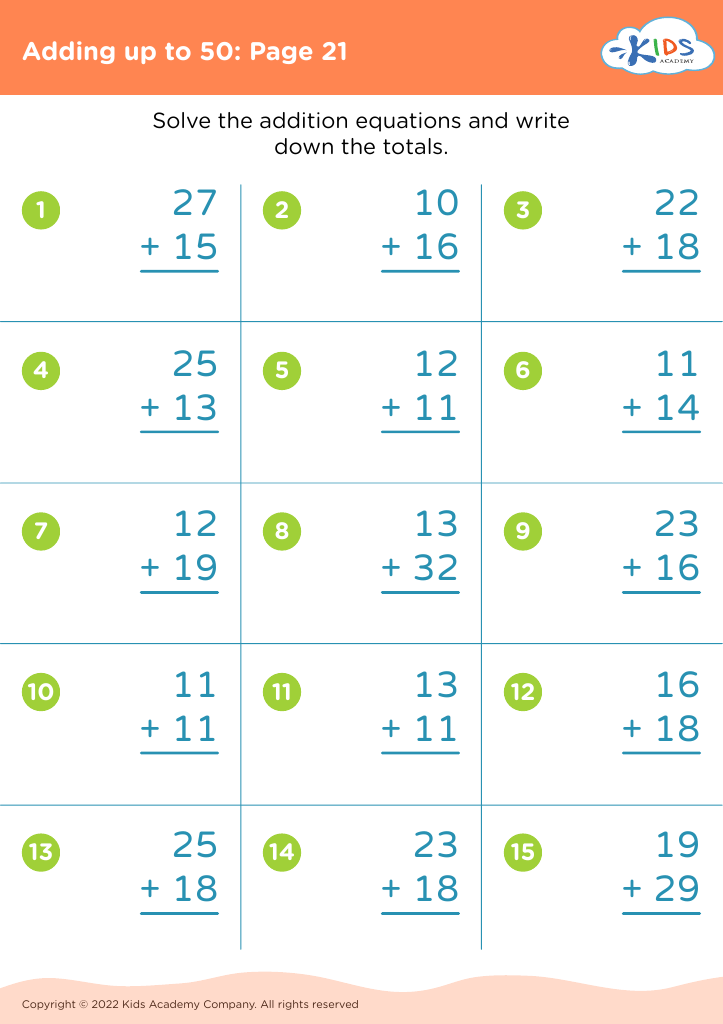
Adding up to 50: Page 21

Adding up to 50: Page 21

Adding up to 50: Page 21
Worksheet
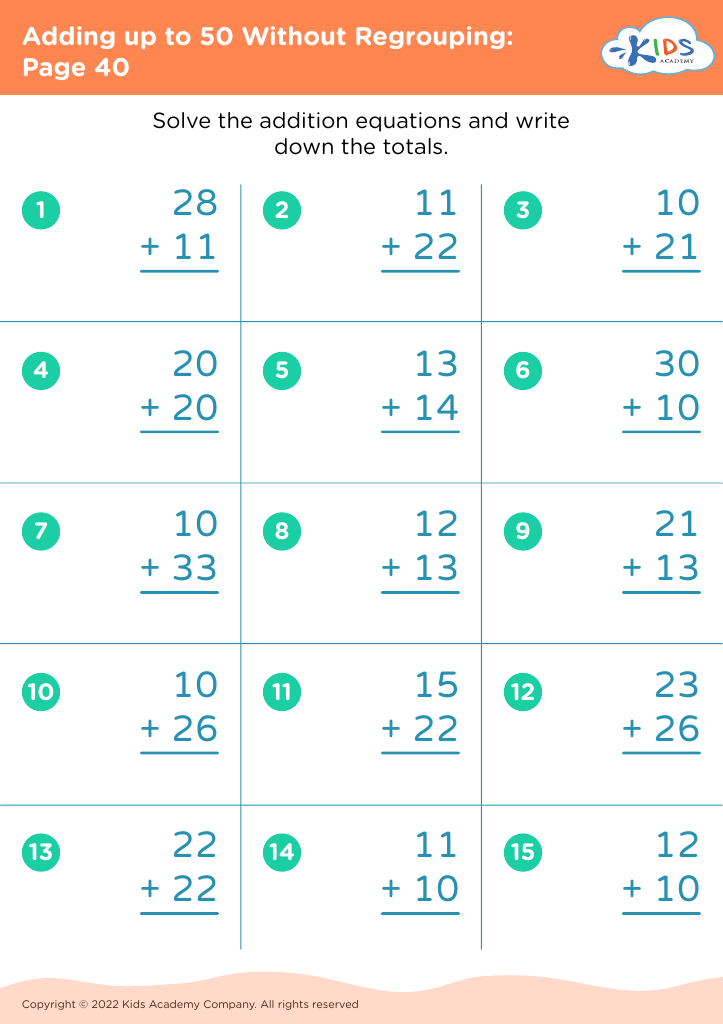
Adding up to 50 Without Regrouping: Page 40
Worksheet
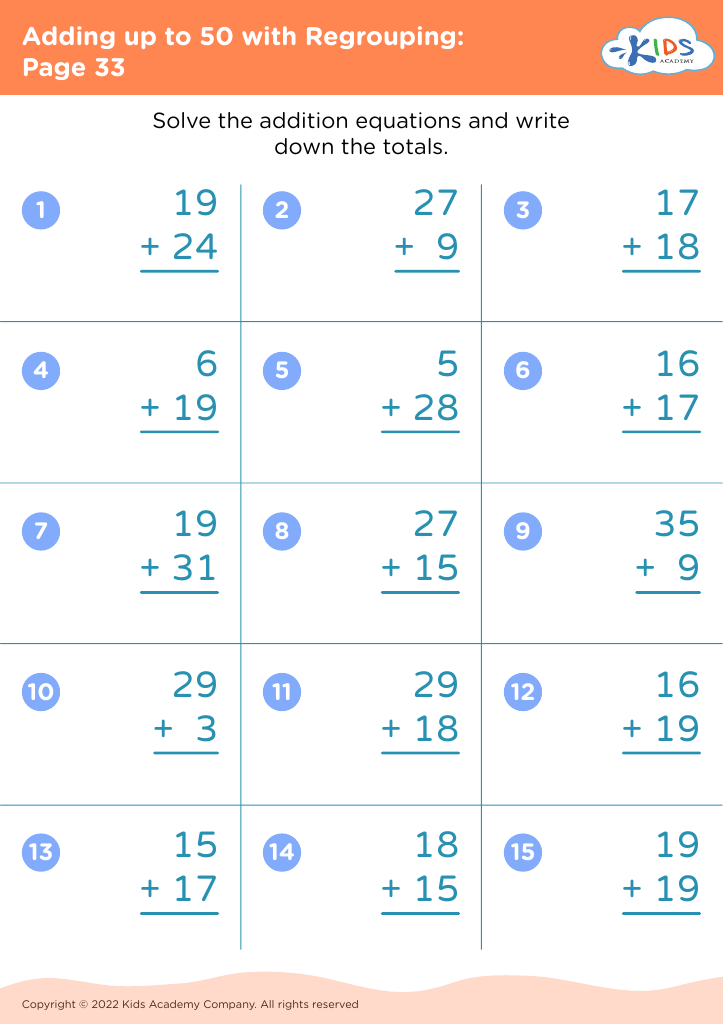
Adding up to 50 with Regrouping: Page 33
Worksheet
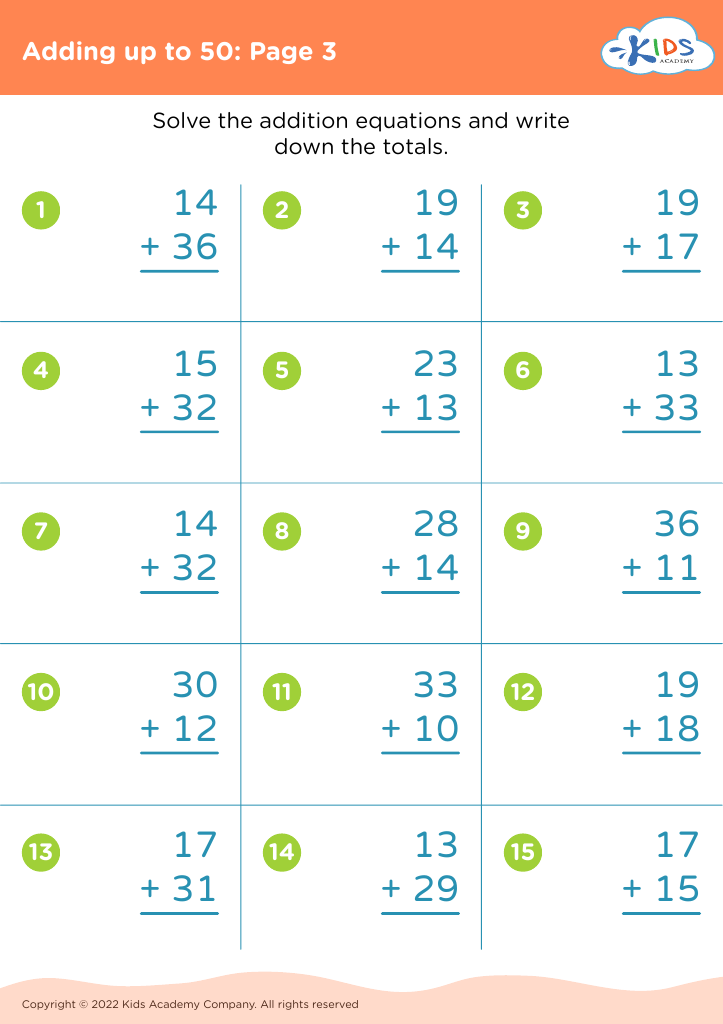
Adding up to 50: Page 3

Adding up to 50: Page 3

Adding up to 50: Page 3
Worksheet
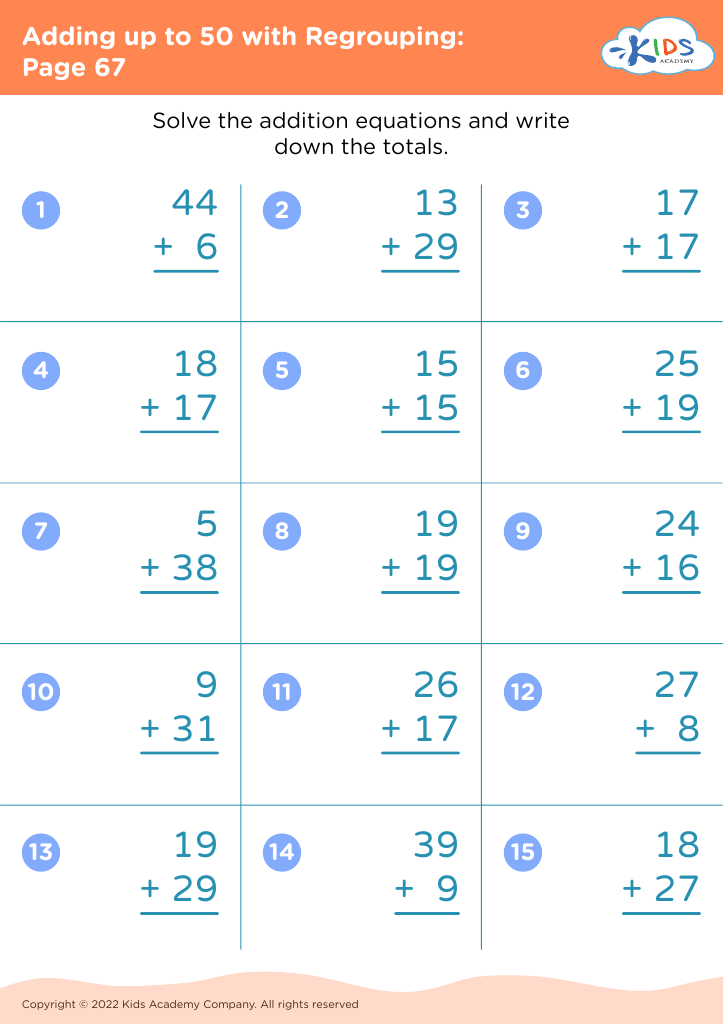
Adding up to 50 with Regrouping: Page 67
Worksheet
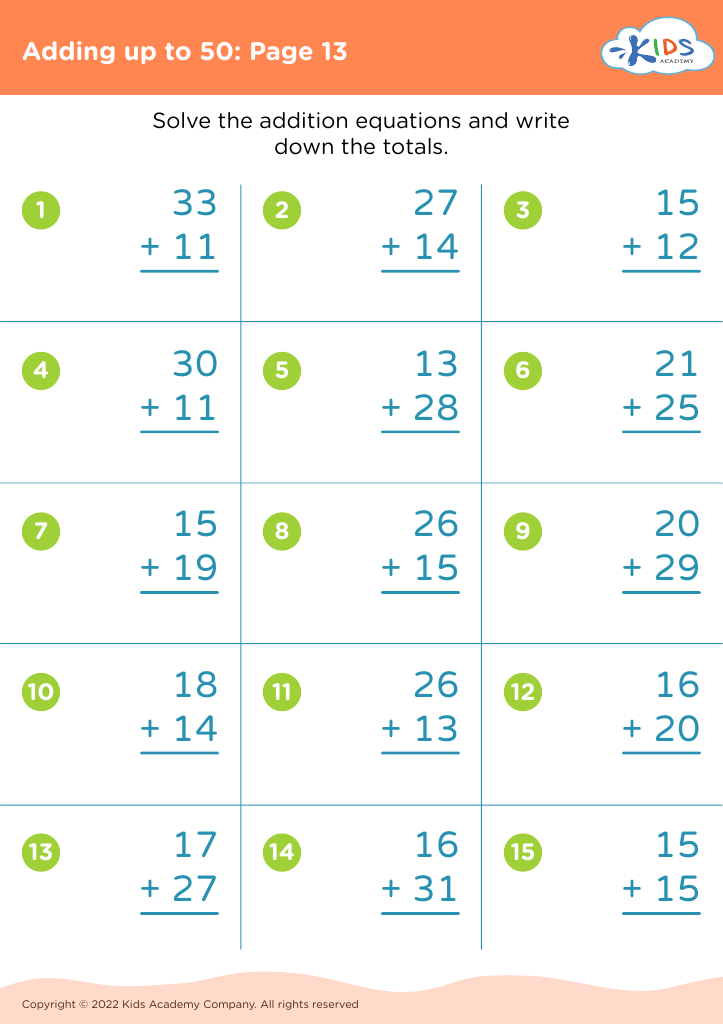
Adding up to 50: Page 13

Adding up to 50: Page 13

Adding up to 50: Page 13
Worksheet
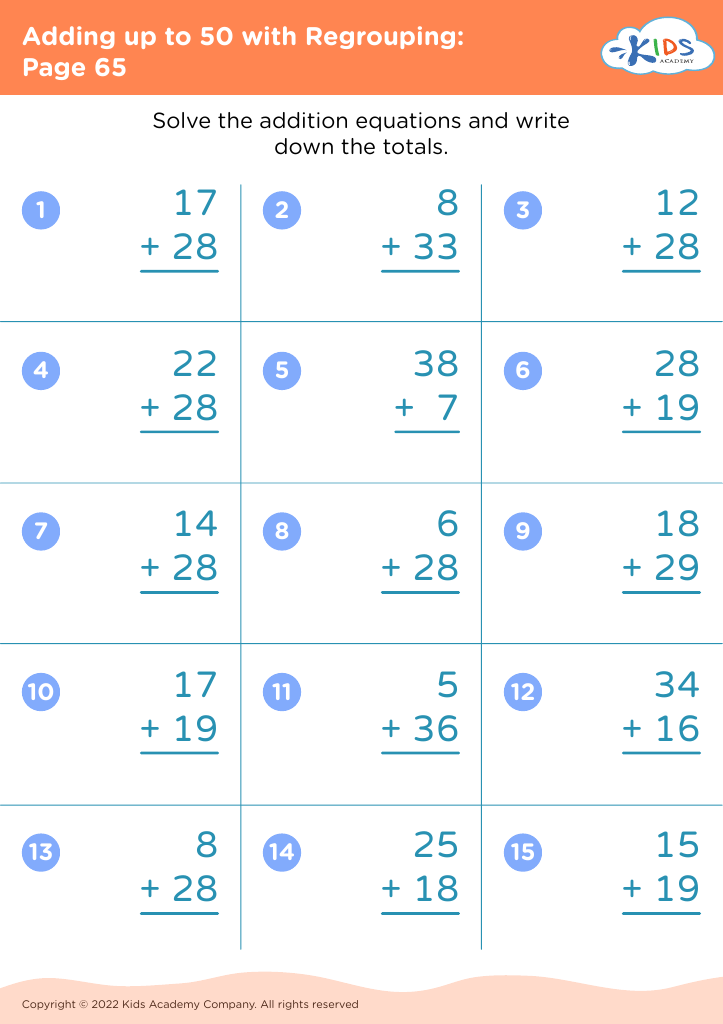
Adding up to 50 with Regrouping: Page 65
Worksheet
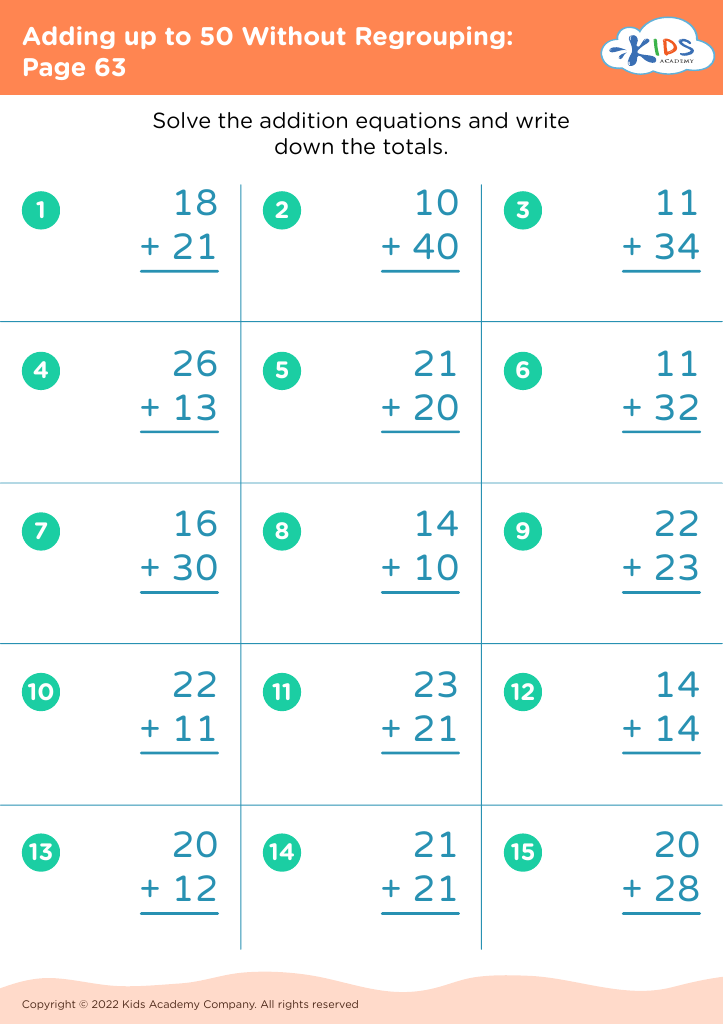
Adding up to 50 Without Regrouping: Page 63
Worksheet
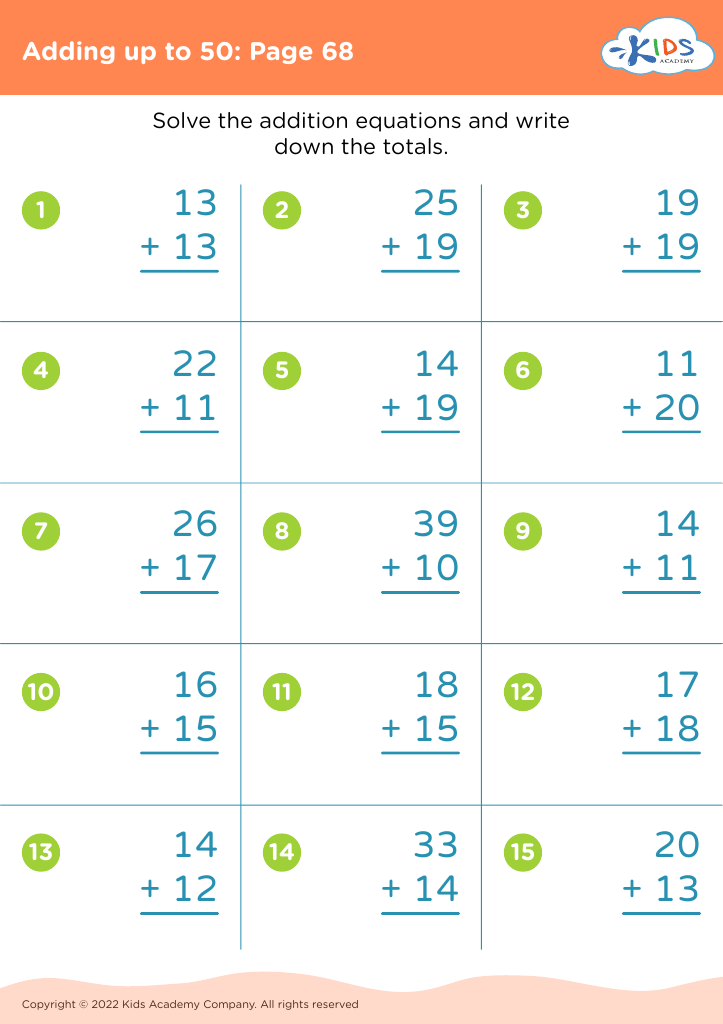
Adding up to 50: Page 68

Adding up to 50: Page 68

Adding up to 50: Page 68
Worksheet
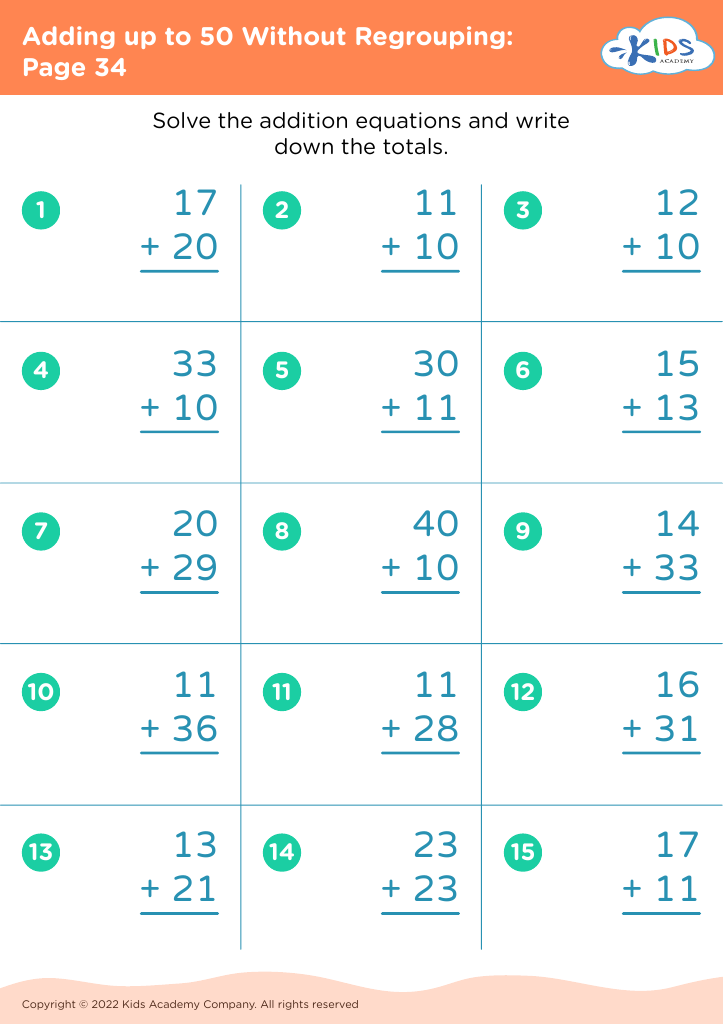
Adding up to 50 Without Regrouping: Page 34
Worksheet
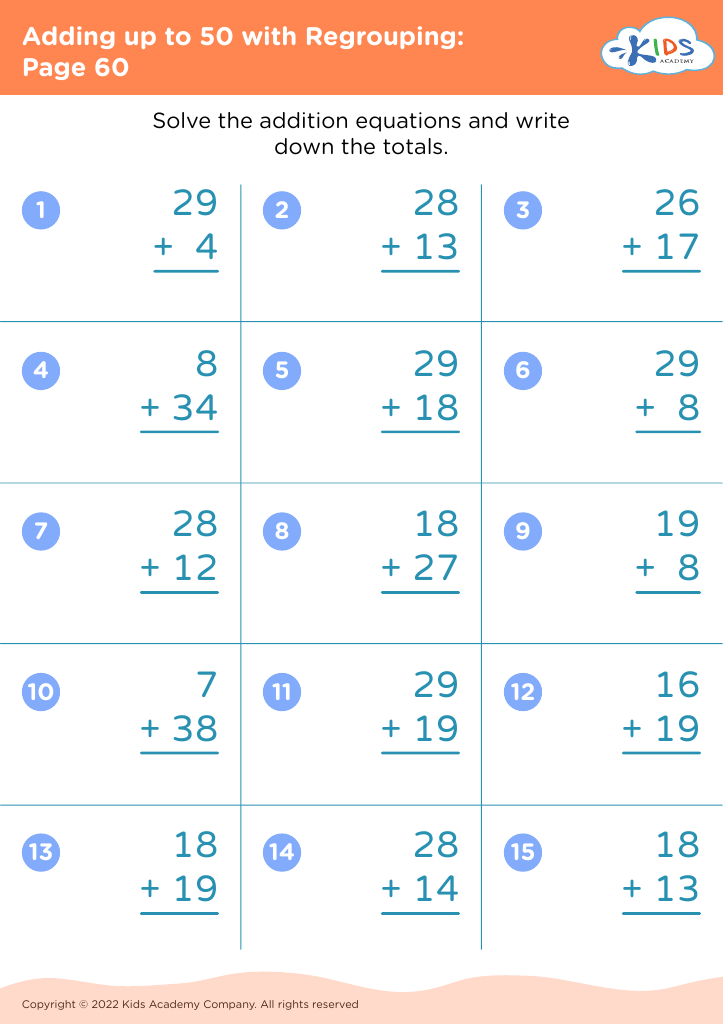
Adding up to 50 with Regrouping: Page 60
Worksheet
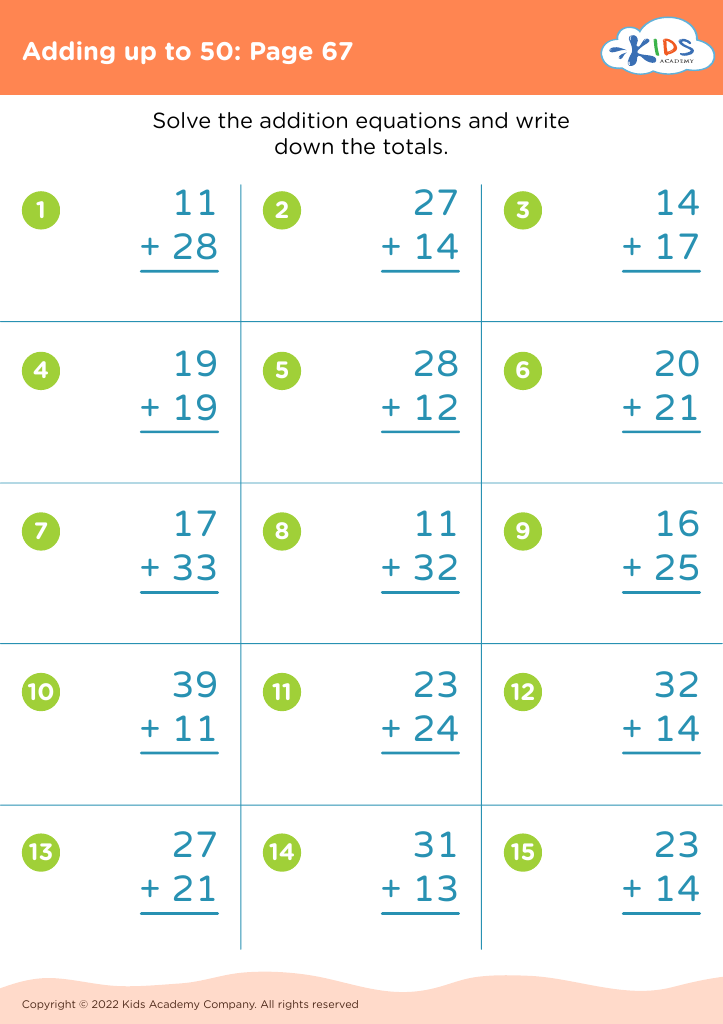
Adding up to 50: Page 67

Adding up to 50: Page 67

Adding up to 50: Page 67
Worksheet
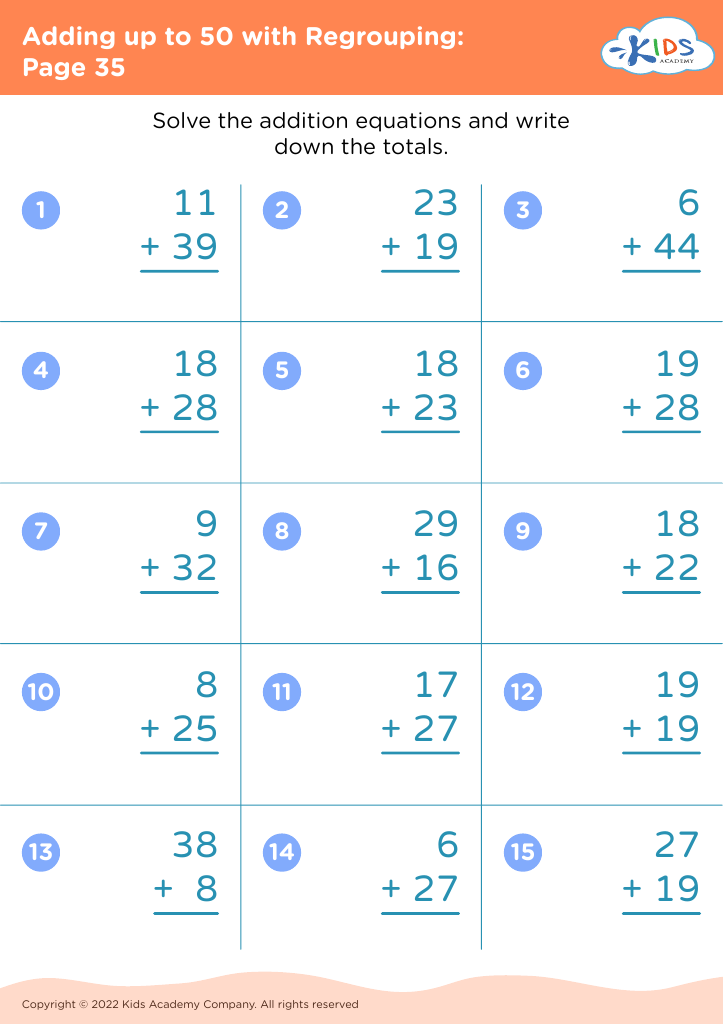
Adding up to 50 with Regrouping: Page 35
Worksheet
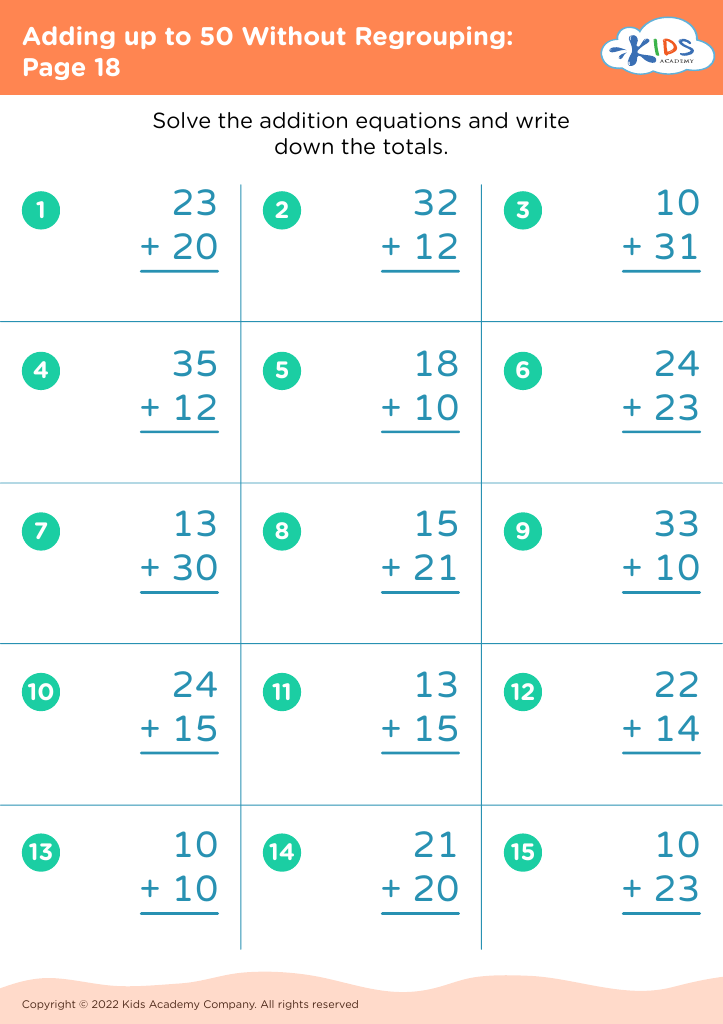
Adding up to 50 Without Regrouping: Page 18
Worksheet
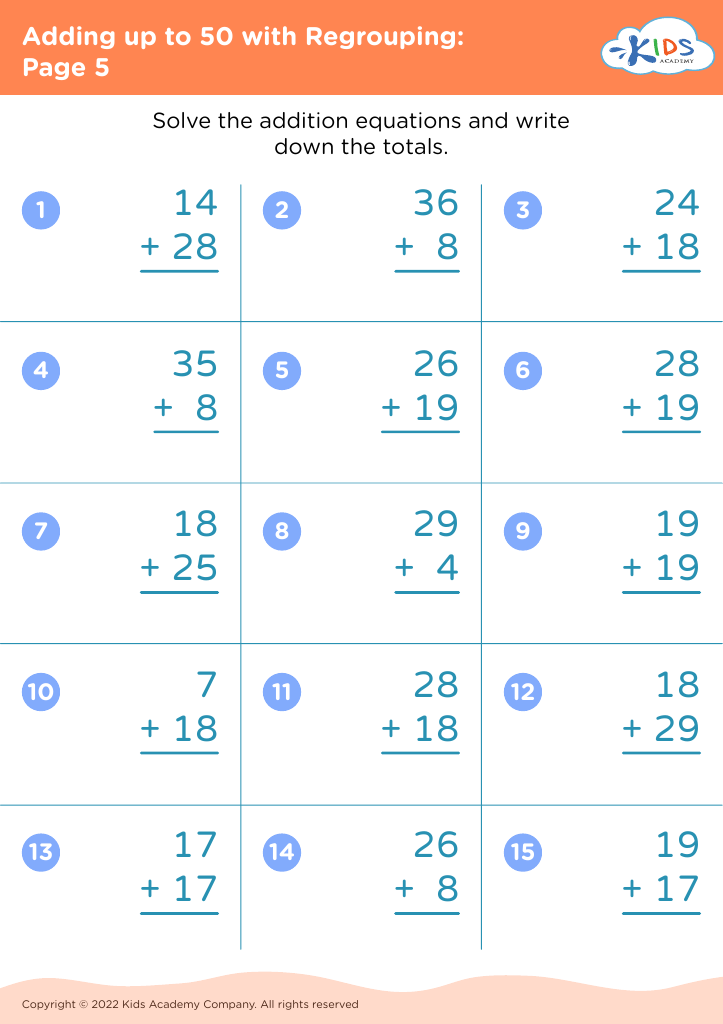
Adding up to 50 with Regrouping: Page 5
Worksheet
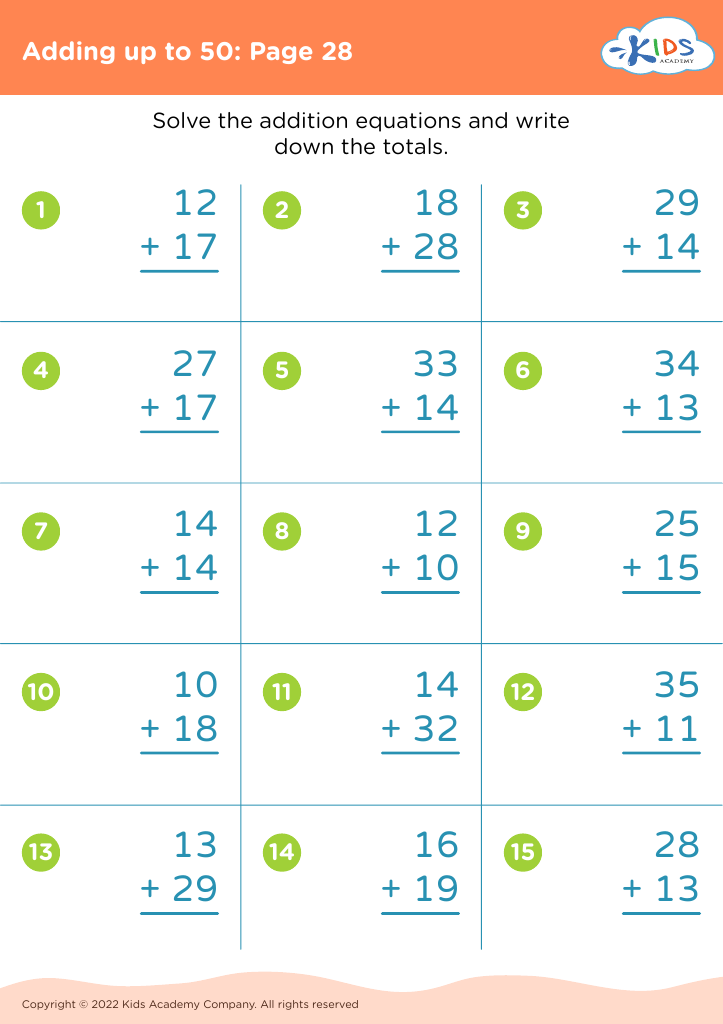
Adding up to 50: Page 28

Adding up to 50: Page 28

Adding up to 50: Page 28
Worksheet
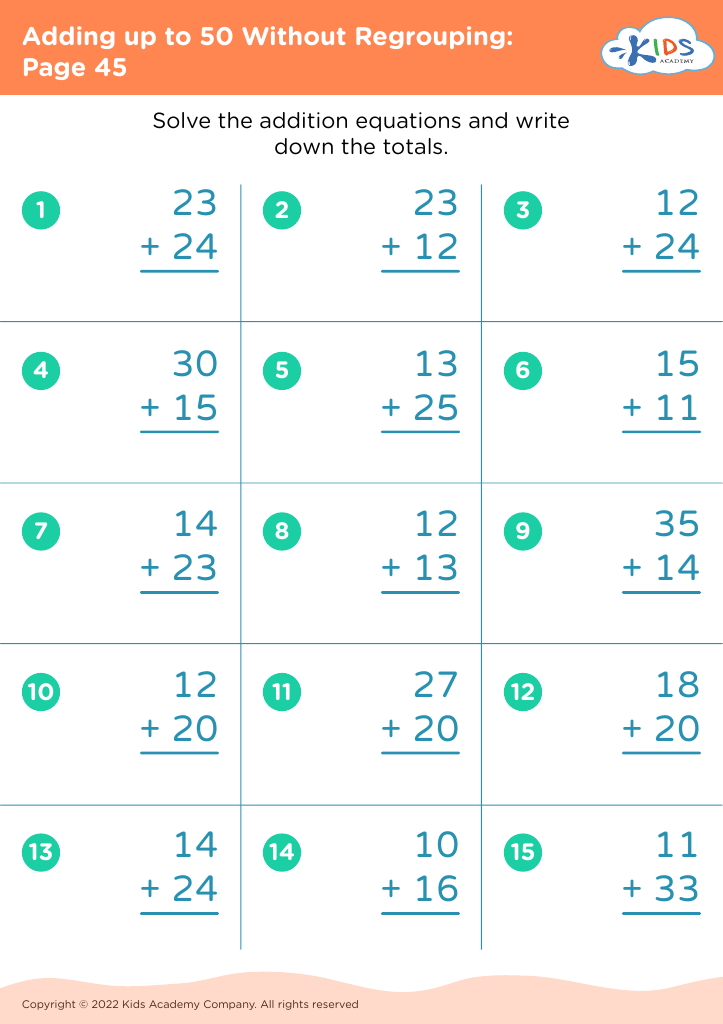
Adding up to 50 Without Regrouping: Page 45
Worksheet
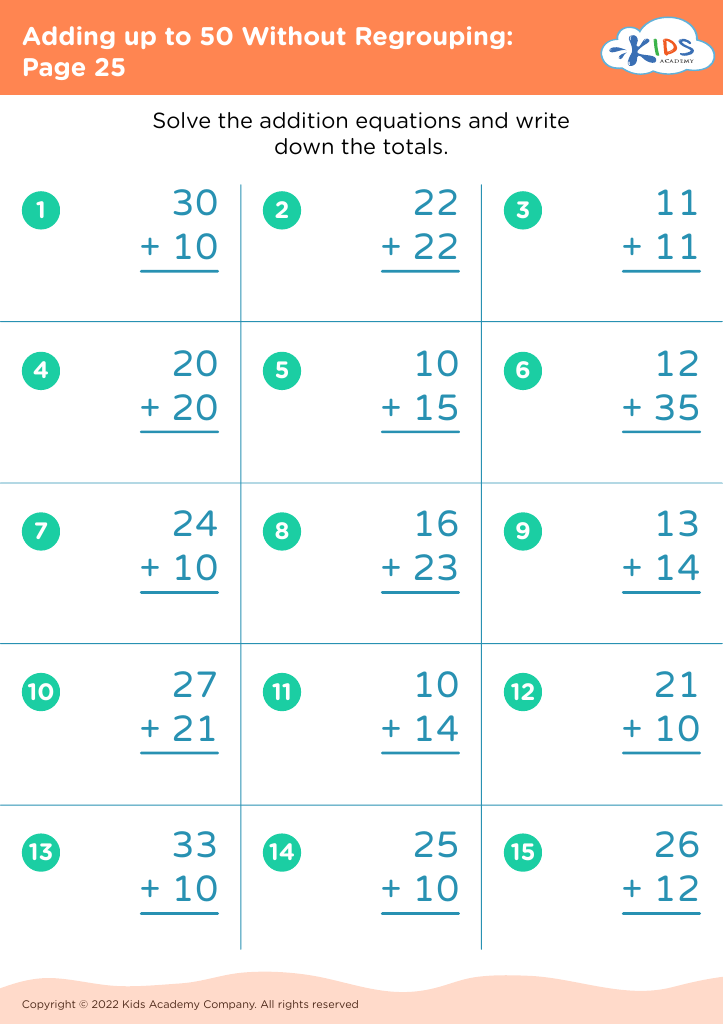
Adding up to 50 Without Regrouping: Page 25
Worksheet
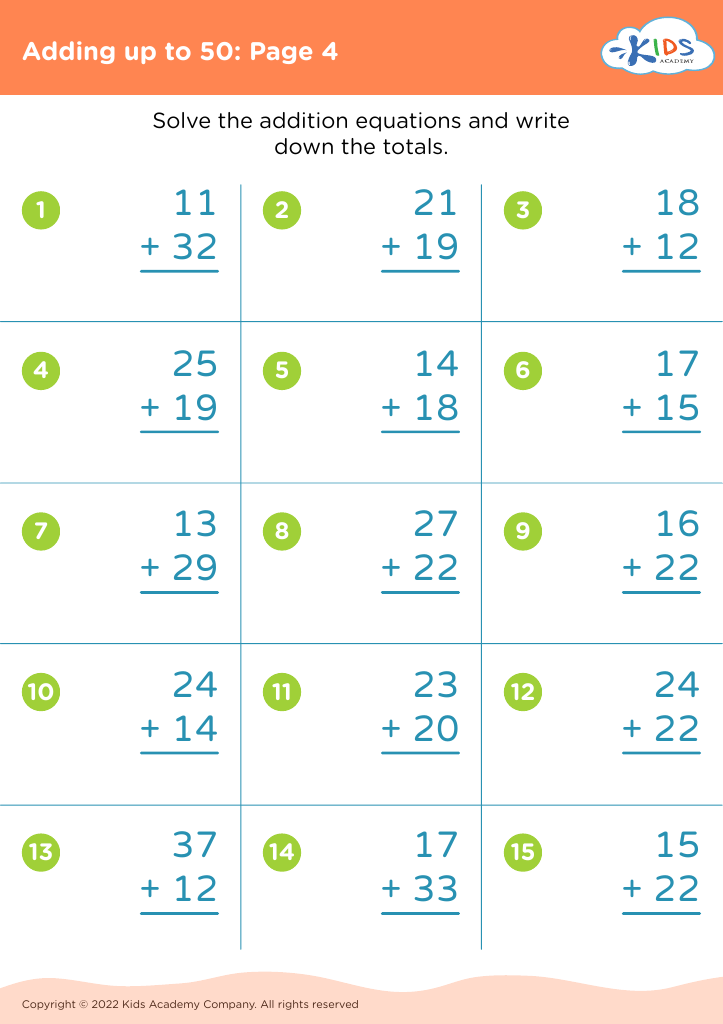
Adding up to 50: Page 4

Adding up to 50: Page 4

Adding up to 50: Page 4
Worksheet
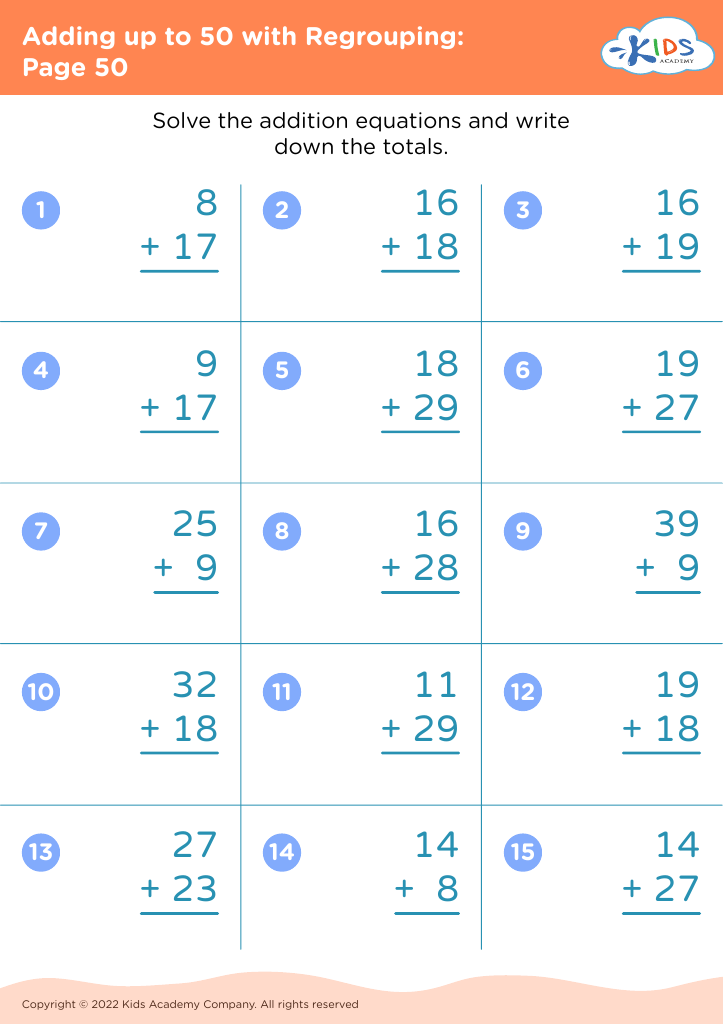
Adding up to 50 with Regrouping: Page 50
Worksheet
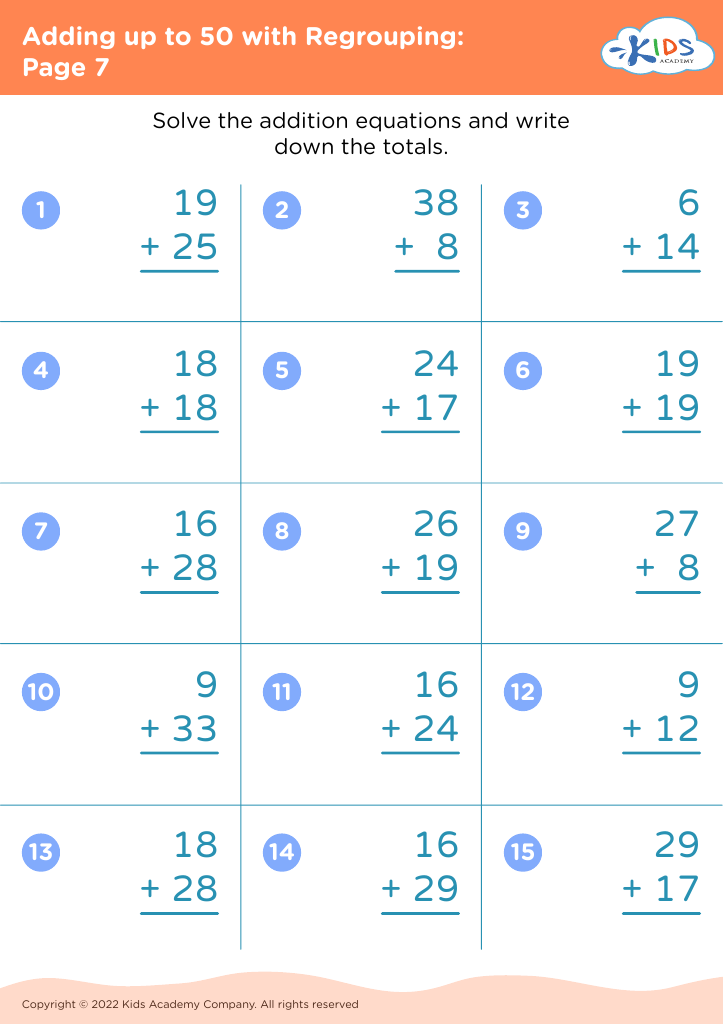
Adding up to 50 with Regrouping: Page 7
Worksheet


Understanding fractions during the ages of 4-7 lays a critical foundation for a child's future mathematical skills. At this developmental stage, children are naturally curious and start engaging with numbers and measurements. Introducing fractions can help them grasp the concept of parts and wholes, a foundational idea in mathematics.

When parents or teachers focus on fractions adding up to 50, they not only introduce the concept of parts of a whole, but also help children develop addition skills in a context that is both manageable and relatable. For instance, using visual aids such as pie charts or everyday objects can make the learning process engaging.

Moreover, understanding fractions promotes problem-solving and logical reasoning. It develops critical thinking skills as children learn to break down numbers and relationships between them. This mathematical skill set is essential for later subjects that require divided and multiplied concepts.

Additionally, children who grasp these concepts early on can develop confidence in their math abilities. Parent and teacher involvement in this learning process encourages a supportive environment, which is integral for academic success. Thus, focusing on fractions is crucial for children's cognitive development and lays the groundwork for their mathematical journey.