Understanding patterns Adding up to 50 Worksheets for Ages 4-7
8 filtered results
-
From - To
"Understanding Patterns Adding up to 50 Worksheets for Ages 4-7" are expertly designed to make learning fun and intuitive for young minds. These engaging worksheets focus on enhancing kids' math skills through recognizing and creating patterns, essential for building a strong mathematical foundation. Children will enjoy colorful, interactive exercises that train them to add numbers up to 50, while cultivating critical thinking and problem-solving abilities. Perfect for classroom use or at-home practice, these worksheets are key tools for sparking a love for math in early learners, paving their way for future academic success!
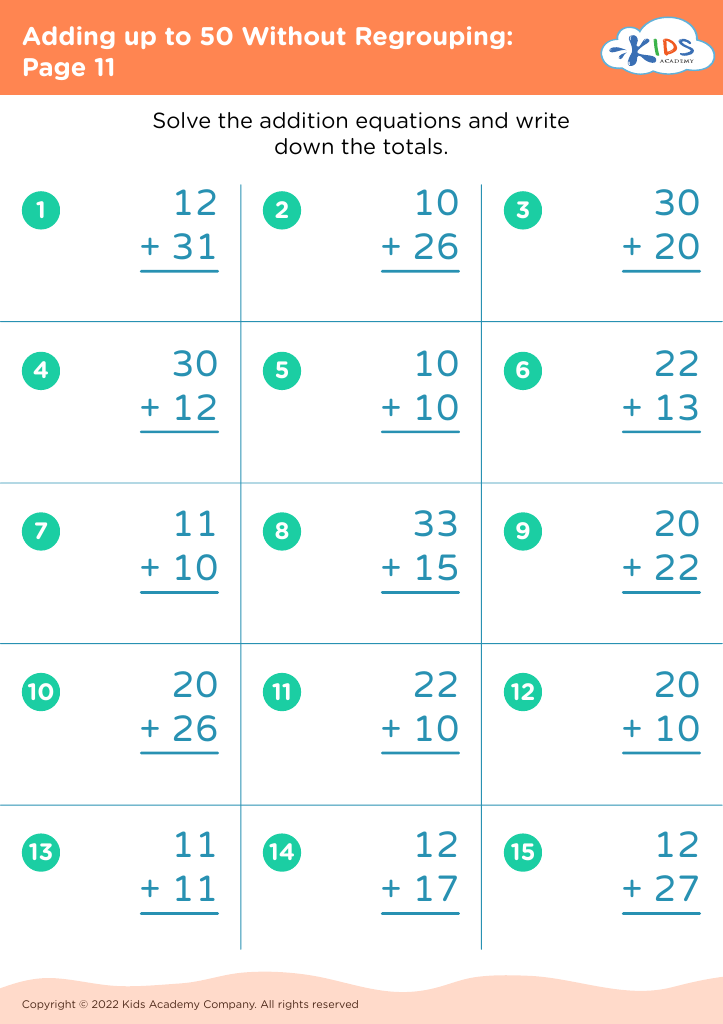
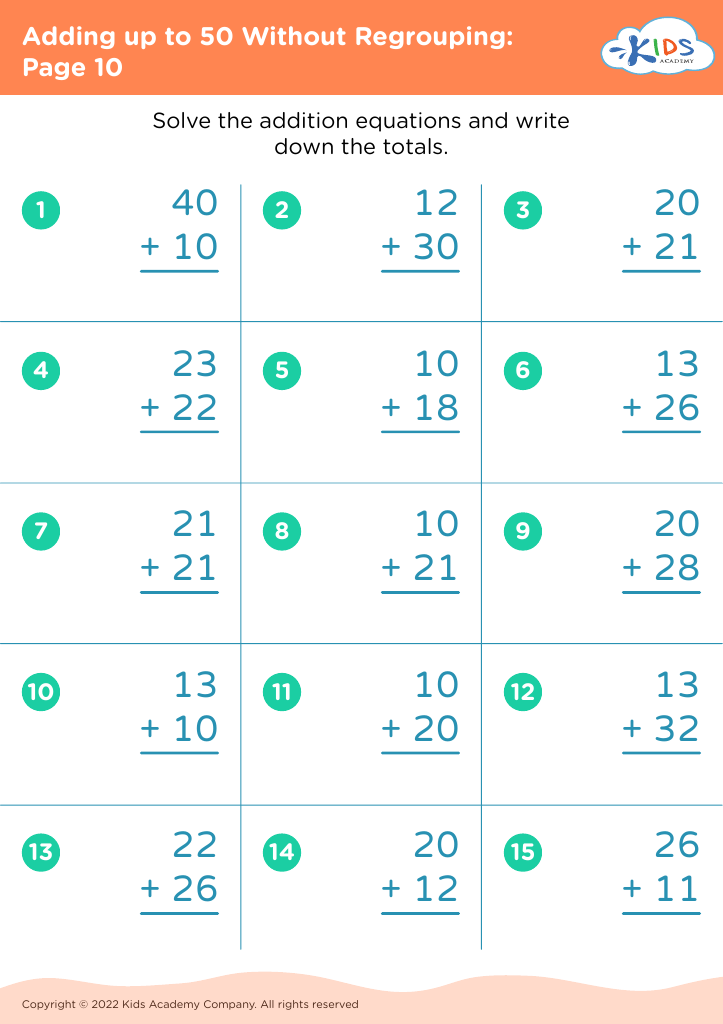
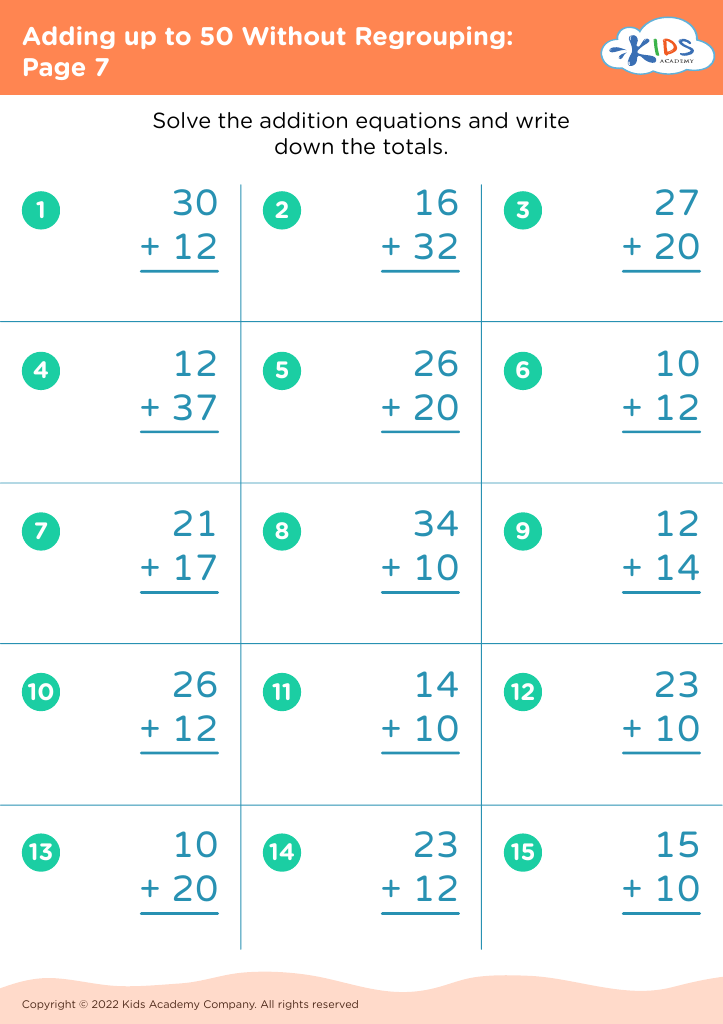
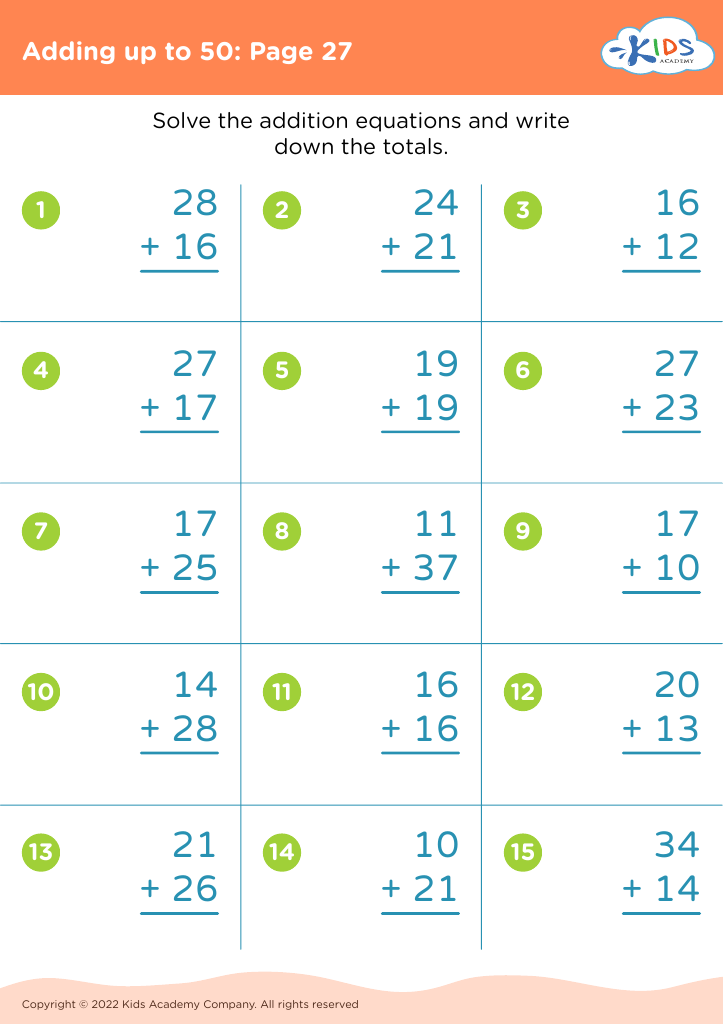
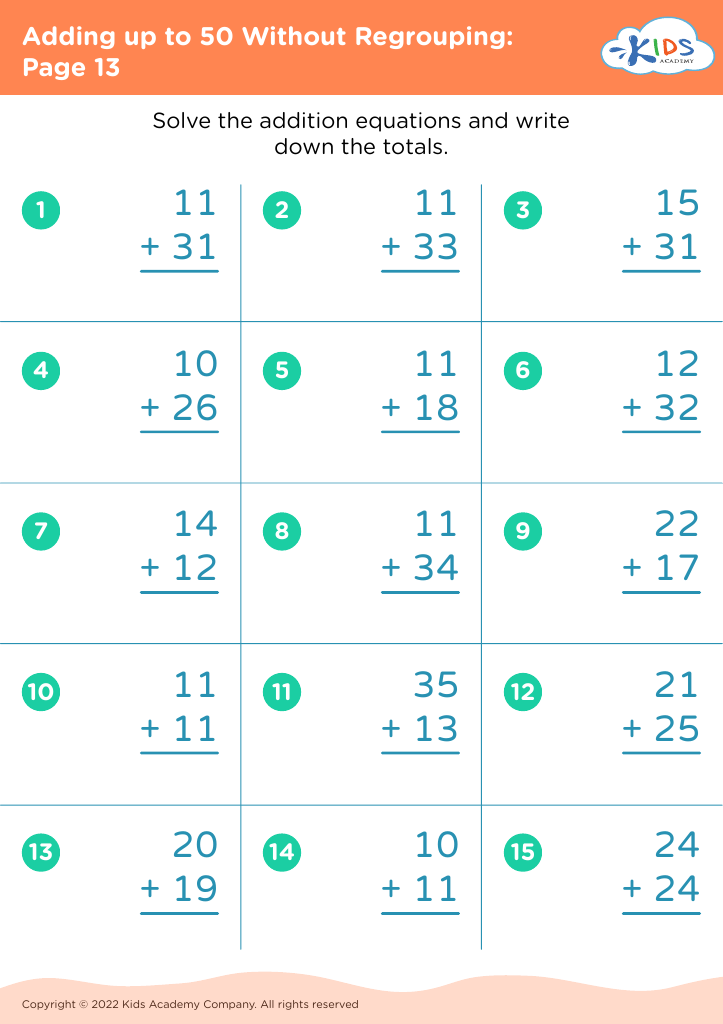
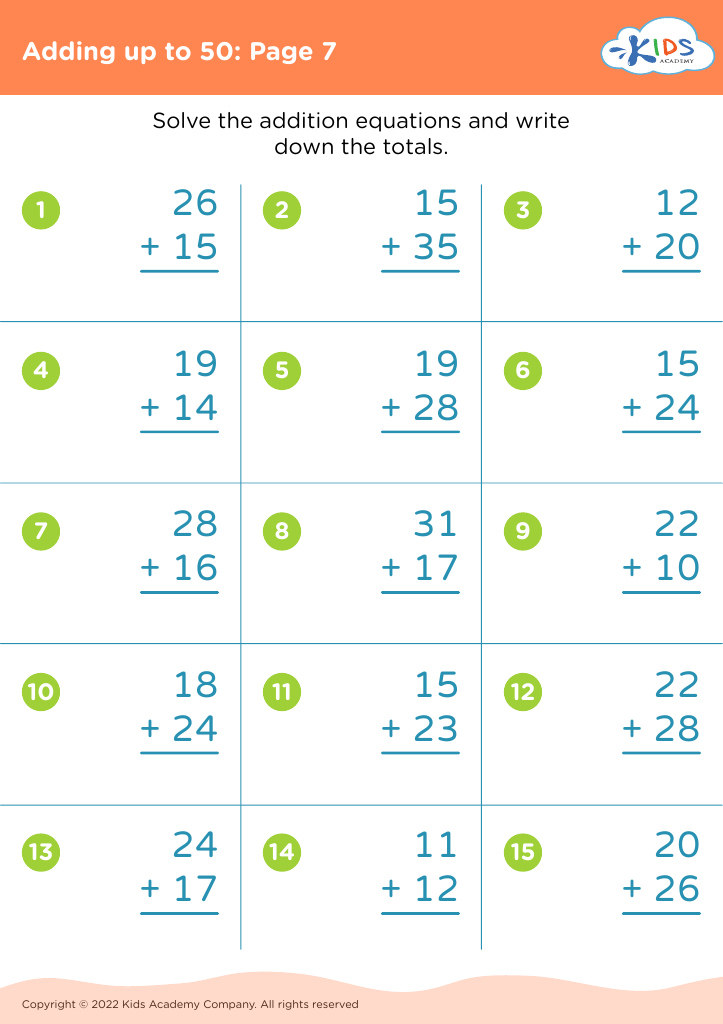
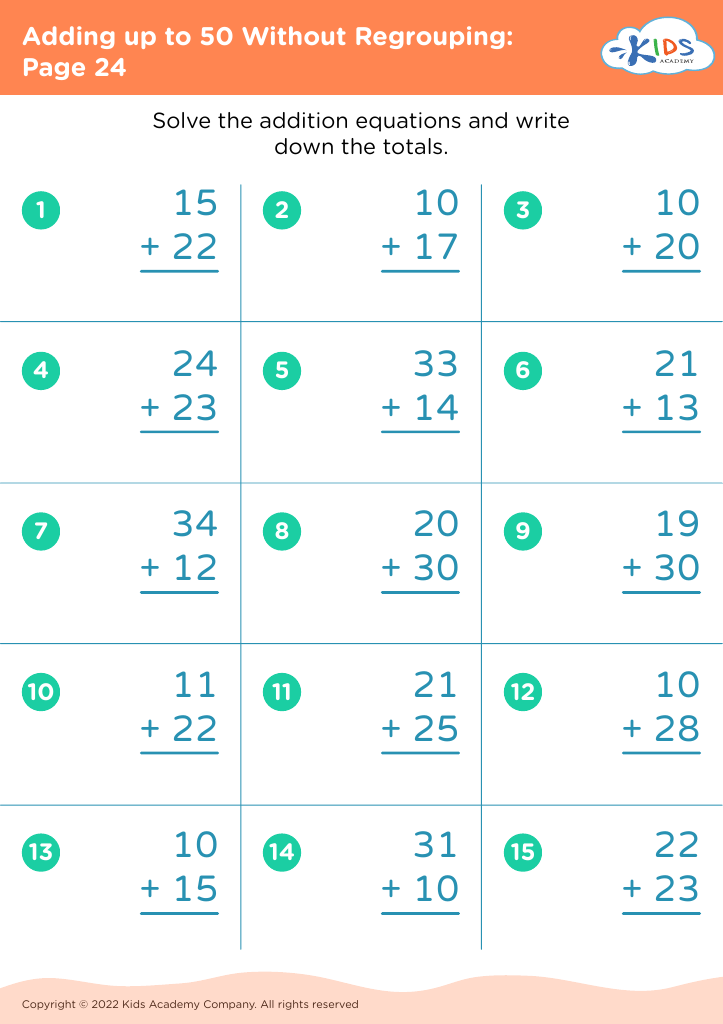
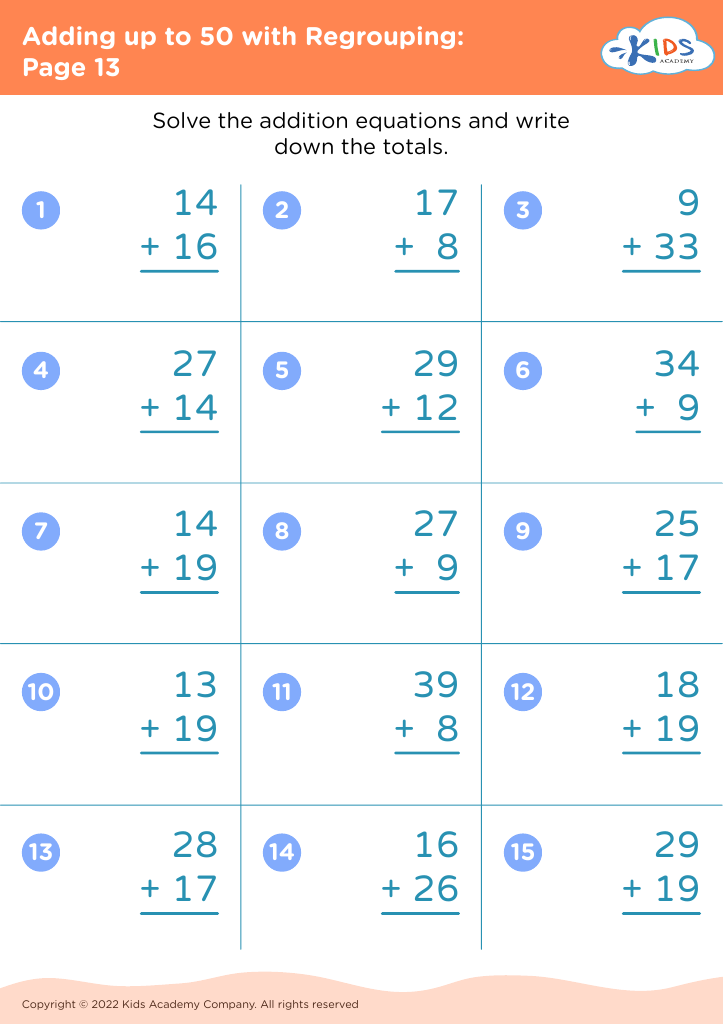




Understanding patterns and working with numbers is foundational for children aged 4-7, and both parents and teachers should pay attention to this developmental milestone. Patterns are the building blocks of mathematical thinking and problem-solving. When children learn to recognize and create patterns, it helps them predict what comes next, which is essential for understanding sequences and developing logical thinking.
Introducing patterns and working with numbers up to 50 helps to develop critical thinking and arithmetic skills gradually and age-appropriately. For instance, counting by 2s, 5s, or 10s up to 50 not only improves number sense but also prepares children for more complex calculation concepts. This sets a strong basis for future math learning, such as addition, subtraction, multiplication, and division.
Moreover, a good grasp of numbers and patterns enhances problem-solving skills beyond math, aiding in cognitive development. It improves attention to detail, develops memory, and fosters spatial awareness. These skills are transferable to other subject areas, making overall learning more effective.
By encouraging an early love for numbers and patterns, parents and teachers help nurture a child's innate curiosity and confidence in their abilities, setting them up for long-term academic success and a positive attitude towards learning.








