
Vocabulary expansion Adding up to 50 Worksheets for Ages 4-7
3 filtered results
Difficulty Level
Grade
Age
-
From - To
Subject
Activity
Standards
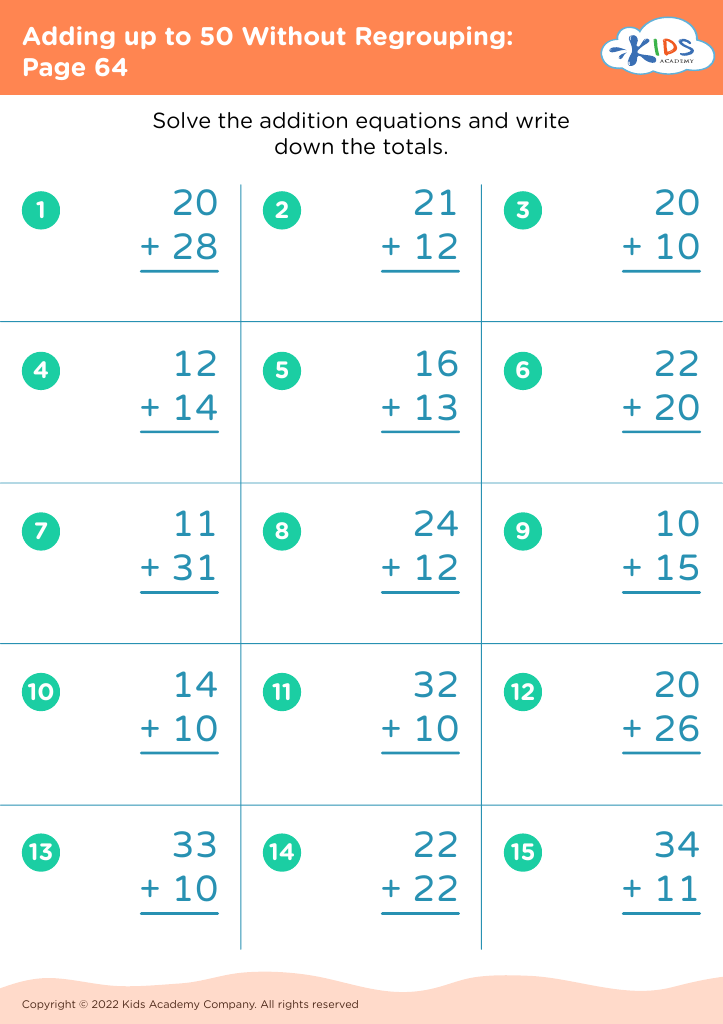
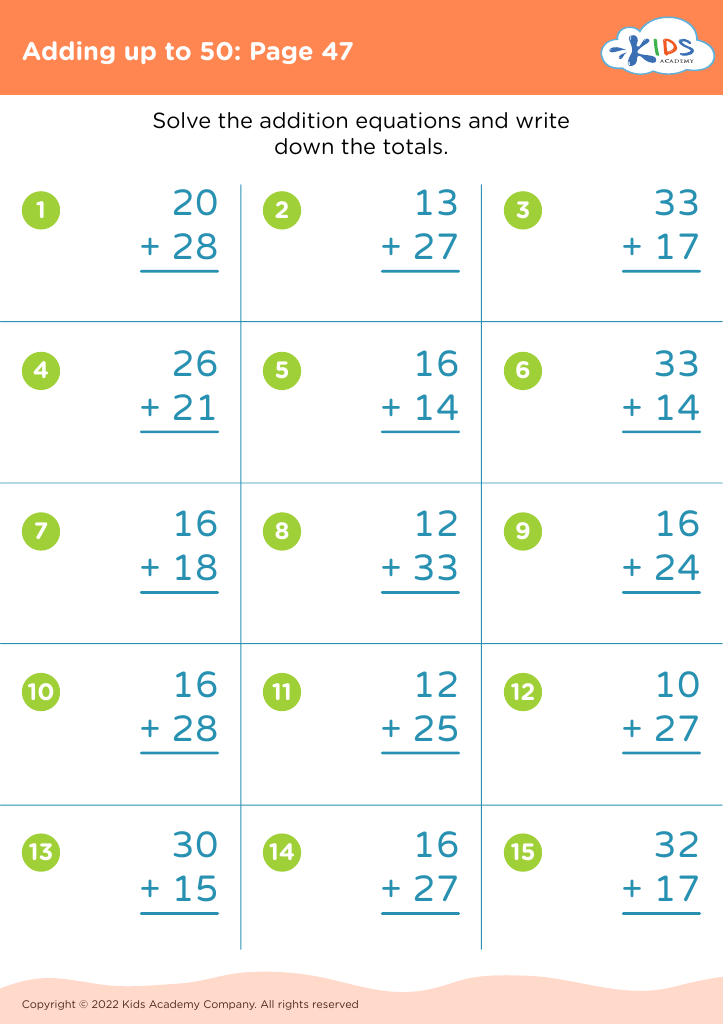
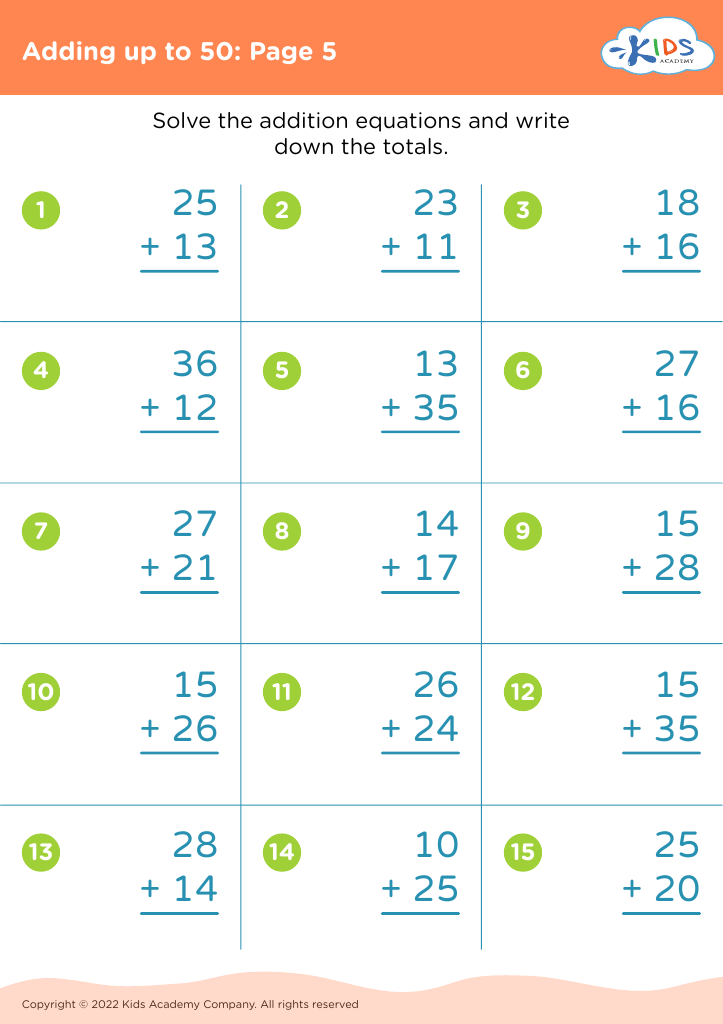
Unlock your child's potential with our "Vocabulary Expansion: Adding Up to 50 Worksheets" designed for ages 4-7! This engaging collection features 50 worksheets that not only enhance math skills but also promote vocabulary development. Children will enjoy fun activities focused on number recognition, counting, and simple addition, while simultaneously expanding their language skills through contextual word use. Each worksheet is crafted to offer a balance of educational challenges and creativity, ensuring that learning is enjoyable and effective. Perfect for home or classroom use, these resources empower young learners to thrive in both math and language comprehension. Start their learning journey today!
Favorites
With answer key
Interactive
Join Kids Academy for Free
Who is primarily going to use this learning content?




Vocabulary expansion is crucial for children ages 4-7, as it significantly influences their overall literacy, cognitive development, and social skills. At this formative age, children are rapidly absorbing language, and a robust vocabulary allows them to express their thoughts, feelings, and ideas more clearly. When parents or teachers prioritize vocabulary expansion, they equip children with the ability to engage in meaningful conversations, enhancing both their comprehension and communication skills.
Additionally, a rich vocabulary has a direct impact on academic success. Children with a broader word bank are more likely to excel in reading and writing, as they can better understand texts and articulate their ideas in assignments. Moreover, strong vocabulary skills can foster critical thinking and problem-solving abilities by enabling children to discuss concepts and express nuanced opinions.
Furthermore, boosting vocabulary not only aids in language and literacy development but also fosters social and emotional competence. Children learn to relate to their peers better by understanding and using words relevant to their experiences. This enhances their social interactions, empathy, and emotional intelligence. Therefore, by actively engaging in vocabulary expansion, parents and teachers play a pivotal role in fostering well-rounded, confident, and articulate young learners.








