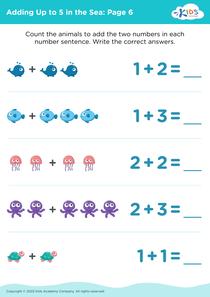
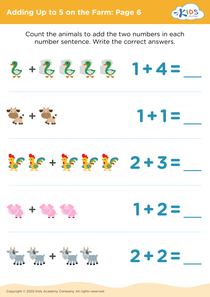
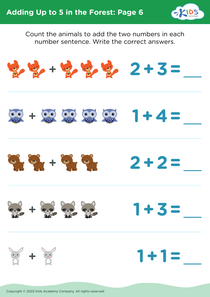
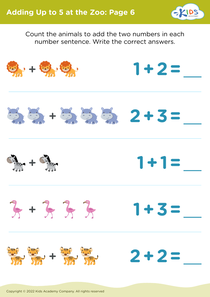
Problem-Solving Skills Adding with Busy Bugs Worksheets for Ages 4-7
6 filtered results
-
From - To
Discover the magic of problem-solving with our "Adding with Busy Bugs" worksheets, designed specifically for kids aged 4-7! These engaging resources encourage young learners to develop essential math skills while exploring fun and vibrant busy bug themes. Each worksheet includes interactive challenges that motivate children to think critically and creatively while mastering addition techniques. As they work through the colorful activities, kids enhance their problem-solving abilities, building a strong foundation in math. Perfect for home or classroom use, these worksheets make learning enjoyable and effective, inspiring a love for math in early childhood education. Get started today!
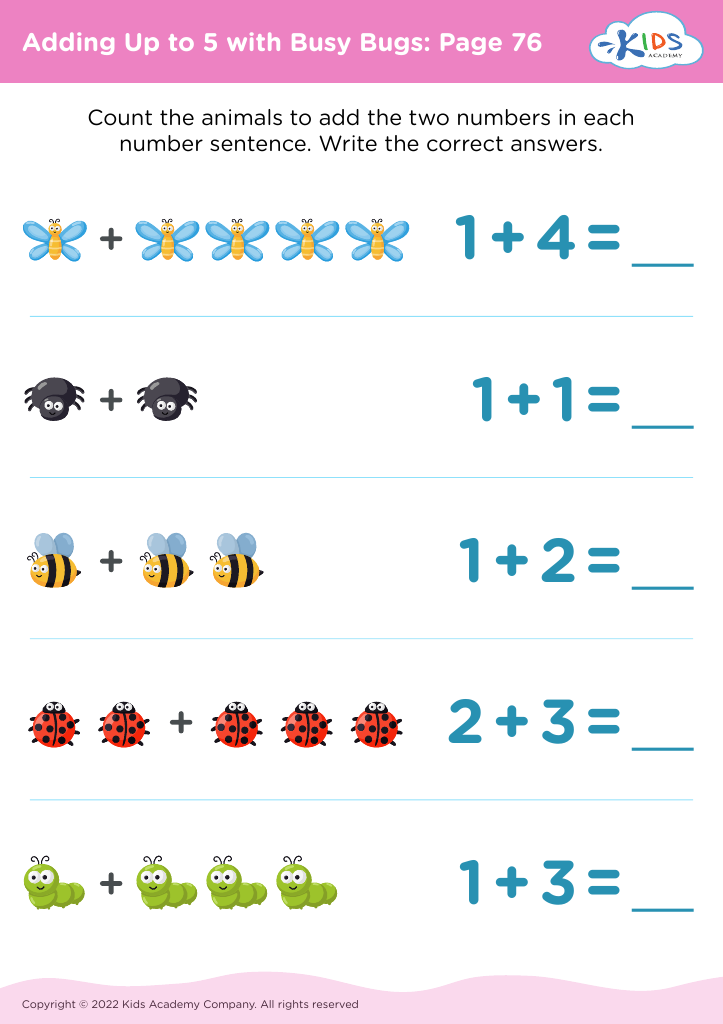
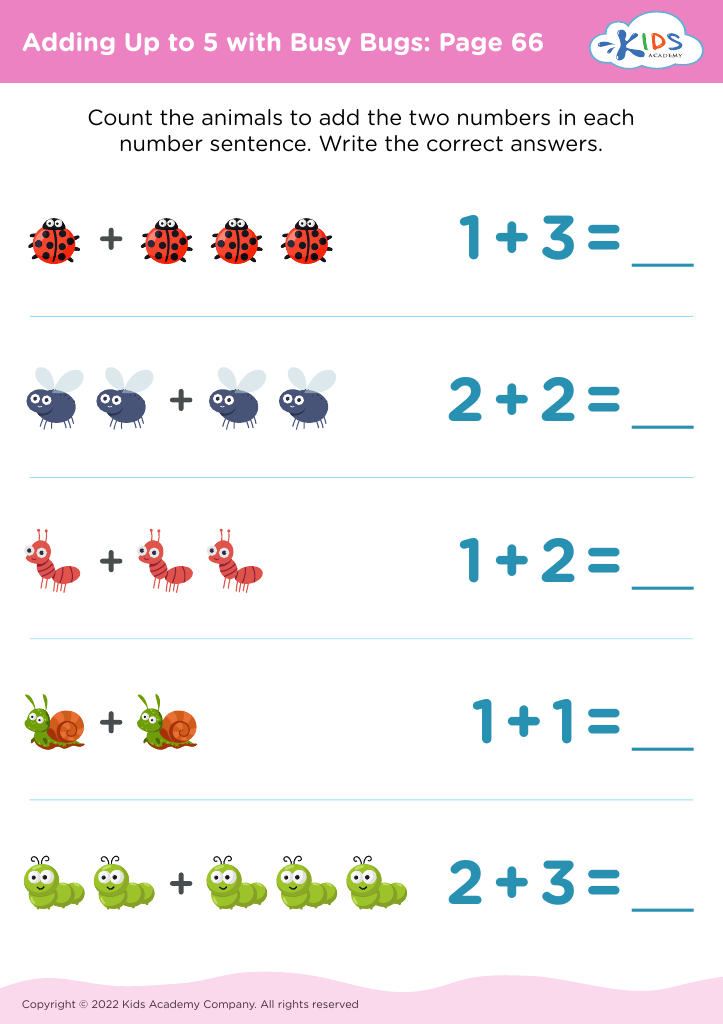
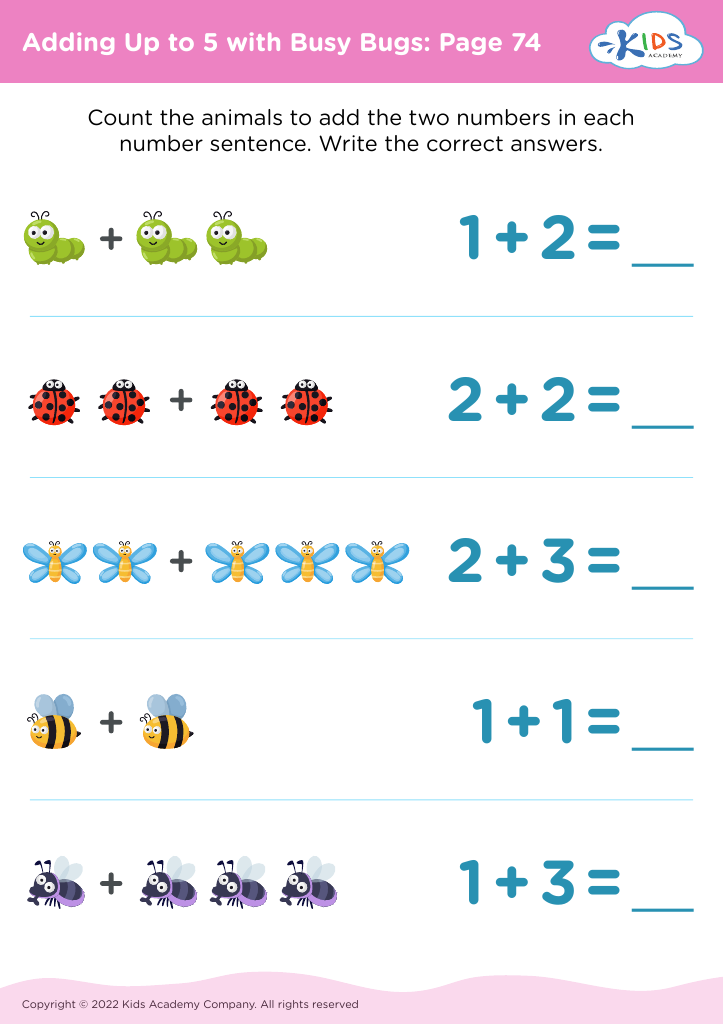
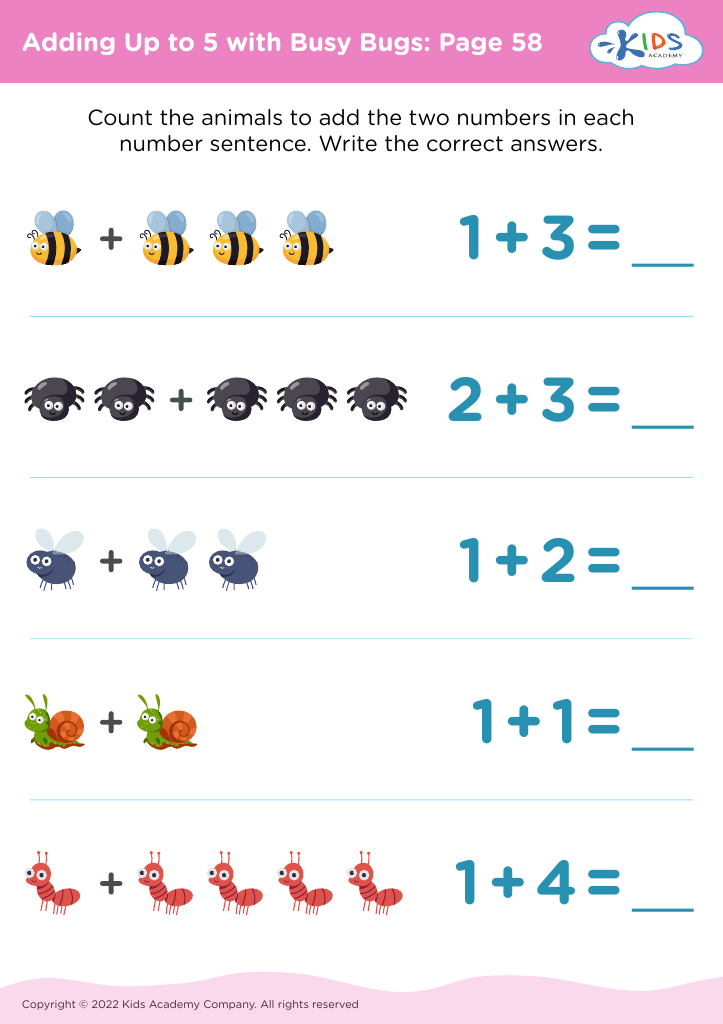
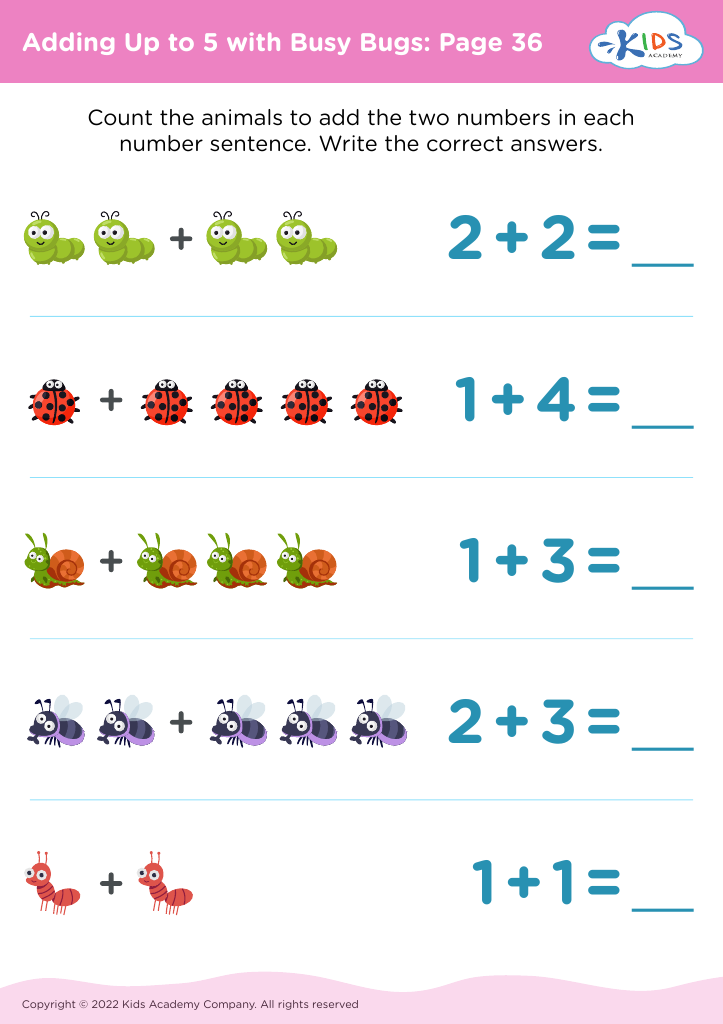
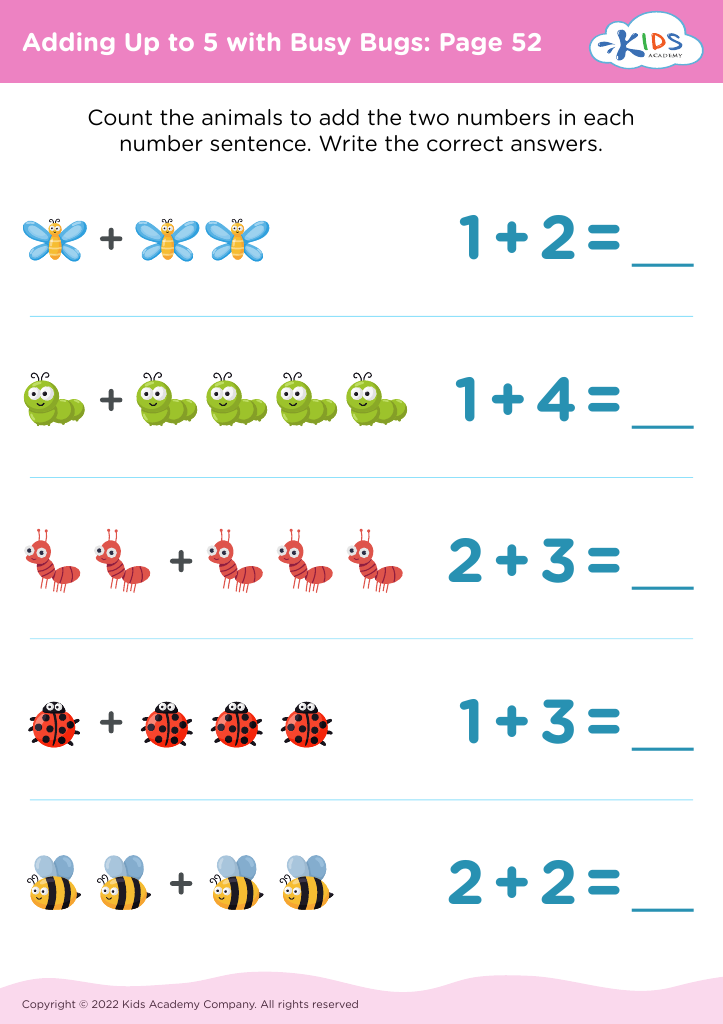



Parents and teachers should prioritize problem-solving skills for children ages 4-7, especially through engaging activities like Busy Bugs. At this young age, foundational cognitive skills are developing rapidly. Problem-solving activities, such as those found in Busy Bugs, not only foster critical thinking but also enhance creativity and resilience.
These skills are essential as they help children learn to identify challenges, brainstorm solutions, and make decisions independently. Engaging in structured play, where children must navigate challenges posed by busy bugs, encourages collaboration and communication as they often work in groups. This collaborative experience also nurtures social skills and emotional intelligence.
Moreover, early development of problem-solving competencies lays the groundwork for later academic success. It promotes confidence as children learn to tackle obstacles, boosting their overall motivation and enthusiasm for learning. The engaging nature of activities like Busy Bugs captures children's attention, making the process of learning important skills both fun and effective.
In our rapidly changing world, children equipped with strong problem-solving skills are better prepared to adapt to new situations and overcome challenges, supporting their growth into capable, confident individuals. Therefore, nurturing these skills through play should be a shared goal for both parents and educators.