Problem-solving abilities Addition and Subtraction Word Problems Worksheets for Ages 4-7
4 filtered results
-
From - To
Encourage young minds to develop essential math skills with our Problem-Solving Abilities Addition and Subtraction Word Problems Worksheets designed for ages 4-7. These engaging activities will improve your child’s ability to tackle real-life problems by mastering basic arithmetic. Our carefully crafted worksheets feature vibrant illustrations and relatable scenarios to make learning fun and effective. Each problem enhances critical thinking, comprehension, and numeracy skills, ensuring a well-rounded math foundation. Ideal for parents and teachers, these resources seamlessly blend education with play, fostering a love for learning in a supportive and interactive environment. Empower your child to succeed in math effortlessly!
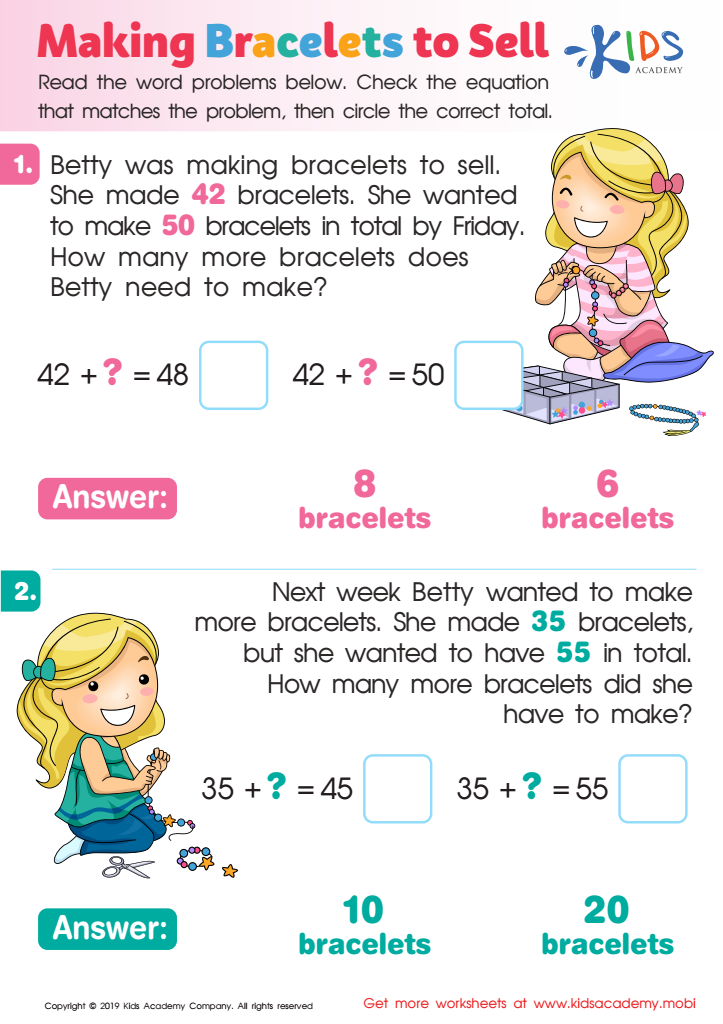
Making Bracelets to Sell Worksheet
 Assign to My Students
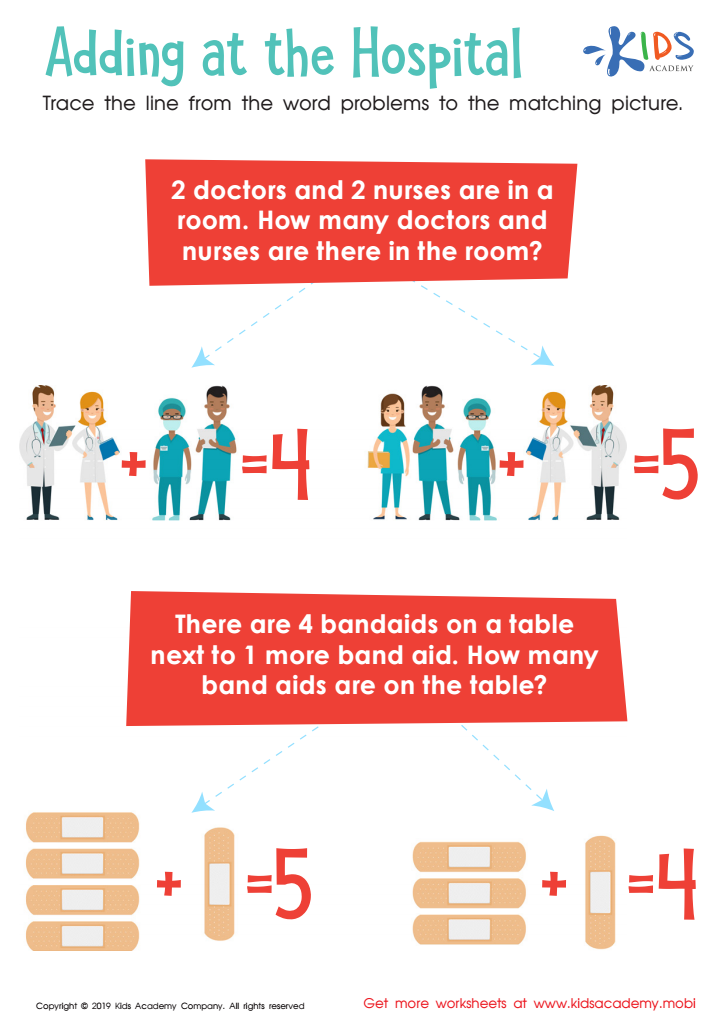
Adding at the Hospital Worksheet
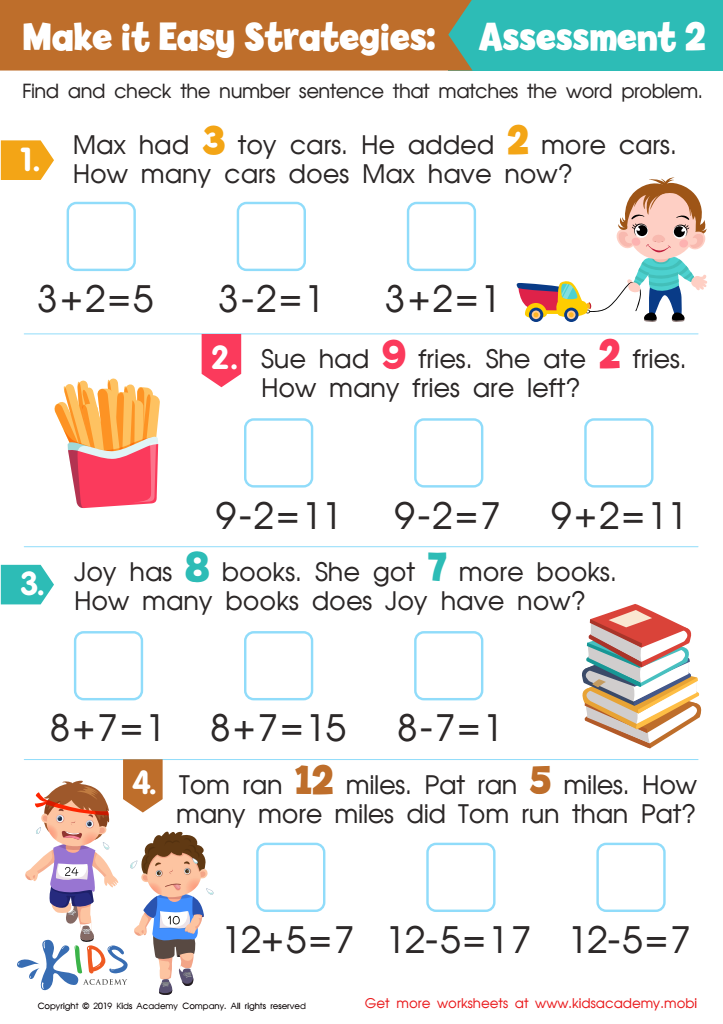
Make it Easy Strategies: Assessment 2 Worksheet
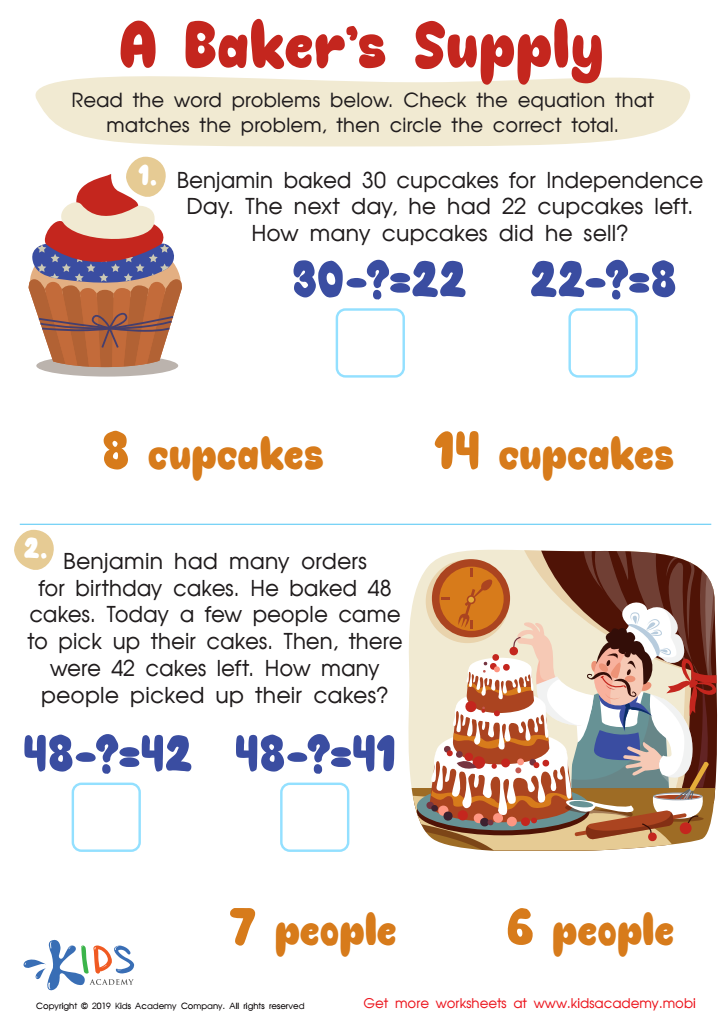
A Baker's Supply Worksheet








Parents and teachers should deeply care about developing problem-solving abilities through addition and subtraction word problems for children aged 4-7. During these formative years, children are building the foundational skills that will support their future learning across all subjects. Introduction to simple word problems teaches them to interpret and understand real-life situations, making math concepts more relevant and engaging. This relevance helps young learners grasp the importance of math in daily life, such as counting objects, sharing equally among friends, or planning simple activities.
Additionally, problem-solving activates critical thinking and logical reasoning skills. When children dissect a word problem, they learn to identify key information, determine relationships between quantities, and execute arithmetic operations. These processes enhance cognitive development, encouraging flexible thinking and perseverance in tackling new challenges.
Moreover, early competence with math problems builds confidence. Children who feel successful in solving word problems are more likely to develop a positive attitude towards learning math and other subjects. By creating a strong foundation at this age, parents and teachers can set young learners on a path to academic achievement, critical thinking, and an enduring love for problem-solving beyond just pencil-and-paper arithmetic.