Mathematical reasoning Addition Facts Worksheets for Ages 4-7
4 filtered results
-
From - To
Welcome to our "Mathematical Reasoning Addition Facts Worksheets for Ages 4-7" page! Designed to support young learners, these engaging worksheets offer a fun and interactive way for children to master addition facts. Our resources foster critical thinking skills and help develop a solid foundation in mathematical reasoning. Through colorful visuals and engaging exercises, kids will practice identifying numbers, solving simple addition problems, and building confidence in their math abilities. Perfect for use at home or in the classroom, these worksheets are an excellent tool for parents and educators looking to enhance young learners' numeracy skills. Explore our collection today!
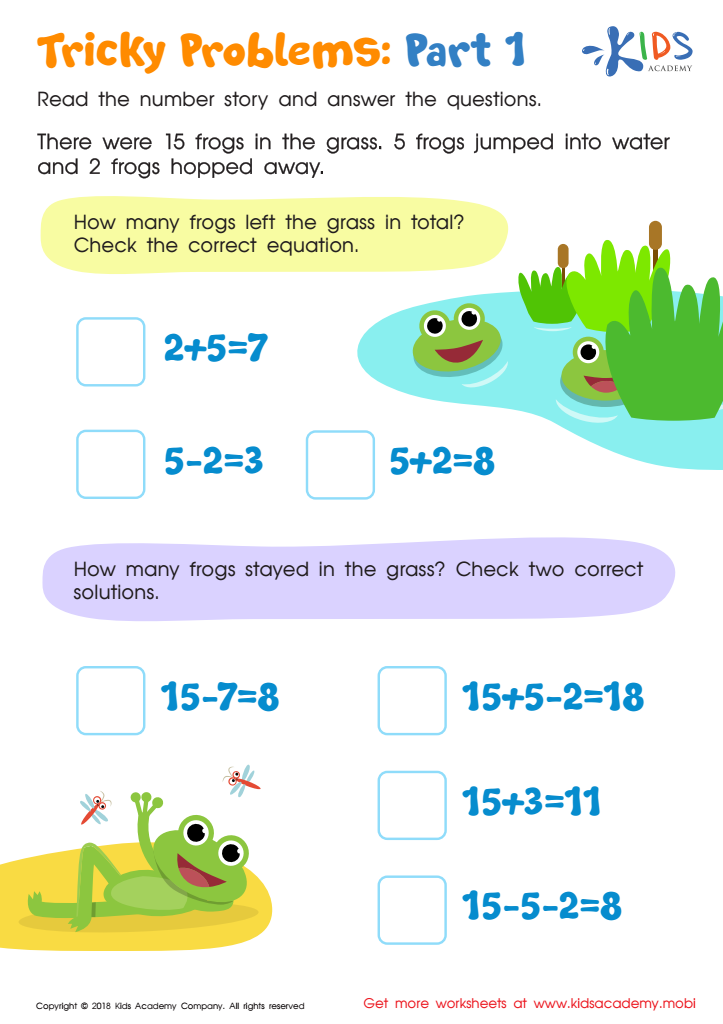
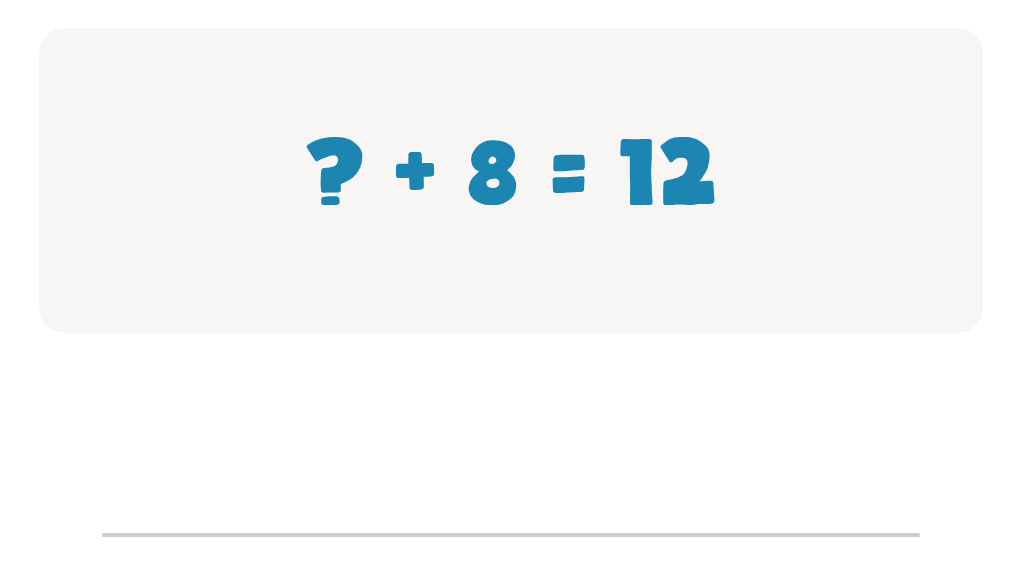
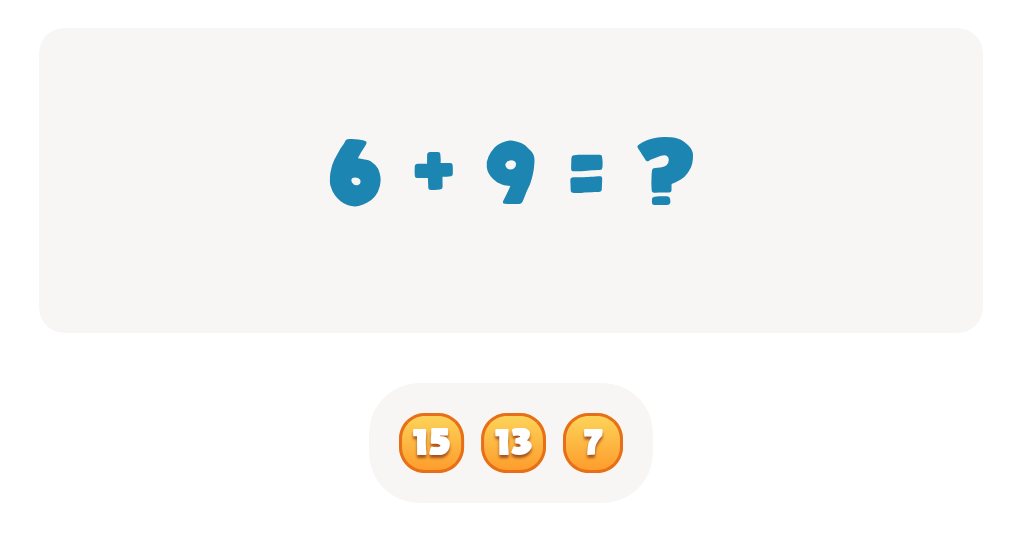
Tricky Problems Worksheet: Part 1
 Assign to My Students
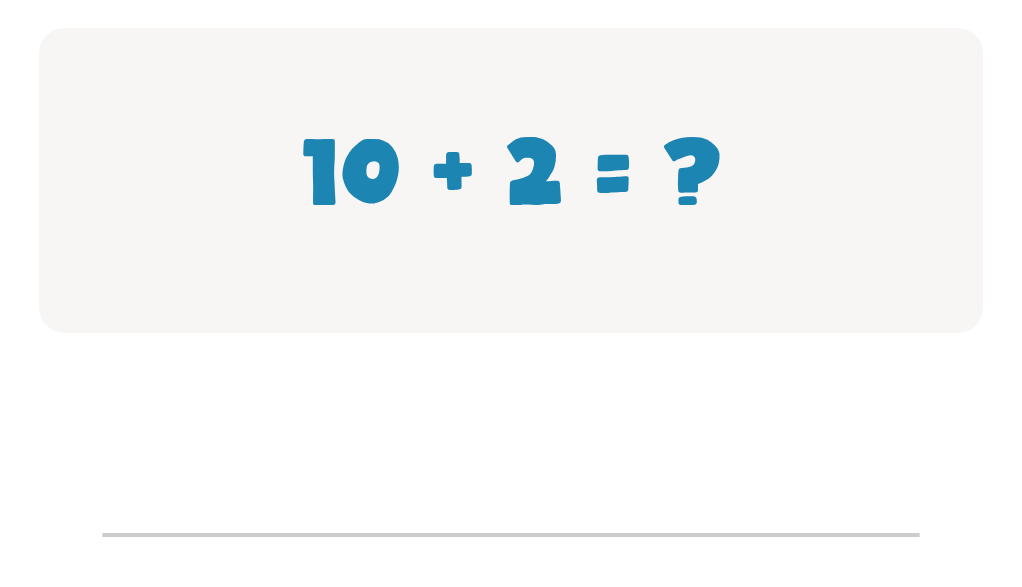

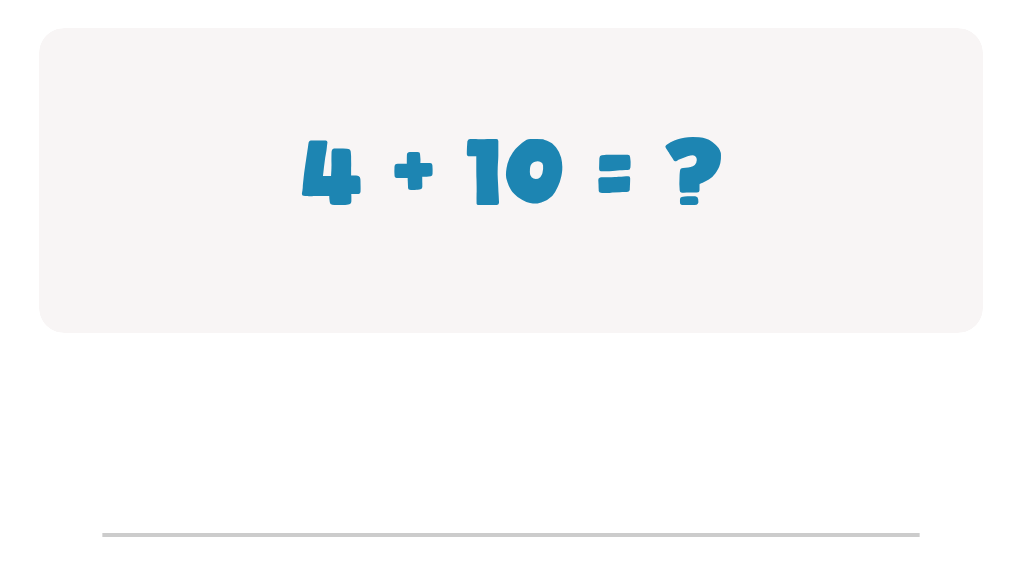
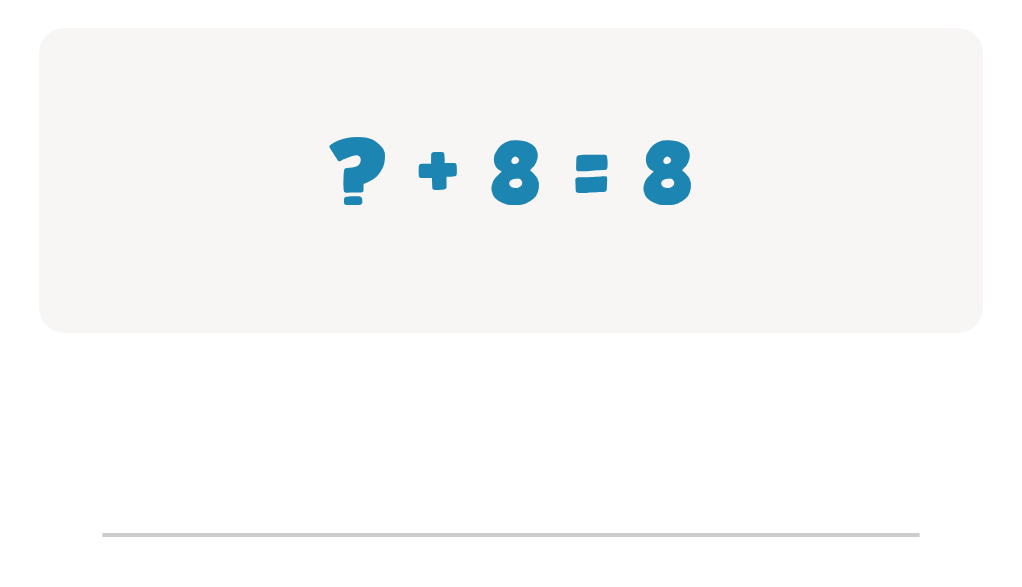

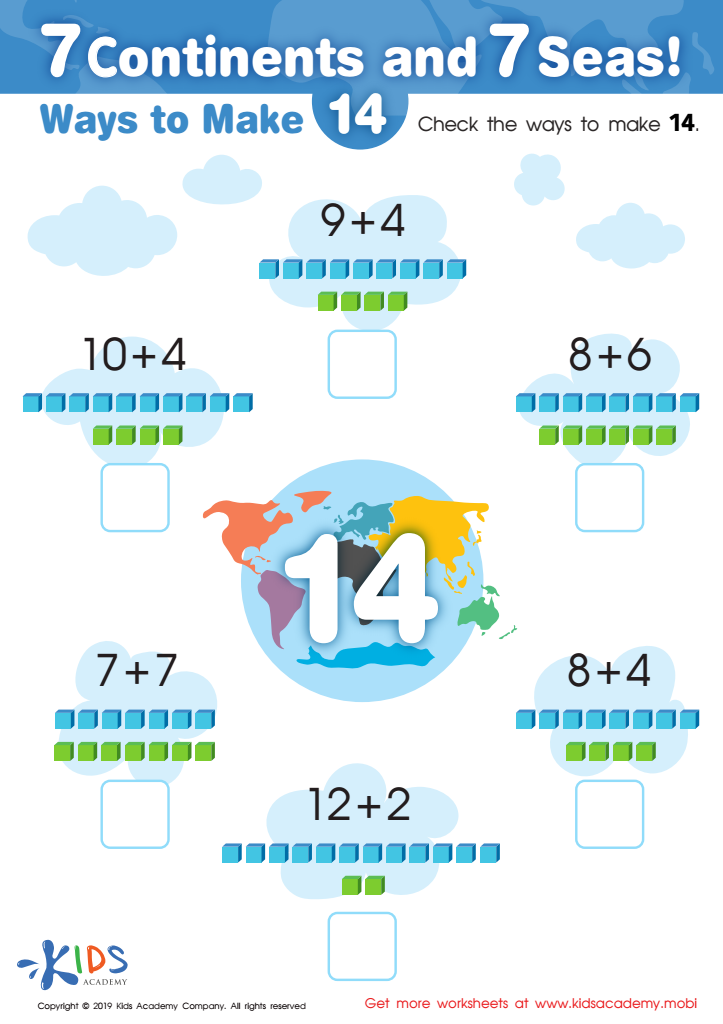
7 Continents and 7 Seas Worksheet
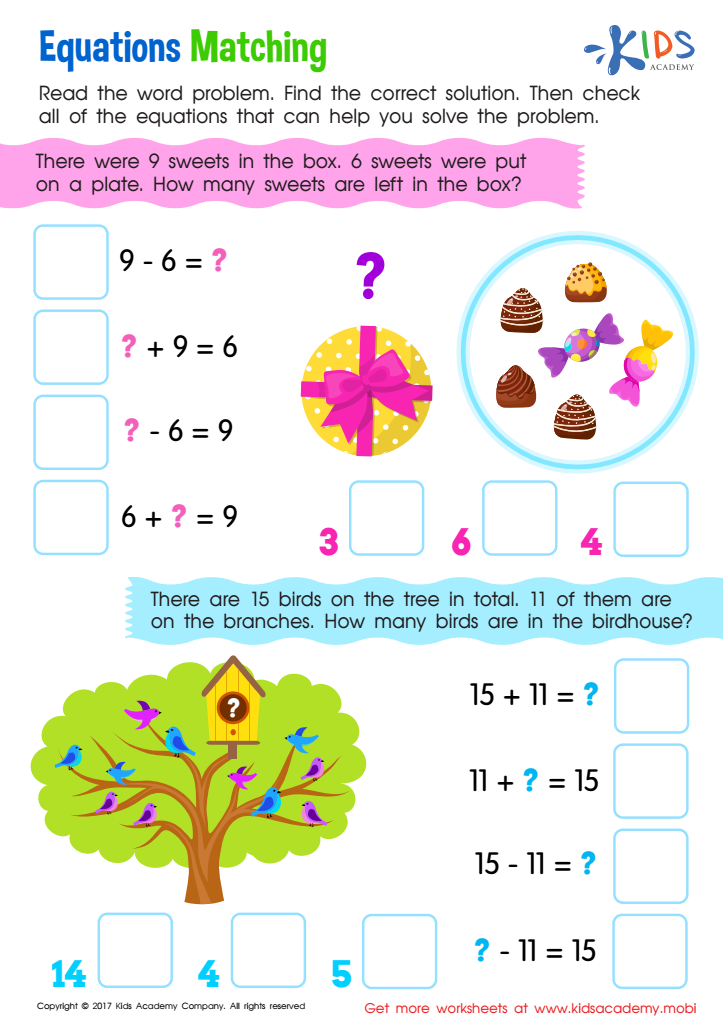
Equations Matching Word Problems Worksheet
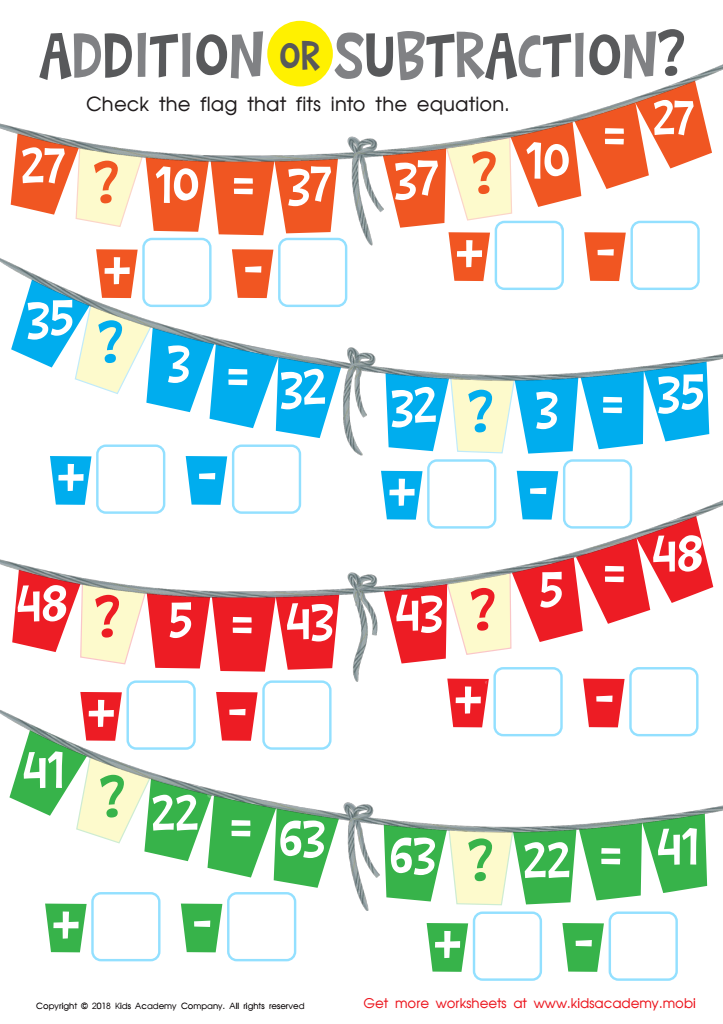
Addition or Subtraction? Worksheet








Mathematical reasoning, particularly regarding addition facts for children aged 4-7, is a fundamental aspect of early childhood education. This critical period in a child's developmental journey lays the groundwork for their future mathematical understanding and problem-solving skills.
First, mastering addition facts enhances a child's ability to engage with more complex mathematical concepts later on, including subtraction, multiplication, and division. It builds their confidence and fosters a positive attitude toward math, reducing the likelihood of math anxiety.
Additionally, developing mathematical reasoning improves children’s logical thinking and cognitive abilities. When they learn how to reason through addition problems, they enhance their capacity to analyze situations, make connections, and understand relationships between numbers - skills that are essential in both academic contexts and everyday life.
For parents and teachers, cultivating these skills at an early age equips children with valuable tools necessary for critical thinking and decision-making. Moreover, it offers them opportunities for engaging learning experiences, whether through games or practical problem-solving in real-life scenarios.
In summary, prioritizing mathematical reasoning and addition facts during these formative years helps children build a solid mathematical foundation that benefits their overall educational journey and everyday interactions.








