Animal identification Addition & Subtraction Worksheets for Ages 4-7 - Page 2
28 filtered results
-
From - To
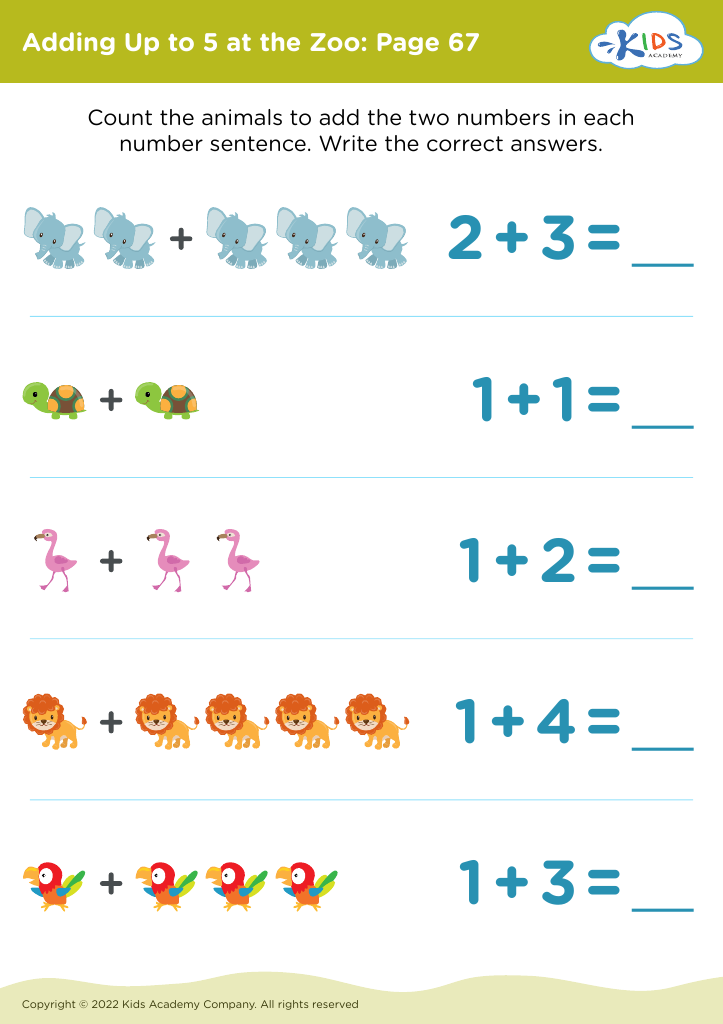
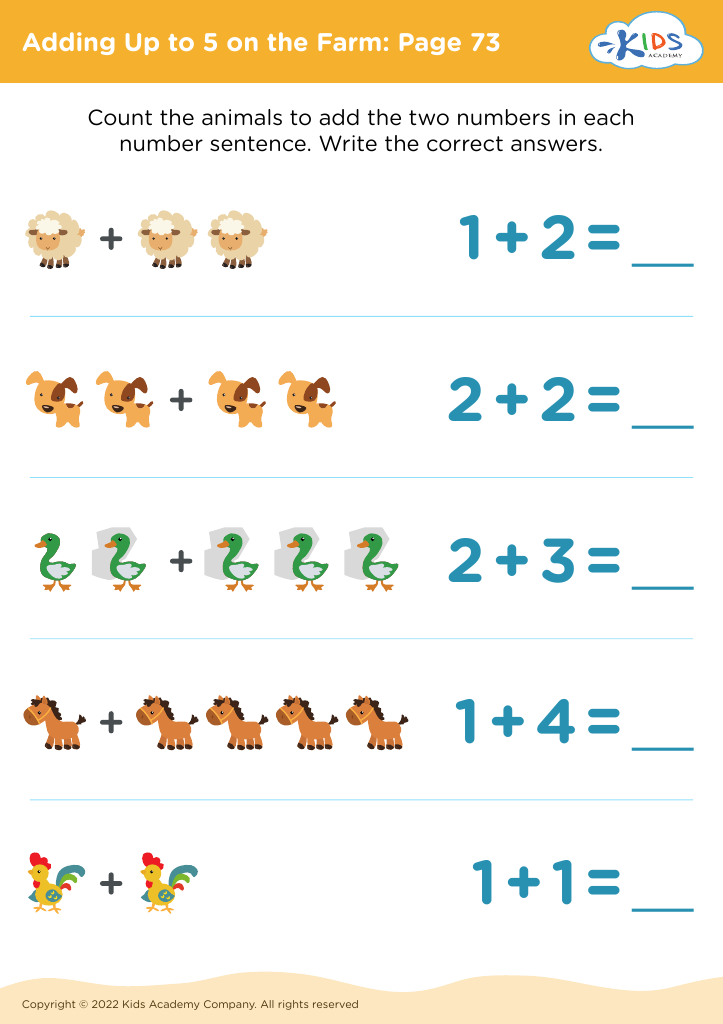
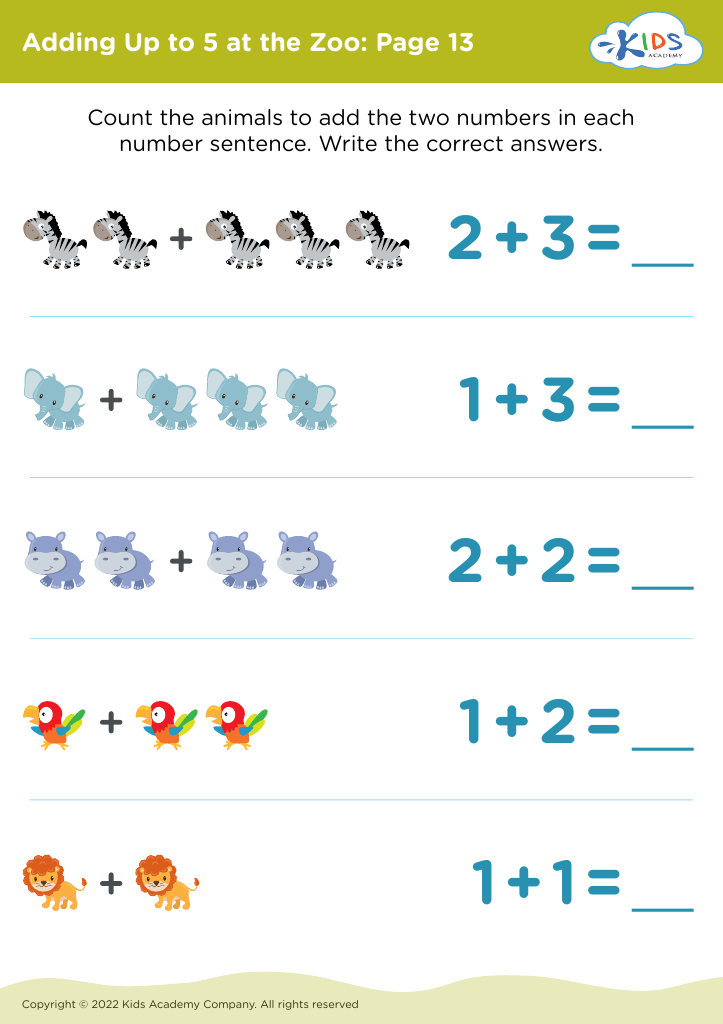
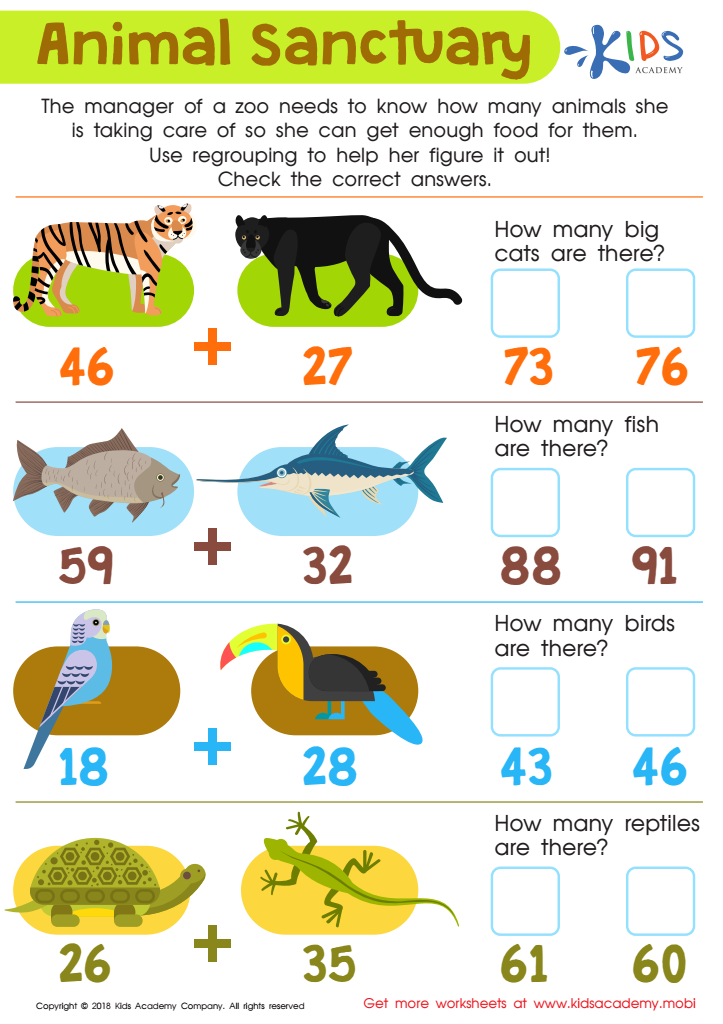
Animal Sanctuary Worksheet
 Assign to My Students








Animal identification combined with addition and subtraction activities for children aged 4-7 offers multifaceted educational benefits that make it a worthwhile endeavor for parents and teachers alike. At this age, children are developing crucial cognitive skills, and incorporating animals can make learning more relatable and engaging.
First, animals attract children's natural curiosity, making educational activities more enjoyable. When kids are interested, they are more likely to be attentive and retain information. Recognizing different animals also helps expand their vocabulary and general knowledge about the world, fostering both language and cognitive development.
Adding math into the mix further enhances these benefits. Simple addition and subtraction develop numerical understanding and problem-solving skills, foundational elements crucial for future math success. Using animals as counters or visual aids can help children better understand abstract mathematical concepts in a concrete way.
Moreover, integrating these elements supports interdisciplinary learning, which is shown to improve comprehension and the ability to transfer skills across different subjects. It encourages children to make connections between their everyday environment and their education, making learning a holistic experience.
Finally, these activities also provide an excellent opportunity for parents and teachers to closely observe each child’s learning style and pace, enabling them to offer more tailored support. Overall, animal-themed math activities foster a love for learning while building essential early skills in a captivating and effective way.








