Decision making skills Addition & Subtraction Worksheets for Ages 4-7
3 filtered results
-
From - To
Boost your child’s decision-making abilities with our engaging Addition & Subtraction Worksheets designed for ages 4-7. These worksheets not only teach essential math skills but also help children learn how to make choices and solve problems effectively. Featuring fun visuals and age-appropriate challenges, our resources make learning an enjoyable adventure. Your little learners will practice addition and subtraction while developing critical thinking and decision-making skills, all in a supportive framework that encourages independence. Perfect for home or classroom use, these worksheets are tailored to inspire confidence and foster a love of learning in young children. Start nurturing their future today!
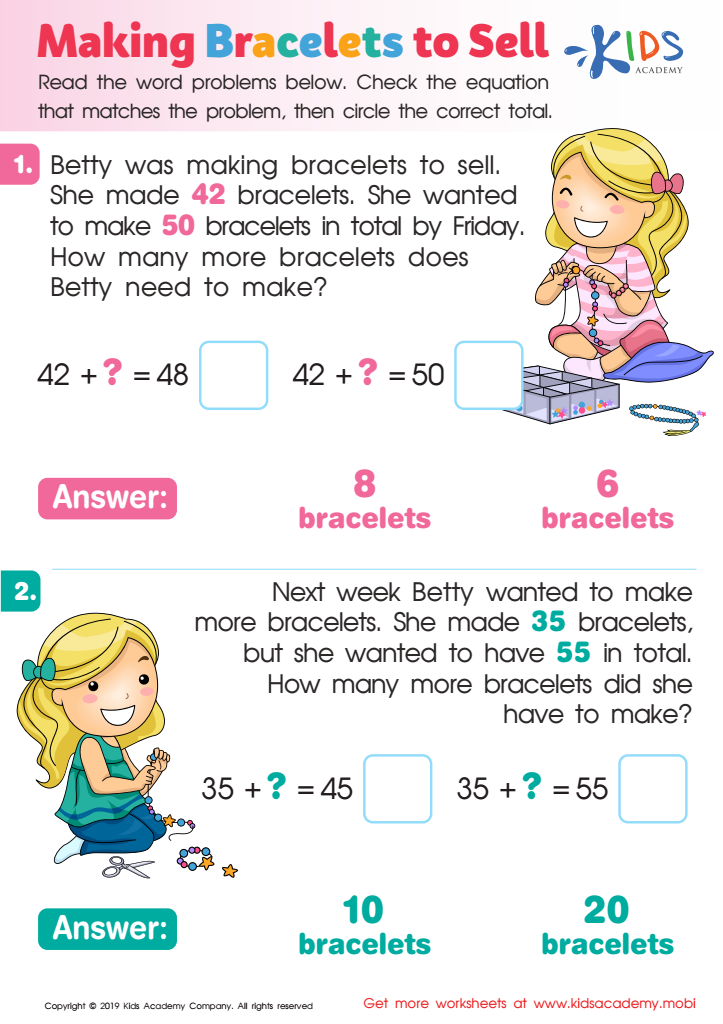
Making Bracelets to Sell Worksheet
 Assign to My Students
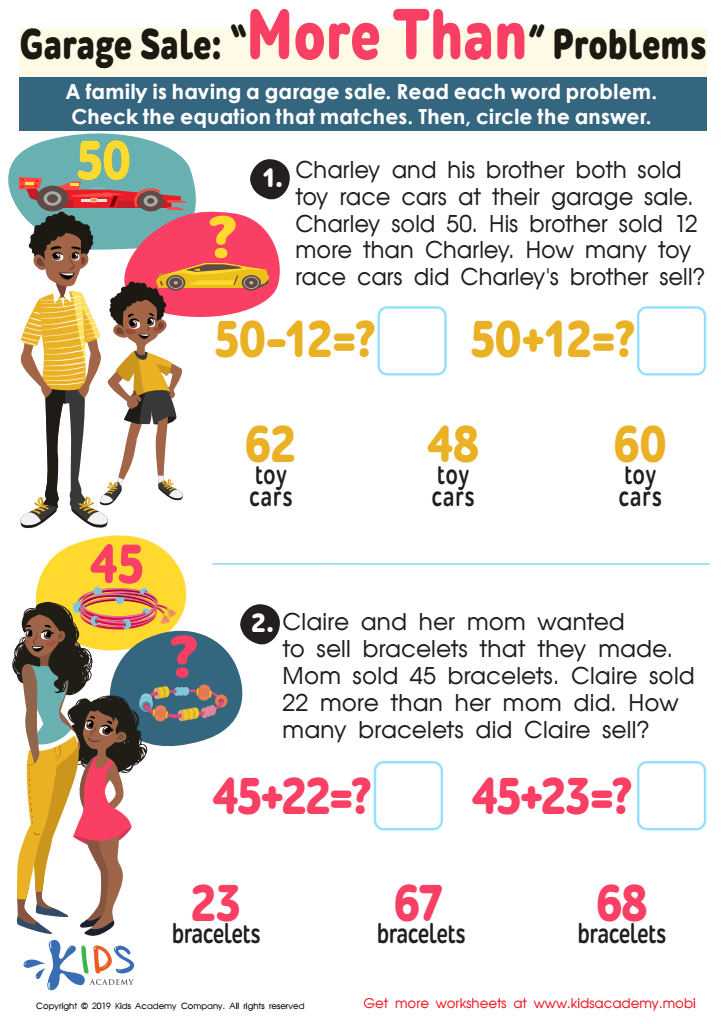
Garage Sale - More yhan Worksheet
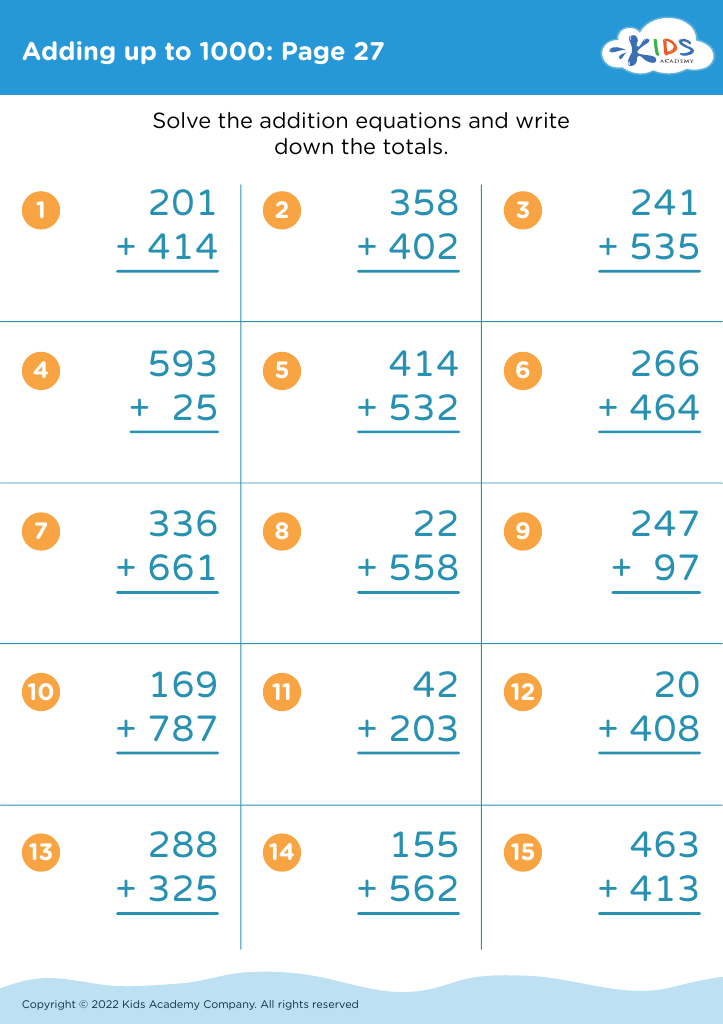








Parents and teachers should recognize the importance of decision-making skills in the context of addition and subtraction for children aged 4-7. Early mathematical concepts, such as addition and subtraction, serve as the foundation for logical reasoning and problem-solving abilities that influence a child’s overall cognitive development. By engaging young learners in activities that require them to make decisions—such as determining how to group objects for addition or deciding how many items to take away for subtraction—children cultivate critical thinking skills that enable them to approach problems methodically.
Moreover, mastering these basic addition and subtraction skills helps foster confidence and independence in children. It allows them to navigate everyday situations, such as sharing snacks, managing allowances, or understanding time and quantities. Additionally, when teachers and parents prioritize decision-making in math, they encourage a style of learning that promotes curiosity and exploration, making math enjoyable rather than fearsome.
Ultimately, nurturing these skills early on supports a child’s academic success and equips them with the capabilities needed for future complex mathematical concepts and real-world challenges, establishing a strong foundation for lifelong learning.








