
Developing critical thinking Addition & Subtraction Worksheets for Ages 4-7
3 filtered results
Difficulty Level
Grade
Age
-
From - To
Subject
Activity
Standards
Enhance your child's problem-solving abilities with our "Developing Critical Thinking Addition & Subtraction Worksheets" designed for ages 4-7. These engaging worksheets encourage kids to think critically while mastering fundamental math concepts such as addition and subtraction. With a variety of fun activities, children will learn to analyze, evaluate, and apply their mathematical knowledge in creative ways. Our worksheets foster independence and confidence in young learners, making math enjoyable and accessible. Designed by educators, these resources support cognitive development through interactive exercises that build essential skills for lifelong learning. Start your child's journey to becoming a critical thinker today!
Favorites
With answer key
Interactive
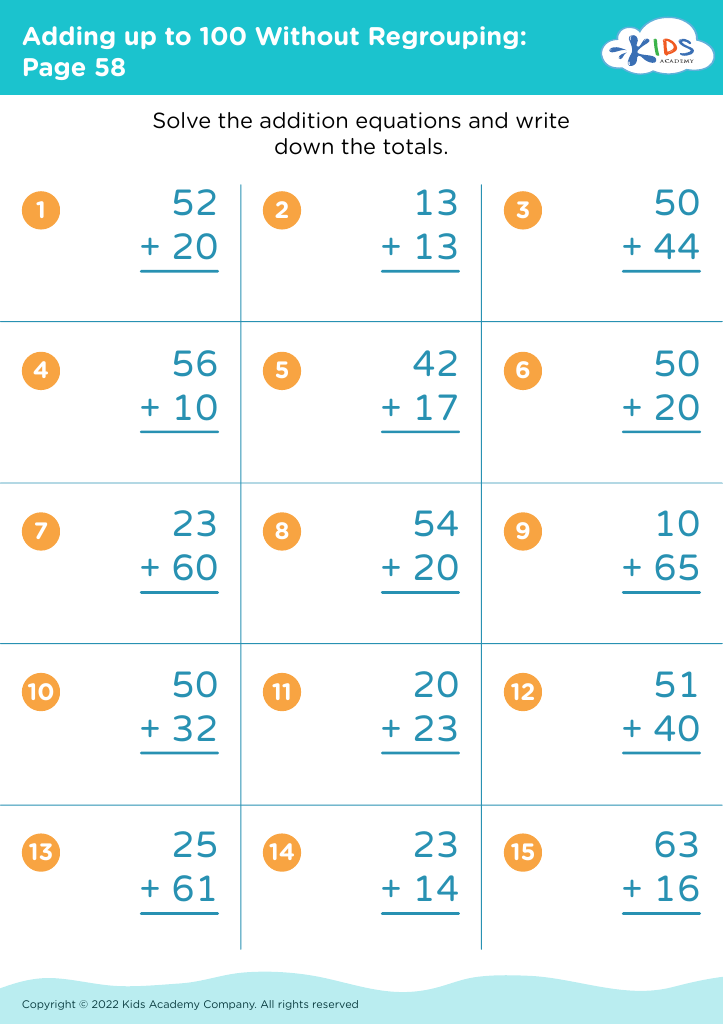
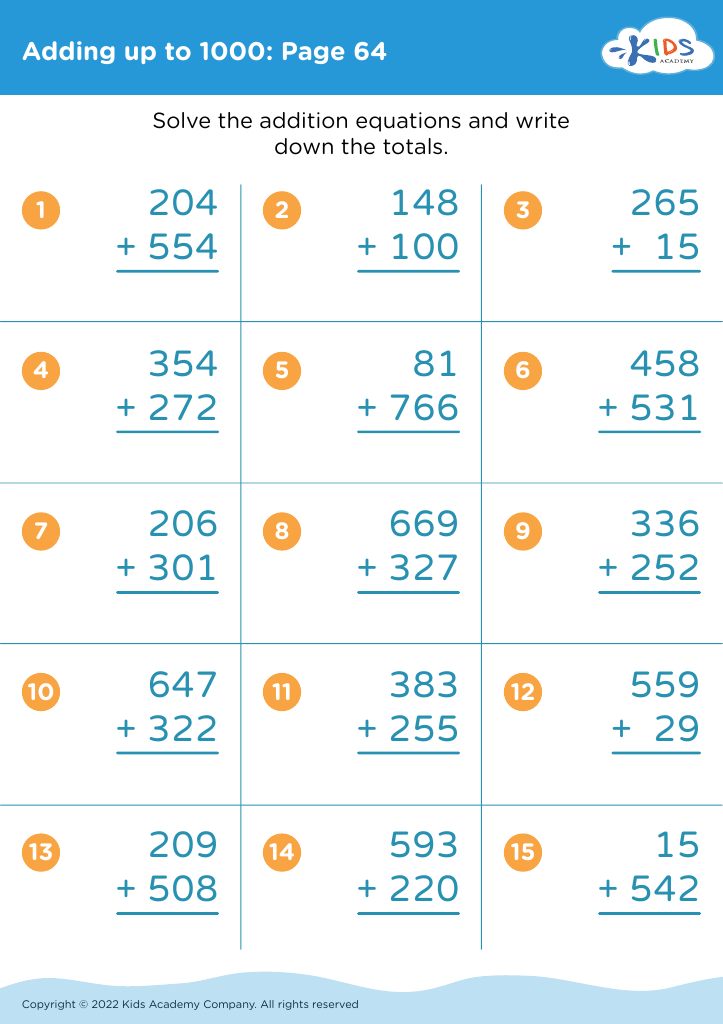
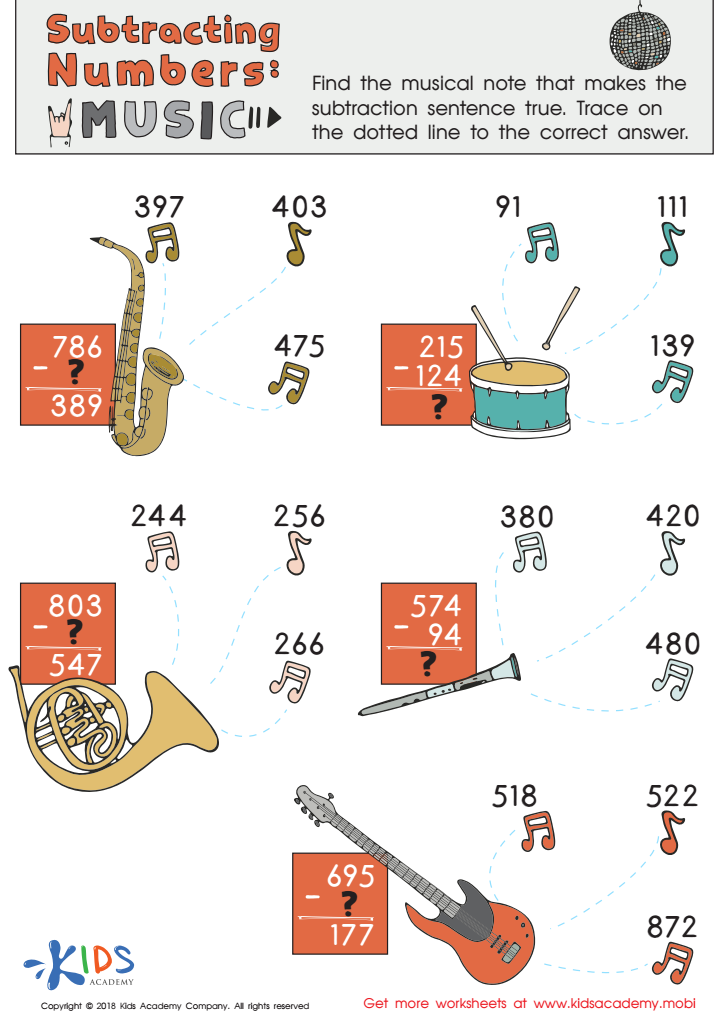
Subtracting Numbers: Music Worksheet
Enroll your kids in a music class and let them express their feelings via music! This worksheet challenges them to identify the musical note that makes the subtraction sentence true. Help them solve the problem and trace the dotted line to the correct answer. Let their appreciation for music grow!
 Assign to My Students
Subtracting Numbers: Music Worksheet
Worksheet
Learning Skills
Join Kids Academy for Free
Who is primarily going to use this learning content?








Developing critical thinking skills in addition and subtraction for children aged 4-7 is vital for their cognitive growth and everyday problem-solving abilities. At this age, children are not just learning basic arithmetic; they are laying the foundation for more complex mathematical concepts and critical thinking skills that will benefit them throughout their lives.
Engaging in mathematical thinking enhances children's ability to reason, make connections, and solve problems. By encouraging critical thinking in addition and subtraction, parents and teachers help children learn to analyze situations, break down problems into manageable parts, and explore different methods for finding solutions. This fosters a sense of curiosity and independence, as children learn that there may be multiple pathways to arrive at the same answer.
Moreover, critical thinking in math supports broader academic skills, such as reading comprehension and logical reasoning. It equips children to tackle challenges collaboratively and confidently, encouraging a growth mindset that values effort and persistence.
Investing time in developing critical thinking skills during these formative years sets children up for academic success and fosters a lifelong love for learning. Parents and teachers play a crucial role in guiding children through this exploratory learning process, making it essential for their educational mission.








