Enhance problem-solving Addition & Subtraction Worksheets for Ages 4-7
3 filtered results
-
From - To
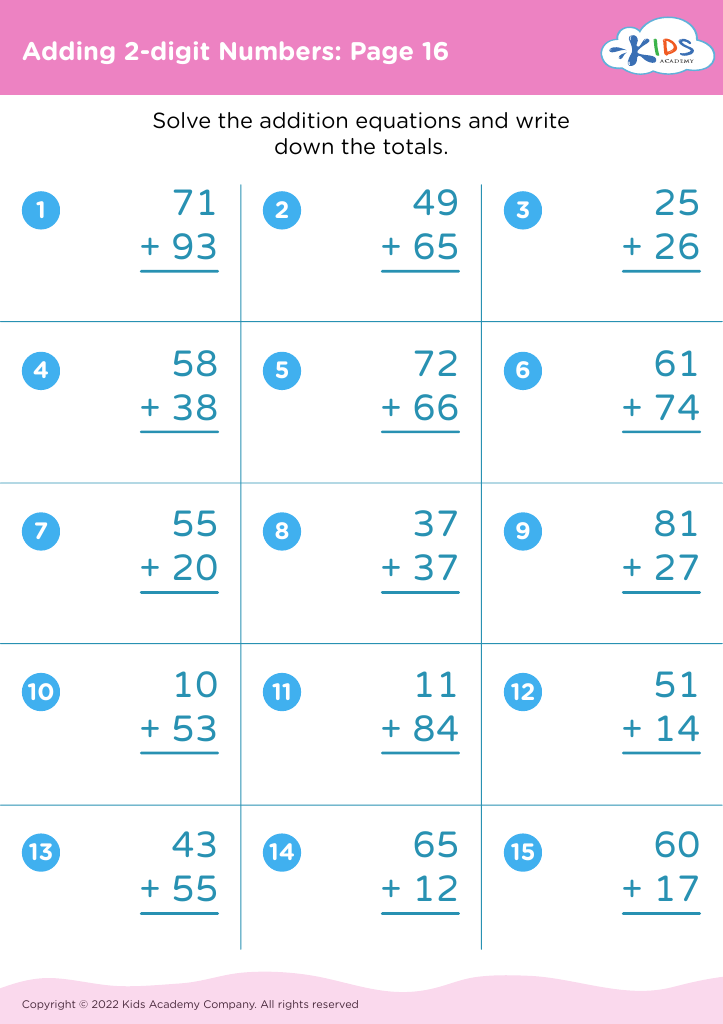
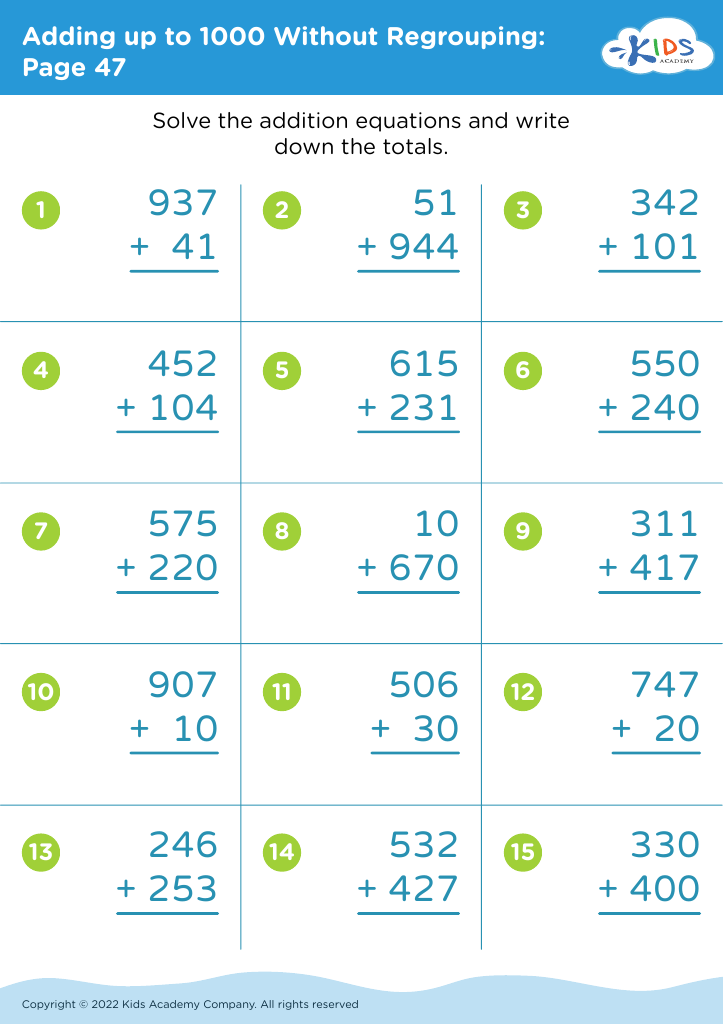
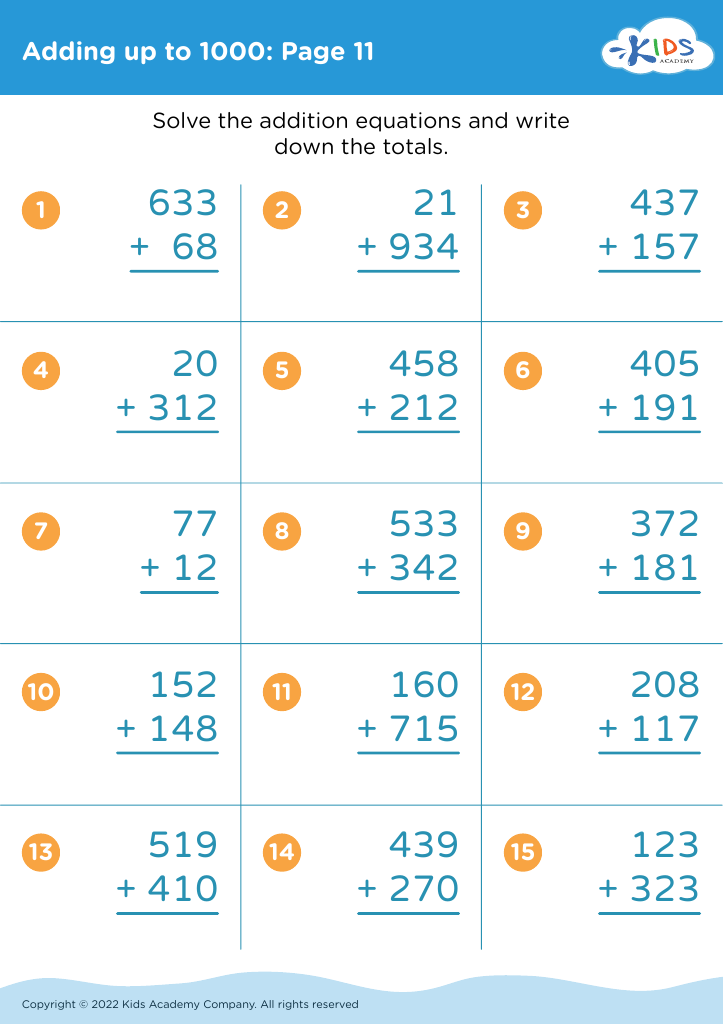
Enhance problem-solving skills with our engaging Addition and Subtraction Worksheets, specifically designed for children ages 4-7! These resources cater to young learners eager to master basic math challenges while having fun. Our worksheets feature colorful illustrations, relatable real-life scenarios, and varying difficulty levels to accommodate different learning paces. Interactive exercises promote critical thinking and encourage students to explore various strategies for arriving at the correct answers. With a focus on building confidence and fostering a love for math, these worksheets are an essential tool for educators and parents alike. Unlock the potential in your child’s math journey today!








Enhancing problem-solving skills in addition and subtraction for children aged 4-7 is crucial for several reasons. First, these foundational math skills serve as the building blocks for more complex mathematical concepts. When children become proficient in addition and subtraction, they gain confidence, which encourages them to tackle more challenging problems in the future.
Moreover, mastering these skills supports cognitive development by fostering logical thinking and the ability to analyze and approach problems methodically. This is not just relevant for math, but extends to critical life skills such as decision-making and reasoning. As children engage with problem-solving activities, they also develop persistence and resilience, as they learn to work through challenges and find solutions.
For parents and teachers, supporting this area of learning means investing in a child’s overall educational success. Using engaging, hands-on methods can make learning enjoyable and relatable. Activities such as games, visual aids, and everyday problem scenarios enrich the learning experience, creating a positive atmosphere where children are eager to learn.
Ultimately, enhancing problem-solving skills for addition and subtraction lays the groundwork for future academic achievement, emotional growth, and a lifelong love of learning.








