
Handwriting practice Addition & Subtraction Worksheets for Ages 4-7
5 filtered results
Difficulty Level
Grade
Age
-
From - To
Subject
Activity
Standards
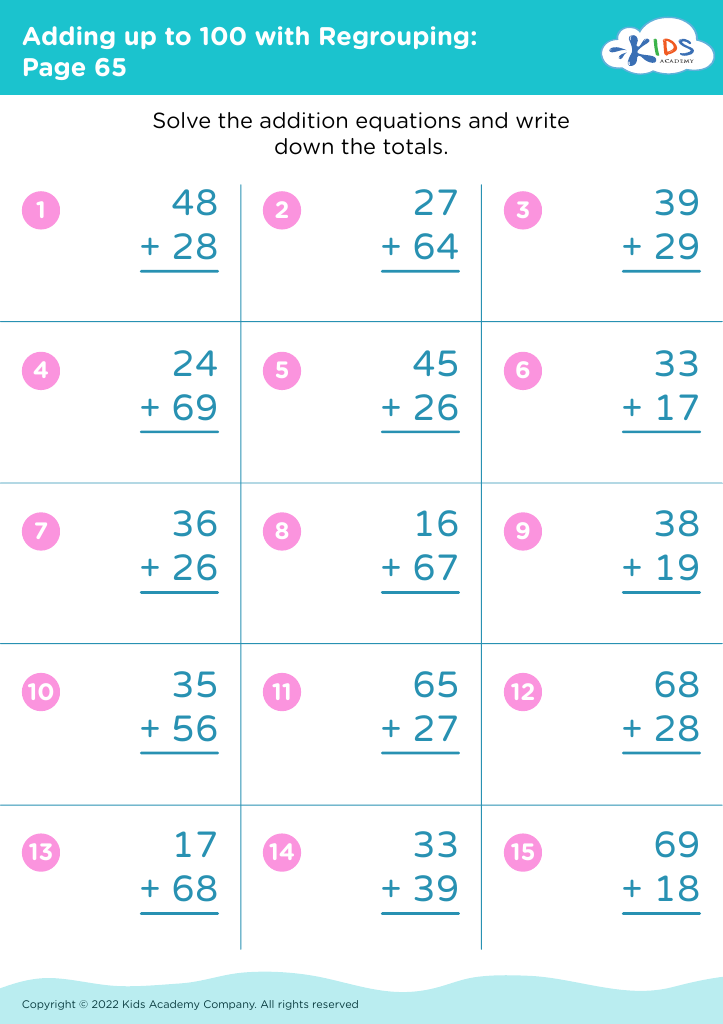
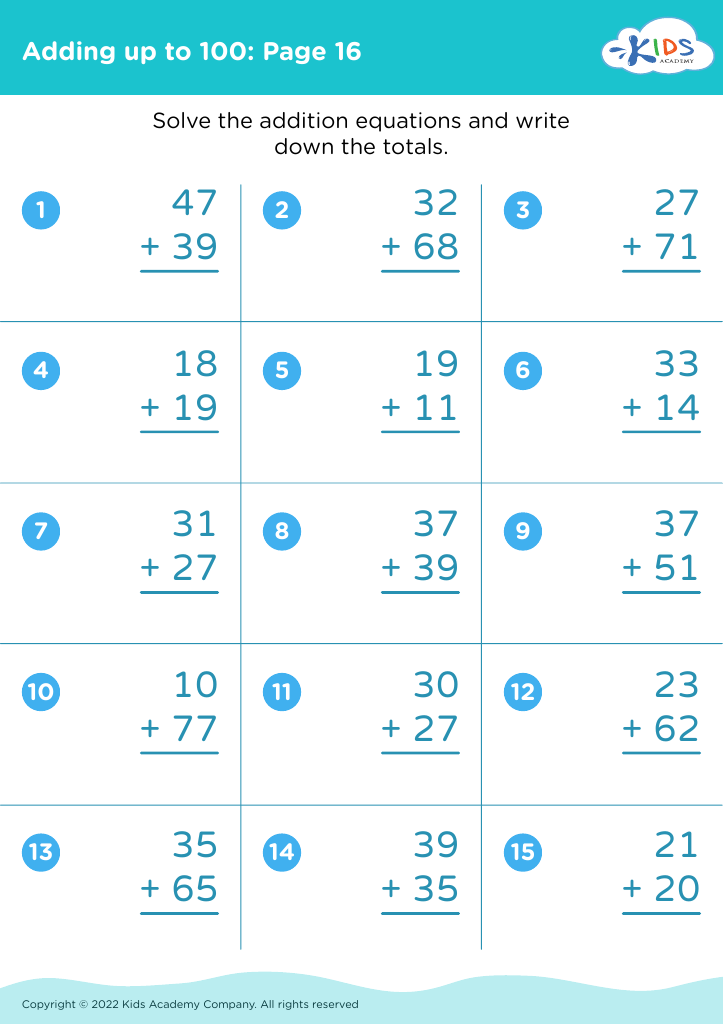
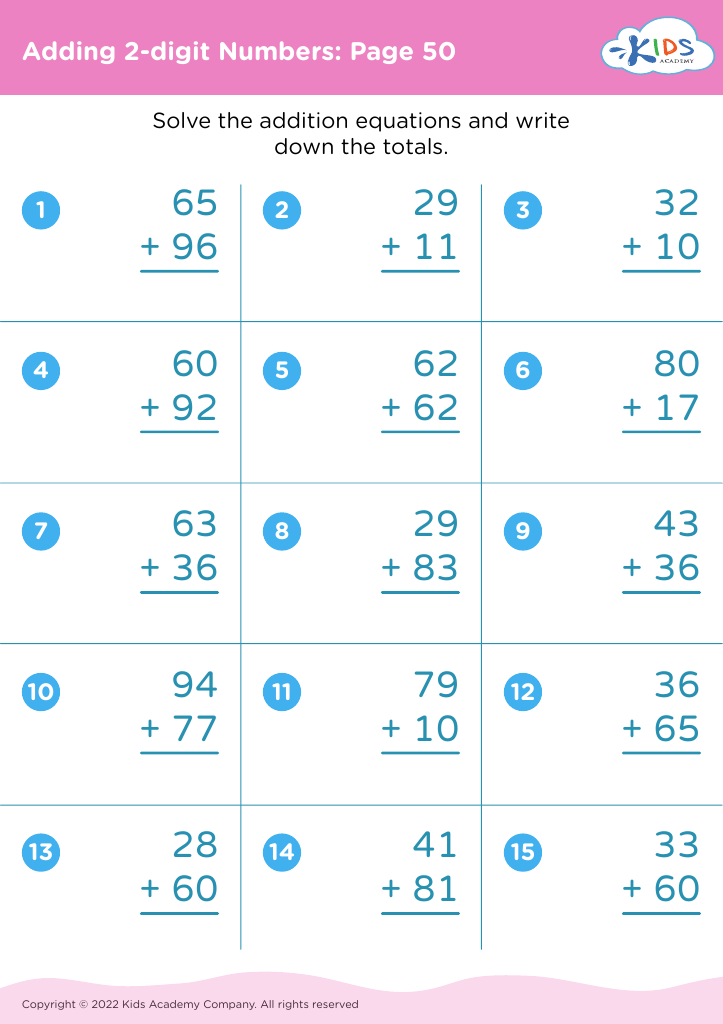
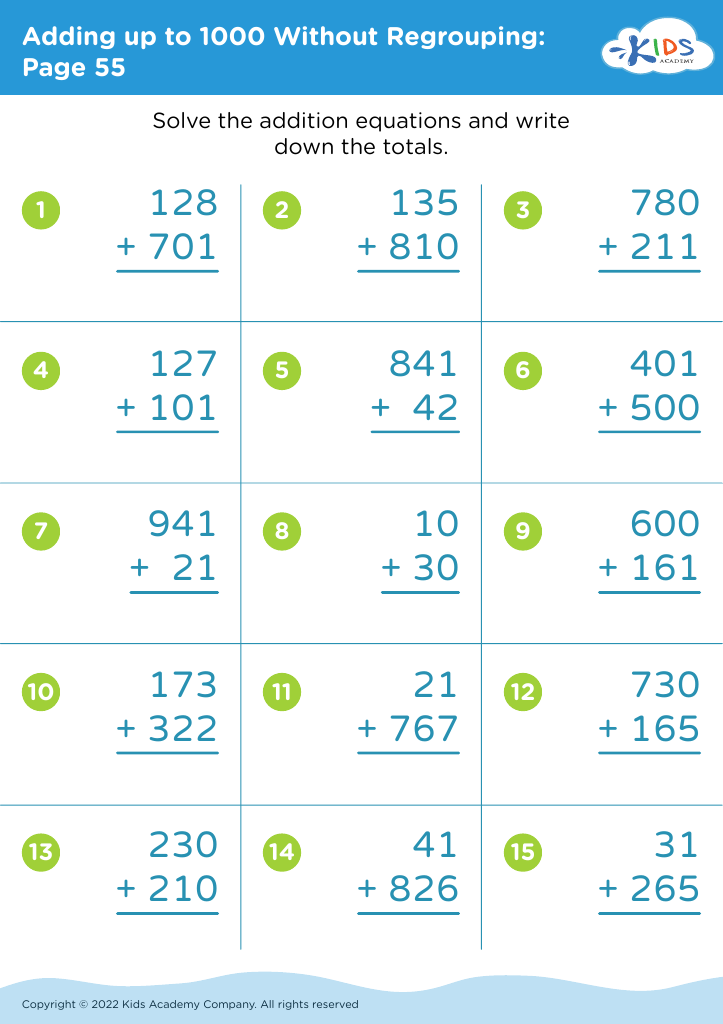
Enhance your child's math and handwriting skills with our Handwriting Practice Addition & Subtraction Worksheets for Ages 4-7. Our engaging printable worksheets are designed to support early learners in mastering basic arithmetic while developing clear and confident handwriting. Combining fun mathematical problems with tracing and writing exercises, these worksheets cater to young learners' interactive and visual needs. Perfect for classroom or home use, our expertly crafted materials ensure children build a solid foundation in both subjects, setting them up for academic success. Cultivate a love for learning in your little ones with our comprehensive and enjoyable practice sheets.
Favorites
With answer key
Interactive
Join Kids Academy for Free
Who is primarily going to use this learning content?








Handwriting practice for addition and subtraction is pivotal for young children aged 4-7 as it integrates cognitive and motor development, benefiting them in multiple ways. At this tender age, children are developing foundational skills that will influence their future academic success.
Firstly, handwriting enhances fine motor skills, which are essential for tasks like writing, buttoning clothes, and tying shoelaces. As children practice writing numbers and mathematical symbols, they strengthen their hand muscles and improve coordination.
Secondly, the act of writing aids memory retention. When children write down numbers and equations, they are more likely to remember mathematical concepts and processes. This tangible interaction with numbers helps cement their understanding, making abstract ideas more concrete.
Additionally, mastering basic arithmetic through handwriting builds a strong numerical foundation. This early exposure helps children become more comfortable with math, boosting their confidence. It also develops problem-solving skills and logical thinking, which are crucial for more advanced mathematical concepts later on.
Lastly, handwriting practice reinforces focus and attention to detail. Writing demands concentration and precision, qualities that are transferable to many aspects of learning and daily activities.
Therefore, both parents and teachers should prioritize handwriting practice for addition and subtraction in early childhood to foster essential skills that will support their holistic development.








