Identifying patterns Addition & Subtraction Worksheets for Ages 4-7
3 filtered results
-
From - To
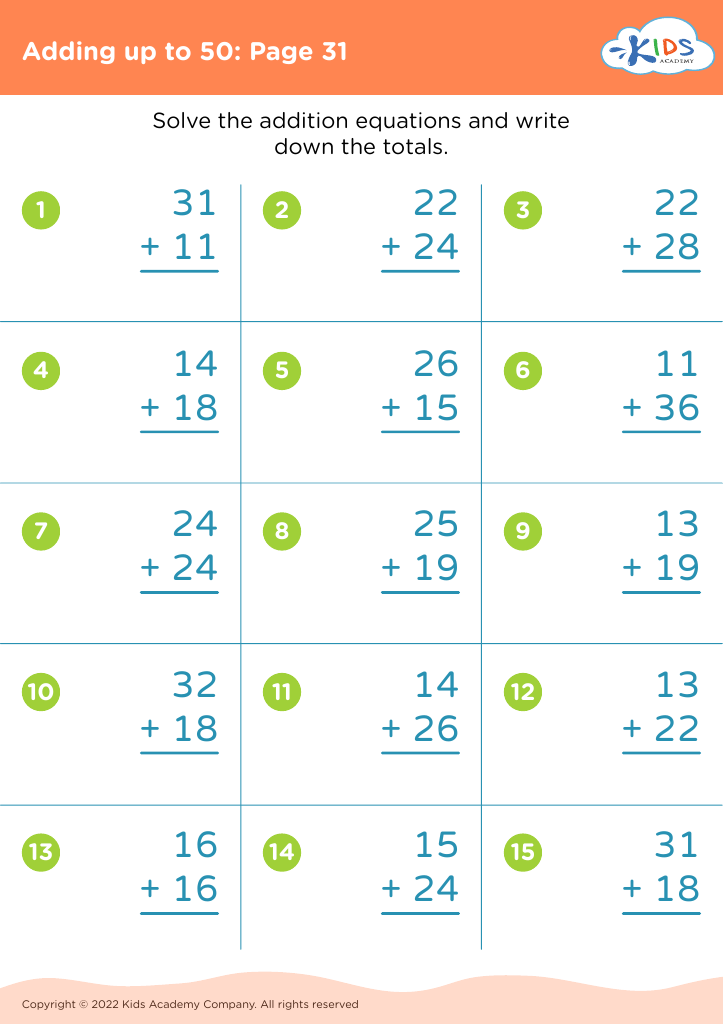
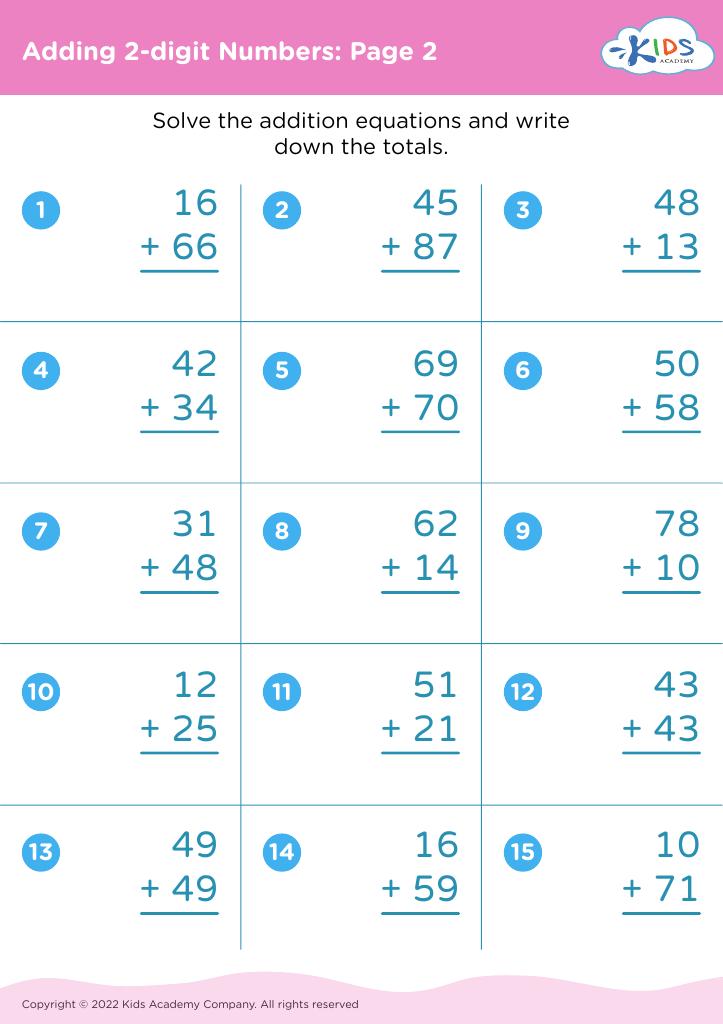
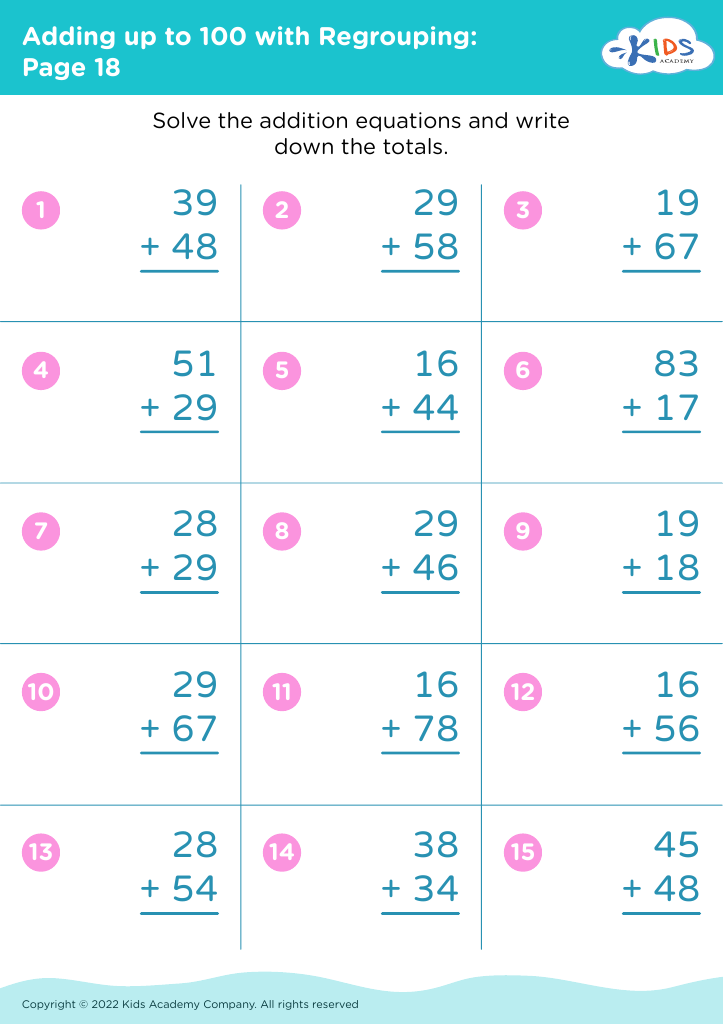
Discover our fun and engaging "Identifying Patterns Addition & Subtraction Worksheets" designed for children ages 4-7! These worksheets promote early math skills by encouraging young learners to recognize patterns while mastering addition and subtraction concepts. Each activity is structured to support cognitive development and problem-solving skills, making math enjoyable and accessible. With colorful illustrations and age-appropriate challenges, kids will develop foundational math abilities while building confidence in their learning journey. Perfect for classroom use or at-home practice, our worksheets will help your child thrive in math and develop a love for learning. Start exploring the world of patterns today!








Identifying patterns in addition and subtraction is crucial for children aged 4-7 for several reasons. First, recognizing patterns lays the foundation for mathematical understanding. Children who grasp patterns can predict numbers, making equations easier to solve. This skill fosters logical thinking and enhances problem-solving abilities, crucial competencies in early education and beyond.
Moreover, learning through patterns promotes engagement. When patterns are woven into fun activities, students enjoy the learning process, making math less intimidating. For parents and teachers, using patterns can create richer educational experiences that strengthen a child's confidence and motivation.
Additionally, understanding numerical patterns aids in mastering fundamental math operations. For example, realizing that adding 2 to an even number will always yield an even result helps children build a more profound foundational sense of math and prepares them for more complex concepts later on.
Parents and teachers should care about patterns because they serve as building blocks for essential skills. Patterns help bridge connections between addition and subtraction, enabling students to become proficient in basic math early in life, setting them on a path toward academic success and lifelong learning capabilities. Supporting young learners in recognizing these relationships is invaluable for their overall development.








