Introduction to mathematics Addition & Subtraction Worksheets for Ages 4-7
3 filtered results
-
From - To
Welcome to our "Introduction to Mathematics: Addition & Subtraction Worksheets" for ages 4-7! Our engaging and colorful worksheets are designed to make learning fundamental math skills fun and enjoyable. Tailored for young learners, these resources introduce the concepts of addition and subtraction through visually appealing activities that cultivate early numeracy skills. With a variety of exercises, children will develop their counting abilities, number recognition, and problem-solving techniques. Perfect for preschool and early elementary grades, these worksheets provide lively learning experiences, nurturing confidence in young mathematicians. Start exploring the world of math with our interactive tools today!
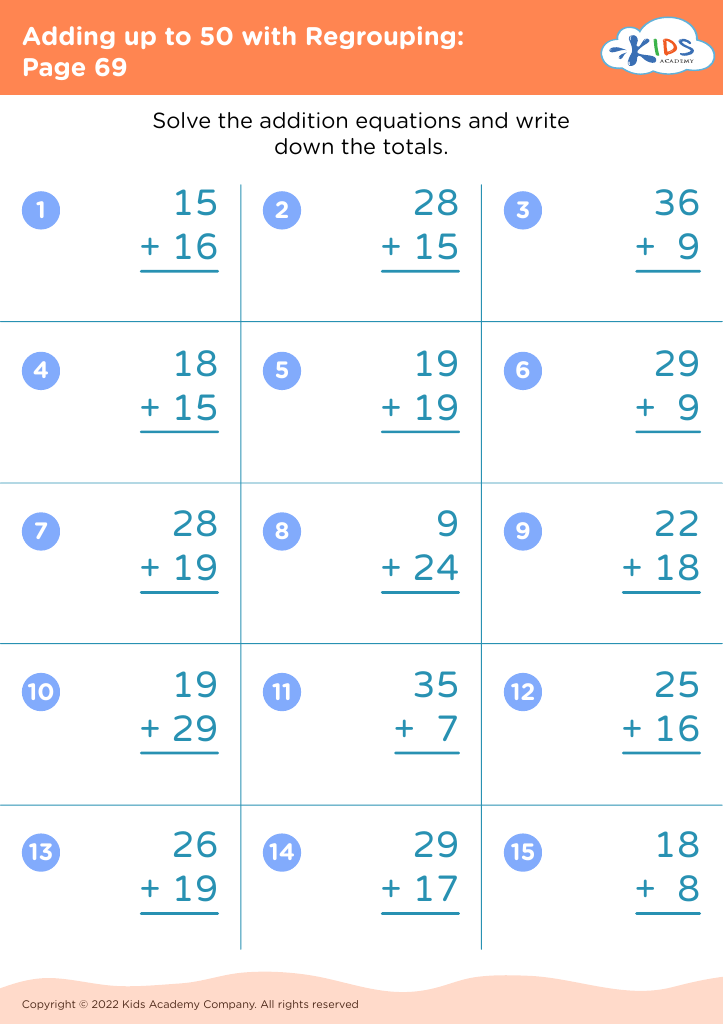
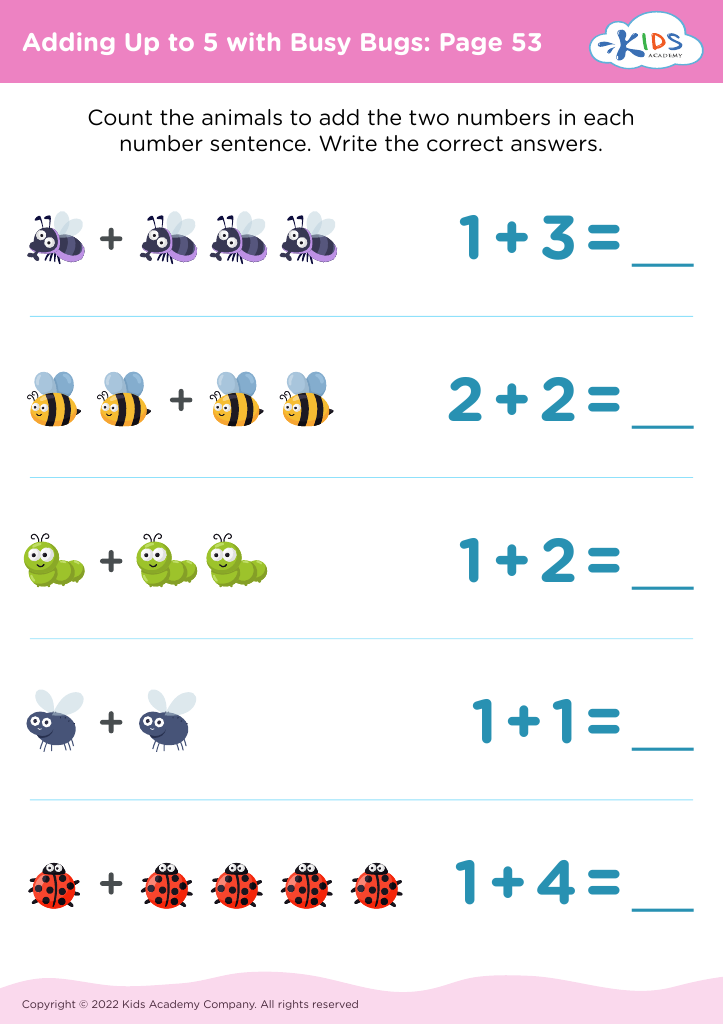
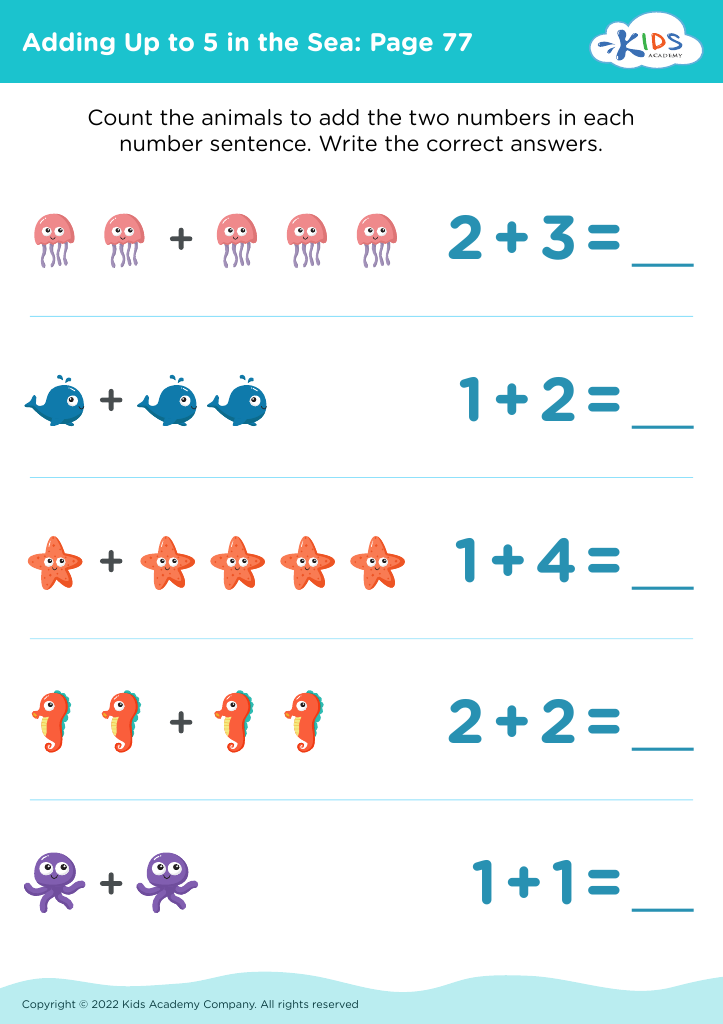








Introduction to mathematics, particularly addition and subtraction, is crucial for children aged 4-7 as it lays a foundational skill set that supports lifelong learning. During this developmental stage, kids are naturally curious and eager to engage with numbers, making it an ideal time for them to grasp basic mathematical concepts.
By introducing addition and subtraction, parents and teachers not only equip children with essential problem-solving skills but also enhance their critical thinking abilities. These early skills help cultivate a mathematical mindset, encouraging logical reasoning and analytical thinking. Engaging children with playful and relevant contexts, such as games or everyday situations, fosters a positive attitude toward math, making it enjoyable rather than intimidating.
Furthermore, creating a strong base in arithmetic early on prepares students for more complex mathematical challenges in the future, ensuring they remain confident and competent in their math abilities. Parents and teachers' involvement in this learning stage boosts children's motivation and engagement, leading to a better educational experience. Ultimately, prioritizing early mathematics education is an investment in a child’s academic success and overall cognitive development.








