Logical thinking development Addition & Subtraction Worksheets for Ages 4-7
9 filtered results
-
From - To
Enhance your child's logical thinking skills with our engaging Addition and Subtraction Worksheets designed for ages 4-7! These printable resources encourage young learners to develop problem-solving skills while mastering basic math concepts. Each worksheet combines fun visuals and interactive exercises to keep children motivated as they explore addition and subtraction through logical reasoning. Ideal for parents and educators, these worksheets help build a strong foundation in math, fostering critical thinking and analytical skills. Perfect for at-home learning or classroom use, our comprehensive collection ensures that early learners will gain confidence and excitement in math. Start your child's math journey today!
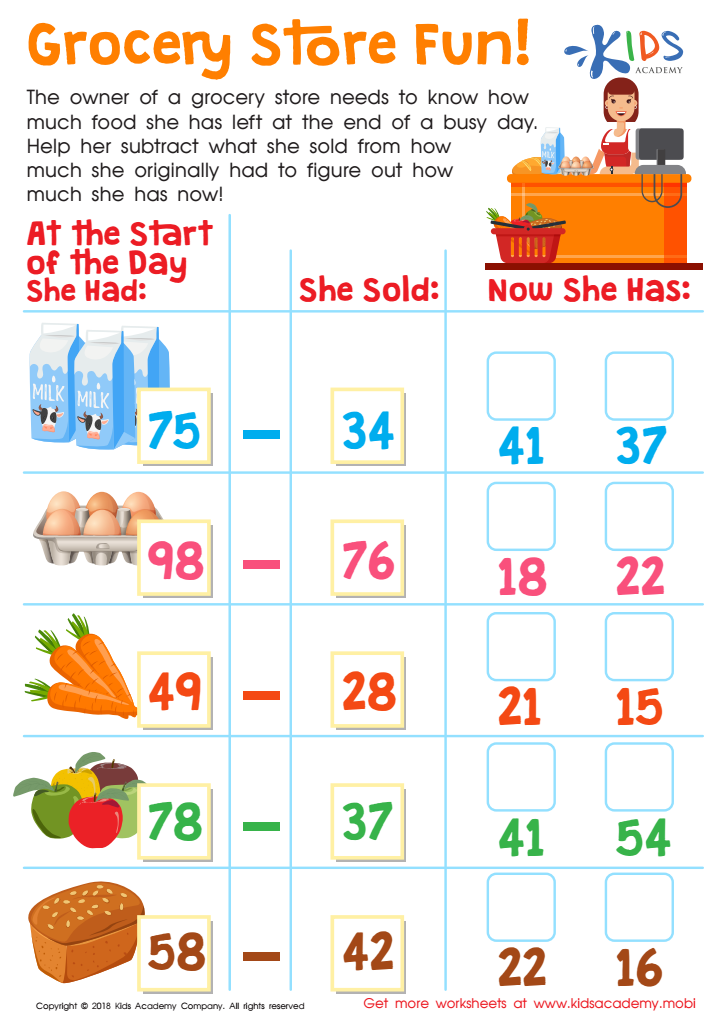
Grocery Store Fun! Worksheet
 Assign to My Students
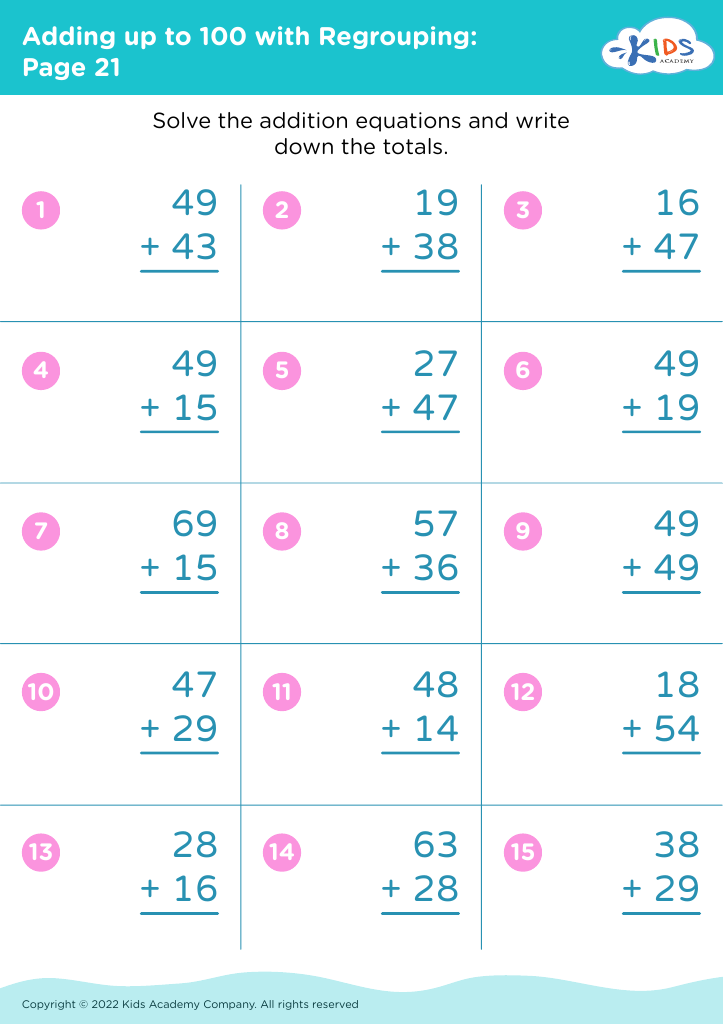
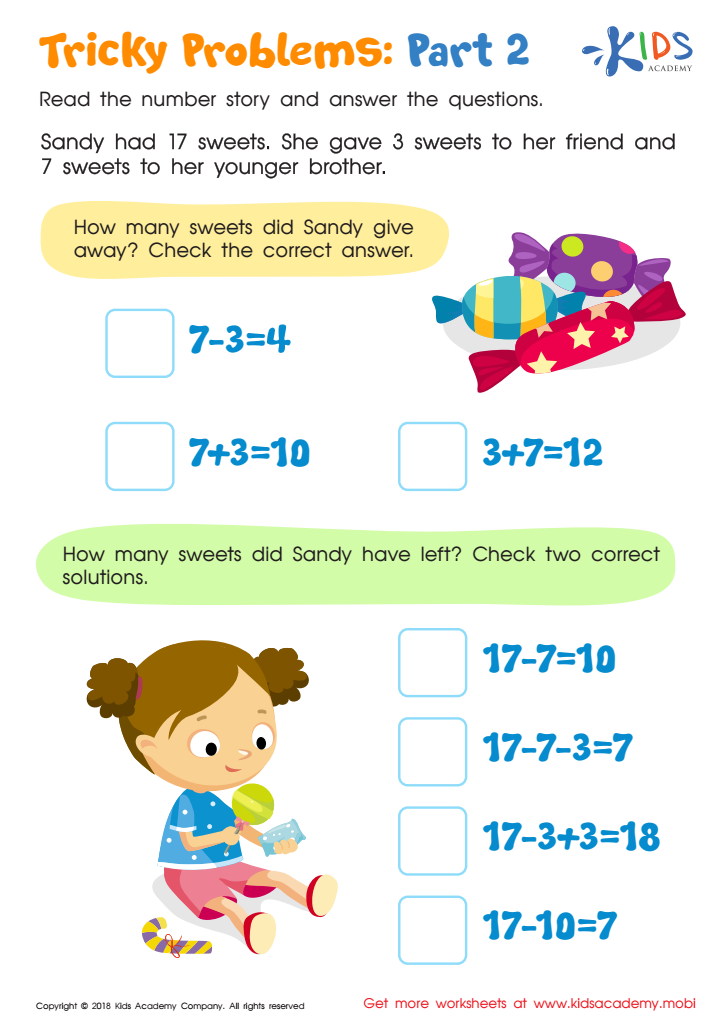
Tricky Problems Worksheet: Part 2
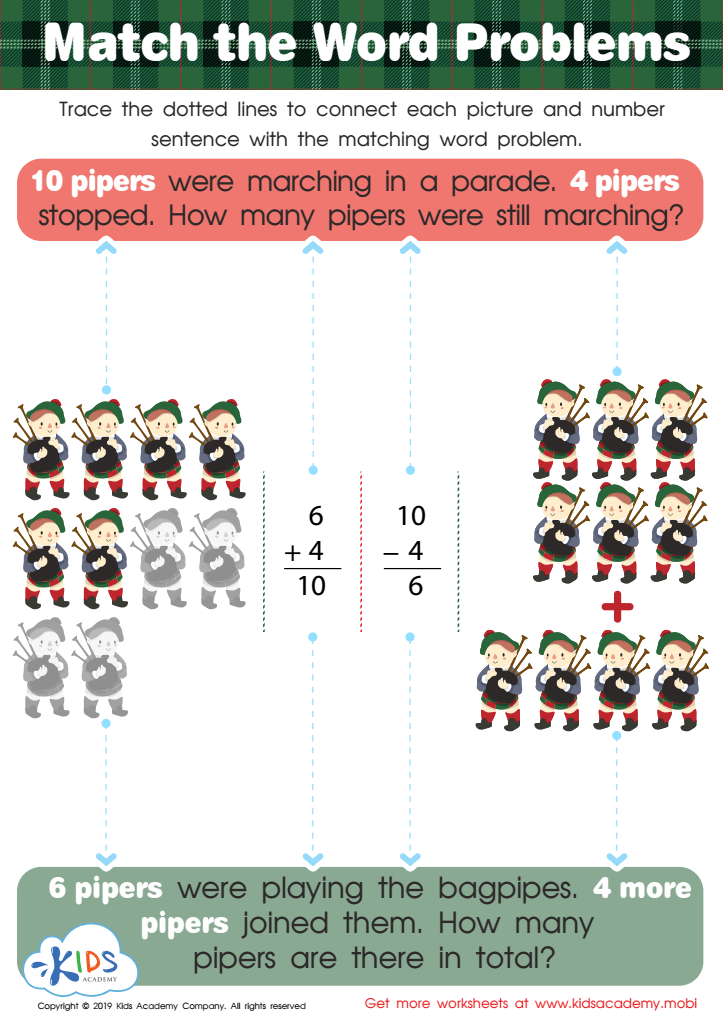
Match the Word Problems Worksheet
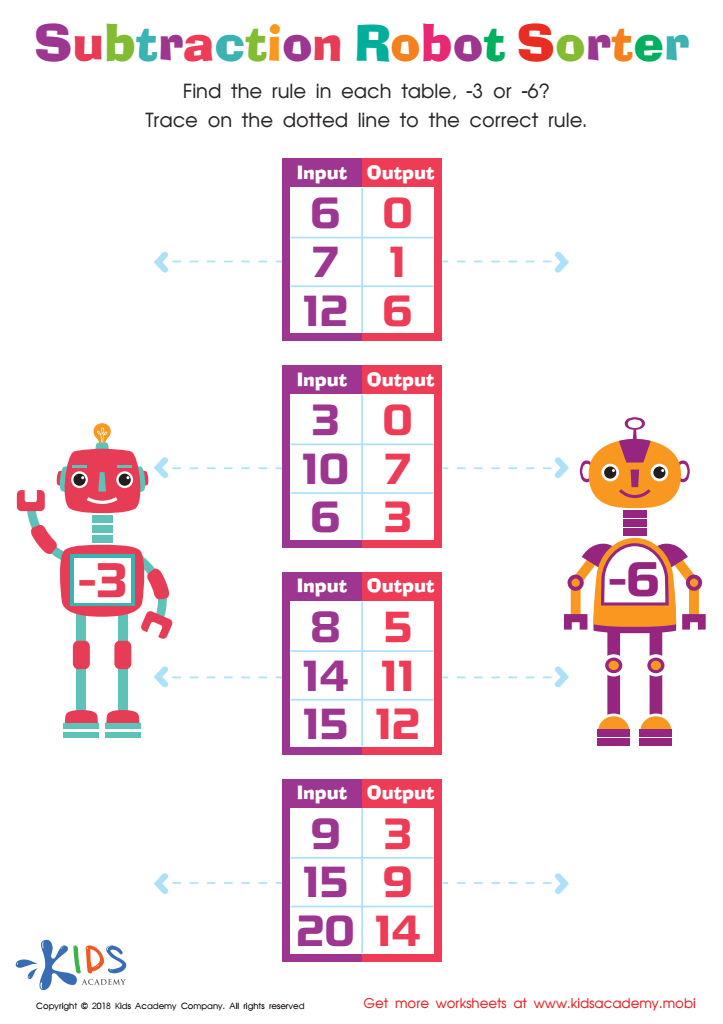
Subtraction Robot Sorter Worksheet
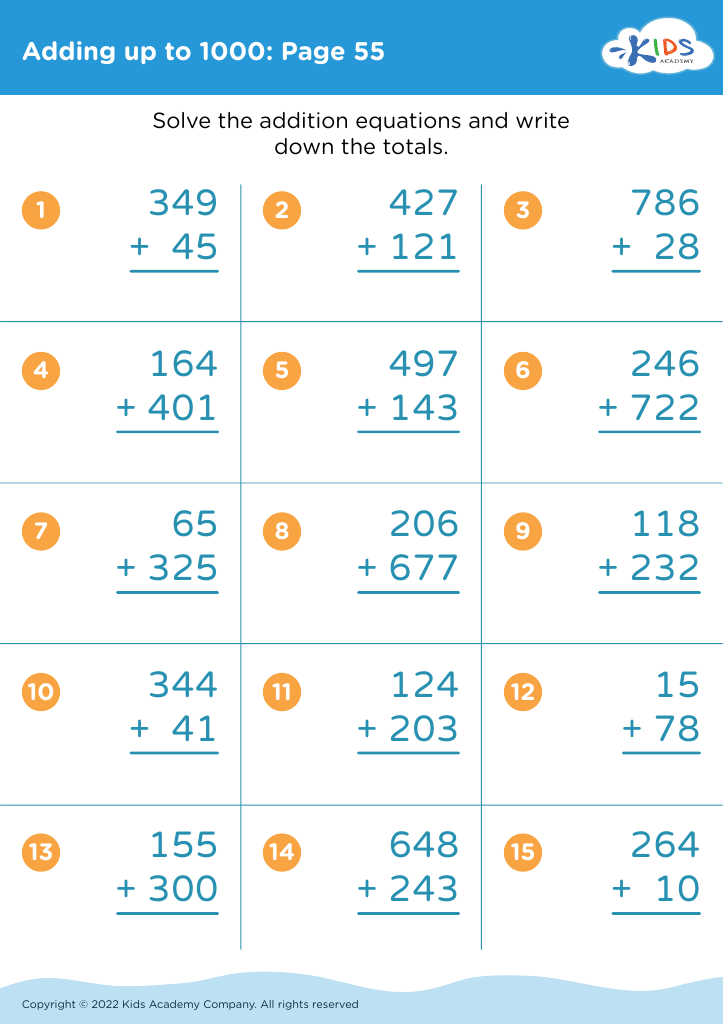








Logical thinking development in early childhood, particularly during the ages of 4-7, is crucial for fostering essential cognitive skills that underpin academic success. During this stage, children are actively developing the ability to reason, solve problems, and understand the relationships among numbers, specifically through addition and subtraction.
By encouraging logical thinking in the context of these foundational mathematical skills, parents and teachers set the stage for deeper understanding. Addition and subtraction aren’t just abstract numbers; they represent real-world concepts, like sharing toys or counting items. Engaging children in these activities stimulates curiosity and helps them develop a problem-solving mindset.
Moreover, mastering these skills enhances critical thinking and helps students learn to approach challenges methodically. Early exposure to logical reasoning through structured activities prepares them for more complex mathematics later, while also building confidence in their own abilities.
Additionally, children equipped with strong logical thinking skills tend to perform better academically overall. By prioritizing addition and subtraction comprehension at this young age, educators and parents can cultivate lifelong learners who approach challenges with logic, resilience, and creativity, significantly impacting their educational journey.








