Mathematical operations Addition & Subtraction Worksheets for Ages 4-7
4 filtered results
-
From - To
Explore our engaging "Addition & Subtraction Worksheets" designed specifically for children aged 4-7! These worksheets provide a fun and interactive way for young learners to grasp essential mathematical operations. With colorful illustrations and age-appropriate problems, kids will develop their addition and subtraction skills while enhancing number recognition and counting abilities. Our collection includes a variety of exercises, from simple sums to more challenging tasks, ensuring that children can progress at their own pace. Perfect for at-home practice or classroom activities, these worksheets make mathematics enjoyable and effective for early learners. Get started today and watch your child's confidence soar!
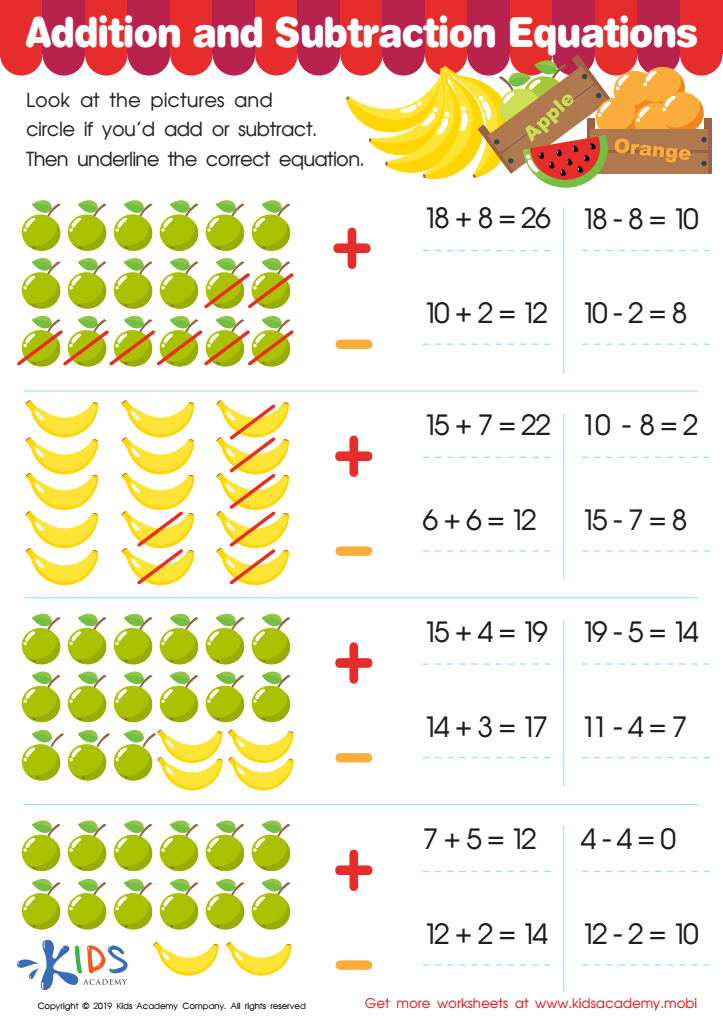
Addition and Subtraction: Equations Worksheet
 Assign to My Students
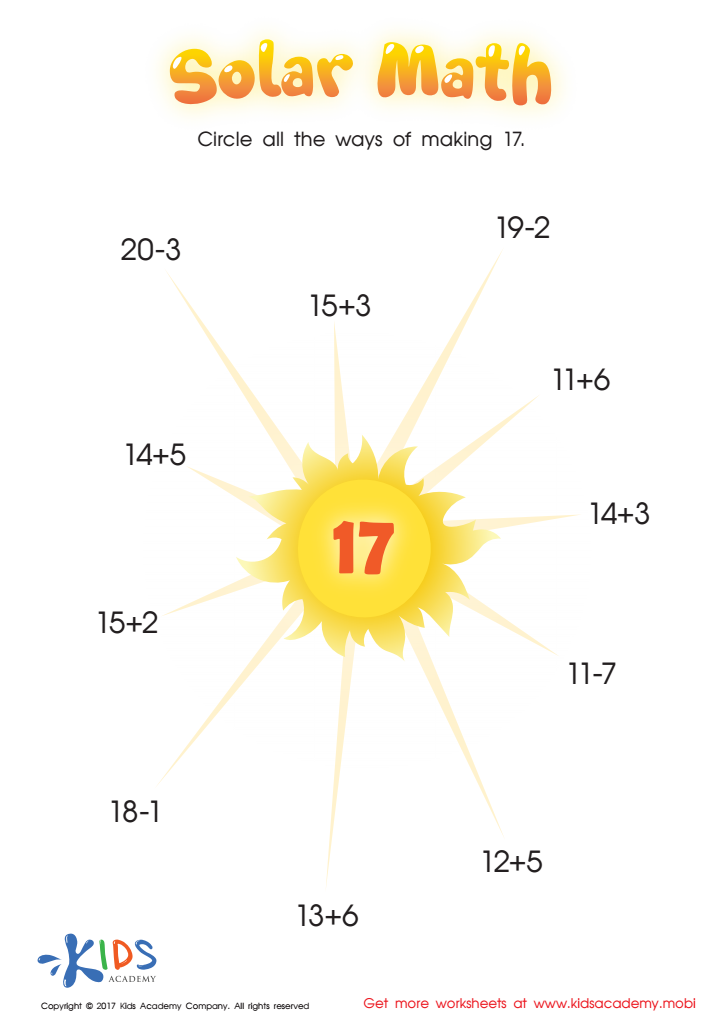
Solar Math Substraction Worksheet
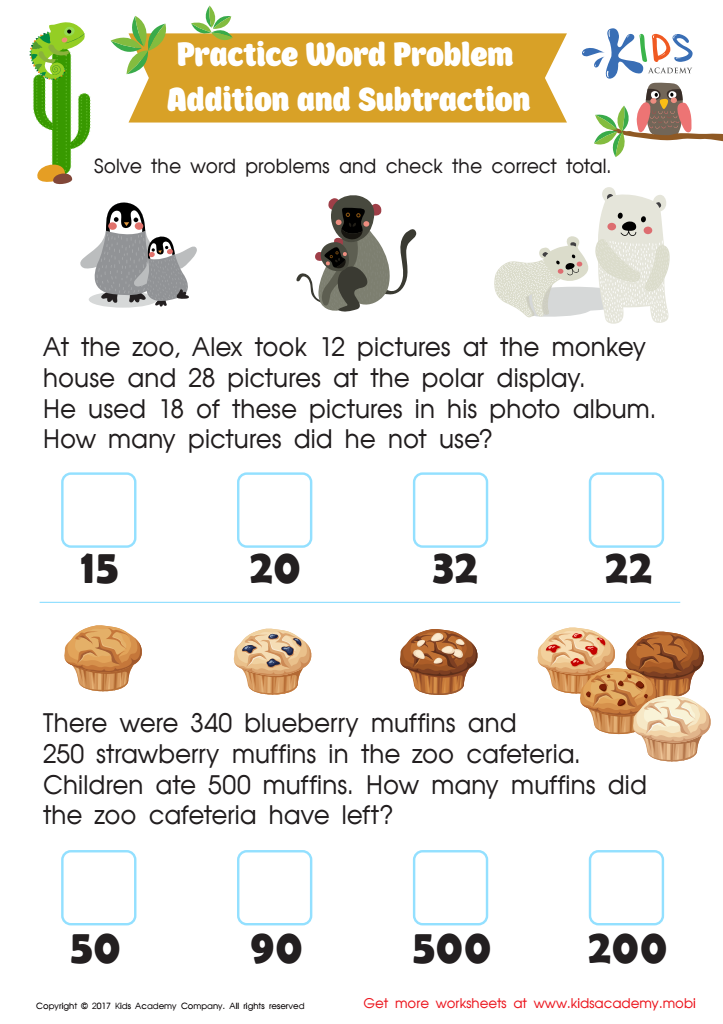
Addition and Subtraction: Word Problems Worksheet
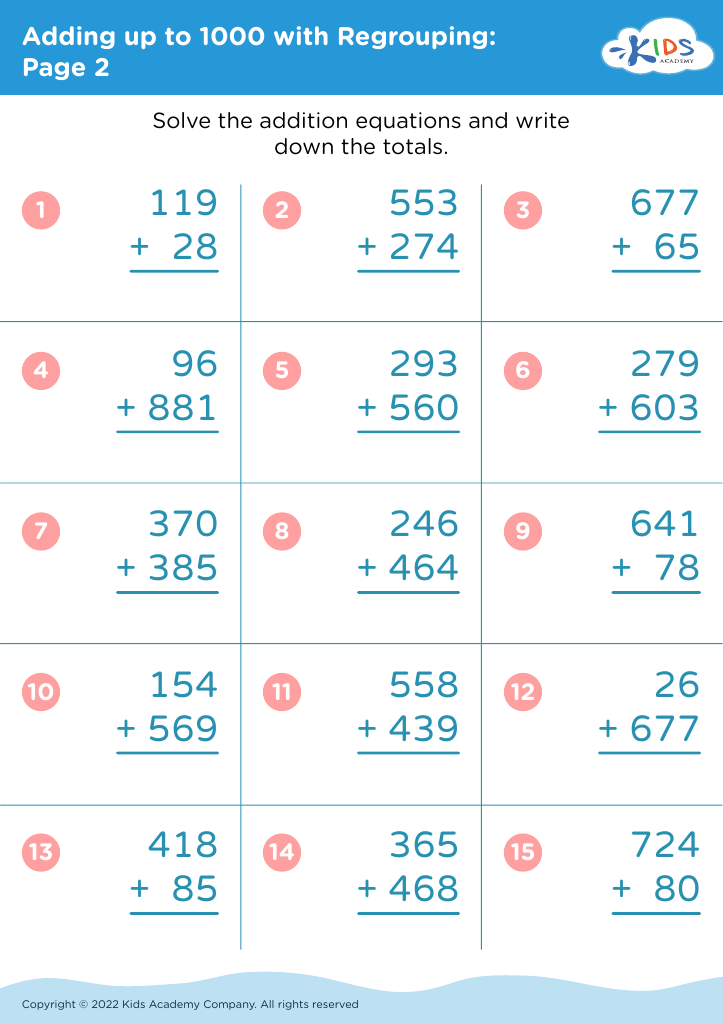








Parents and teachers should prioritize teaching addition and subtraction to children aged 4-7 because these foundational skills are essential for their overall mathematical development and everyday life. Mastering these operations helps young learners develop critical thinking and problem-solving abilities, fostering cognitive skills that are vital for future learning.
At this age, children are naturally curious about numbers and patterns, making it an ideal time to introduce mathematical concepts in a fun and engaging way. Addition and subtraction form the basis for more complex operations, such as multiplication and division, which they will encounter in later grades. A strong grasp of these skills ensures that students can progress in their mathematical knowledge without struggling with advanced concepts.
Moreover, teaching addition and subtraction enhances children's ability to handle real-life situations, such as counting items, budgeting, or measuring ingredients in recipes. It also builds confidence as they succeed in solving problems independently.
Lastly, engaging in mathematical activities at home or in the classroom can strengthen the bond between parents and children or foster positive relationships between teachers and students. In a nurturing environment, children thrive emotionally and academically, setting the stage for a lifelong appreciation of mathematics.








