
Mathematical thinking Addition & Subtraction Worksheets for Ages 4-7
6 filtered results
Difficulty Level
Grade
Age
-
From - To
Subject
Activity
Standards
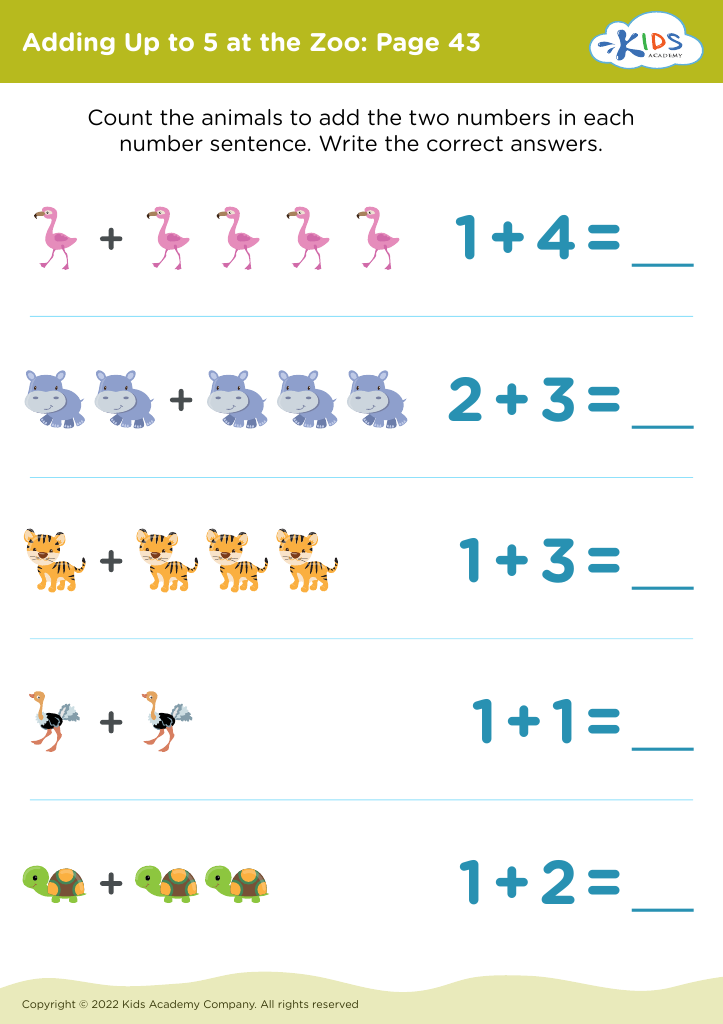
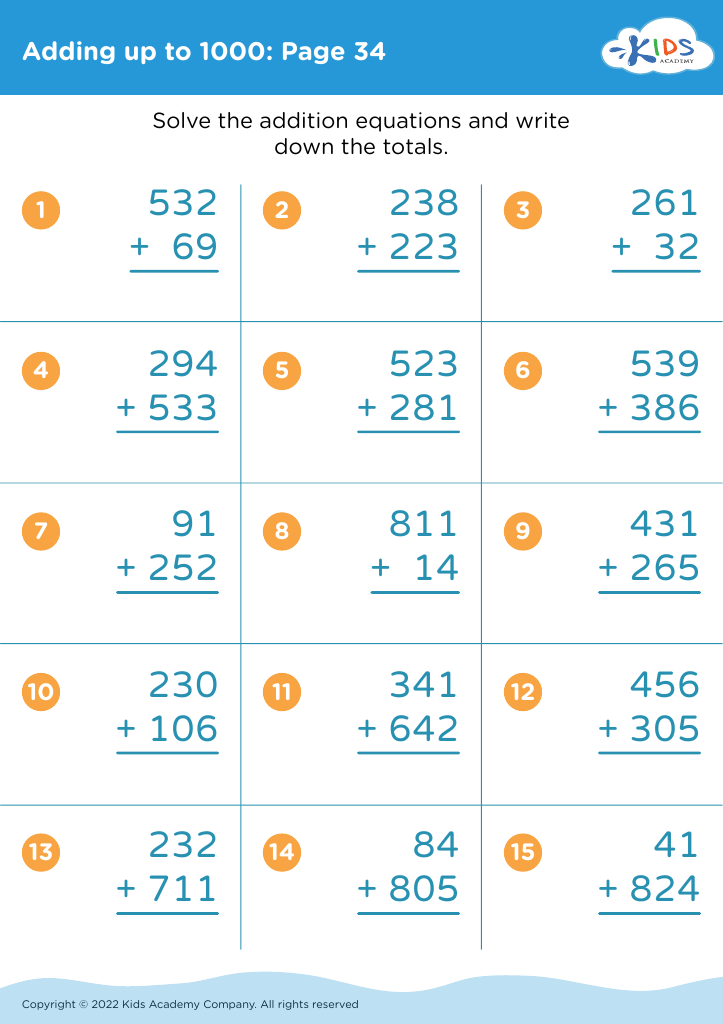
Boost your child's mathematical skills with our "Mathematical Thinking Addition & Subtraction Worksheets for Ages 4-7". Our expertly crafted worksheets help foster critical thinking and problem-solving abilities in young learners. Designed by educators, these engaging activities make learning fun and interactive. Through a variety of exercises, children will develop confidence in basic addition and subtraction, setting a solid foundation for future math success. Whether used at home or in the classroom, our printable worksheets are an excellent resource for enhancing your child’s math skills while encouraging a love for learning. Help your child excel with Kids Academy today!
Favorites
With answer key
Interactive
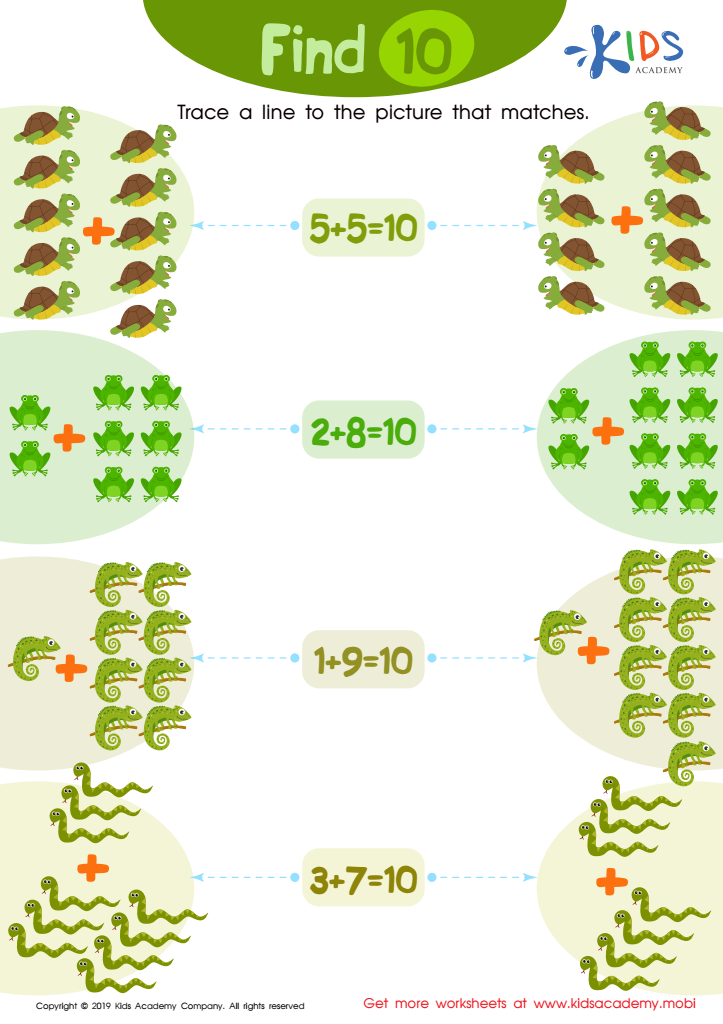
Find 10 Worksheet
Counting can be tricky, but your kids can master it with regular practice. Here's a fun activity to help: count the animals, then trace a line to the pictures that matches. With these tips, math will be an easy walk in the park.
 Assign to My Students
Find 10 Worksheet
Worksheet
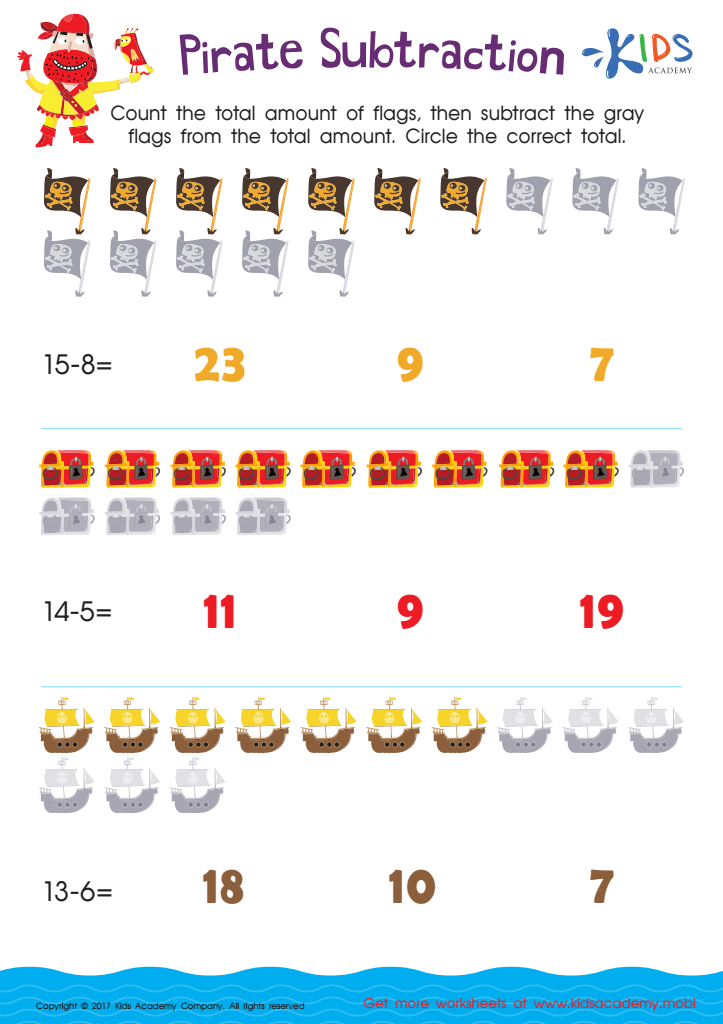
Pirate Subtraction Substraction Worksheet
Ahoy! Learn to subtract with pirate-themed math fun! This worksheet has ships and treasure chests to help your little one understand subtraction using a helpful strategy. Colorful illustrations make it a great learning experience.
Pirate Subtraction Substraction Worksheet
Worksheet
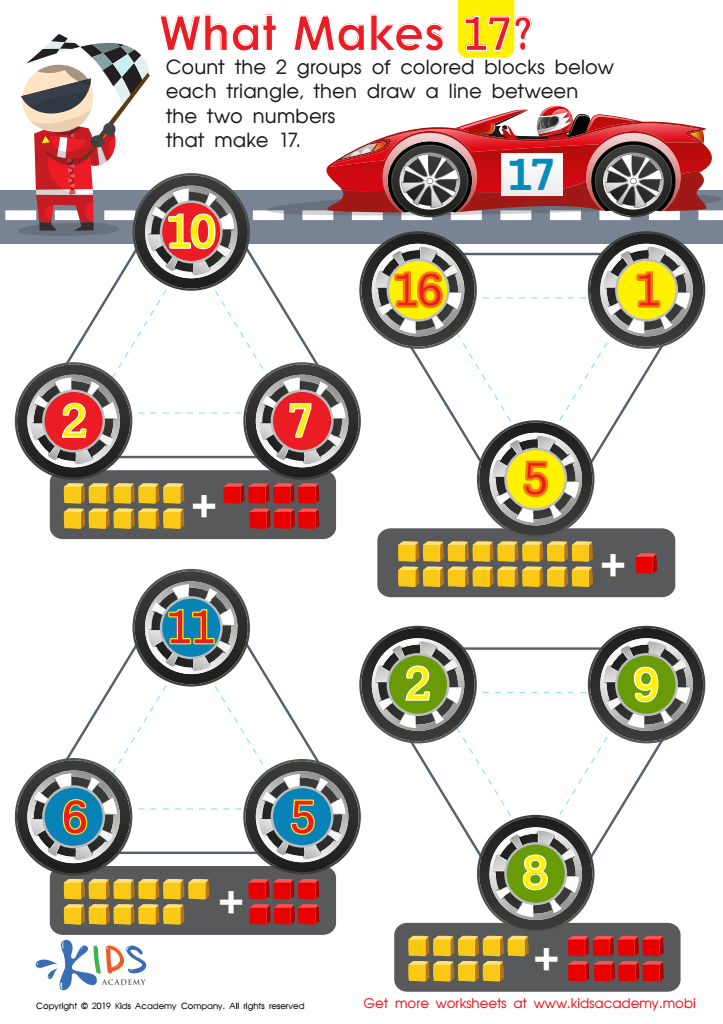
What Makes 17 Worksheet
Practice makes perfect! Let your kindergartners explore addition using this worksheet. Count the blocks in each triangle to reach the same total of 17, and draw a line between the two numbers. Once they get the hang of it, nothing will be too difficult!
What Makes 17 Worksheet
Worksheet
Join Kids Academy for Free
Who is primarily going to use this learning content?








Mathematical thinking, especially skills in addition and subtraction, forms the foundation of numeracy for children aged 4-7 and is crucial for their overall cognitive development. During these formative years, young learners are highly receptive and capable of absorbing fundamental concepts that will support their future academic success.
Developing proficiency in addition and subtraction helps children understand quantities, number relationships, and basic problem-solving strategies. It sets the groundwork for more complex mathematical concepts they will encounter later, such as multiplication, division, and fractions. Strong skills in these areas enable children to approach other subjects with confidence and analytical skills, thus fostering overall academic growth.
Moreover, early exposure to addition and subtraction through fun, interactive activities cultivates a positive attitude toward mathematics. When children grasp these concepts early, it reduces anxiety and builds self-confidence, encouraging them to approach challenges with enthusiasm rather than fear.
For parents and teachers, investing time and effort in nurturing mathematical thinking through structured and playful methods is invaluable. It not only enhances intellectual capabilities but also supports emotional and social development, as problem-solving often involves critical thinking and cooperative learning. As children's proficiency grows, they become more self-assured learners with a strong mathematical foundation, essential for lifelong success and adaptability in an increasingly quantitative world.








