
Mental math development Addition & Subtraction Worksheets for Ages 4-7
3 filtered results
Difficulty Level
Grade
Age
-
From - To
Subject
Activity
Standards
Boost your child’s mental math skills with our expertly designed addition and subtraction worksheets for ages 4-7. These engaging activities focus on developing quick and accurate problem-solving abilities, making math fun and manageable for young learners. Featuring unique exercises tailored to various learning styles, our worksheets help build confidence in handling basic arithmetic. Perfect for both classroom and at-home practice, these resources ensure your child masters essential math concepts at their own pace. Visit our website today to explore our comprehensive collection and watch your child's mathematical fluency flourish!
Favorites
With answer key
Interactive
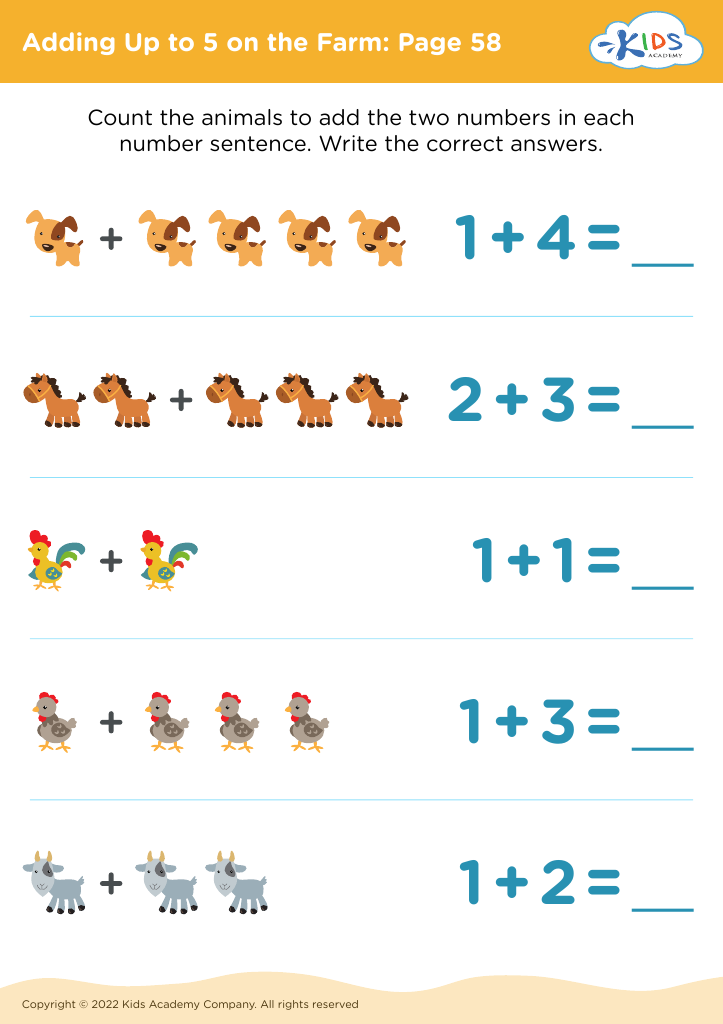
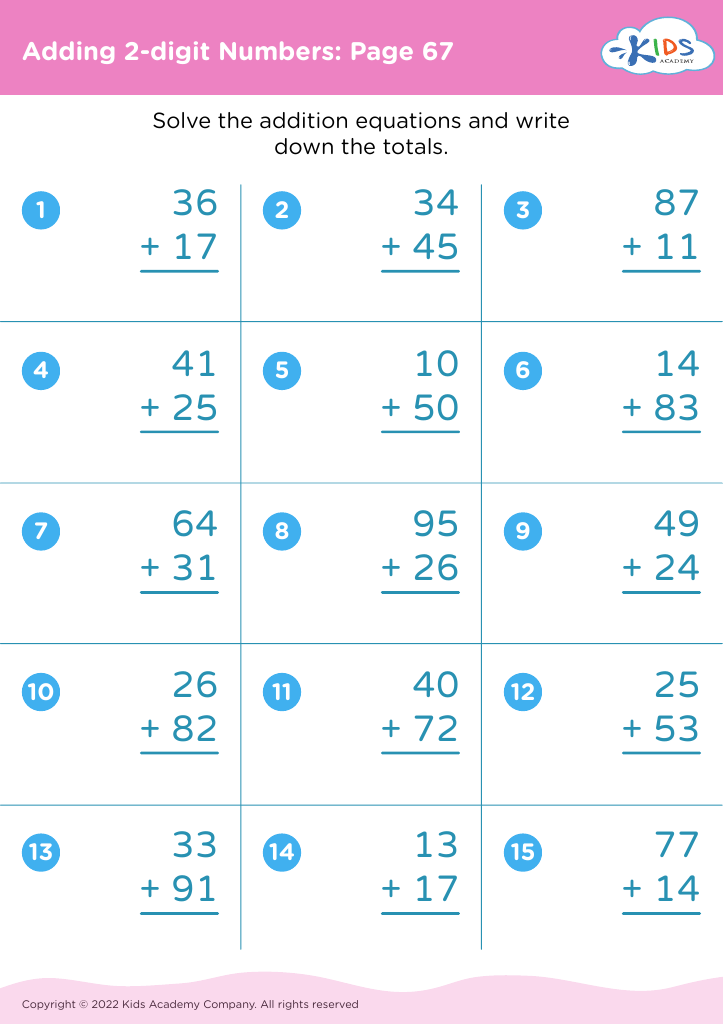
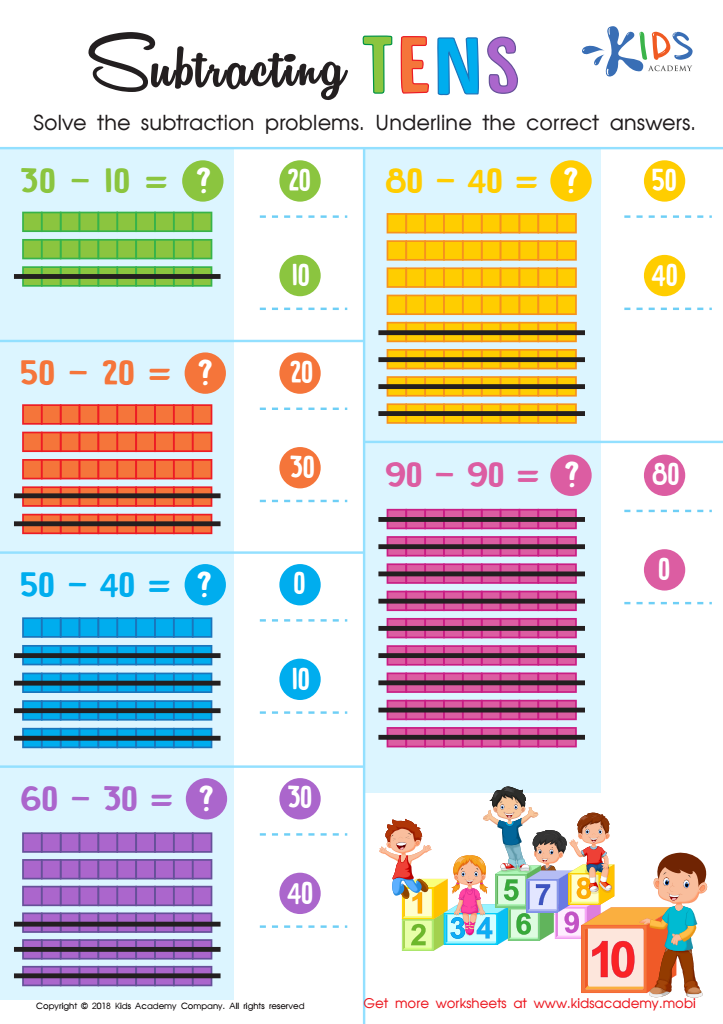
Subtracting Tens Worksheet
Base ten blocks enable kids to make practical math connections and develop number sense. This free worksheet, using bright-colored tens blocks, helps children learn to skip count and subtract. It lays a strong foundation for upcoming higher level math problems.
 Assign to My Students
Subtracting Tens Worksheet
Worksheet
Join Kids Academy for Free
Who is primarily going to use this learning content?








Mental math development, particularly in addition and subtraction, is fundamental for children aged 4-7 as it lays the groundwork for future academic and cognitive success. During these formative years, young minds are exceptionally receptive to learning and developing new skills, and mental math fosters a variety of essential abilities.
Firstly, mastering mental addition and subtraction enhances numerical fluency, allowing children to effortlessly navigate more complex mathematical problems in later grades. This fluency reduces anxiety related to math, promoting a positive attitude toward the subject. Additionally, mental math improves memory and concentration by encouraging children to hold and manipulate numbers in their minds, thereby strengthening their working memory capabilities.
Secondly, mental math encourages critical thinking and problem-solving skills. It enables children to identify patterns, develop strategies, and approach problems from different angles, making them more adaptable learners. These cognitive skills are transferable to other areas of learning and daily life, fostering overall intellectual growth.
Lastly, mental math develops confident, independent thinkers. When children can quickly and accurately perform mental calculations, they gain a sense of achievement and self-assurance. This confidence can enhance their participation in classroom activities and improve their overall attitude toward learning.
Overall, encouraging mental math development in young children sets a strong foundation for their educational journey and cognitive development.








