Number comparison Addition & Subtraction Worksheets for Ages 4-7
3 filtered results
-
From - To
Introduce your child to the concepts of number comparison with our engaging addition and subtraction worksheets, tailored for ages 4-7. These educational activities help young learners enhance their mathematical skills while having fun. Focusing on fundamental aspects like comparing values, understanding greater than and less than, and mastering basic subtraction and addition, these worksheets are designed to foster critical thinking and problem-solving abilities in kids. Our carefully crafted exercises ensure a solid foundation in early math, boosting your child's confidence and preparing them for more advanced concepts. Browse our collection today and kickstart your child's learning journey!
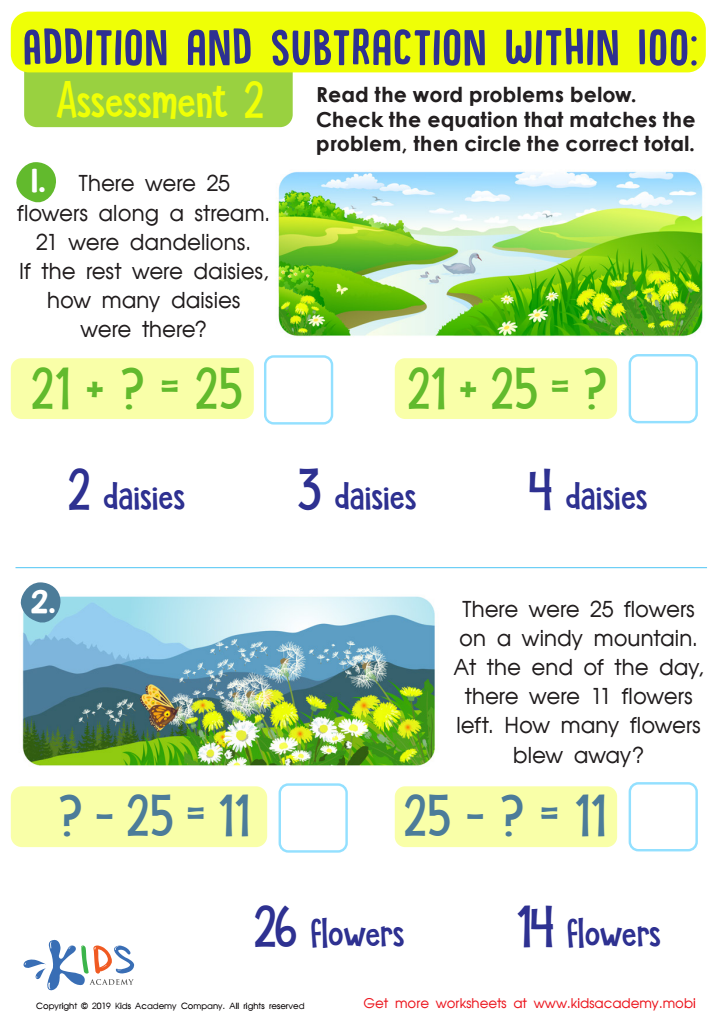
Assessment 2 Math Worksheet
 Assign to My Students
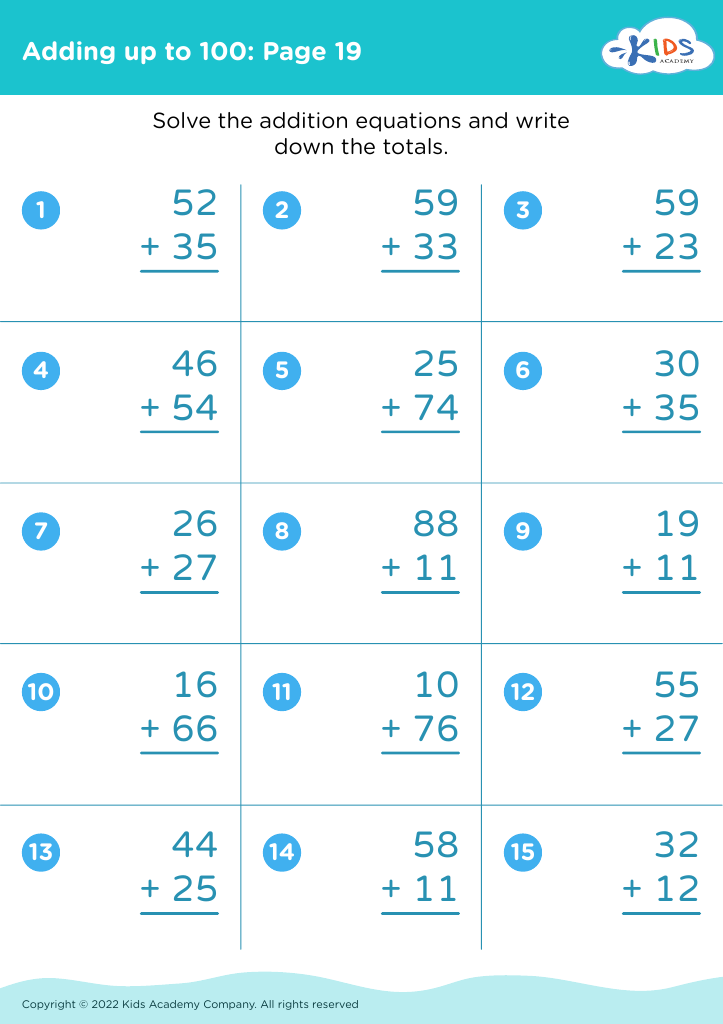
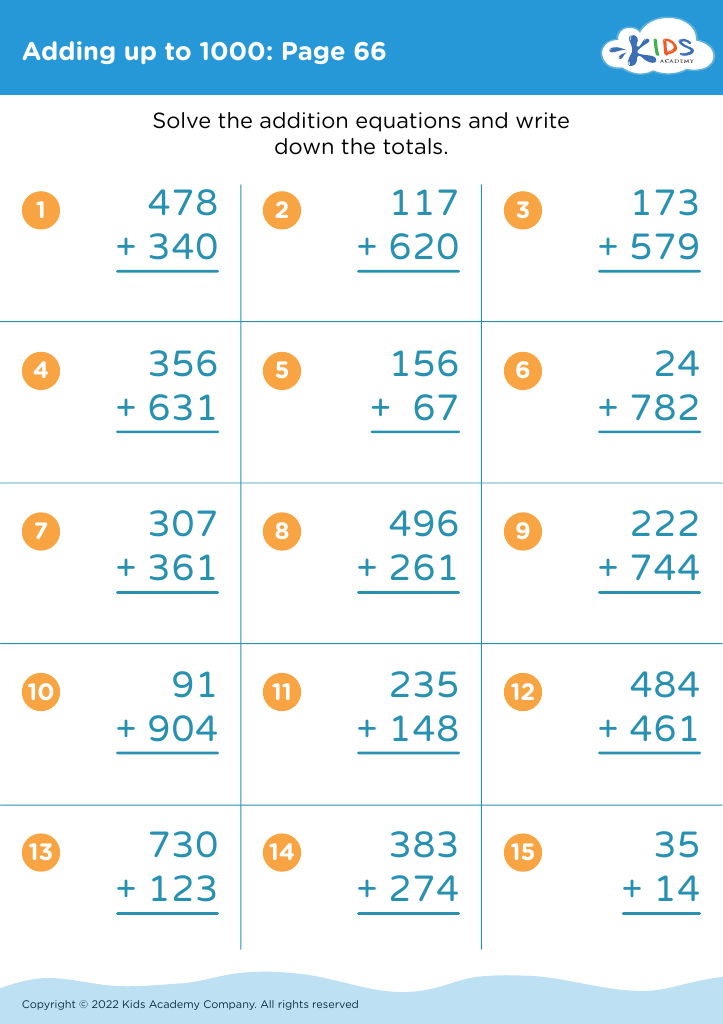








Parents and teachers should prioritize teaching number comparison, addition, and subtraction to children aged 4-7 because these foundational math skills lay the groundwork for future academic success and everyday problem-solving. During this critical developmental window, young brains are exceptionally receptive to learning new concepts, and establishing a strong numerical understanding ensures children are well-equipped for more advanced math topics.
Number comparison aids children in understanding relative values and sequencing, which are essential for grasping more complex ideas later. For instance, recognizing that 5 is greater than 3 helps in making informed decisions and enhances logical thinking.
Addition and subtraction form the basis of arithmetic operations, fundamental to all branches of math. Mastery in these areas not only boosts a child's confidence in handling numbers but also strengthens cognitive skills such as memory, reasoning, and critical thinking. Engaging in these practices enhances a child’s ability to analyze and solve problems.
Moreover, these skills have everyday applications, such as counting items, sharing objects equally, and understanding simple transactions, making daily interactions more comprehensible and less intimidating. Early proficiency in math promotes a positive attitude towards learning, fostering curiosity and perseverance. Thus, investing time and effort into teaching these basic math skills during early childhood critically impacts lifelong educational and personal success.








