Numerical problem solving Addition & Subtraction Worksheets for Ages 4-7
3 filtered results
-
From - To
Boost your child's mathematical skills with our engaging Numerical Problem Solving Addition & Subtraction Worksheets, specially designed for ages 4 to 7. These interactive resources ignite a love for learning while helping young minds develop essential problem-solving abilities. Each worksheet features age-appropriate exercises that challenge students to practice basic addition and subtraction in fun, relatable scenarios. Ideal for at-home learning or classroom activities, our worksheets encourage critical thinking and foster a solid understanding of numbers. Start your child's journey to math mastery today with our expertly crafted worksheets, and watch them confidently tackle numerical challenges!
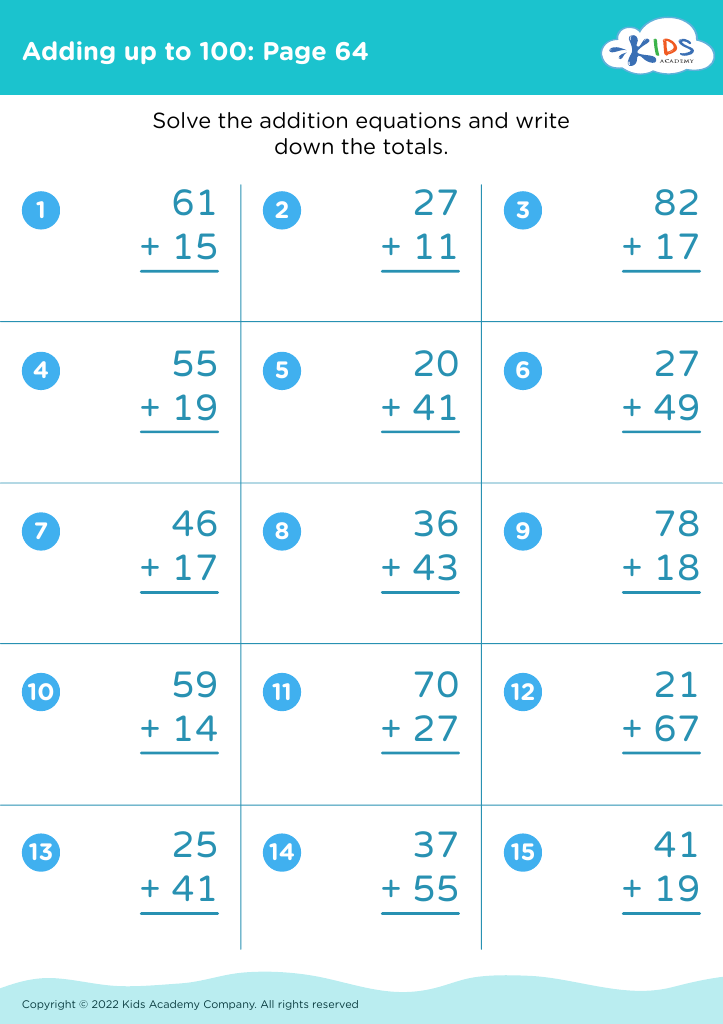
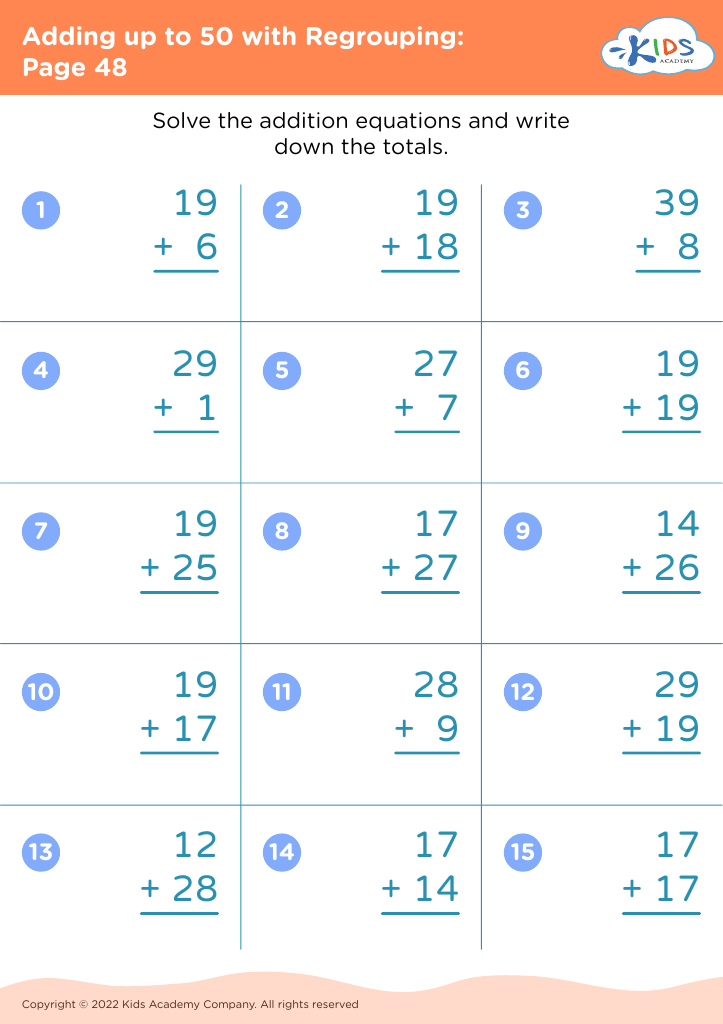
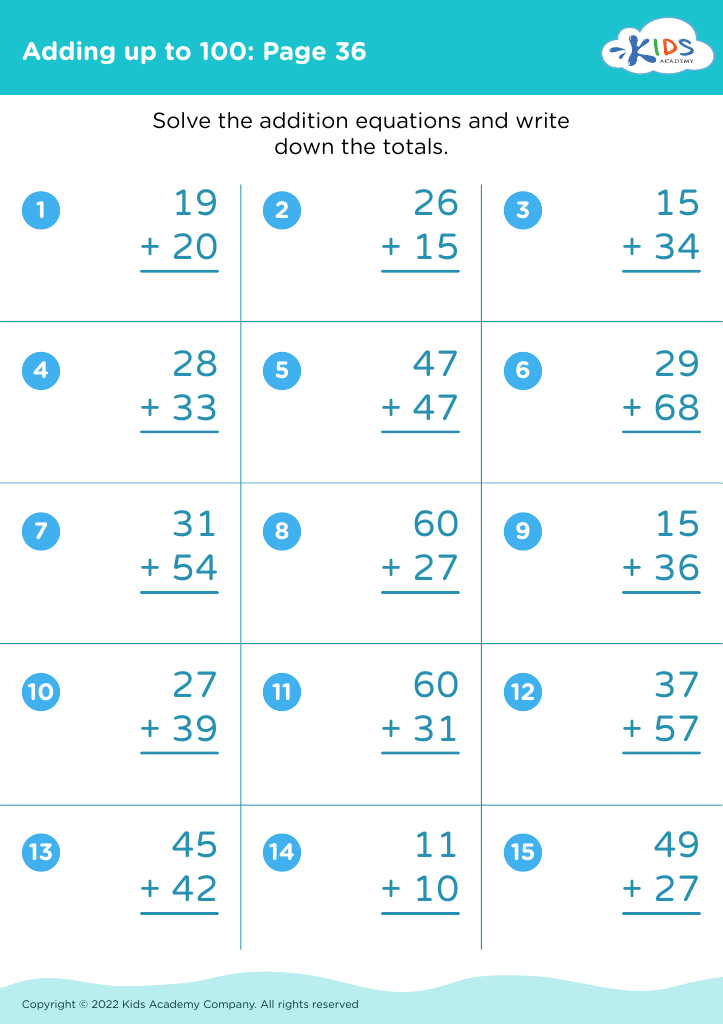








Numerical problem-solving in addition and subtraction is a crucial component of early childhood education, particularly for children aged 4 to 7. At this stage, children's cognitive skills are rapidly developing, and mastering these foundational math concepts can significantly influence their overall academic success.
Parents and teachers should prioritize these skills because they form the building blocks for more advanced mathematical reasoning. Understanding addition and subtraction helps children develop critical thinking and problem-solving abilities. Beyond math, these skills enhance logical reasoning, encourage persistence when faced with challenges, and boost self-confidence as students master new concepts.
Moreover, mastering numerical problem-solving promotes a positive attitude towards math, fostering a love for numbers and learning. It also aids in developing other skill sets, such as pattern recognition and spatial awareness, which are essential in various aspects of daily life and future learning.
Engaging children in interactive and fun math activities encourages a hands-on approach, making learning enjoyable and relatable. In summary, focusing on addition and subtraction not only prepares young learners for future academic success but also equips them with essential life skills that extend beyond the classroom. Therefore, parents and teachers should actively support and stimulate children's early mathematical experiences.








