Practice inference skills Addition & Subtraction Worksheets for Ages 4-7
3 filtered results
-
From - To
Discover our engaging "Practice Inference Skills Addition & Subtraction Worksheets," designed specifically for children ages 4-7. These worksheets help young learners develop critical thinking by interpreting mathematical concepts through relatable contexts and fun scenarios. By solving addition and subtraction problems, kids enhance their inference skills while gaining confidence in their math abilities. Our colorful worksheets are tailored to keep children motivated and excited about learning, making math a thrilling adventure. Perfect for home or classroom use, these resources support early math educators in fostering a strong foundation in arithmetic, logical reasoning, and problem-solving skills. Start your child's math journey today!
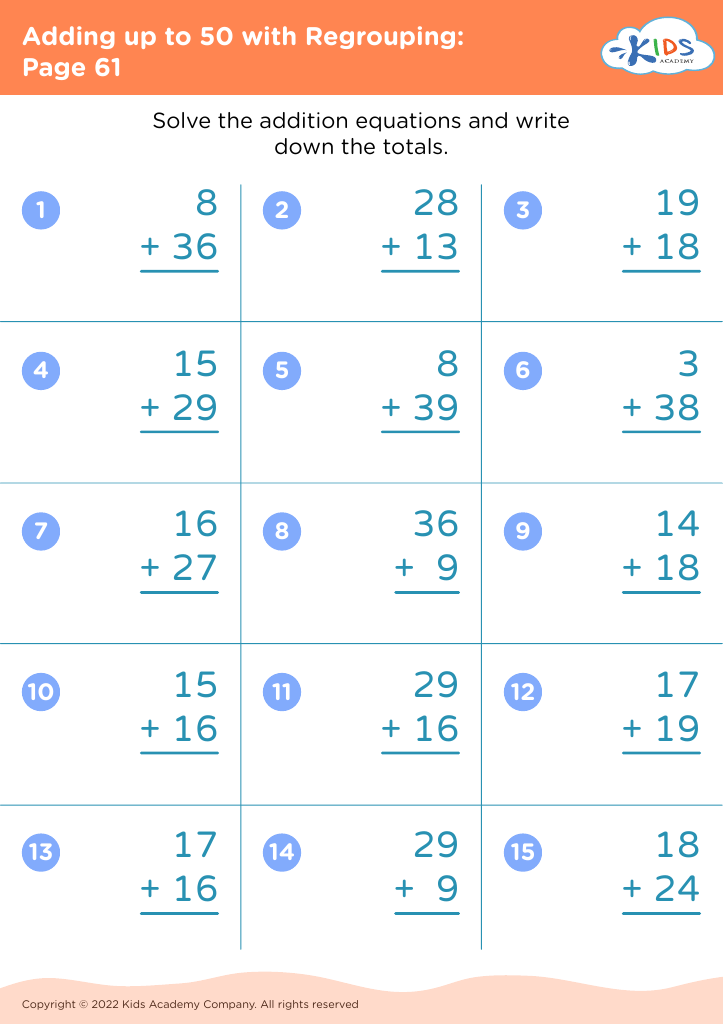
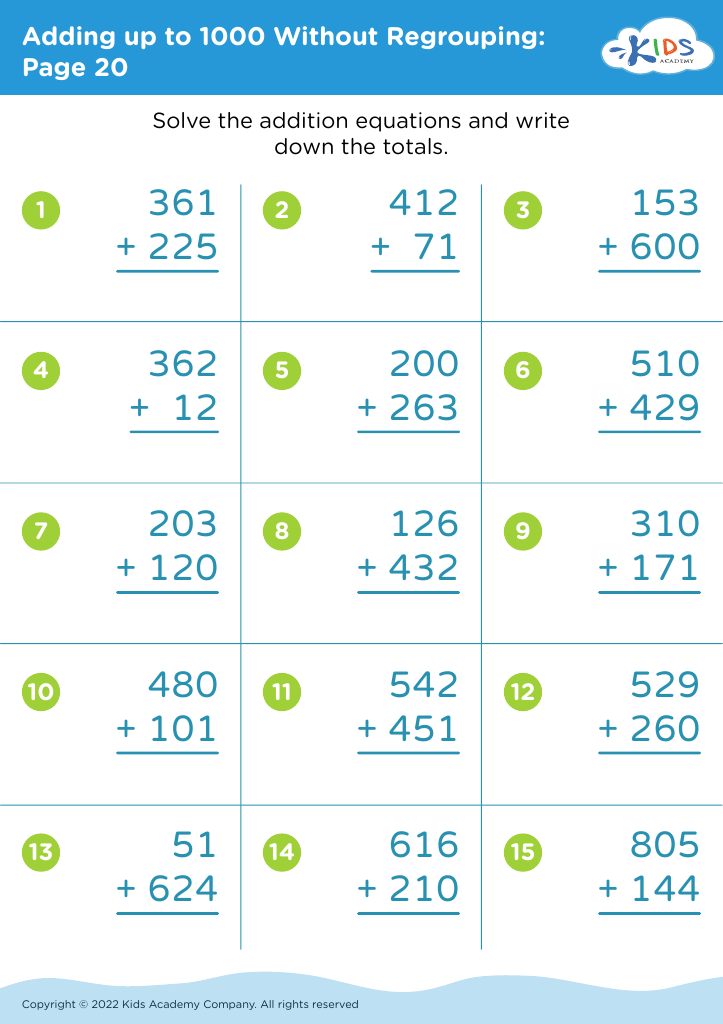
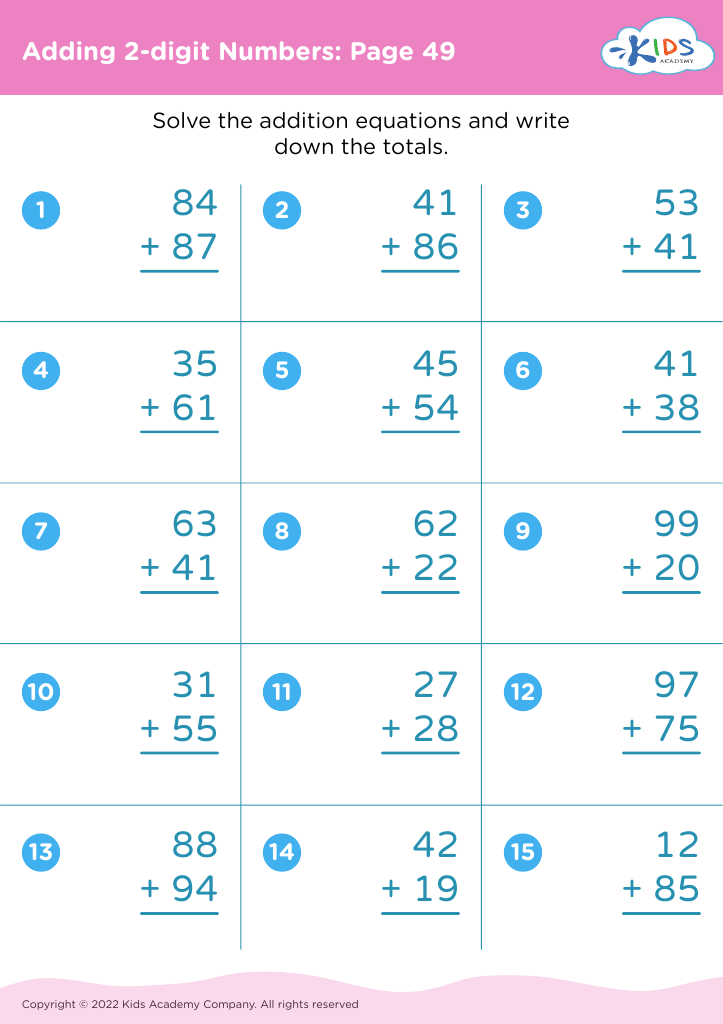








Practice inference skills in addition and subtraction for children ages 4-7 is crucial for fostering early mathematical understanding and problem-solving abilities. During these formative years, children develop foundational cognitive skills essential for later learning. Inference skills allow children to draw conclusions based on patterns and relationships they explore within mathematical problems, promoting deeper comprehension of concepts like number families and operations.
Parents and teachers should prioritize these skills because they empower children to approach math problems with confidence, enabling them to reason logically rather than relying solely on memorization. This engagement enhances critical thinking, encouraging kids to ask questions and seek solutions independently. Furthermore, as children learn to infer strategies for addition and subtraction, they build a solid foundation for more complex math concepts in the future, setting them up for success in later grades.
Additionally, strong inference skills can support children's literacy development, as the same analytical thinking applies to reading. Therefore, investing time in developing these skills will not only enhance a child's math abilities but also their overall academic confidence and efficiency, leading to a lifelong love for learning. In short, fostering inference skills is an essential component of holistic early education.








