Practice writing numbers Addition & Subtraction Worksheets for Ages 4-7
6 filtered results
-
From - To
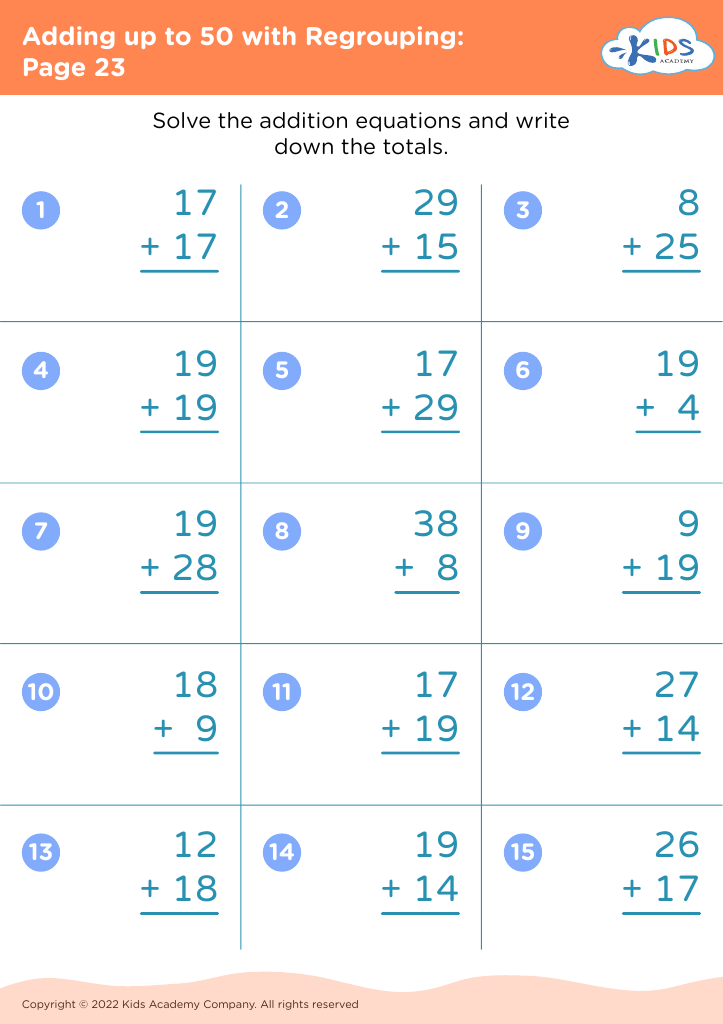
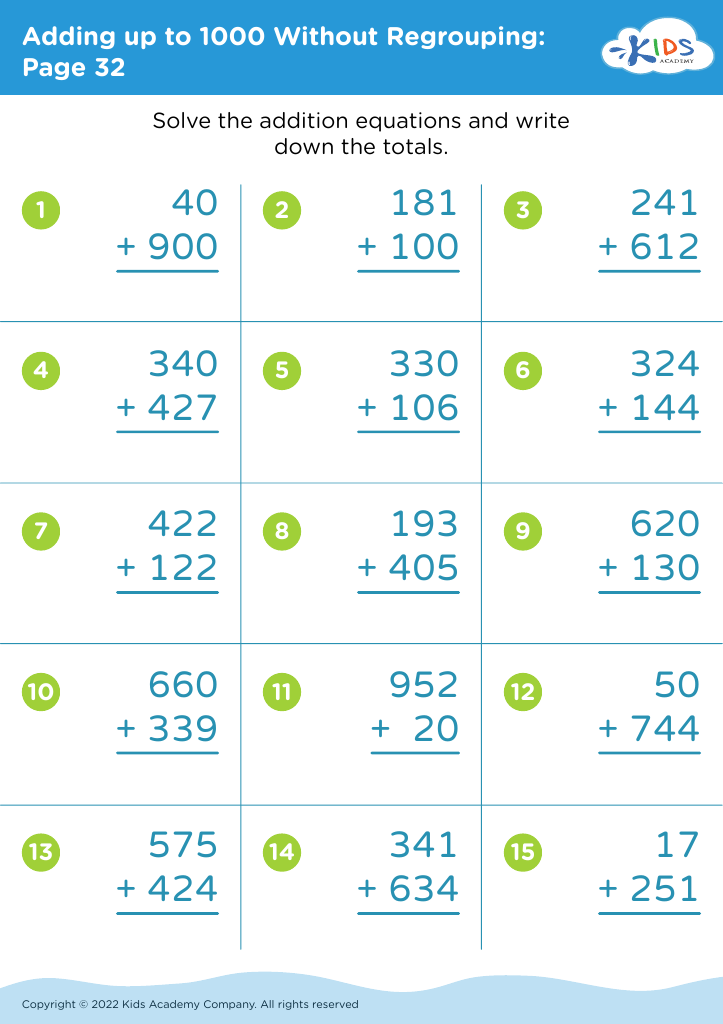
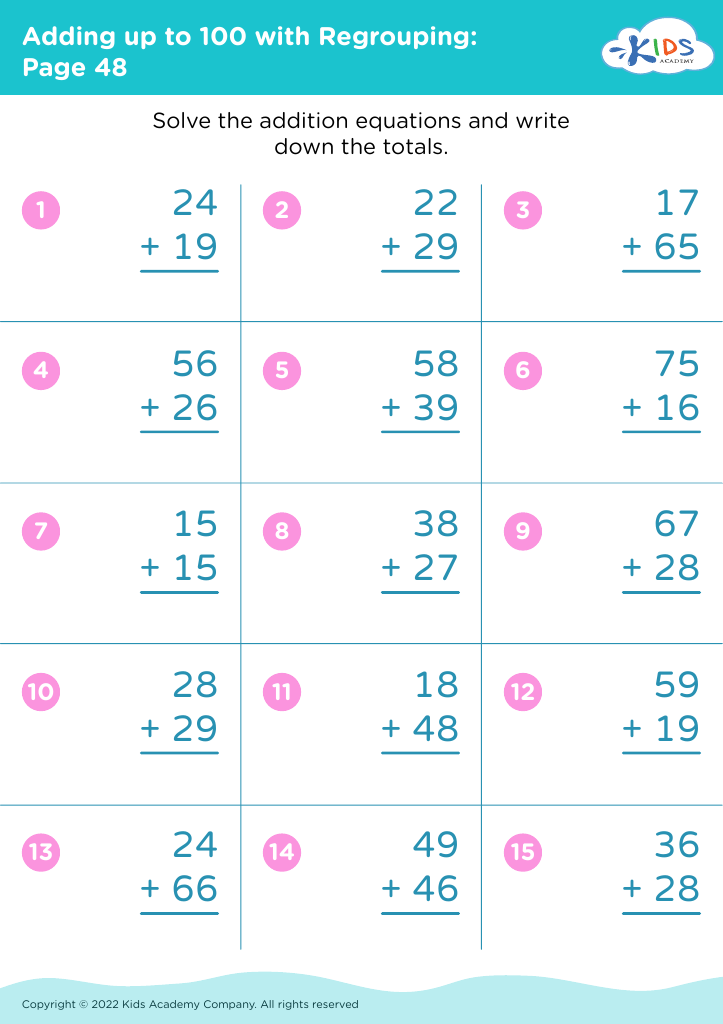
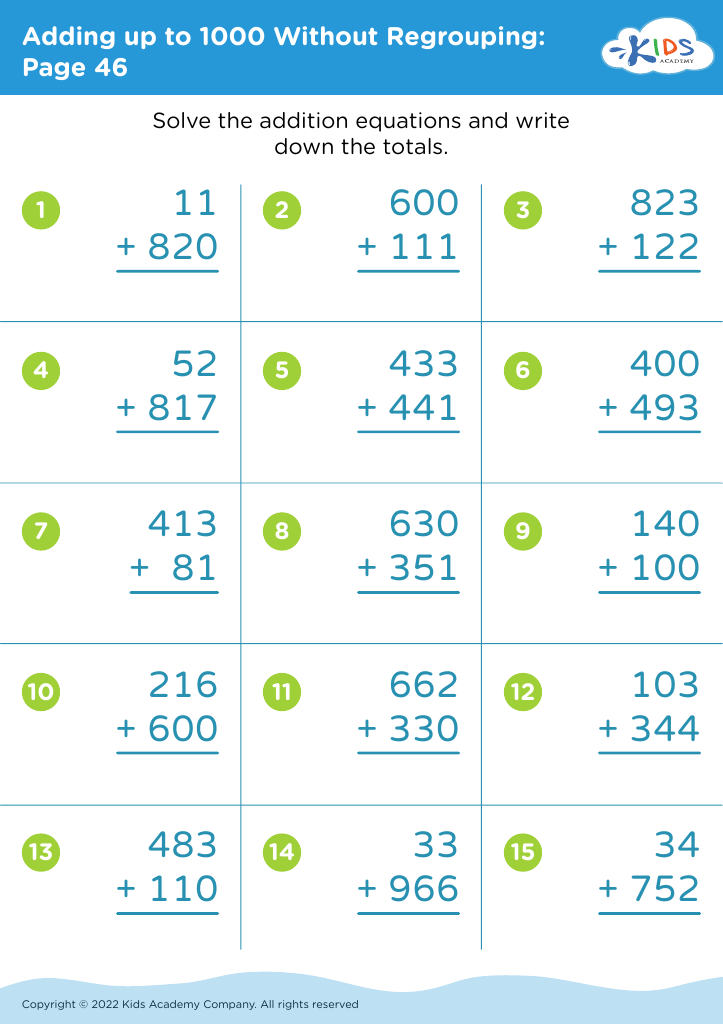
Enhance your child's math skills with our Practice Writing Numbers Addition & Subtraction Worksheets for Ages 4-7. These engaging and educational printables are designed to help young learners master number formation, learn addition, and practice subtraction. Featuring fun graphics and interactive exercises, our worksheets make math enjoyable, boosting your child's confidence and interest in mathematics. Ideal for both classroom and home use, these resources support early math development and build a strong foundation for future learning. Perfectly tailored for children aged 4-7, our worksheets provide hands-on practice to ensure your child's progress and success.
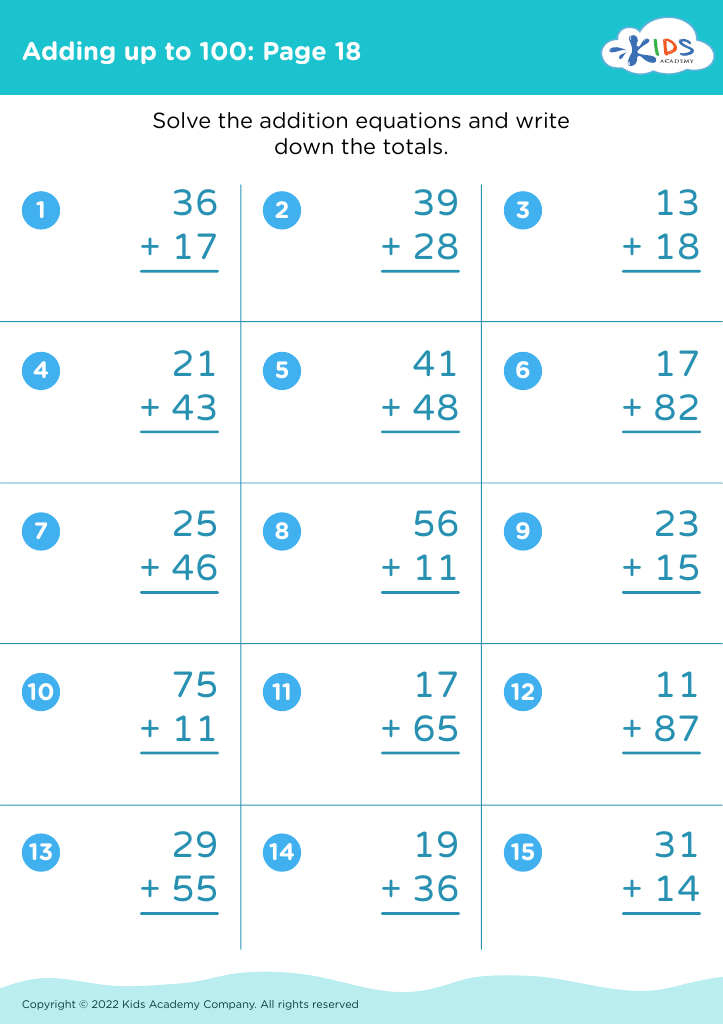
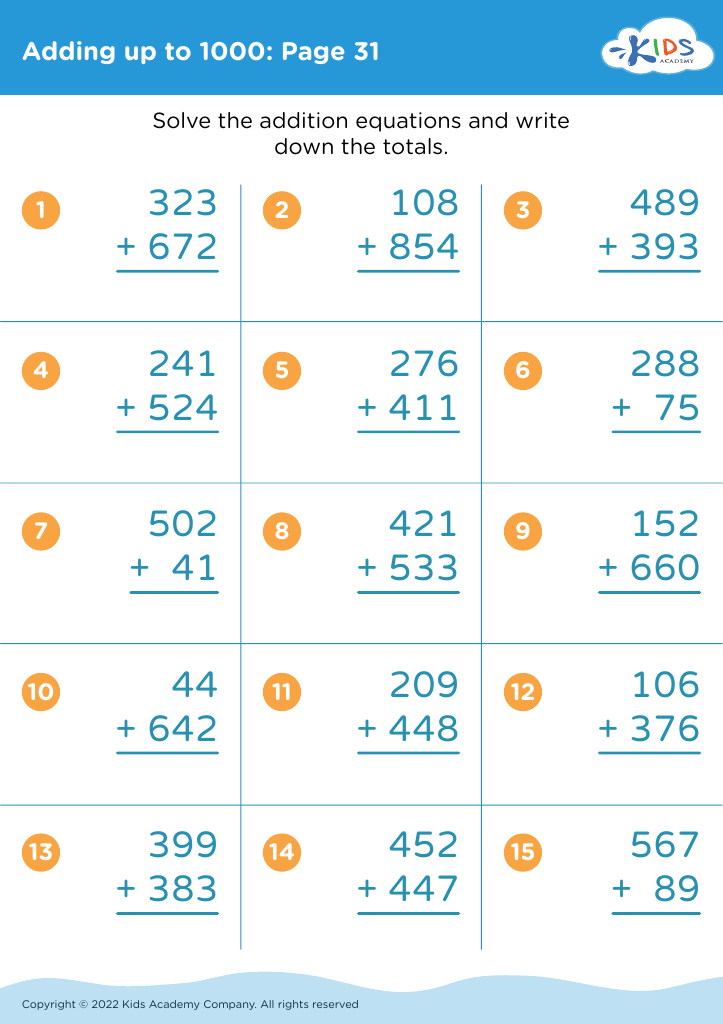








Parents and teachers should care about practice writing numbers, addition, and subtraction for children aged 4-7 because these foundational skills are critical for their overall cognitive development and future academic success. Developing number-writing skills helps children recognize and understand numerical symbols, fostering their ability to participate in everyday activities that require numbers, such as telling time and handling money.
Engaging in addition and subtraction exercises enhances a child’s analytical thinking and problem-solving abilities. Early exposure to these concepts builds a robust mathematical foundation, reducing anxiety around math as they advance through their schooling. Additionally, mastering these skills during early grade years supports the development of fine motor skills and hand-eye coordination, important for writing proficiency.
Furthermore, numeracy skills are not just essential for mathematics itself, but they also contribute to subjects such as science and technology, enabling interdisciplinary learning. When young learners are proficient in basic arithmetic, they gain confidence and enthusiasm, setting a positive tone for future academic endeavors. Investing time in these practices ensures children transition smoothly to more complex mathematical concepts, ultimately empowering them with the skills needed for success in the modern world. So, encouraging and supporting young learners in these areas remains a crucial aspect of early childhood education.








