Understanding number relationships Addition & Subtraction Worksheets for Ages 4-7
8 filtered results
-
From - To
Explore our engaging "Understanding Number Relationships: Addition & Subtraction Worksheets" designed for children aged 4-7. These interactive resources aim to build a solid foundation in math by helping young learners grasp the concepts of addition and subtraction through relatable contexts. Our worksheets encourage kids to recognize patterns, comprehend numerical relationships, and improve their problem-solving skills. With vibrant illustrations and age-appropriate exercises, students will gain confidence in their abilities while having fun! Perfect for home or classroom use, these worksheets promote essential mathematical understanding essential for future learning success. Start your child's mathematical journey with us today!
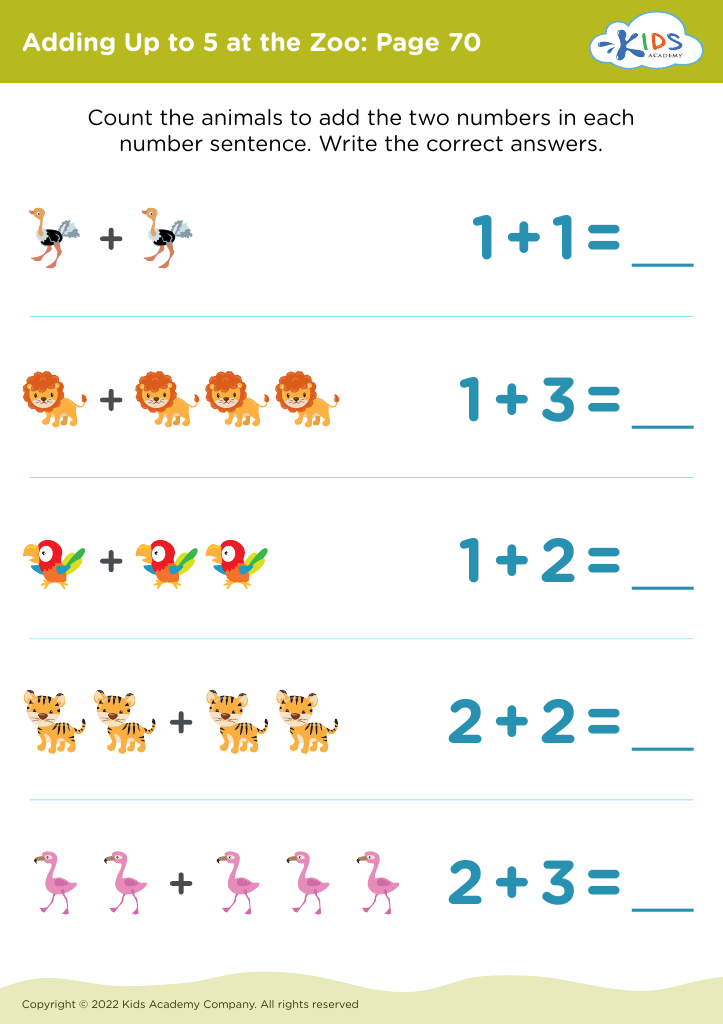
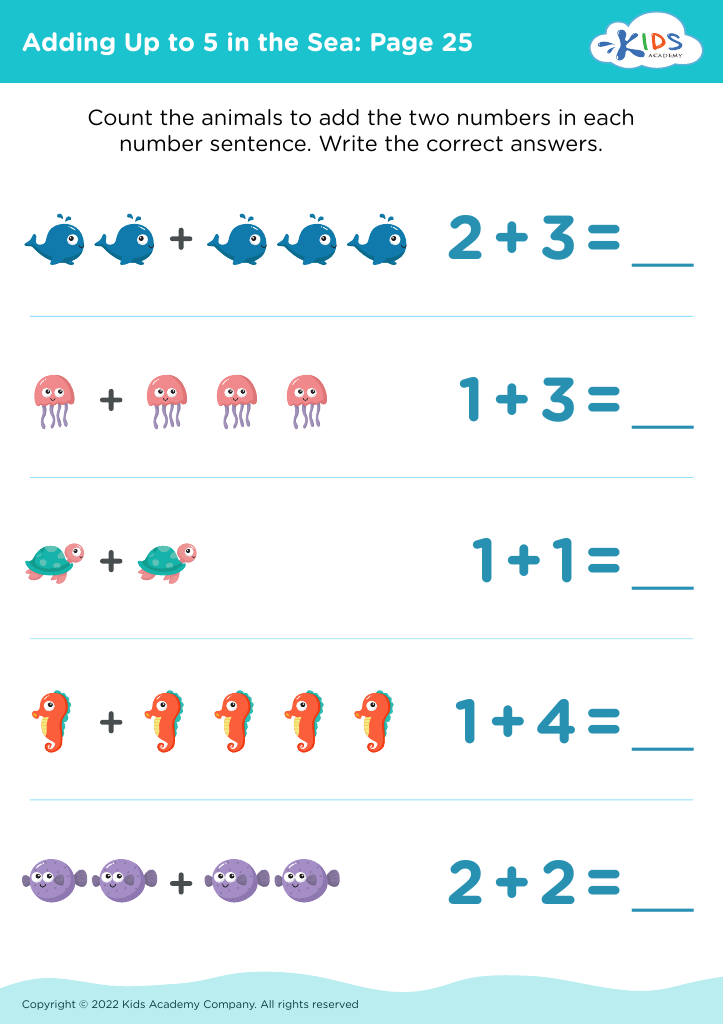
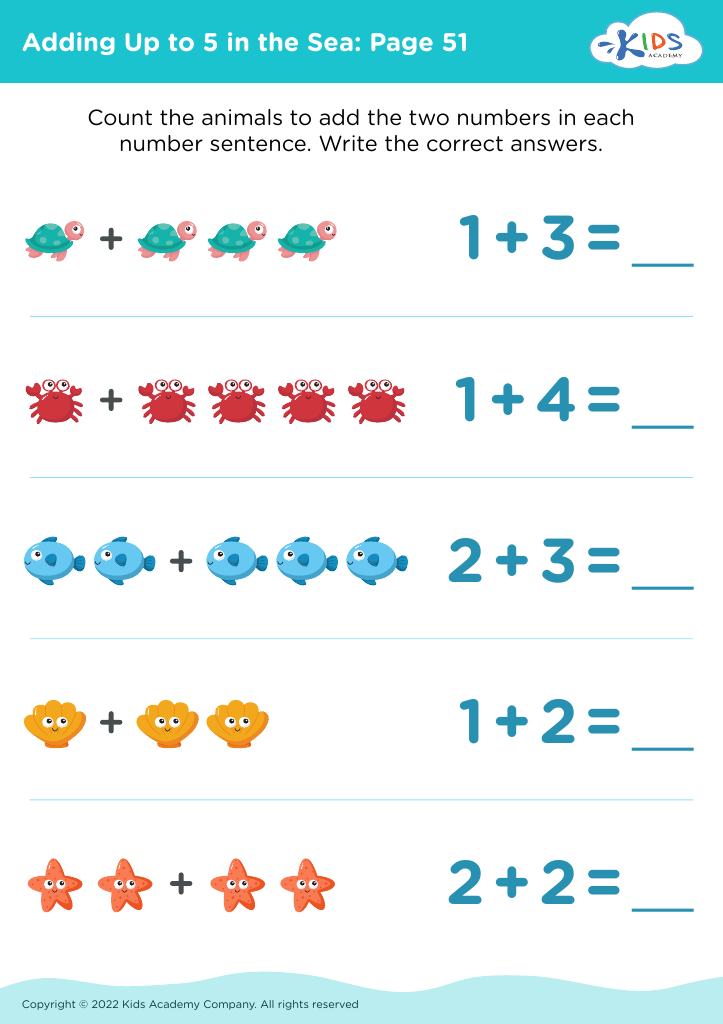
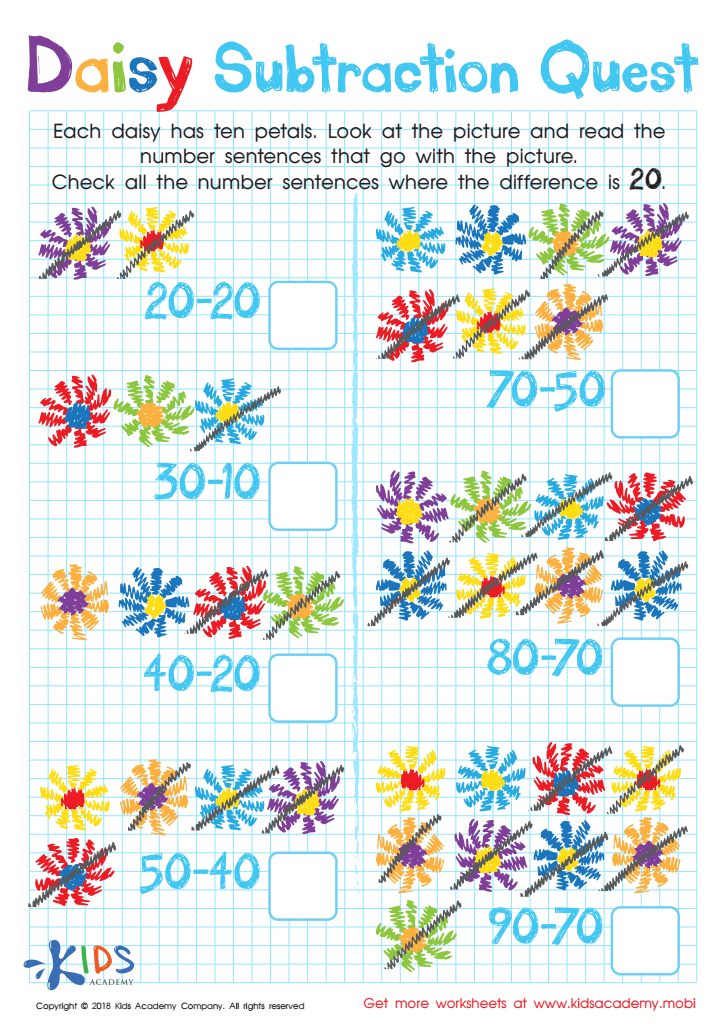
Daisy Subtraction Quest Worksheet
 Assign to My Students
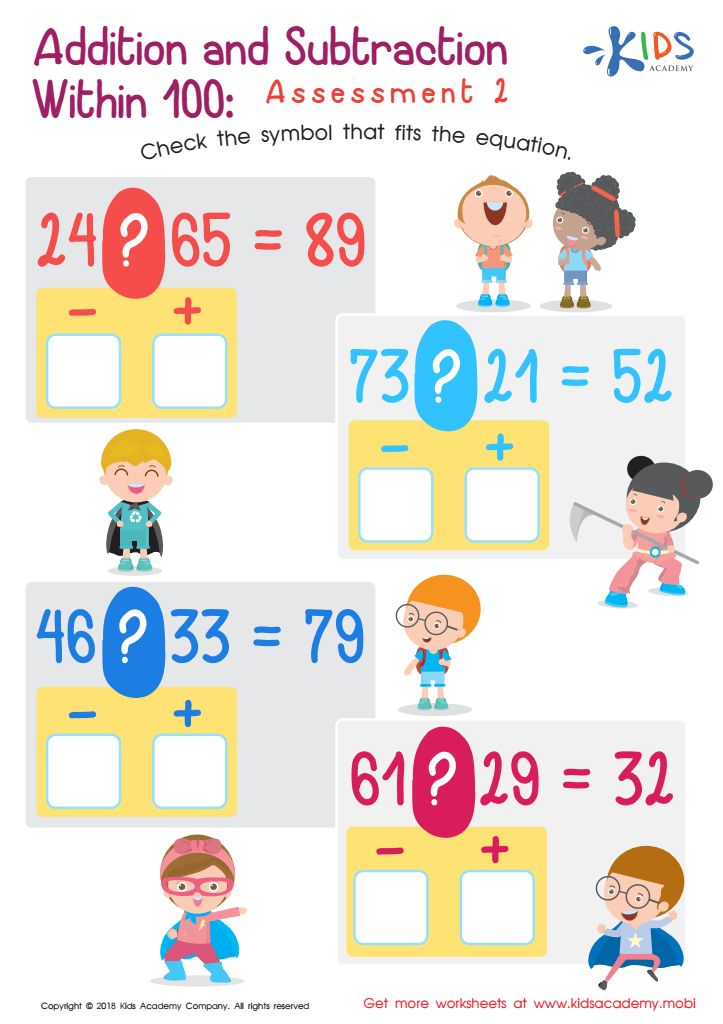
Addition and Subtraction Within 1: Assessment 2 Worksheet
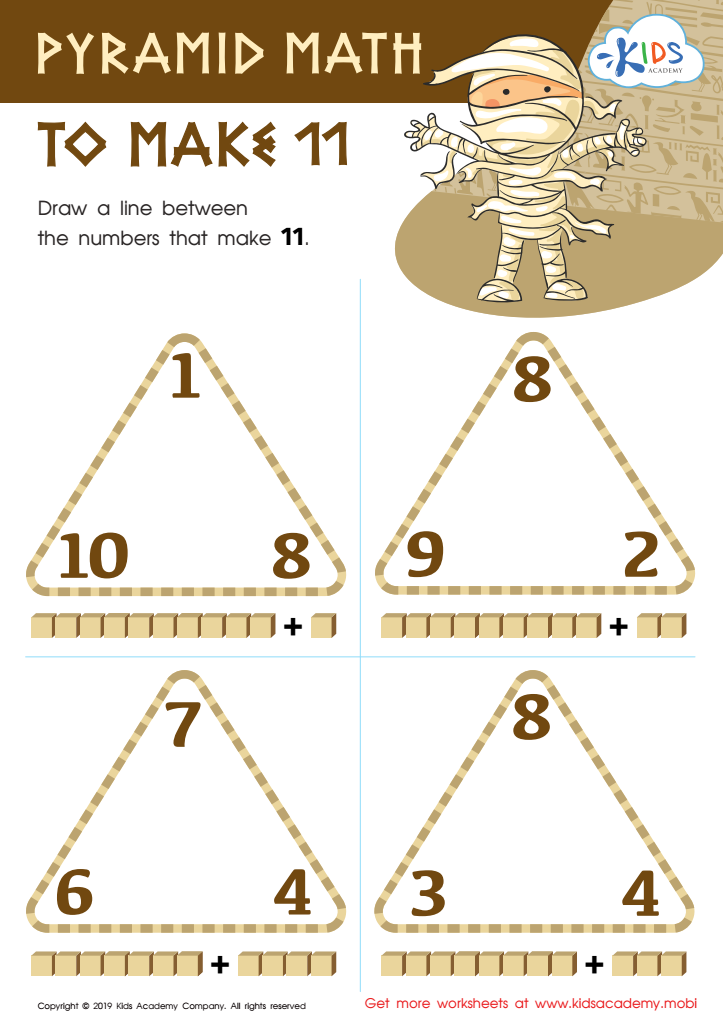
Pyramid Math to Make 11 Worksheet








Understanding number relationships, particularly in addition and subtraction, is crucial for children aged 4-7 as it lays the foundation for their mathematical development. During these formative years, children are not just memorizing facts; they are developing a deep comprehension of how numbers interact with one another.
By grasping number relationships, children learn to see patterns and make connections between numbers, which enhances their problem-solving skills. For example, recognizing that addition is simply combining quantities while subtraction involves taking away helps students understand the concepts conceptually rather than just through rote learning. This understanding fosters a sense of number sense, which is key for later, more complex math tasks.
Furthermore, these early skills are predictive of future academic success. Parents and teachers who emphasize the importance of number relationships can facilitate critical discussions around these concepts, engaging children in practical applications through games and real-life scenarios. This not only makes learning enjoyable but also relevant, helping children develop confidence in their mathematical abilities. Ultimately, nurturing these foundational skills supports lifelong learning and equips children with the tools necessary to tackle new and challenging mathematical concepts as they grow.








