Understanding sequence Addition & Subtraction Worksheets for Ages 4-7
4 filtered results
-
From - To
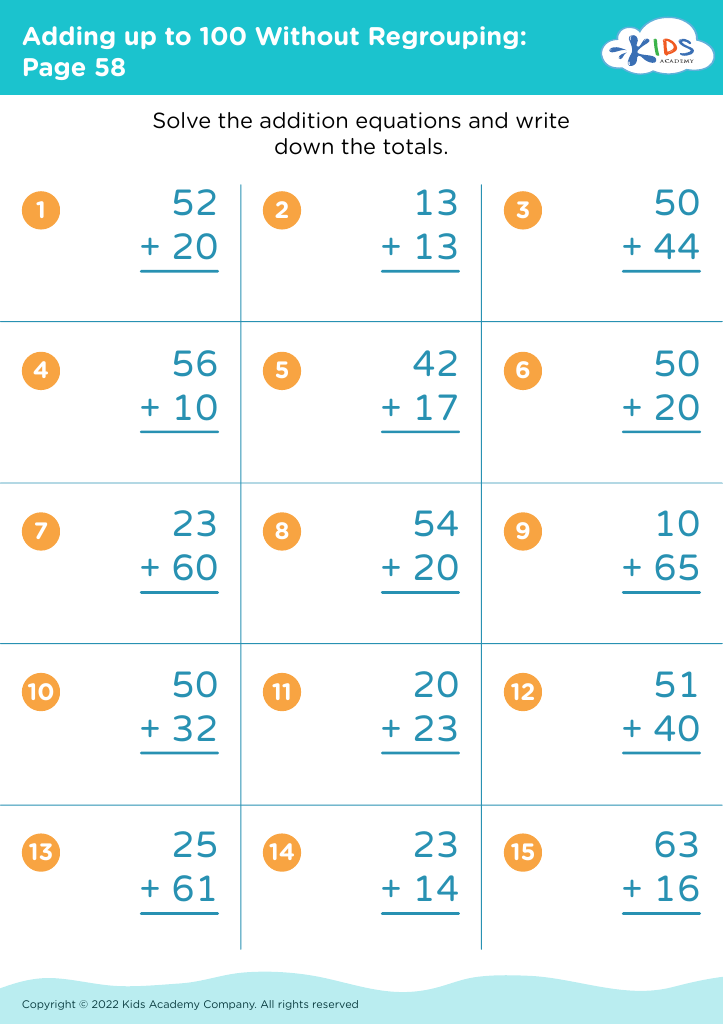
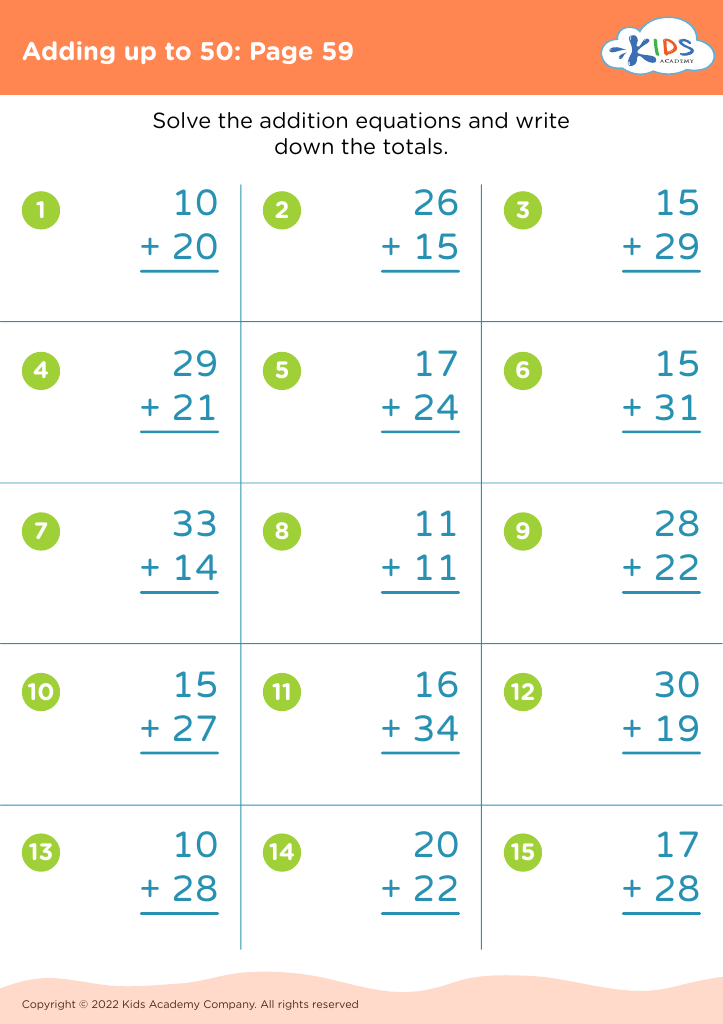
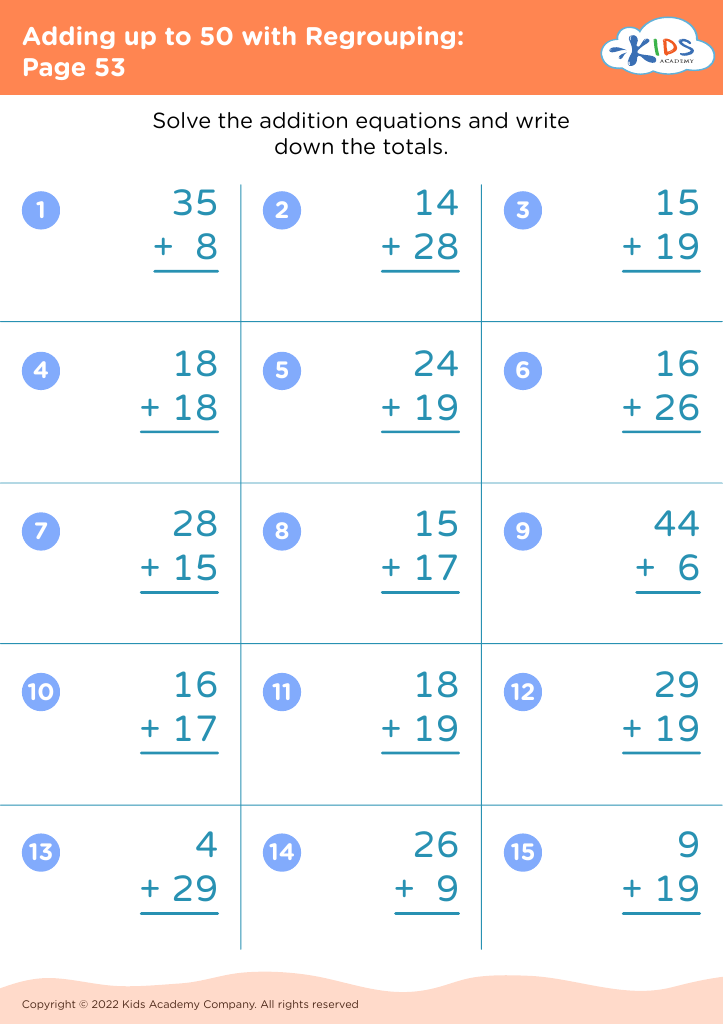
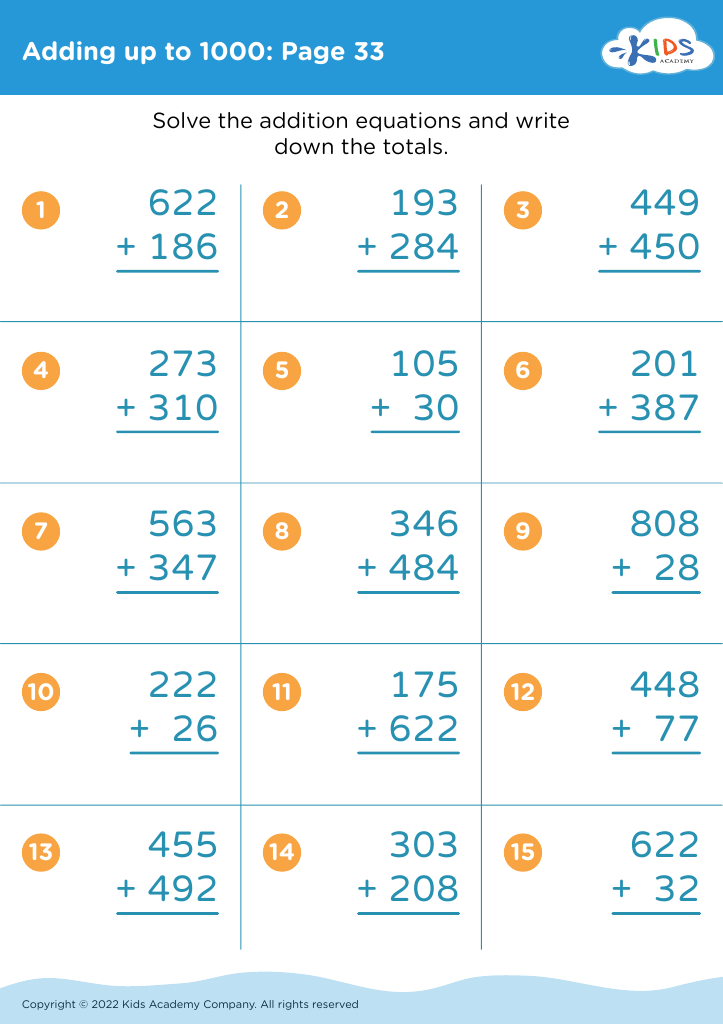
Our "Understanding Sequence Addition & Subtraction Worksheets for Ages 4-7" are designed to build foundational math skills in young learners. These engaging, age-appropriate worksheets utilize fun and interactive methods to teach children the concepts of sequencing in addition and subtraction. Through a variety of exercises, kids can practice ordering numbers, understanding mathematical operations, and developing problem-solving abilities. Perfect for preschool to early elementary students, our worksheets provide a step-by-step approach that fosters confidence and prepares children for more advanced math challenges. Utilize these expertly crafted resources to enhance your child's mathematical journey.








Understanding sequence addition and subtraction is crucial for children ages 4-7 as these skills lay the foundation for their overall mathematical development. At this age, children are in the pre-operational stage, as described by Piaget, where they begin to grasp the concept of numbers and their relationships. Introducing sequence addition and subtraction helps solidify their understanding of numerical order and the procedural steps necessary to solve mathematical problems.
Caring about this aspect of early math education is essential because it builds a strong base for more complex mathematical concepts that children will encounter later. When children grasp the idea of adding or subtracting in a sequence, they start to understand patterns, enabling them to predict and extend number sequences. This skill is directly related to their ability to perform calculations efficiently and accurately.
Furthermore, mastering these basic operations enhances children’s confidence and positive attitudes toward math. Early success in math contributes to higher self-esteem and promotes a proactive attitude towards learning new concepts.
Finally, educators and parents who emphasize sequence addition and subtraction support cognitive development, including critical thinking and problem-solving skills. By guiding children through these fundamental concepts, they help foster logical reasoning and analytical thinking, essential not only in academics but in daily life challenges and decision-making processes.








