Understanding time Addition & Subtraction Worksheets for Ages 4-7
6 filtered results
-
From - To
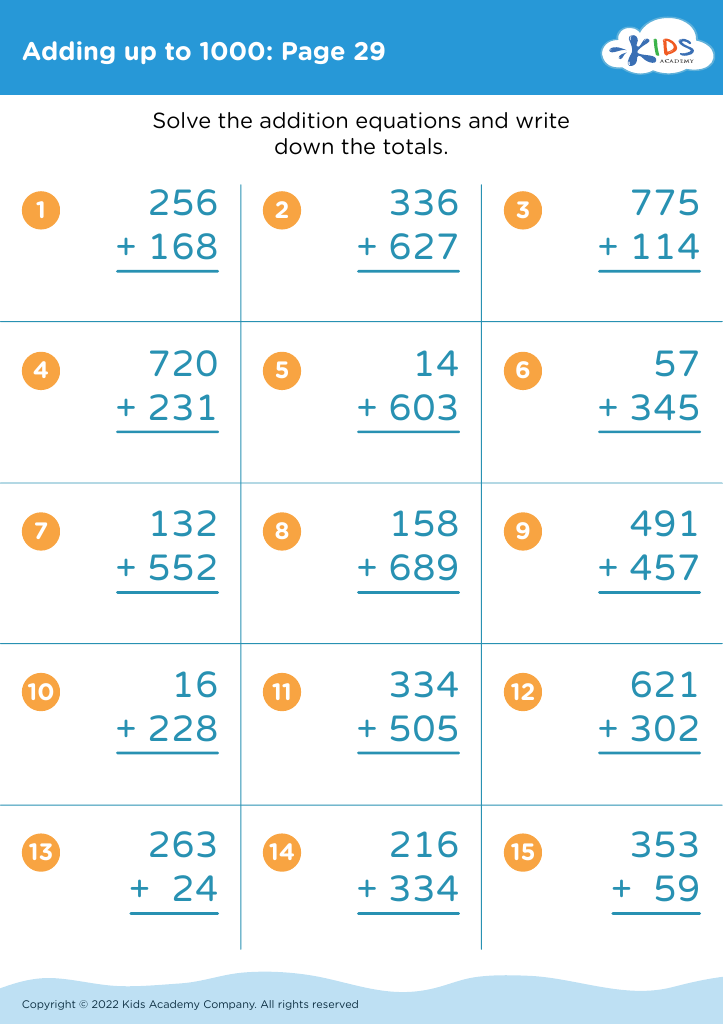
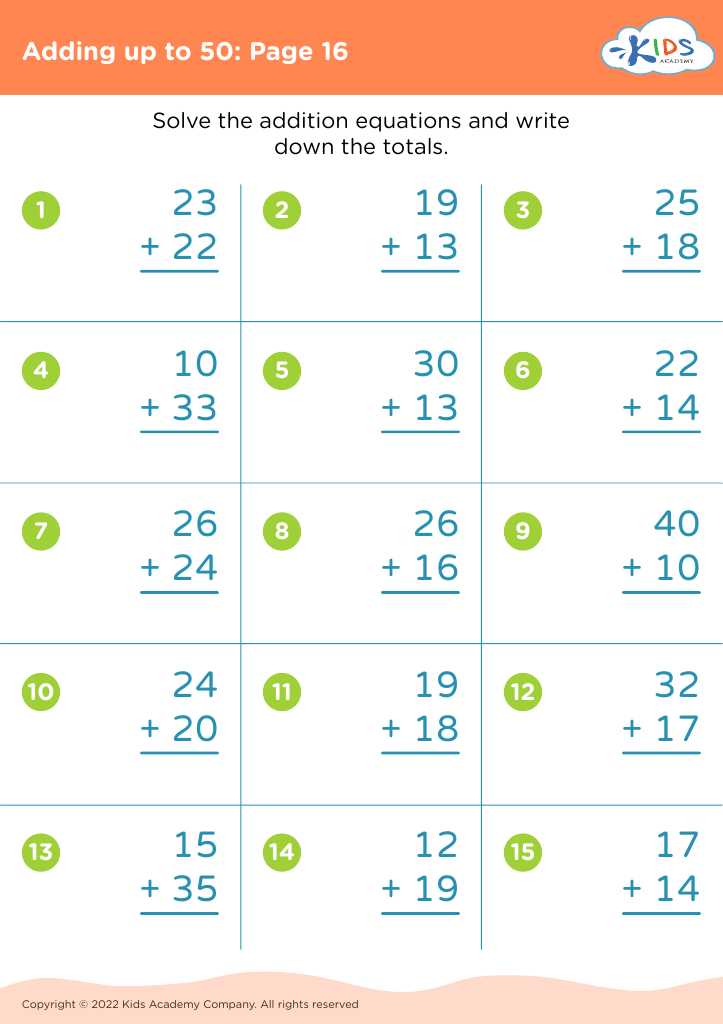
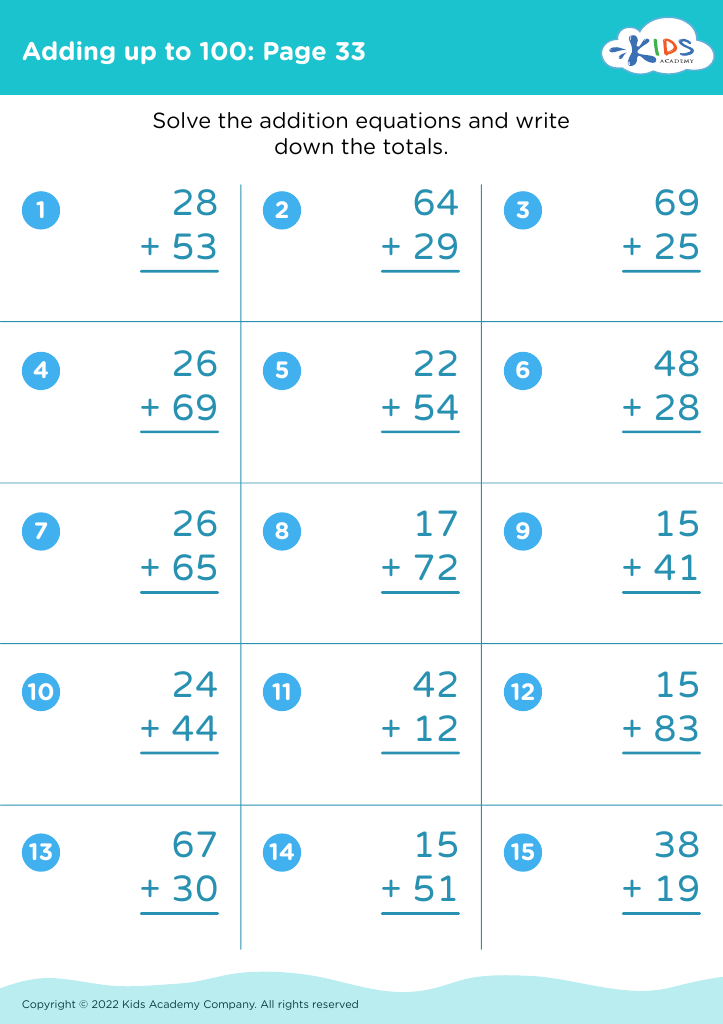
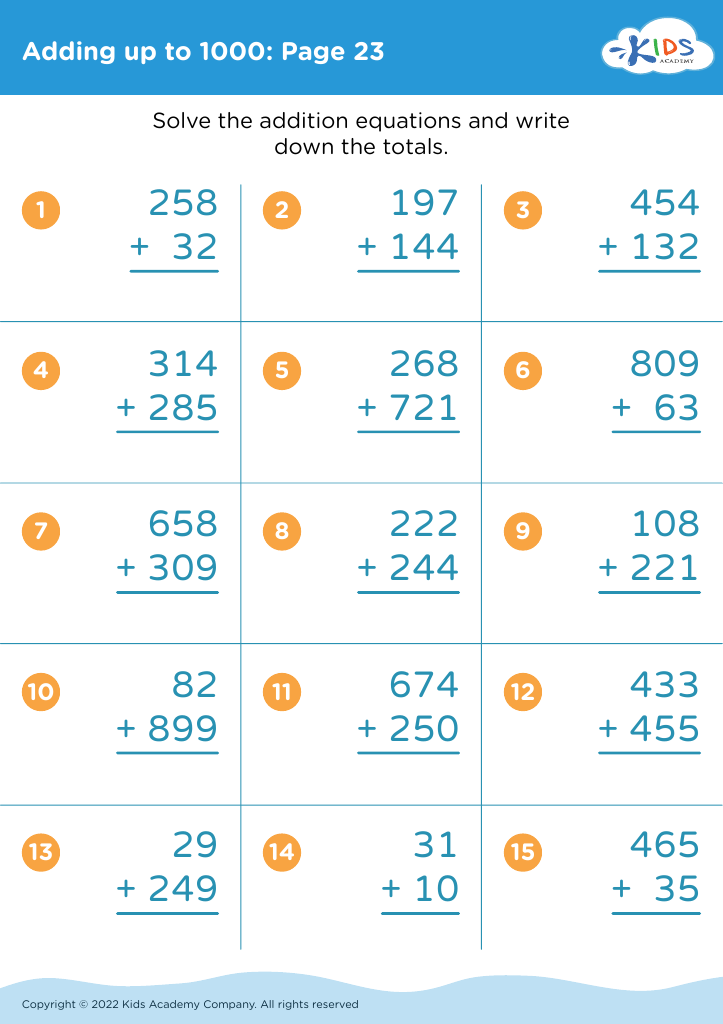
Engage young learners with our "Understanding Time Addition & Subtraction Worksheets," designed specifically for ages 4-7. These interactive worksheets make learning about time fun and relatable, incorporating addition and subtraction concepts into everyday scenarios. Children will practice identifying clocks, reading time, and solving math problems that integrate both skills. With colorful illustrations and simple instructions, these resources foster a love for math while enhancing critical thinking. Perfect for teachers and parents alike, these worksheets support early childhood education and provide a solid foundation for future math success. Download and inspire your child's journey through the world of time and numbers today!
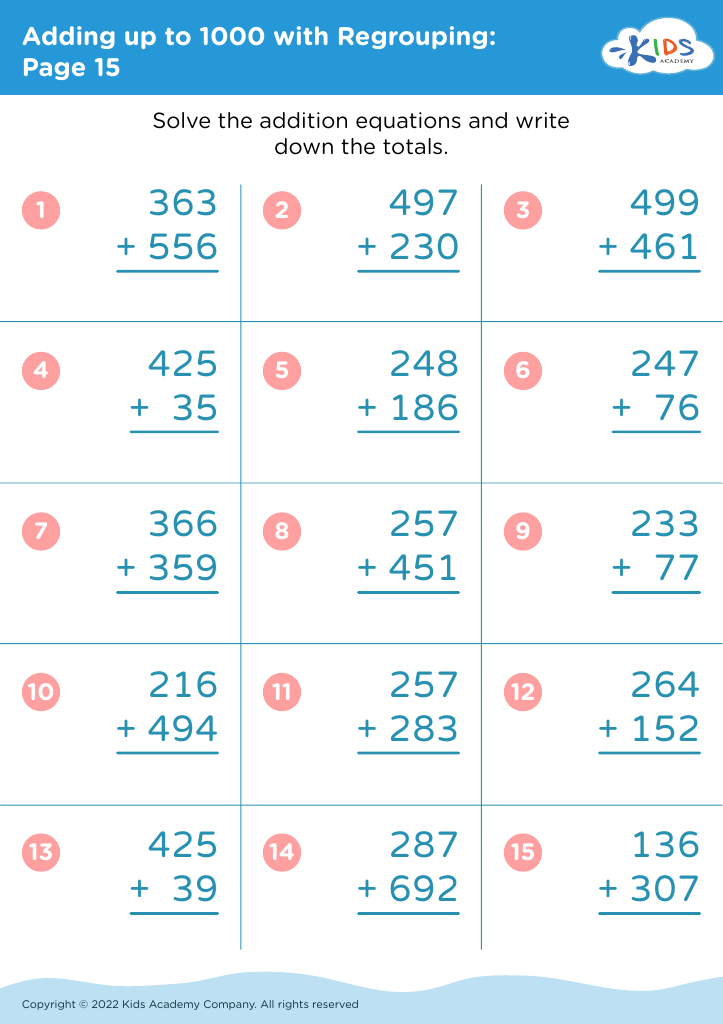
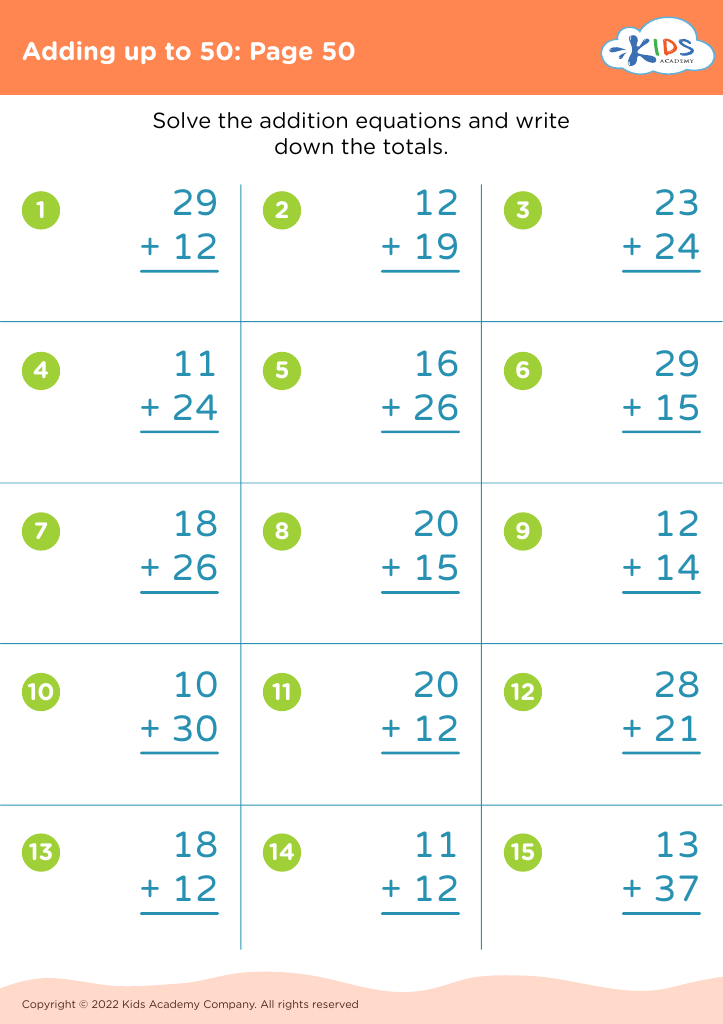








Understanding time, addition, and subtraction is crucial for children aged 4-7 as it lays the groundwork for essential cognitive and life skills. At this developmental stage, kids begin to grasp the concepts of numbers and their relationships, and these foundational skills serve as the building blocks for future math learning.
Learning to tell time helps children become more aware of their routines and the world around them, fostering independence. For example, knowing when it’s time to play, eat, or go to school encourages responsibility and time management—a skill that will be essential throughout their lives.
Similarly, mastering addition and subtraction empowers young learners to solve problems and engage with their environment in a more meaningful way. These mathematical operations are foundational for everyday tasks like sharing, grouping, and budgeting. Furthermore, they enhance critical thinking and develop a child’s confidence in their abilities.
Engaging parents and teachers in this learning process promotes collaboration, ensuring kids receive consistent messages and support. By investing time and effort into these concepts, adults can help children build a strong mathematical foundation that will benefit them in academics and practical life situations, fostering a lifelong appreciation for learning.








