Underwater animal identification Addition & Subtraction Worksheets for Ages 4-7
3 filtered results
-
From - To
Dive into learning with our Underwater Animal Identification Addition & Subtraction Worksheets for Ages 4-7! These engaging worksheets blend the excitement of discovering fascinating sea creatures with essential math skills practice. Perfect for young learners, each sheet features colorful underwater scenes that captivate attention and make learning fun. Children will develop their addition and subtraction abilities while identifying unique marine animals. Designed to strengthen both math and observation skills, these worksheets provide an interactive and educational experience, perfect for classrooms or homeschooling. Dive beneath the waves and make math practice an adventure your child will love!
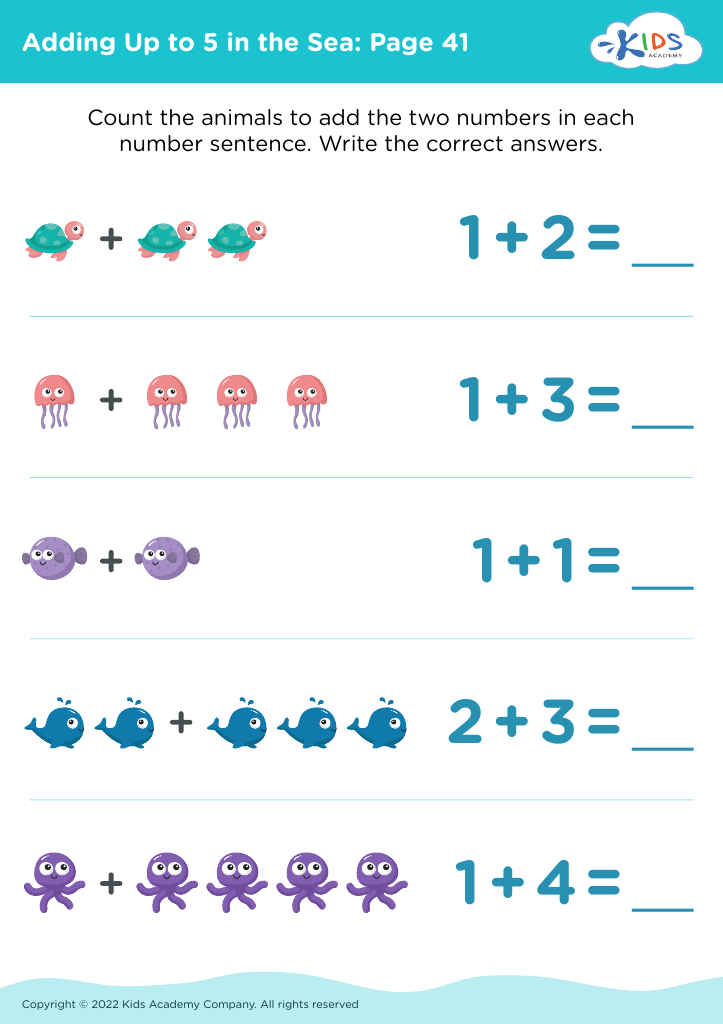
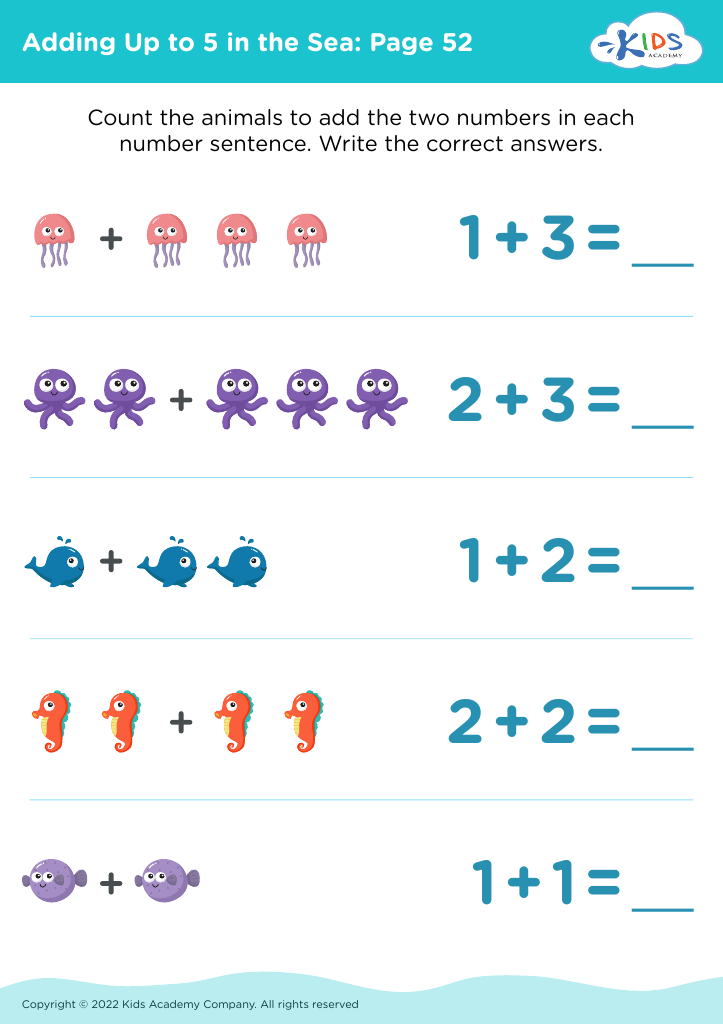
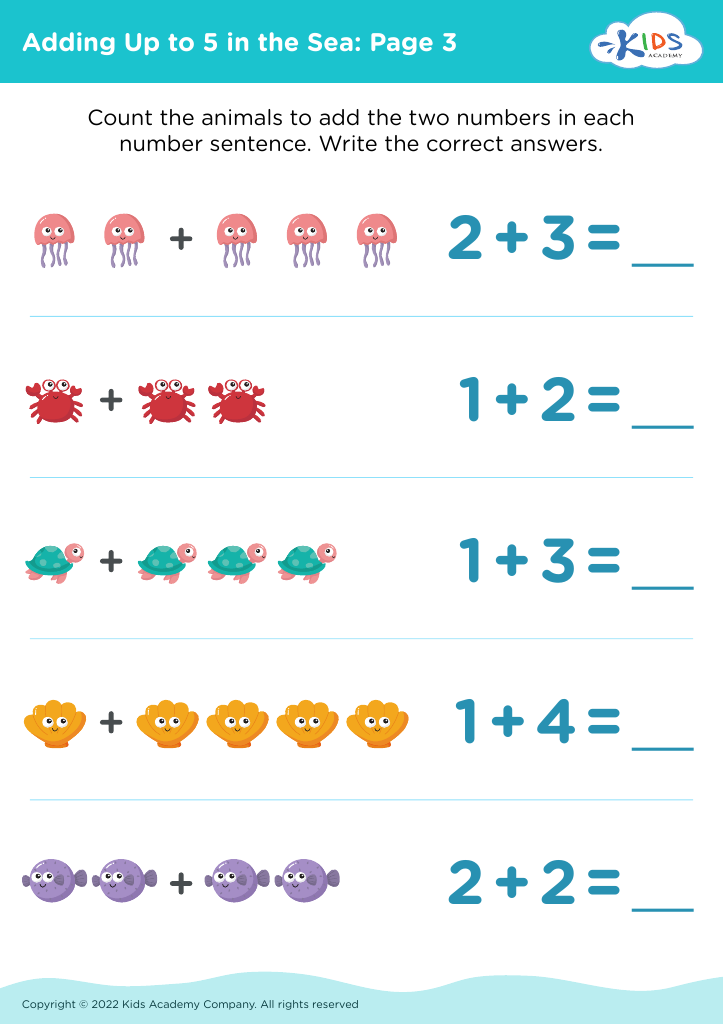








Parents and teachers should care about "Underwater Animal Identification Addition & Subtraction" activities for ages 4-7 because they offer a multifaceted approach to early childhood development. First, these activities introduce young learners to basic math concepts like addition and subtraction, which are foundational skills for their future academic success. Using engaging underwater animals makes math feel playful rather than daunting, capturing the imagination and interest of young children.
Second, incorporating underwater animal identification promotes curiosity about marine biology, fostering a love of nature and science from an early age. Recognizing and naming different species enhances vocabulary and categorization skills, which are crucial for cognitive development. This dual emphasis on math and science paves the way for interdisciplinary learning, encouraging kids to make connections between different subjects.
Moreover, these activities improve fine motor skills and hand-eye coordination through tasks such as counting manipulatives or writing numbers. Social skills are also nurtured when children collaborate on problems or discuss their answers, promoting teamwork and communication.
Lastly, such integrative learning experiences cater to diverse learning styles, making abstract concepts more tangible through visual, auditory, and kinesthetic learning. In sum, these activities are not just educational tools but gateways to holistic development, equipping children with skills they will use throughout their lives.








